Brazilian Hair Removal: Pain, Number of Sessions and Aftercare
By Dr. Kim8 min read
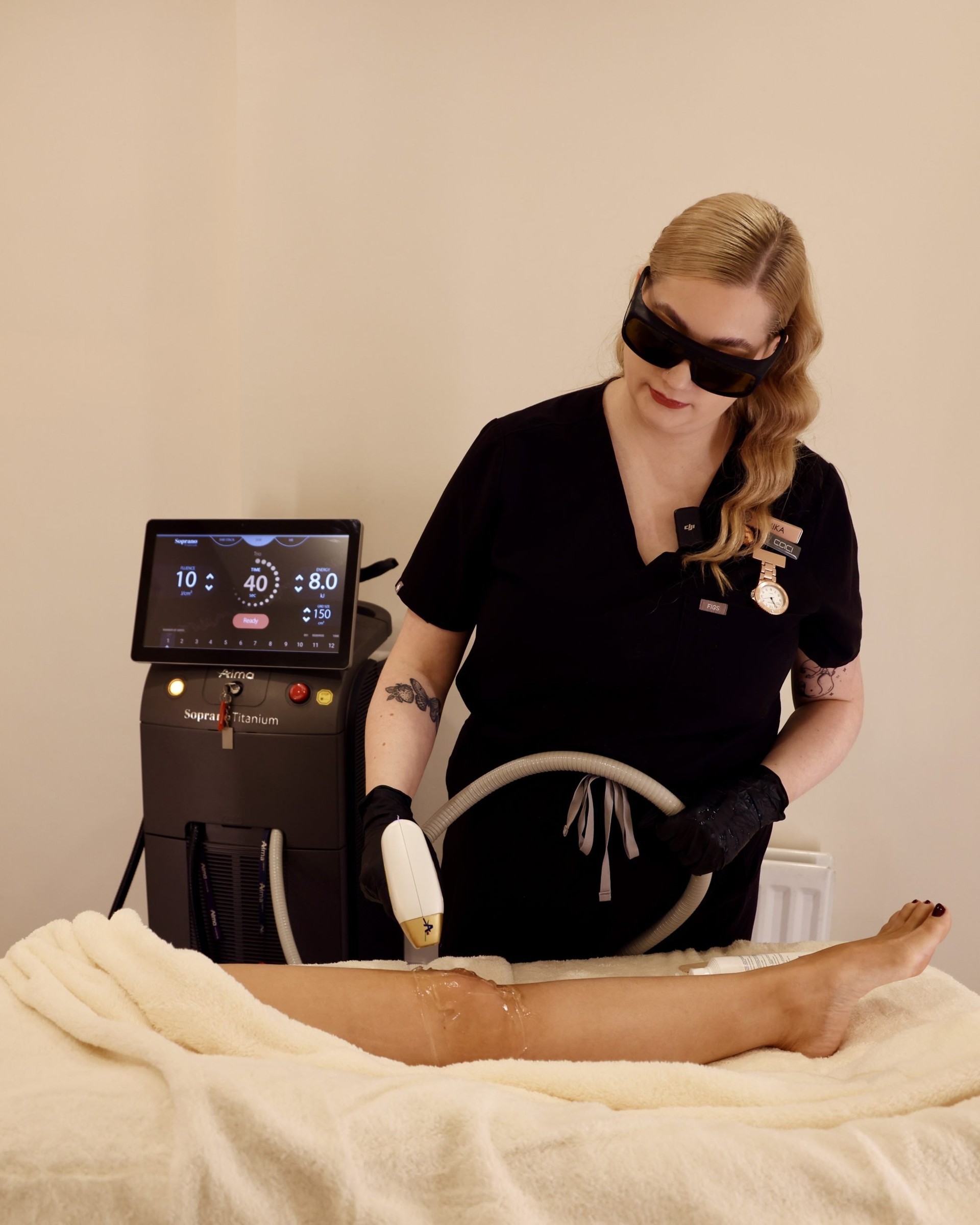
Brazilian hair removal is often described as a simple procedure, a few laser passes and you are done. In practice, though, many people find it far more painful than treating the arms or legs, and it usually takes more sessions before the results become visible. That raises a natural question: why does the exact same laser feel so much harder to tolerate in this one area?
The basic principle of laser hair removal is the same everywhere on the body. But this area differs from others in hair thickness and shape, skin thinness, and how densely nerves are packed underneath. Those differences are exactly what drive the pain, the number of sessions needed, and how quickly the skin recovers. Looking at each factor one at a time makes it much easier to understand why this area feels so much more demanding.
Why does the same laser respond differently by area?
Laser hair removal works by targeting melanin, the pigment inside the hair root, which absorbs light and converts it into heat. As melanin absorbs light energy and heats up, that heat spreads to the surrounding follicle, the small pocket structure where the hair actually grows, and damages it. It is the same reason a black shirt gets hotter than a white one in the sun.
That reaction is not equally strong everywhere, though. It depends on the state of the skin and hair. The thinner the skin, the more easily heat reaches nerves deeper down, and the thicker or curlier the hair, the less evenly that heat spreads through a single follicle. The Brazilian area happens to have both of these traits at once, which is why the same laser setting can feel far more intense here than elsewhere.
Why does Brazilian hair removal hurt so much?
Much of the pain comes down to the structure of the skin itself. Nerve endings are packed more densely in this area than in most other skin, so the same amount of heat feels much sharper here. Think of how a fingertip reacts to a small poke far more than a forearm does. It is a similar idea.
On top of that, the skin layer itself tends to be thinner, so heat reaches the nerves in the dermis, the deeper layer of skin, more easily. On the arms and legs, there is usually more distance between the outer layer and the dermis, giving the heat some room to cool as it travels. In this area, that distance is shorter, so heat often reaches the nerves before it has a chance to dissipate. That is one reason providers tend to be more cautious about the intensity setting here than elsewhere.
Does the laser not work while hair is resting?
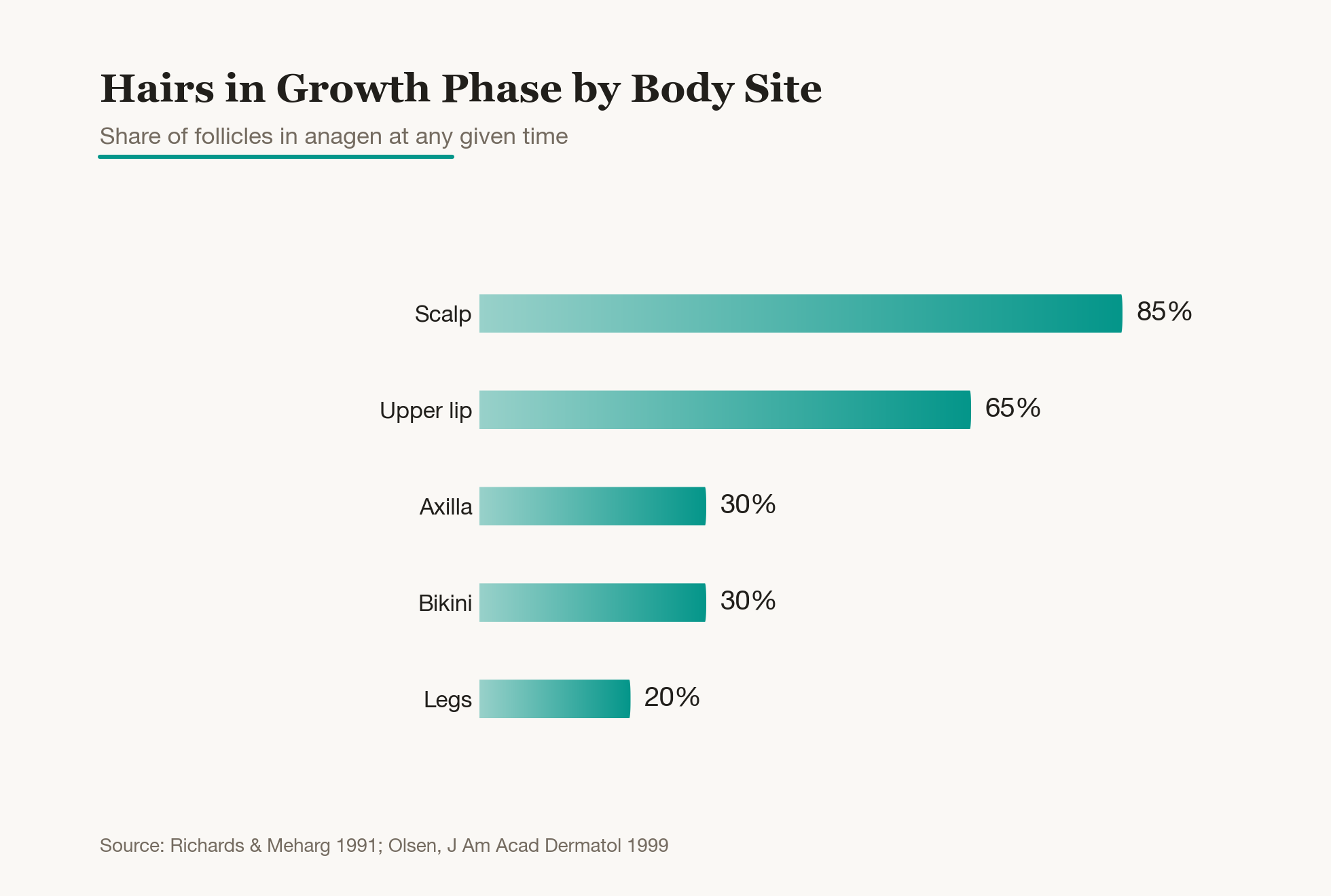
For a laser to work, the hair needs to be in its growth phase, the period when the follicle is actively producing hair. During this phase, melanin fills the follicle deeply enough for the laser's heat to reach all the way down to the root. In the resting phase, on the other hand, when the follicle has stopped producing hair, melanin levels are minimal, so the laser barely has anything to react with.
The problem is that not every follicle on the body enters its growth phase at the same time. Some follicles are in the growth phase while others are resting, all mixed together, so a single session only affects the hairs that happen to be growing at that moment. That is why sessions are spaced weeks apart, so that the remaining follicles can be treated as they cycle into the growth phase in turn. This area is known to cycle through its growth phase faster than the arms or legs, which is often why sessions need to be closer together, or why more of them are needed overall.
The pace of this cycle also varies from person to person and from one body area to another. So instead of assuming a fixed number of sessions will finish the job, it is more realistic to watch how the skin responds after each treatment and adjust the interval from there. Because the proportion of follicles in the growth phase differs by area, applying the same session count that worked on the arms or legs to this area often means needing more sessions than expected.
How does curly hair affect treatment?
Hair in the Brazilian area tends to be thicker and curlier than hair on the arms or legs. That single trait shapes both the treatment itself and the recovery afterward.
- Because the follicle sits at a curved angle, heat from the laser does not always travel evenly down to the root even when the beam enters straight. It is a bit like pouring water into a bent straw, it does not fill evenly all the way to the end.
- Thicker hair contains more melanin, so it absorbs a larger burst of heat at once, which can mean more irritation for the surrounding skin as well.
- Curly hair is more prone to becoming ingrown, a strand that curves back into the skin instead of growing straight out. As the new tip sharpens, it tends to follow the angle of the curved follicle back underneath the skin.
For these reasons, providers often lower the intensity slightly and space out sessions more carefully in this area.
What to watch for with darker skin
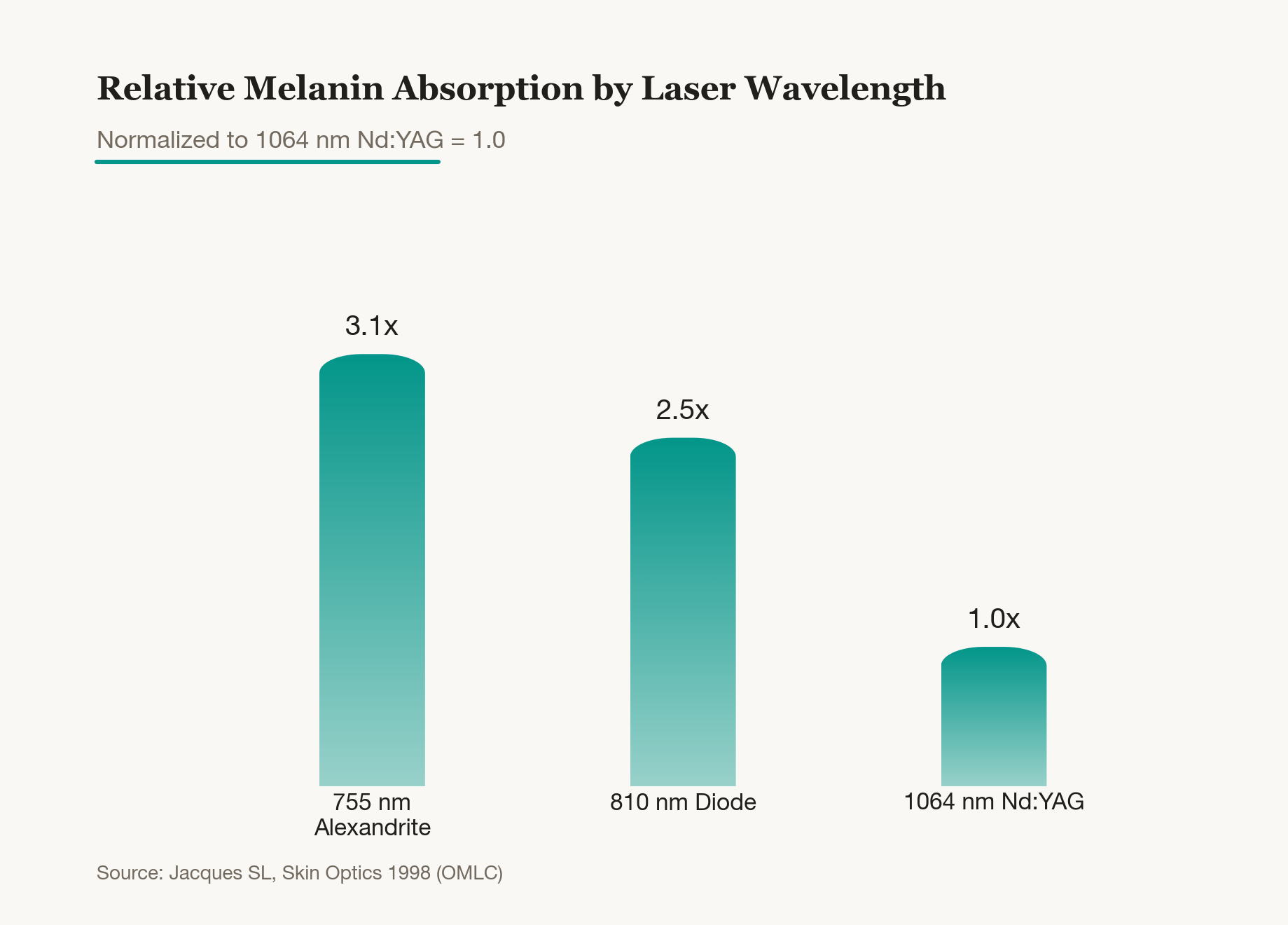
Because lasers target melanin, they can react not only with melanin in the hair root but also with melanin in the skin itself. Areas where the skin is naturally darker, or where friction has darkened the skin over time, carry a somewhat higher risk of burns or hyperpigmentation, since the laser ends up absorbing melanin from the skin as well as the hair.
The Brazilian area sees frequent friction from underwear and clothing, which already makes it prone to darker pigmentation compared to other areas. That is why checking the skin tone and condition here before treatment, and adjusting the laser's wavelength, the type of light used, and its intensity accordingly, is considered the safer approach. Longer wavelengths tend to pass through tissue beyond melanin more selectively, which is why longer wavelengths are generally preferred for darker skin tones.
How to care for skin before and after
The mechanics of the treatment matter, but care before and after the session has a real impact on the outcome too, for a few reasons.
- Avoiding tanning or heavy sun exposure before treatment is recommended. If the skin already has elevated melanin levels, the laser reacts more with the skin itself, which increases irritation.
- Wearing loose, low friction clothing for the first few days after treatment is recommended. Skin that has just absorbed heat is still recovering, and added friction at that stage can easily lead to redness or pigmentation.
- Sun protection is worth keeping up regardless of whether a session was recently done. Skin that has just been treated is more reactive, and ultraviolet exposure can make pigmentation darken more easily during that window.
Following this routine reduces irritation and gives the skin enough time to recover before the next session.
Why do some hairs last until the end?
Even after multiple sessions, it is unrealistic to expect every single hair to disappear. That comes down to the nature of the follicles themselves. Some contain very little melanin to begin with, or sit at an especially sharp angle, so the laser's heat never quite reaches them fully.
This area is also influenced by hormones, and new follicles can become active again over time. For that reason, it makes more sense to think of Brazilian hair removal as a way to noticeably reduce and thin out hair rather than eliminate it completely. After several sessions, the hair that remains is usually finer and lighter than before, which makes everyday maintenance considerably easier.
It is also common to notice a dramatic reduction after the first few sessions, followed by a slower pace as the remaining, smaller number of follicles get treated. Thicker follicles that were already in the growth phase tend to respond first, while follicles that enter the growth phase later, or sit at more difficult angles, are the last to go. That is why, in the final stretch, spacing sessions out a bit more and finishing gradually is considered safer than pushing the intensity higher to speed things up.
References
Korean Dermatological Association, American Academy of Dermatology (AAD), and Ministry of Food and Drug Safety (MFDS).
Was this helpful?
About this article
Written by a practising aesthetic physician and intended for general education — not a substitute for individual medical advice.
Read next
Laser Hair Removal Sessions and Intervals: Why Are Multiple Sessions Needed?
Laser hair removal only reacts to follicles that are actively growing right now. Because follicles in the same area are cycling out of sync with each other, it takes several sessions to catch them all. Here is the biology behind why the spacing between sessions matters and why some areas need more rounds than others.
By Dr. Kim
Laser Hair Removal Sessions: Why Split Into 3 to 7 Treatments?
A plain-language look at how laser hair removal zeroes in on dark melanin pigment, and why it only works on hair caught in its growth phase. We walk through the hair cycle behind the 3-to-7-session protocol, and why the number of sessions and the wait between them varies so much from one body area to another.
By Dr. Lee

Body Onda: Effects, Approach by Area, Number of Sessions and How Long It Lasts
Body Onda is a non-surgical body contouring treatment that uses microwave energy to selectively heat the fat layer beneath the skin, shrinking fat cells while tightening the skin above them. Here is why the heat targets fat rather than skin, why fat reduction and tightening happen together, how the approach differs for the abdomen, arms, and flanks, and how many sessions it takes to see lasting results.
By Dr. Kim