Laser Hair Removal Sessions and Intervals: Why Are Multiple Sessions Needed?
By Dr. Kim7 min read
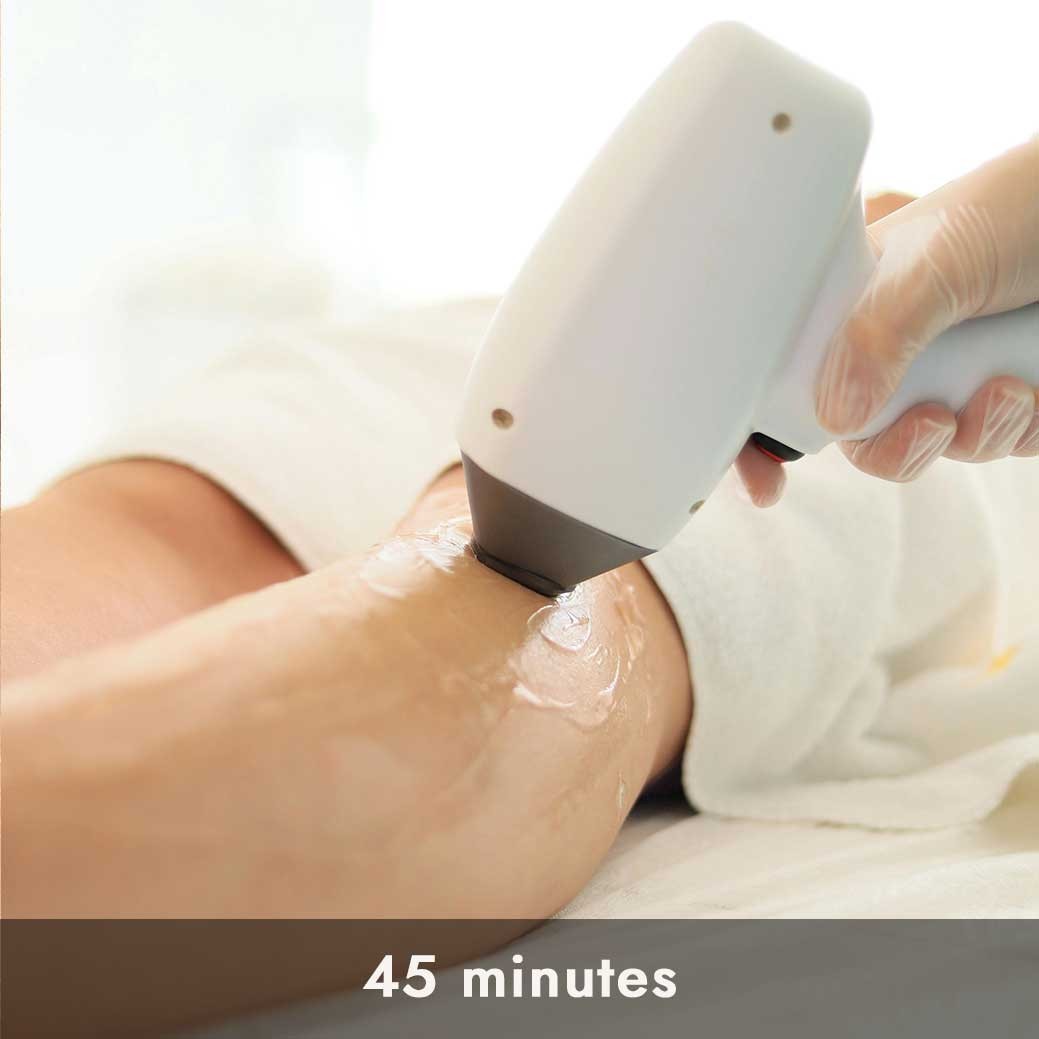
A lot of people wonder why one laser session is not enough, and why clinics recommend three or four rounds, sometimes six or seven. It is not that the laser is too weak. The real reason has nothing to do with the laser itself. It comes down to how hair actually grows.
Even within the same patch of skin, some hairs are actively growing, some have already finished growing and are resting, and others are getting ready to shed. All of these sit side by side in the same area. A laser only reacts to one of these types. That is why a single session only clears part of the hair, and the rest has to wait for the next round. Once you understand this pattern, it becomes obvious why you need to complete the full course and why the spacing between sessions matters.
Which hairs does a hair removal laser respond to?
Laser hair removal works by using heat to damage the follicle, the small sac under the skin that produces hair. Laser light is absorbed strongly by melanin, the dark pigment in skin and hair. Since hair is packed with melanin, the laser heats up the hair shaft, and that heat travels down into the follicle and damages it.
The catch is that this heat transfer only happens through hair that is actually visible above the skin. A follicle that has not grown a shaft yet has no pigment target for the laser to lock onto. Without a target, the laser light simply passes through. That means a follicle that is not currently growing will not respond, no matter how many times you fire the laser at it.
The three stages of the hair cycle
A follicle does not grow once and stop. It cycles continuously. This cycle is called the hair cycle, and it breaks down into three main stages.
- Growth phase (anagen): The cells at the base of the follicle divide rapidly, pushing the hair shaft upward. Melanin only fills the hair shaft in sufficient amounts during this stage, which is what gives the laser a target.
- Regression phase (catagen): Cell division stops and the follicle gradually shrinks. Melanin production drops off sharply along with it, leaving very little pigment for the laser to absorb.
- Resting phase (telogen): The follicle is fully dormant and preparing for the next growth phase. The hair is barely anchored near the surface of the skin at this point, so there is almost no melanin target left.
Within the same area, every follicle sits at a different point in this cycle. While one follicle is in its growth phase, the one right next to it might already be in regression, and another might be resting. It is a bit like a classroom where every student's vacation starts on a different day.
Why only growing-phase follicles respond to the laser
During the growth phase, the hair matrix cells at the base of the follicle (the cells that actually build the hair) and the melanocytes that produce pigment are both working actively together. Melanocytes keep feeding pigment into the shaft, which is why hair looks darkest and thickest during this stage.
Laser energy gets absorbed heavily by this concentrated pigment and converts into heat. That heat travels down to the matrix cells at the base of the follicle and damages them. Once the matrix cells are damaged, that follicle either stops producing new hair or only produces thinner, lighter hair going forward.
A useful comparison is a live electrical wire. Cutting a wire that has current running through it causes a short and real damage. Cutting an empty wire with no current does nothing at all. Growing follicles are the live wire.
Why doesn't it work on resting follicles?
During regression and resting, matrix cell activity slows down or stops completely. Melanocyte activity drops along with it, which means there simply is not enough of a target left for the laser to absorb.
On top of that, the cell cluster at the base of the follicle has already migrated up toward the skin's surface or shrunk down during these stages. So even if some laser heat does reach the area, it struggles to reach the actual cells that need to be damaged. It is similar to shooting an arrow at a target that has already been moved away.
That is why follicles in these stages simply have to wait until they cycle back into the growth phase before a laser session can affect them.
Why is a gap needed between sessions?
The spacing between sessions is based on how long it takes a follicle to cycle from resting back into growth. This timing varies by body area. The face has a shorter cycle, returning to growth in roughly a month, while larger areas like the back or legs have longer cycles that take considerably more time.
If sessions are scheduled too close together, a large share of follicles will still be stuck in the resting phase, and the session will be less effective. If sessions are spaced too far apart, follicles that already passed through their growth phase and moved into regression get missed entirely. That is why clinics base the interval on the average cycle length for each body area and aim for a spacing somewhere in that range.
Since a different set of follicles responds each time, follicles that were missed in one round often land in their growth phase by the next round and get caught then. This is why the amount of remaining hair keeps dropping with each additional session.
Why the number of sessions differs by area
Even for the same person, the number of sessions needed varies by body area. A few factors play into this.
- Share of follicles in the growth phase: Areas like the face and underarms have a higher percentage of follicles in growth at any given time, so more follicles respond per session and fewer total sessions are needed. Areas with a lower growth-phase percentage respond more slowly and need more rounds to catch up.
- Follicle depth and hair thickness: Thicker, deeper hair carries more melanin and responds well to the laser, but heat needs to travel evenly all the way down to the base of the follicle for full damage, which makes precise energy settings more important.
- Whether the area is hormone sensitive: Areas like the jawline or lower abdomen that respond to hormonal changes sometimes see damaged follicles get stimulated back into activity by a new follicle nearby, which is reported to require additional sessions compared to other areas.
- Contrast between skin tone and hair color: The laser targets hair more precisely when skin is lighter and hair is darker, which improves efficiency. When the contrast is weaker, the laser has to be run at a lower setting for safety, which can mean more sessions are needed to reach the same level of damage.
How to maintain results after finishing
Even after completing a full course, some very fine, light vellus hair can remain, and some follicles can become active again over time. This happens because the follicle is not eliminated entirely, just significantly weakened, so depending on a person's hormones and genetics, some regrowth can occur.
Because of this, it is common to schedule touch-up sessions every few months to a year after finishing the main course. These touch-ups usually only need to target the small number of newly grown follicles, so a single session is often enough.
The most important thing is not to skip around with the scheduled interval between sessions. If sessions get spaced out unevenly, follicles that already passed through their growth window in that gap keep getting missed, which can leave the results less satisfying even after the same total number of sessions.
On the flip side, cramming sessions closer together does not help either. Follicles still sitting in the resting phase have not reached growth yet, so there is still no target for the laser to react to. In the end, working with the biological clock of the hair cycle is the most efficient approach, and rushing against that clock will not make results appear any faster.
References
Korean Dermatological Association, American Academy of Dermatology (AAD), and Ministry of Food and Drug Safety (MFDS).
Was this helpful?
About this article
Written by a practising aesthetic physician and intended for general education — not a substitute for individual medical advice.
Read next

Laser Hair Removal Sessions and Intervals: How Many Are Needed to Finish?
Laser hair removal doesn't wrap up in one or two visits, and here's why: it comes down to the growth cycle that alternates between an active growth phase and a resting phase. We'll walk through how many sessions each area typically needs and how the alexandrite and Nd:YAG wavelengths differ.
By Dr. Kim
Brazilian Hair Removal: Pain, Number of Sessions and Aftercare
Brazilian hair removal is often far more painful than arm or leg treatments, and it usually takes more sessions before results show. Here is how the hair growth cycle and the skin in this area differ from other parts of the body, and how to manage the process safely.
By Dr. Kim

Cafe-au-Lait Spots Returning After Laser: Causes, Number of Sessions and Expectations
A café au lait spot forms because the pigment-making cells in that one patch of skin are locally overactive. Laser treatment breaks up the pigment that has already built up, but it doesn't switch off those cells, which is why the color so often returns. Here's the biology behind it, why results differ so much from person to person, and what a realistic treatment timeline actually looks like.
By Dr. Kim