Minoxidil and Finasteride: Differences in Action and Combined Effect
By Dr. Lee7 min read
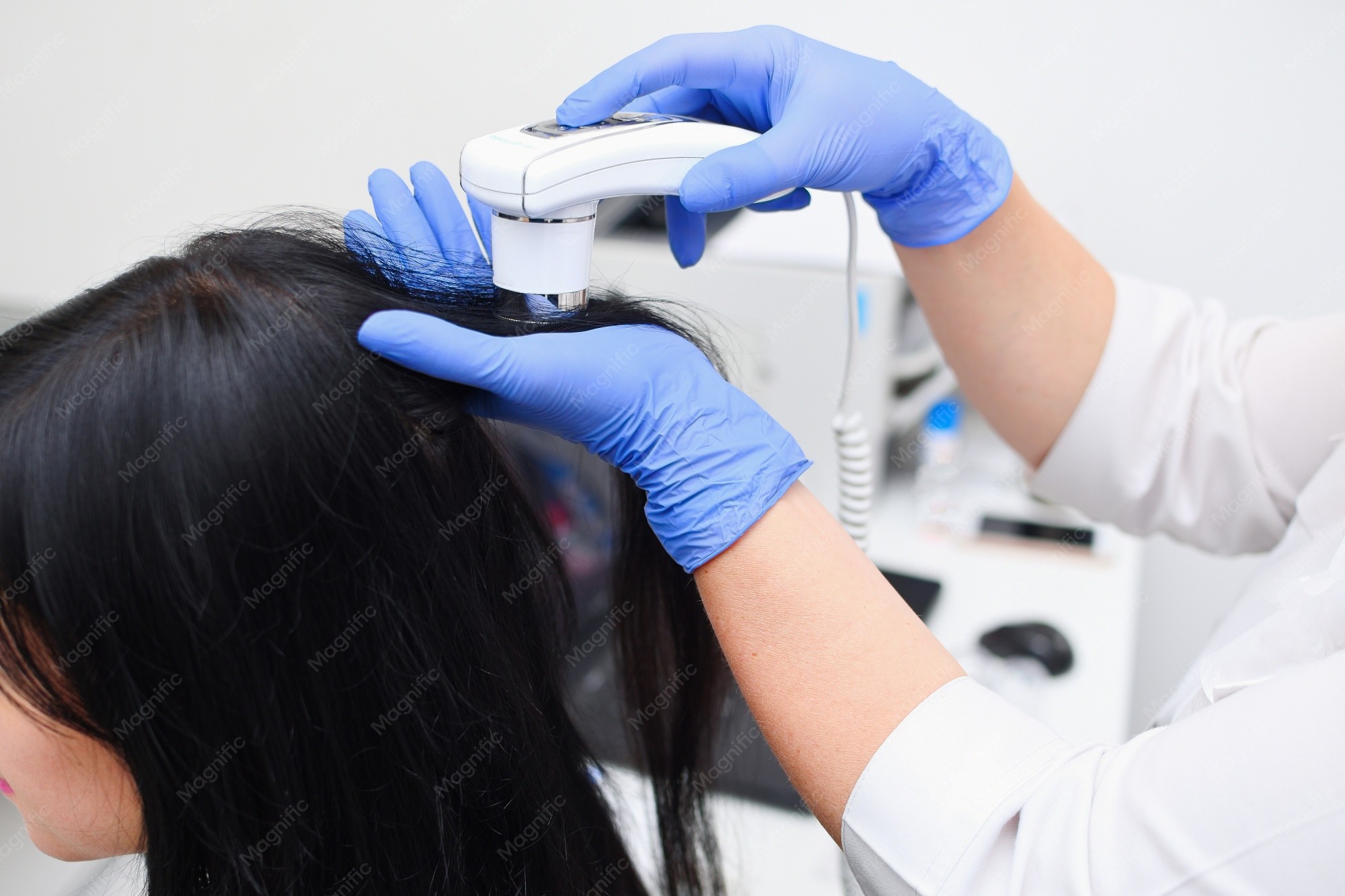
Look into hair loss treatment and two names come up almost every time: topical minoxidil and oral finasteride. A lot of people wonder why doctors recommend using both instead of just picking one.
The reason is simple. The two drugs target completely different problems. Minoxidil increases blood flow to the follicles, while finasteride reduces the hormone signal that attacks them. Once you understand that difference, it also makes sense why combining them is recommended, and why neither one works overnight.
Was minoxidil originally a blood pressure drug?
Minoxidil wasn't developed as a hair loss drug at all. It started out as a blood pressure medication, a vasodilator meant to widen blood vessels and bring hypertension down. Patients taking it noticed an unexpected side effect: hair started growing in places it hadn't before.
That side effect became the whole point of the topical version we use today. The idea was to take minoxidil's vessel-widening power and aim it squarely at the scalp.
How does minoxidil act on the hair follicle?
Hair follicles rely on tiny blood vessels for the oxygen and nutrients they need to keep producing hair. When minoxidil is applied to the scalp, it opens up small gateways in the vessel walls called potassium channels. Once those channels open, the muscle around the vessel relaxes, the vessel widens, and more blood reaches the area around the follicle.
It's not just about more blood flow, either. Minoxidil also increases the release of a signaling molecule called vascular endothelial growth factor, which helps new blood vessels form around the follicle. Think of it as widening the existing pipes while also laying a new one alongside them.
Hair cycles between a growth phase and a resting phase. As hair loss progresses, the growth phase shortens and more follicles sit in the resting phase. Minoxidil is thought to help these better-nourished follicles shift back into growth phase faster, and stay there longer.
Why do minoxidil results differ between people?
Applying minoxidil doesn't mean it starts working the instant it hits your skin. It has to go through one more transformation inside the skin before it can do its job.
Hair follicles contain an enzyme called sulfotransferase, and it's this enzyme that converts minoxidil into its active form, minoxidil sulfate, which is what actually triggers the vessel-widening effect. Think of minoxidil as a key and the enzyme as the hand that turns it.
How much of this enzyme a person has varies quite a bit from one individual to the next. People with plenty of the enzyme convert more of the active form from the same dose, so they tend to see a faster, more noticeable response. People with less of it may apply minoxidil just as consistently but feel the results are slower or weaker. Someone who saw dramatic changes in 8 to 12 weeks while you're still waiting isn't proof the product doesn't work for you, it comes down to this kind of individual variation.
How does finasteride prevent hair loss?
Finasteride takes a completely different route than minoxidil. Instead of blood flow, it targets a hormone signal.
One of the key drivers of male pattern hair loss isn't testosterone itself. It's dihydrotestosterone, or DHT, which forms when an enzyme in the body converts testosterone into this more potent form. DHT binds to receptors in the hair follicle far more strongly than testosterone does.
When DHT keeps acting on genetically sensitive follicles, those follicles gradually shrink in a process called miniaturization. Hair that once grew thick and long turns into thin, short, downy strands, and eventually stops growing altogether.
Finasteride blocks the enzyme, 5-alpha reductase, that converts testosterone into DHT. Suppress that enzyme and DHT levels in the body drop noticeably, easing the pressure that keeps miniaturizing the follicles. To put it in lock-and-key terms, this isn't picking the lock. It's shutting down the factory that makes the key in the first place.
Why does the crown improve while the hairline is slower?
Some people take finasteride and notice clear improvement at the crown, but barely any change along the front hairline.
This gap comes down to how sensitive follicles are to DHT depending on where they sit, which mostly means how many androgen receptors they express. Crown follicles and hairline follicles come from different origins developmentally, and how strongly they respond to DHT genetically also differs by location.
Crown follicles generally show a more pronounced response to DHT suppression, while the front hairline tends to respond more slowly or to a smaller degree. That's why it can feel like the crown is improving while the hairline stays stuck. It's less likely that the drug isn't working and more likely that different areas simply respond at different rates.
Why is minoxidil applied while finasteride is taken orally?
This difference also comes straight from how each drug works.
Minoxidil only needs to act locally on the blood vessels, so applying it directly to the scalp is the efficient approach. There's no need to widen blood vessels throughout the entire body, and keeping the effect localized to the scalp also limits any impact on overall blood pressure.
DHT, on the other hand, is a hormone that circulates through the bloodstream to every part of the body. Blocking the enzyme only at the scalp wouldn't meaningfully reduce the DHT being produced everywhere else. That's why finasteride is formulated as an oral medication, circulating through the body to lower enzyme activity system-wide.
You might wonder whether finasteride could just be applied to the scalp the way minoxidil is. Topical finasteride formulations do exist and are used in practice. But their effect on total body-wide DHT tends to be more limited than the oral version, which is why the systemic pill remains the standard approach.
Why does using both work better?
To understand why minoxidil and finasteride are paired together, it helps to remember that hair loss usually isn't caused by one problem. It's two problems happening at once.
- Finasteride handles the ongoing miniaturization driven by DHT, an approach aimed at the root cause.
- Minoxidil handles the nutrient and oxygen shortage in follicles that have already weakened, an approach aimed at supporting what's left.
- When both problems are progressing at the same time, fixing only one leaves the other still working against you. Addressing both pathways together has been reported to produce a complementary effect.
In short, while finasteride slows down the miniaturization process, minoxidil keeps the remaining follicles more active. Because they're knocking on different doors, studies have reported better outcomes from using both together than from either drug alone.
When do hair loss drugs start to show results?
Starting either drug doesn't mean thicker hair the next morning. That's simply because the hair growth cycle itself is slow by nature.
It takes a follicle at least 12 weeks to shift from the resting phase into the growth phase and grow hair long enough to actually notice. No matter how quickly a drug acts biochemically, each individual follicle still needs biological time to start a new cycle and produce a visible result. That's why most people are told to expect 3 to 6 months of consistent use before seeing a real change.
In a healthy scalp, most follicles are believed to sit in the growth phase, with only a small portion resting at any given time. As hair loss progresses, that balance shifts, and a growing share of follicles end up in the resting phase. Restoring that balance with medication means waiting for follicles that already slipped into resting phase to start a fresh growth cycle and grow long enough to show. So even though the drug may already be working inside the body, there's a natural lag before the results become visible on the outside.
Why does hair shed more at the start of minoxidil?
It's common to feel like more hair is falling out right after starting minoxidil. That's less a side effect and more a sign the drug is doing its job.
When minoxidil forcibly wakes up follicles that had been sitting in the resting phase and pushes them into the growth phase, the old hair occupying that spot sheds first to make room for new growth. That's what creates the impression of increased shedding during this window. This initial shedding phase usually settles down within 2 to 6 weeks, and is generally followed by newly grown hair filling back in.
References
Korean Dermatological Association, Ministry of Food and Drug Safety (MFDS), American Academy of Dermatology (AAD), and U.S. Food and Drug Administration (FDA).
Was this helpful?
About this article
Written by a practising aesthetic physician and intended for general education — not a substitute for individual medical advice.
Read next

Finasteride and Minoxidil: Differences and Combined Effect Compared
A clear look at how finasteride and minoxidil tackle male-pattern hair loss through completely different mechanisms, what the clinical evidence actually shows for each, why combining them tends to outperform either alone, and what to know about sexual side effects and the pregnancy warning.
By Dr. Kim
Retinol Adjustment Period: Why Does Skin Flip When You First Start?
A closer look at how retinoids treat wrinkles and acne through two separate pathways, speeding up cell renewal while boosting collagen production. Here is why skin flakes and turns red right after you start, and how to build tolerance without irritation.
By Dr. Kim

Ontanium Treatment: How Onda and Titanium Work Together, and Results Compared
Ontanium is the name people use for a combo treatment that pairs two separate devices, Onda and Titanium, back to back in one session. Onda uses microwave energy to heat the dermis and fat layer, while Titanium fires a triple-wavelength laser that reaches both deeper tissue and the skin surface at once. Because the two devices generate heat through completely different physics, running them together closes gaps in depth that neither one covers alone.
By Dr. Kim