Gummy Smile Botox Effects, Duration, and Side Effects
By Dr. Kim9 min read

A smile that shows a good stretch of upper gum is often called a gummy smile. It can give a bright, open impression, but some people feel self-conscious about it and end up holding back their smile. Botox is one of the simpler ways to address this.
Not every gummy smile is the same, though. When the cause is muscular, Botox works well. When it comes from the gums or the jawbone, Botox alone falls short. That is why two people can get the same treatment and one sees a clear improvement while the other barely notices a difference. Figuring out the cause first is what makes the treatment work. Here is what the research actually shows: what a gummy smile is, which causes respond to Botox, which lip-elevating muscles get treated and where, and how strong the results are and how long they last.
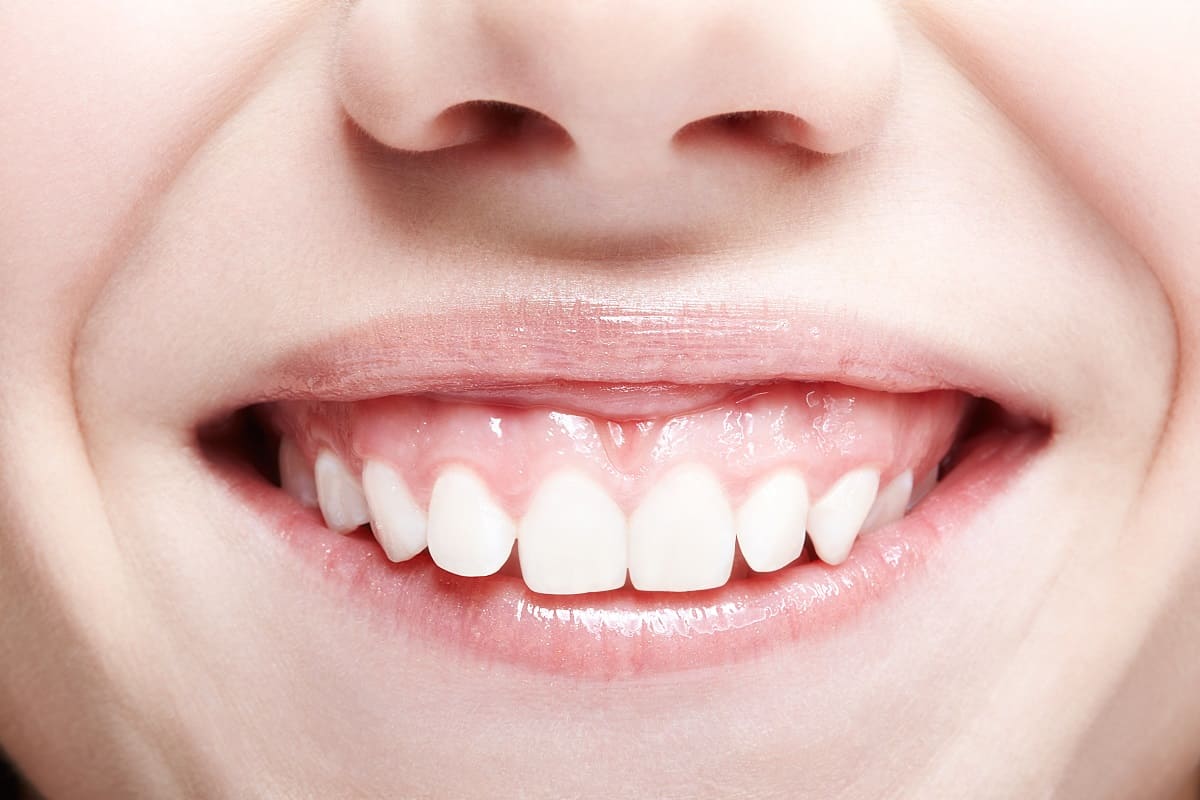
How many millimeters of visible gum counts as a gummy smile?
A gummy smile refers to a smile that shows a large amount of gum above the upper teeth. In everyday language it is called a gummy smile; the clinical term is excessive gingival display.
There is a rough guideline for this. Showing about 1 to 2mm of gum on a wide smile is considered normal. Once gum exposure passes 3mm, it is classified as a gummy smile, and 6mm or more is considered pronounced. A small amount of visible gum can actually read as youthful and lively, so many people do not need to treat it at all.
A gummy smile is more common than people think. It shows up in roughly 10 percent of people in their twenties and thirties, slightly more often in women than men, and it naturally becomes less visible with age as the upper lip drops a little. It is not a disease. It is simply a facial trait that comes from how far the upper lip rises when smiling, balanced against the gum, teeth, and jawbone.
That is why the starting point for diagnosis is simply measuring how many millimeters of gum show up in a smiling photo. If it is just a slight amount, there is no need to treat it. If it passes 3mm and bothers you, the next step is identifying the cause and choosing an approach. Here is how those causes break down.
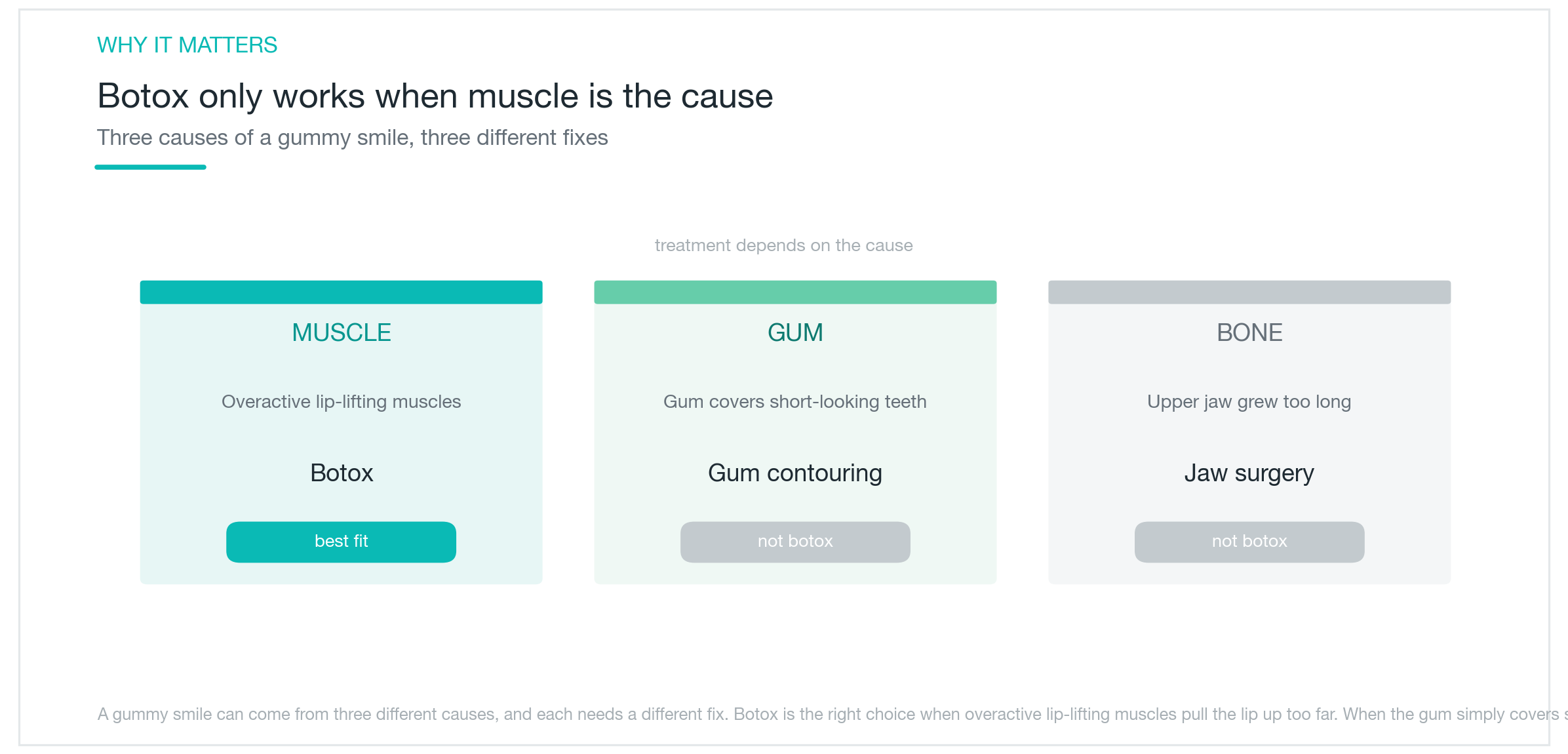
Does Botox work when the cause is gum or bone?
Even when the smile looks the same, the underlying cause can vary, and the right treatment depends on that cause. There are three broad categories.
First, a muscular cause. This is when the muscles that lift the upper lip are strong or overactive, pulling the lip up too far when smiling. This is the type Botox works best for. Softening the muscle strength a little means the lip rises less when smiling, so less gum shows.
Second, a gum-related cause. Here, the teeth have fully grown in, but the gum tissue still covers part of them instead of receding, so the teeth look short and the gum looks wide. This is called delayed passive eruption. It calls for gum contouring or crown lengthening to reshape the gum line, and Botox will not fix it.
Third, a skeletal cause. Here the upper jawbone has grown too long vertically, bringing the whole gum line down with it, a condition called vertical maxillary excess. Orthognathic surgery on the jawbone is the real fix here, and Botox has limited effect. Because of this, getting Botox alone when the real cause is bone or gum tissue can leave you disappointed with the results, which is why identifying the cause first matters. The good news is that most common gummy smiles do come from a muscular cause, and Botox can noticeably soften them in many of these cases.

Which lip-lifting muscles are injected, and how many units?
The muscles that lift the upper lip cluster together beside the nostril. Gummy smile Botox targets these muscles, and there are three key ones.
The innermost one, running vertically along the side of the nose, is the levator labii superioris alaeque nasi, or LLSAN. It is the main muscle behind gum showing near the front teeth. Next to it sits the levator labii superioris, and a bit further out is the zygomaticus minor, which is involved in gum showing behind the canine teeth. If the Botox spreads further out to the zygomaticus major, it can weaken the muscle that lifts the corner of the mouth and make the smile look off, so it is important not to inject too far laterally.
There are two common approaches to injection placement. One is the classic method: injecting into the small hollow beside the nostril, about 3 to 5mm out from the nostril edge, using roughly 2.5 units per side. The other targets the Yonsei point, the spot where all three muscles converge, identified in an anatomical study from Yonsei University. It sits where a vertical line dropped from the base of the nostril, offset 1cm laterally, crosses a horizontal line drawn 3cm above the corner of the mouth. A single injection here reaches all three muscles at once, so there is no need for multiple needle sticks. Doses run about 2 to 3 units per side, usually 4 to 10 units total for both sides. Keeping it symmetrical, starting low, and adjusting based on how the muscle responds is the safer approach.
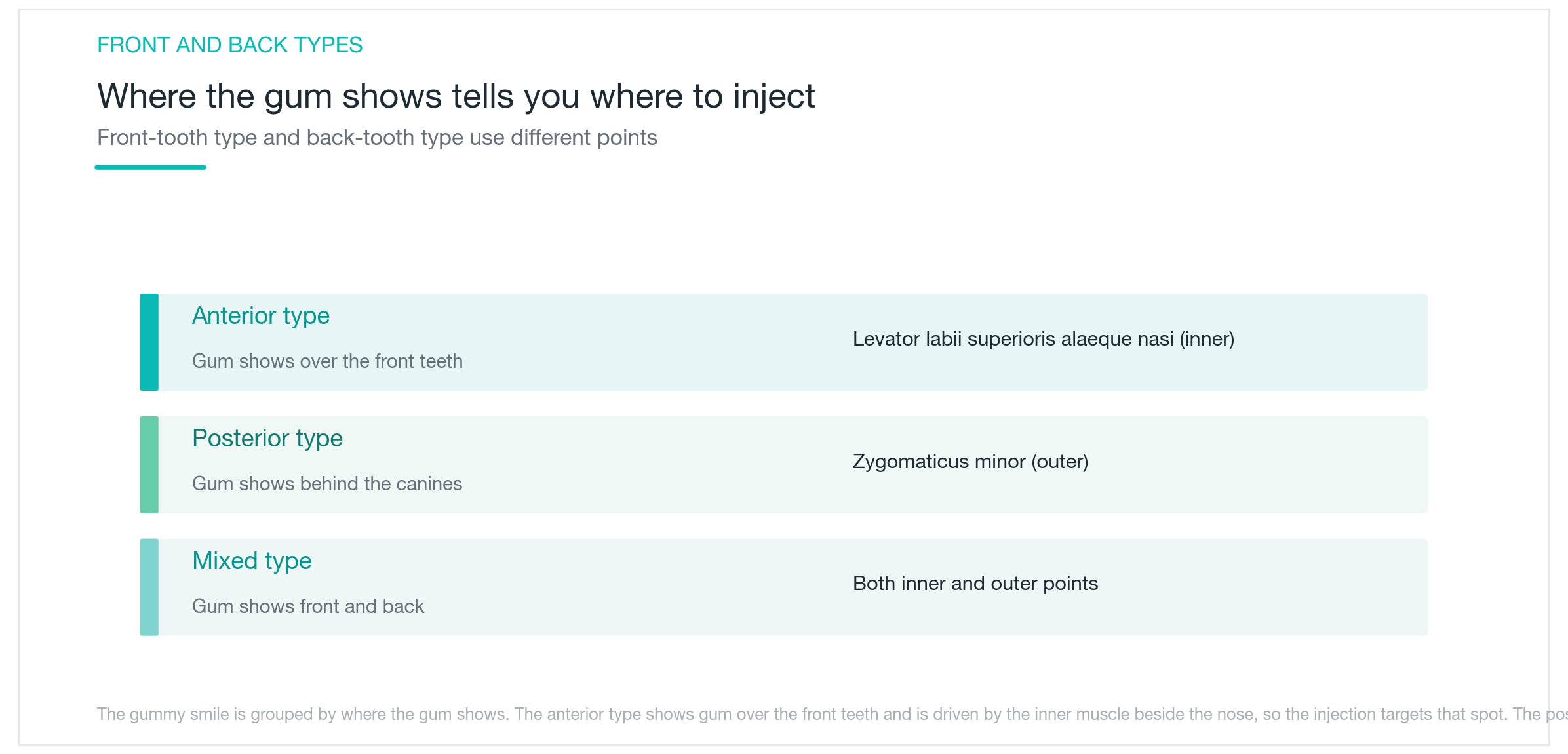
Injection site differences for incisor and canine types
Some approaches place the injection differently depending on exactly where the gum shows. One study divided gummy smiles into several types based on the location of gum exposure.
The incisor type shows gum mainly above the front teeth. Since the LLSAN, the innermost muscle, drives this, treatment targets that spot. The canine type shows gum behind the canine teeth, so a light dose to the zygomaticus minor is added. In this case the dose is smaller than for the incisor type, and the injection is kept medial to avoid the zygomaticus major. A mixed type, where both front and back gum show, targets both spots, and an asymmetric type, where one side is worse, gets the dose adjusted to match the more affected side.
The reason for sorting patients into types is simple. If the gum shows in front but the injection only covers the outer muscle, or if it shows in back but only the inner muscle gets treated, the result falls short of what you would want. So checking exactly where the gum shows during an actual smile, and placing the injection accordingly, is what determines the outcome. In one study that used this location-based approach, gum exposure area dropped by about 75 percent on average. It was a small early study with only 16 participants, so it is best read as a directional finding rather than a firm number.
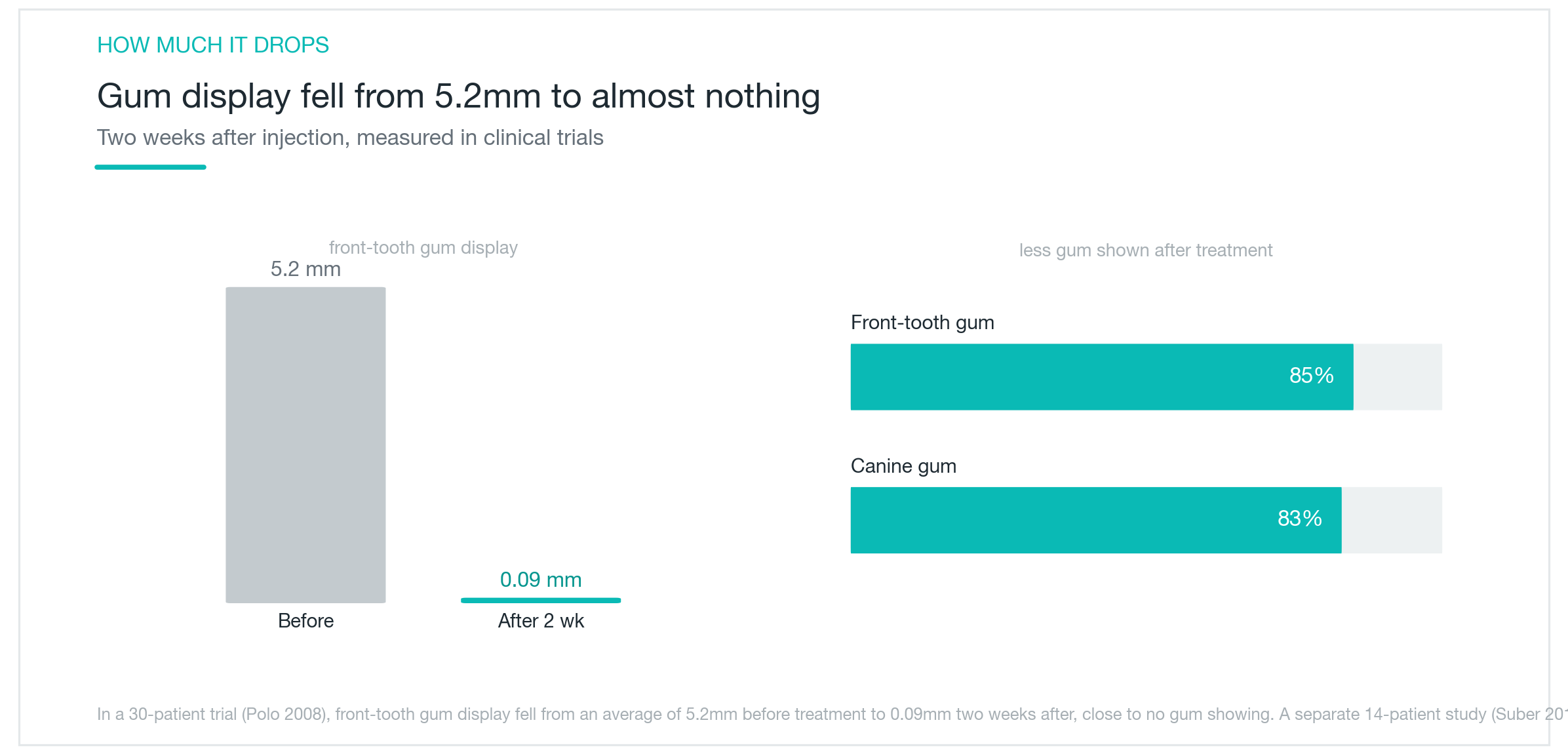
When does it start to work and how long does it last?
The effect is fairly well documented in the literature. In one key study of 30 people, gum exposure at the front teeth dropped from an average of 5.2mm before treatment to 0.09mm two weeks later, bringing it down to a level where the gum is almost invisible. Another study found an 85 percent reduction in front-tooth gum exposure and an 83 percent reduction at the canines.
The timeline is also well mapped out. Botox starts working somewhere between 2 days and 2 weeks after injection, and the effect peaks between 2 and 4 weeks. From there it gradually fades. Results typically last about 3 to 6 months, shorter than Botox in areas like the forehead or between the brows. The muscles around the mouth are in constant motion, so the effect wears off a bit faster there.
Maintaining the results means repeating the treatment. The first few sessions are usually spaced 3 to 6 months apart, and the interval can stretch out once the muscle habit softens a little. One thing worth noting is that the more severe the gum exposure, the harder it is for Botox alone to fully correct it. When exposure passes 6mm, Botox tends to have a weaker effect, so it is worth considering it alongside another approach.
Pros, cons, and side effects compared with surgery
Botox is not the only way to address a gummy smile. Lip repositioning surgery, which removes a small strip of mucosa on the inside of the upper lip to limit how far it can rise, is a common alternative. Beyond that, gum contouring is used when the cause is gingival, and orthognathic surgery when the cause is skeletal.
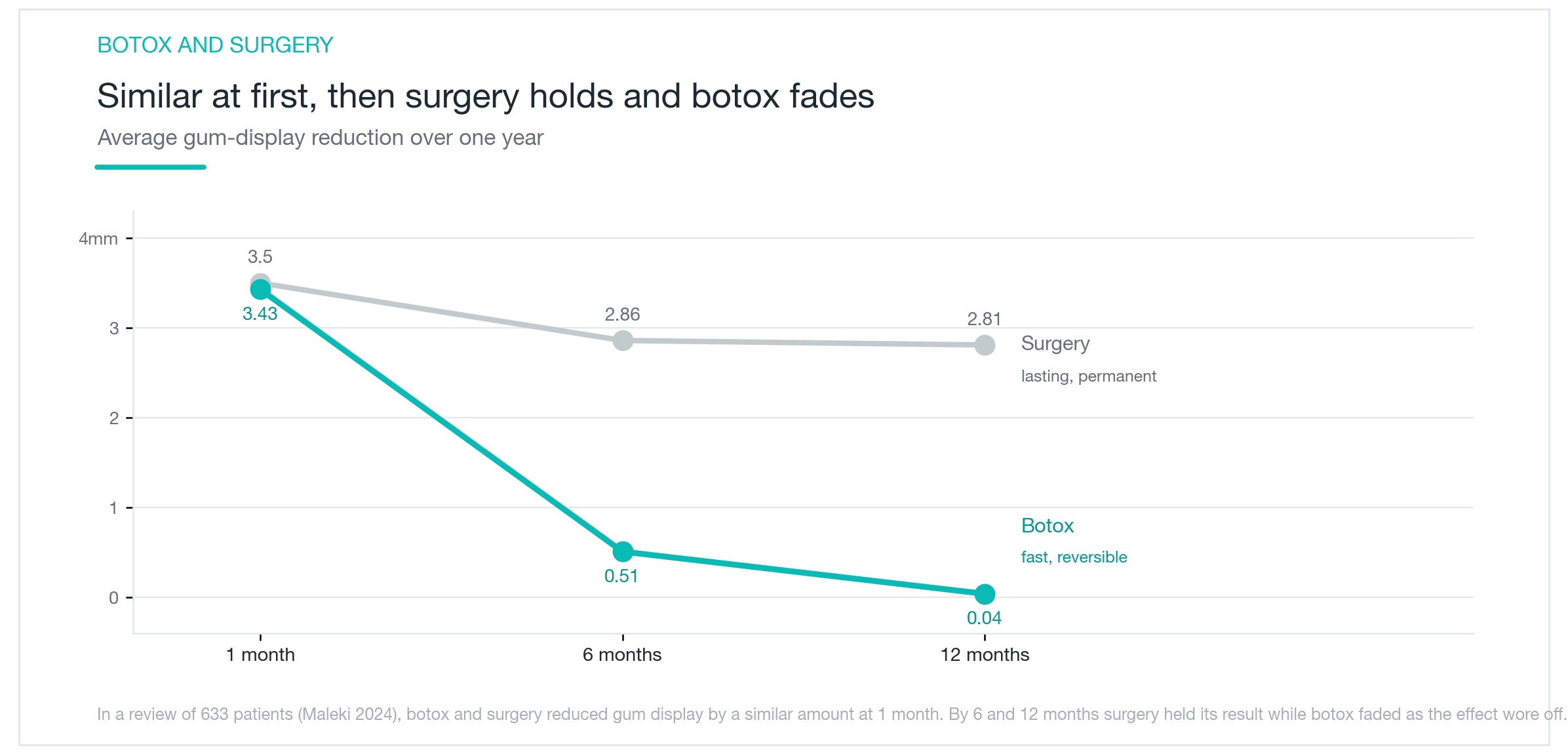
A comparative study pooling over 600 patients shows a clear pattern. At one month, Botox and surgery produced similar reductions in gum exposure. But by 6 and 12 months, surgery held its results while the Botox effect wore off and gum exposure returned to baseline. In short, Botox wins on speed, convenience, and reversibility, and surgery wins on durability.
So the choice really depends on the situation. For a mild, muscle-driven gummy smile, Botox is a reasonable first step, and it also suits people who find surgery too much of a commitment or want to test the effect first. If gum exposure is more severe, or you want results that last, surgery may fit better, and some clinics combine both to boost the early results.
It is worth knowing the side effects too. Soreness or bruising at the injection site is common and settles quickly. If the dose is too high or unevenly split between sides, the smile can end up asymmetric, or the upper lip can feel long and stiff, making speech or expressions slightly awkward. There is no reversal agent, but the effect fades on its own as the Botox wears off. That is why starting with a low dose, keeping both sides even, and checking placement against an actual smile matters so much. When the cause is properly identified as muscular, gummy smile Botox is a quick way to make a smile feel noticeably more relaxed.
Was this helpful?
About this article
Written by a practising aesthetic physician and intended for general education — not a substitute for individual medical advice.
Read next
Mouth Corner Botox: Results, How Long It Lasts, Dosage, and Side Effects
A clear look at how Botox lifts downturned mouth corners, from weakening the depressor anguli oris so the elevator muscles win out, to injection sites and units, onset and duration, combining with filler, and the side effects worth knowing, all backed by real clinical data.
By Dr. Kim

Trapezius Botox Effect and Duration, Including Side Effects and Who It Suits
Trapezius Botox, known as Bobby Botox, relaxes the muscle at the top of the shoulders to make the neck look longer and the shoulder line smoother. Here is an easy, research backed look at how it slims the shoulders, how long results last, whether shoulder weakness or other side effects show up, and who makes the best candidate.
By Dr. Kim

Effects After Lifting Treatment and Duration, Including Swelling and Aftercare
A look at downtime and recovery after non-surgical lifting treatments like HIFU, RF, and thread lifts, how long the effect lasts, and when retreatment makes sense, based on real study numbers. Also separates aftercare advice that's well supported by evidence, like SPF and not smoking, from advice that's closer to clinical folklore.
By Dr. Kim