Gouri Liquid PCL Effects: When They Appear and How Many Sessions
By Dr. Lee7 min read
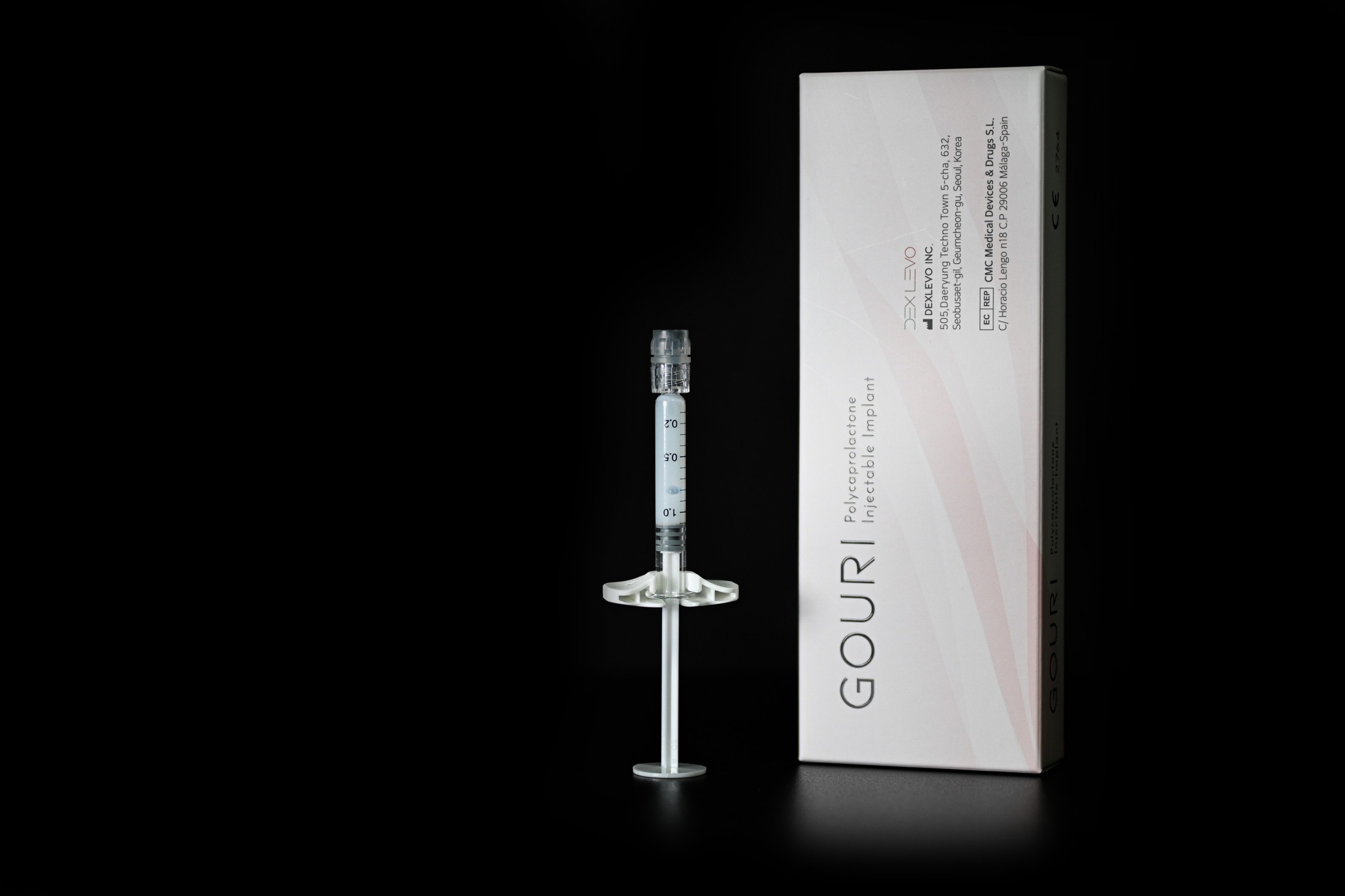
If your whole face feels like it has lost its bounce, filling in one spot with a filler, say the cheeks or the smile lines, often does not feel like enough. That is where Gouri Liquid PCL has been getting attention lately. Instead of targeting a single area, it is described as lifting firmness gently across the entire face, and that idea alone has drawn a lot of curiosity.
But the word liquid sounds unfamiliar in this context, and PCL is not exactly a household name either. Naturally, people want to know how the effect actually happens and how long it lasts. To answer that, it helps to start with what PCL does inside the body and why the liquid form is different from what came before.
How is liquid PCL different?
PCL, short for polycaprolactone, was originally used in surgical sutures. It is a polymer that slowly breaks down and disappears inside the body over time, essentially dissolving on its own. That is the same reason surgical stitches vanish naturally within a year or two, and that same property means PCL does not linger in the body indefinitely. When used in cosmetic injections, it is usually shaped into microscopic particles suspended in a gel. Most PCL fillers on the market today are this particle type.
Gouri Liquid PCL takes a different route. Rather than forming visible particles, it keeps the material in something closer to a dissolved liquid state. Without clumping, it does not gather into a single mass at the injection site and instead spreads much more widely through the surrounding tissue. Think of dissolving sugar straight into water versus dropping a sugar cube in one spot: the first sweetens the whole glass evenly, while the second makes only that one spot intensely sweet. That difference is essentially what separates a treatment that fills one area from one that changes the texture of the whole face.
The injection technique reflects this too. Rather than injecting deep into one or two points, practitioners typically spread it thinly across multiple layers over a broad area. This shallow, widespread placement is considered key to getting the soft, diffuse effect the liquid form is known for.
What changes when there are no particles?
With particle fillers, stimulation concentrates wherever each particle sits. That produces a localized reaction around the injection point, and volume and firmness improve noticeably right there. Liquid PCL works differently. Because it flows rather than clumping, the stimulation spreads shallowly and evenly across a wide area instead of piling up in one spot.
A useful comparison is gardening. Particle fillers are like dumping fertilizer in one bed, while the liquid form is closer to watering the entire garden evenly with a sprinkler. So instead of one area standing out, the skin texture and firmness across the whole face tend to lift together at a similar pace. That is exactly why the liquid form gets chosen when the goal is overall facial firmness rather than one specific area.
Because the stimulation is not concentrated in a single spot, patients are also less likely to feel bumps or lumps under the skin afterward. For anyone getting filler for the first time, that even spread is part of why the result tends to look natural rather than obviously "done" in one area.
How collagen gradually builds up
Once PCL enters the body, it is recognized as a foreign material, and the immune system responds. This is called a foreign body reaction, which sounds alarming but is simply the natural process of immune cells surrounding and processing an outside substance. Macrophages, the immune system's cleanup crew, move in first, and their signals activate fibroblasts, the cells responsible for producing collagen.
Collagen acts like the support beams holding up the skin. As we age, those beams thin out and weaken, which is why skin sags and loses firmness. The fibroblasts that PCL activates start rebuilding those beams, laying down new collagen bit by bit. It is similar to a construction crew replacing old support columns one at a time instead of tearing them all down at once. The body fills in new collagen gradually, on its own schedule. This underlying mechanism is the same whether the PCL is particle or liquid form, but because the liquid version spreads stimulation across a wider area, the resulting collagen production is understood to happen gently across the whole face rather than in one concentrated spot.
How does its purpose differ from filler?
Volume fillers like hyaluronic acid (HA) work by physically filling space the moment they are injected. In an area that has genuinely lost volume, like sunken cheeks or deep smile lines, they act almost like packing soil into a hole, producing an immediate filling effect. That is why results are often visible right after the procedure.
Liquid PCL takes a different approach. Right after injection, it does not add much volume at all. Its real purpose is to prompt the body to build its own collagen over time. Rather than instantly filling a hollow spot, it is closer to gradually improving the thickness and firmness of the skin across the whole face. If your cheeks are visibly sunken, a volume filler that fills that space right away makes more sense. But if no single area looks hollow and the issue is more that the whole face feels thin and lax, a localized filling approach will not really solve that. In short, a volume filler suits people who need a specific area filled, while liquid PCL is considered a better fit for lifting overall tone and firmness across the face.
When do results start to show?
Since new collagen takes time to form, the effect of liquid PCL is understood to build gradually over 4 to 12 weeks after treatment rather than showing up right away. On the day of the procedure itself, you may not notice much of a change at all, and it is common for the skin to feel gradually firmer and more even as the weeks pass.
The PCL material itself slowly breaks down and disappears from the body, but the collagen it triggers is tissue your own body produced, so it is reported to stick around for roughly 6 to 12 months even after the material has fully dissolved. That is part of why people describe the results lasting longer than a typical volume filler, though the exact timeline varies depending on individual skin condition and metabolic rate, since collagen production speed differs somewhat from person to person. Because of that variation, comparing photos a day or two after treatment is not very useful. Taking comparison photos a month or two apart tends to make the actual change much easier to see.
Since the results build gradually, it also helps to go in without expecting an instant transformation. Unlike a volume filler that shows an obvious difference the moment you look in the mirror, this kind of change is often something people around you notice before you do.
How many sessions, and at what interval?
Because a single round of stimulation does not maximize collagen production on its own, the typical recommendation is 2 to 3 sessions spaced 4 to 6 weeks apart.
- Multiple sessions beat a single one. Collagen builds up gradually with each round of stimulation, so spreading treatment across 2 to 3 sessions rather than doing it all at once tends to produce a better overall result.
- Do not space sessions too close together. The PCL from an earlier session needs time to trigger its reaction and generate collagen, so injecting again too soon can cause the responses to overlap, leading to more swelling or a foreign body sensation.
- The number of sessions needed varies by area and skin condition. Thinner skin with more pronounced sagging tends to take longer for collagen to build up, so it is safer to work out the right number of sessions with a consultation based on your own skin.
Light massage is sometimes recommended after treatment, with the goal of helping the liquid spread evenly through the tissue. Basic aftercare, like sun protection and avoiding harsh stimulation, matters too. Neglecting that care can interfere with the collagen settling into place, so the 1 to 2 weeks after treatment deserve as much attention as the procedure itself.
A single round of treatment does not mean the effect lasts forever, either. Collagen gradually declines again over time, so if you want to hold onto the firmness you built, it is a good idea to check back in with a consultation around 12 to 18 months later to see if another round makes sense.
References
Korean Dermatological Association, Ministry of Food and Drug Safety (MFDS), American Academy of Dermatology (AAD), and U.S. Food and Drug Administration (FDA).
Was this helpful?
About this article
Written by a practising aesthetic physician and intended for general education — not a substitute for individual medical advice.
Read next
Rejuran Results: When Do They Appear, and How Many Sessions and Intervals?
Rejuran places DNA fragments extracted from salmon into the skin, targeting the skin's own regeneration signals rather than adding volume. Here's a principle-first look at why this ingredient triggers fresh collagen production, how its purpose differs from a filler's, and why the treatment schedule and intervals are set the way they are.
By Dr. Kim
Why Sculptra Takes 4 Weeks to Show, and How Long It Lasts
Sculptra volume does not appear right after injection. It builds gradually over 4 to 12 weeks because the ingredient itself does not fill space instantly, it works by stimulating collagen production in the skin. Here is a close look at how PLLA triggers that collagen response and why treatment is spread across 2 to 4 sessions.
By Dr. Lee
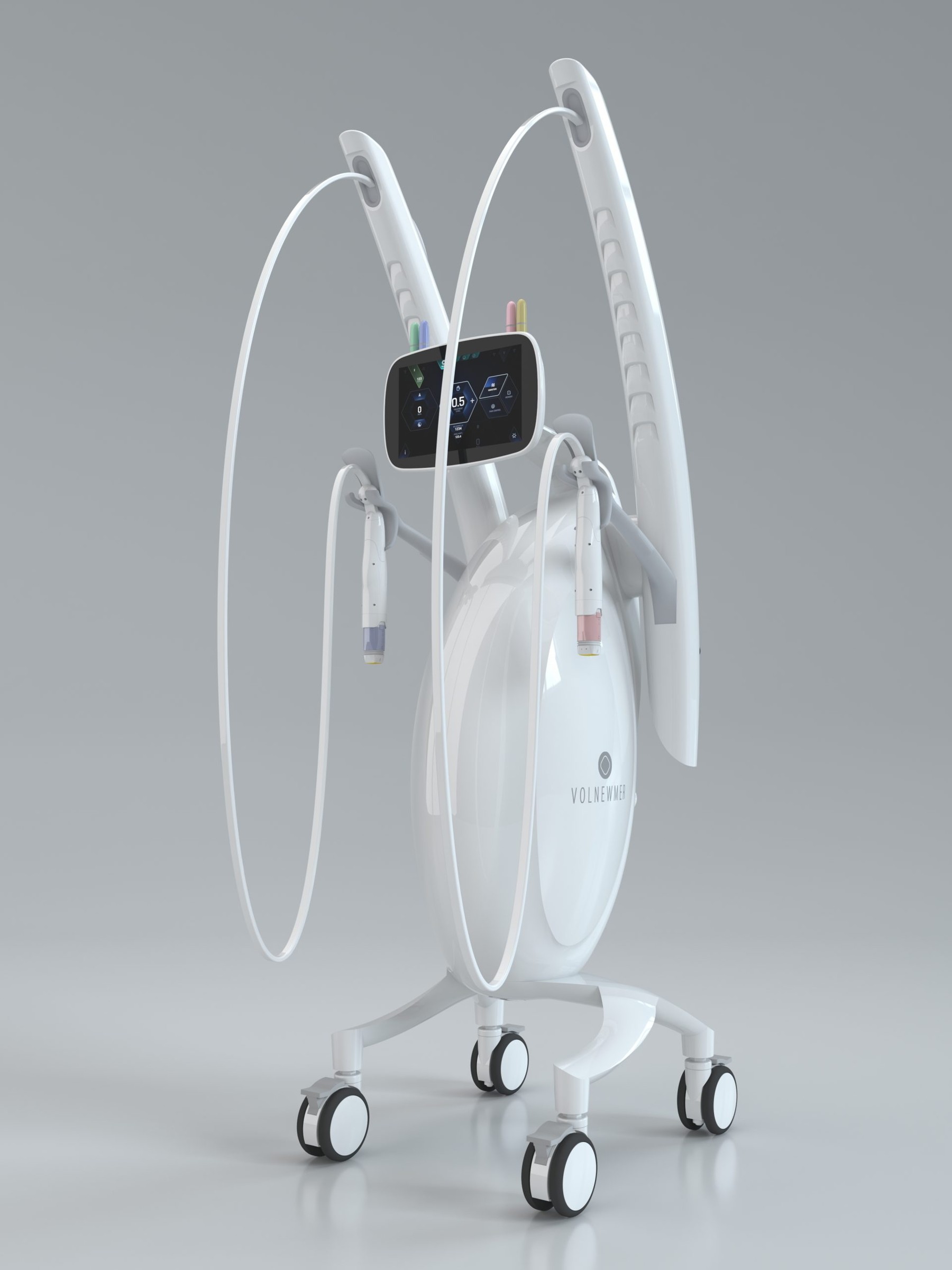
Volnewmer Radiofrequency: Session Design and When Results Appear
A closer look at why Volnewmer relies on one strong burst of radiofrequency energy instead of several gentler passes, how that heat reaches collagen deep in the dermis, and when you can expect results to show up and how long they tend to stick around, explained through simple, everyday comparisons along with what to know before booking a session.
By Dr. Lee