Glutathione Whitening Injection Effects and Side Effects, and How It Differs From the Oral Form
By Dr. Lee6 min read

If you have been researching skin brightening, you have probably come across the baekok injection, the popular IV glutathione drip. The before-and-after stories are compelling, and plenty of people say they have seen real results. So it is worth understanding what has actually been confirmed by research and what is still expectation before you decide whether to get one.
Here is the big picture upfront. The baekok injection delivers glutathione, a powerful antioxidant, directly into a vein. The idea that glutathione can brighten skin does have scientific backing, but most of that evidence actually comes from oral glutathione studies. The IV injection has a large following of satisfied users, yet the clinical trial data behind it is still thin. Rather than dismiss it or oversell it, this article walks through what each form has proven, and how to get the injection safely if you choose to.
How does a whitening injection brighten skin?
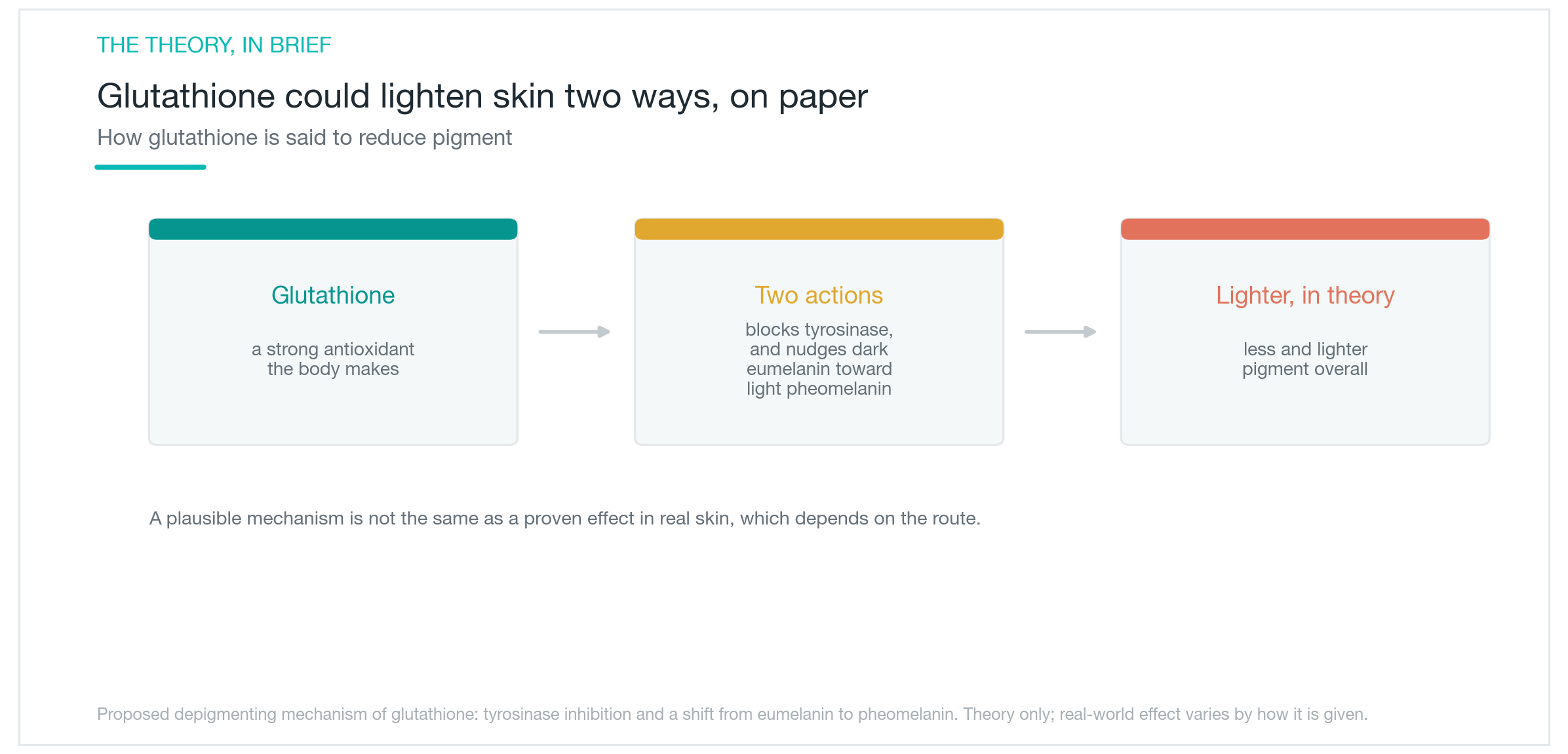
Glutathione is a potent antioxidant made naturally inside every cell in the body. Its core jobs are shielding cells from oxidative stress and supporting liver detoxification. Two separate mechanisms connect it to skin tone.
The first is tyrosinase inhibition. Tyrosinase is the enzyme that drives melanin production, so slowing it down means less pigment gets made. The second is a shift in melanin type. There are two forms of melanin: dark brown eumelanin and lighter pheomelanin. Glutathione is thought to nudge production toward the lighter type, which would make the overall complexion appear brighter.
Glutathione has also been used in hospitals for decades as a supportive treatment in chemotherapy, liver disease, and poisoning cases, so its basic safety profile is reasonably established. That said, a plausible mechanism is not the same as a proven clinical effect. How well the mechanism translates to actual skin brightening depends heavily on how the compound enters the body. The oral and IV routes are genuinely different in terms of both effect and risk, and they deserve separate consideration.
Is there evidence for oral glutathione?
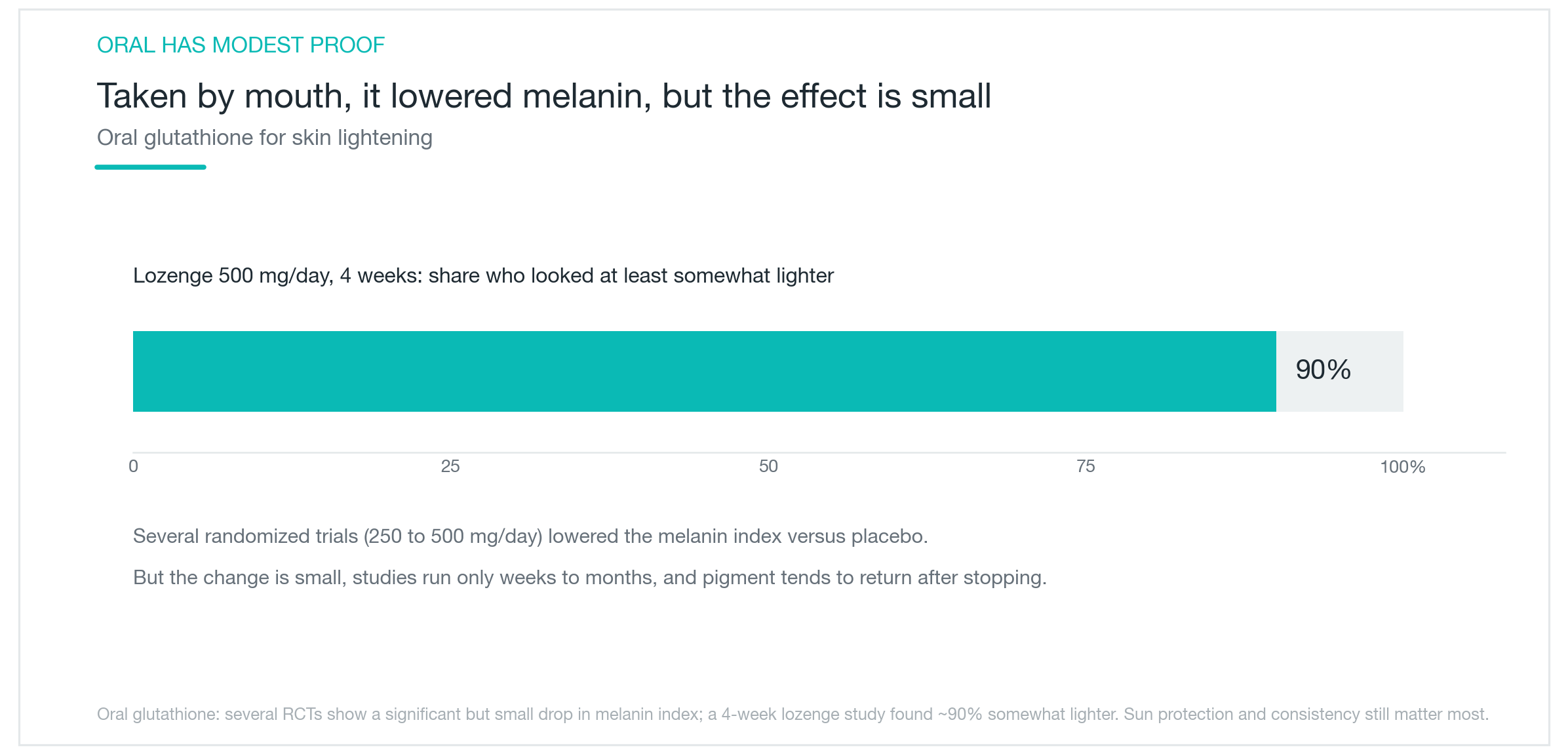
This surprises many people, but oral glutathione has the strongest evidence base of the three forms. Several randomized controlled trials found that participants taking 250 to 500 mg per day had a significantly lower melanin index than those who took a placebo. The melanin index is a device-measured score that reflects how much pigment the skin contains.
One study using a 500 mg glutathione lozenge daily for four weeks found measurable melanin reductions in both sun-exposed and covered areas, with roughly 90% of participants reporting at least some brightening. Topical 2% glutathione has also reduced melanin in trials, and combining oral and topical glutathione outperformed either one used alone.
There are honest limitations worth acknowledging. The effect size is generally modest, study durations ranged from a few weeks to a few months, and pigment tends to return after stopping. Oral glutathione is a legitimate option backed by real data, but it is a gradual, maintenance-oriented tool rather than a dramatic transformation. It works best alongside daily sunscreen. If topicals alone have not been satisfying, oral glutathione is a reasonable next step with meaningful evidence behind it.
Are there studies confirming the effects of the whitening injection?
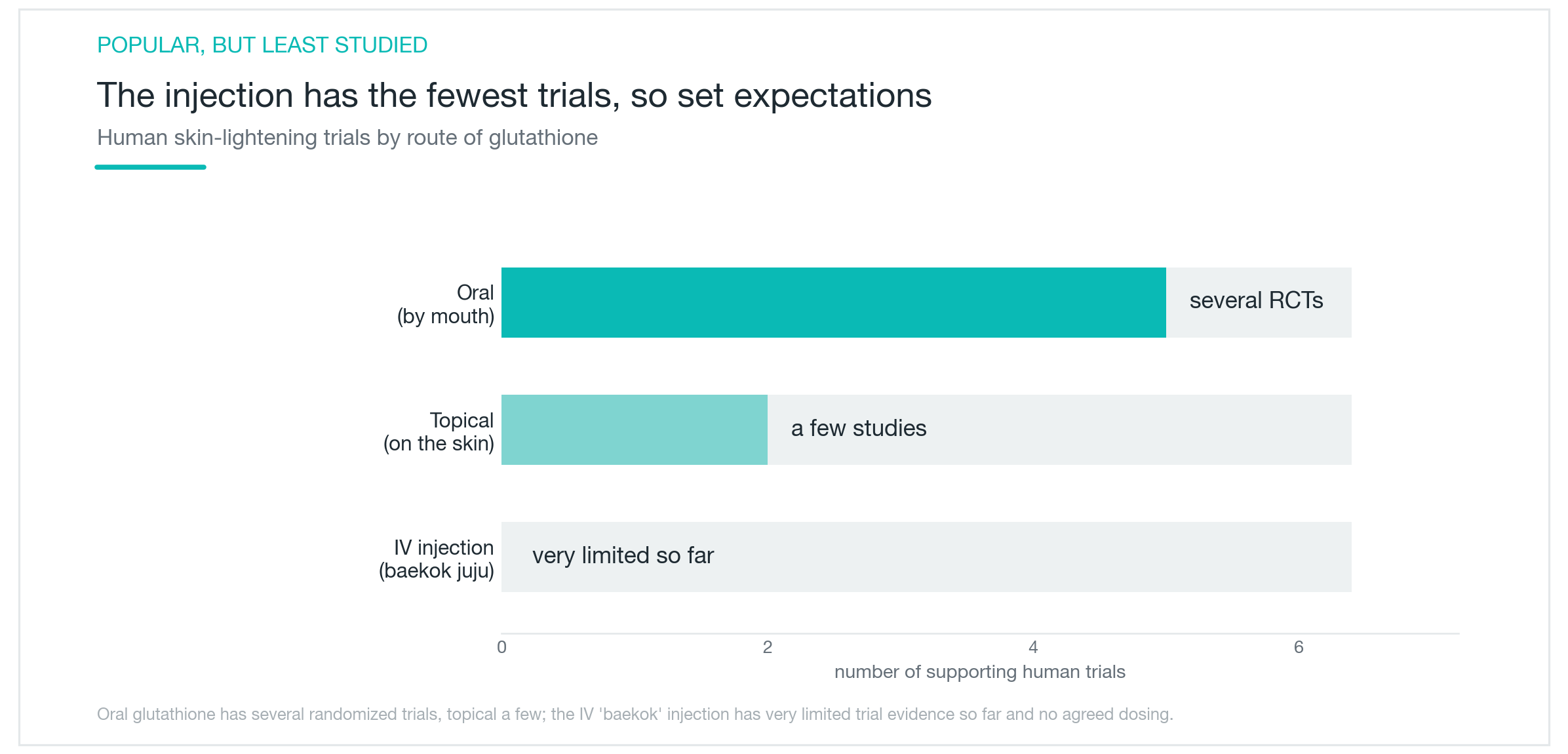
In Korea, the most popular form is the IV glutathione drip, the baekok injection. Anecdotal reports of rapid brightening are everywhere. When you search for the clinical evidence, however, the picture is much thinner than you might expect.
Well-designed human trials specifically validating IV glutathione for skin brightening are still scarce, and there is no established standard for dose, frequency, or duration. This makes it genuinely difficult to tell whether the quick glow many users describe reflects actual melanin suppression by glutathione, a temporary plumpness from IV hydration, or the positive expectations that come with any clinic visit. That uncertainty does not mean the effect is absent.
What matters is the distinction between individual experience and clinical proof. Many people are satisfied with the injection, and that is worth taking seriously. But satisfaction in a personal account does not guarantee the same result for everyone, and the lack of controlled data means variability in outcomes remains poorly understood. A realistic expectation is that IV glutathione may offer a supportive brightening benefit, not that it delivers dramatic or guaranteed whitening for every person.
Intravenous injection side effects and safety conditions
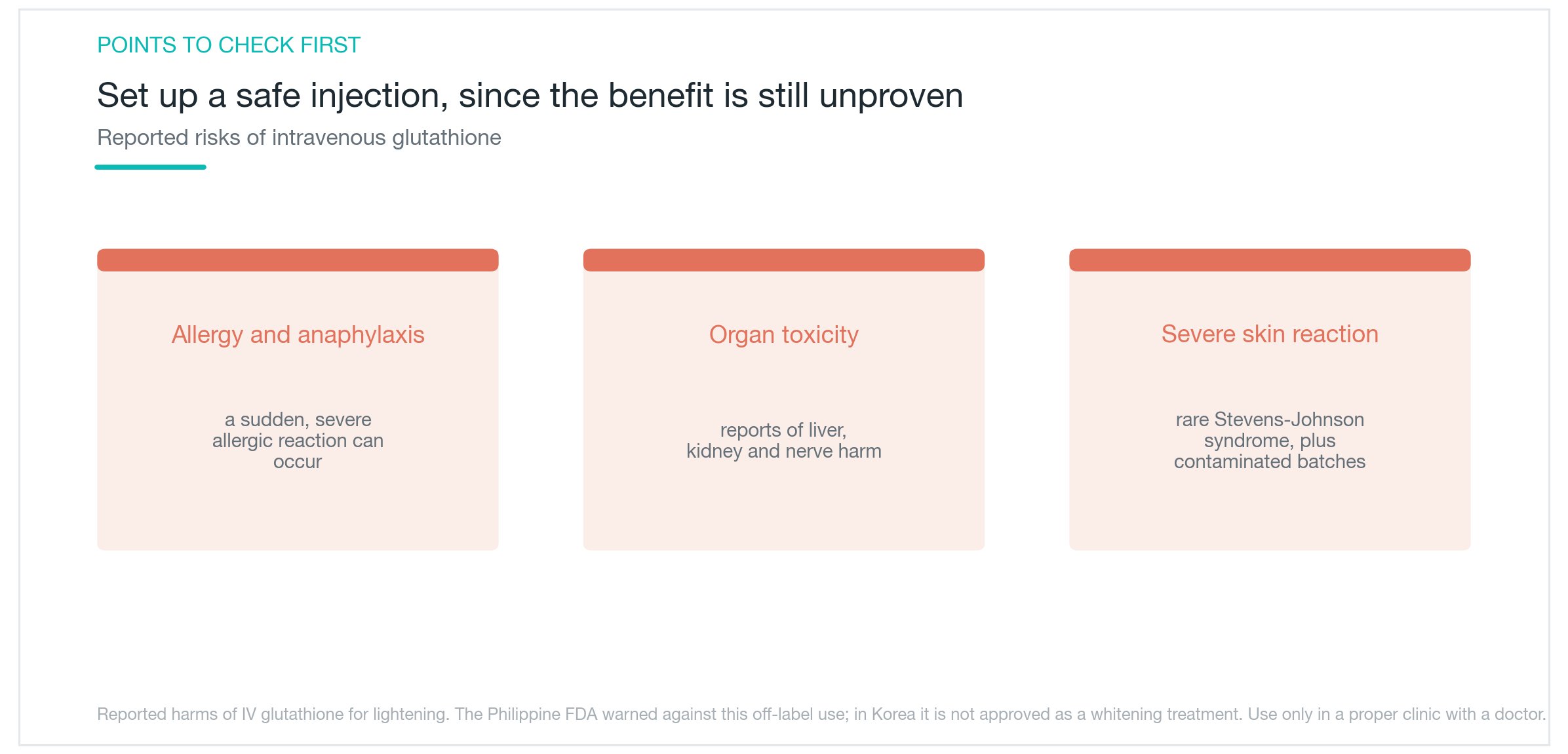
Safety matters just as much as the efficacy question. The IV route carries risks that oral and topical forms do not. Reported adverse events from glutathione injections include anaphylaxis, liver and kidney toxicity, peripheral neuropathy, and, rarely, Stevens-Johnson syndrome, a severe reaction affecting the skin and mucous membranes.
There have also been product-quality concerns. Some batches of injectable glutathione tested across multiple countries showed endotoxin levels above acceptable limits, and contaminated products are thought to have caused several of the serious reactions on record. In response, the Philippine FDA issued an official warning against using glutathione injections for cosmetic whitening. In Korea, injectable glutathione is likewise not approved for whitening use.
None of this means the injection is off-limits. It does mean that conditions matter. Getting the injection at a licensed clinic, confirming the product source, and disclosing any history of allergy, liver or kidney disease, or pregnancy beforehand are basic steps that substantially reduce risk. High-dose cocktail infusions that combine glutathione with multiple other compounds add more variables, so understanding exactly what is in the drip before you start is worthwhile.
Order of whitening attempts and comparison by form
Wanting brighter skin is entirely reasonable. The important thing is getting the sequence right. Sunscreen comes first, and it is the most effective single step. UV exposure is the primary driver of pigmentation, so daily broad-spectrum sun protection prevents further darkening even before any active treatment begins.
After sunscreen come topical ingredients with a solid evidence base. Vitamin C, niacinamide, tranexamic acid, and hydroquinone all belong in this category.
If you want to add glutathione, the oral form has the most clinical support of the three. If you want the IV injection, approach it as a supplementary measure with calibrated expectations, choose a reputable clinic, and make sure the safety conditions above are met. The table below summarizes the evidence and safety profile for each form.
| Form | Brightening evidence | Safety profile |
|---|---|---|
| Oral glutathione | Multiple trials showing reduced melanin index; effect is modest | Generally well-tolerated; mild GI discomfort possible |
| Topical glutathione | Melanin reduction shown; better combined with oral form | Low irritation potential |
| IV injection (baekok) | Many anecdotal reports; dedicated clinical trials still limited | Risk of anaphylaxis and other reactions; product quality and clinic credentials are essential |
The honest picture is this: the baekok injection has a large following and real individual success stories, but the science has not yet caught up with its popularity. For a well-grounded approach to brightening, build on sunscreen and evidence-backed topicals, consider oral glutathione as a supported add-on, and if you want the injection, go in with realistic expectations and a clinic that takes safety seriously.
Was this helpful?
About this article
Written by a practising aesthetic physician and intended for general education — not a substitute for individual medical advice.
Read next
Glutathione Whitening Injection Effects: Does It Really Make Skin Whiter?
A closer look at how glutathione, the main ingredient in whitening injections, interacts with the melanin pathway, what its antioxidant role actually means, how IV drips differ from oral supplements, and how far the current evidence really goes.
By Dr. Kim
Exosome Treatment Effects: How Are They Different From Stem Cells?
Exosomes are tiny signal packets that cells release into their surroundings, delivering only the messages a stem cell creates rather than the stem cell itself to the skin. Here is a plain look at how exosomes carry regeneration and calming signals, why clinics so often pair them with laser treatments, and how much evidence has actually built up so far.
By Dr. Kim

Pebbled Chin Botox: Results, How Long It Lasts, Dosage, and Side Effects
Chin botox (mentalis botox) smooths out the pebbled, orange-peel texture that shows up on an overactive chin. Here's how relaxing the mentalis muscle evens out the skin, the typical dose and injection points, when results appear and how long they last, how this differs from a weak or protruding chin, and the side effects worth knowing about, all backed by real evidence.
By Dr. Kim