Wegovy and Saxenda Effects and Side Effects, Including Injection Interval Differences
By Dr. Kim8 min read
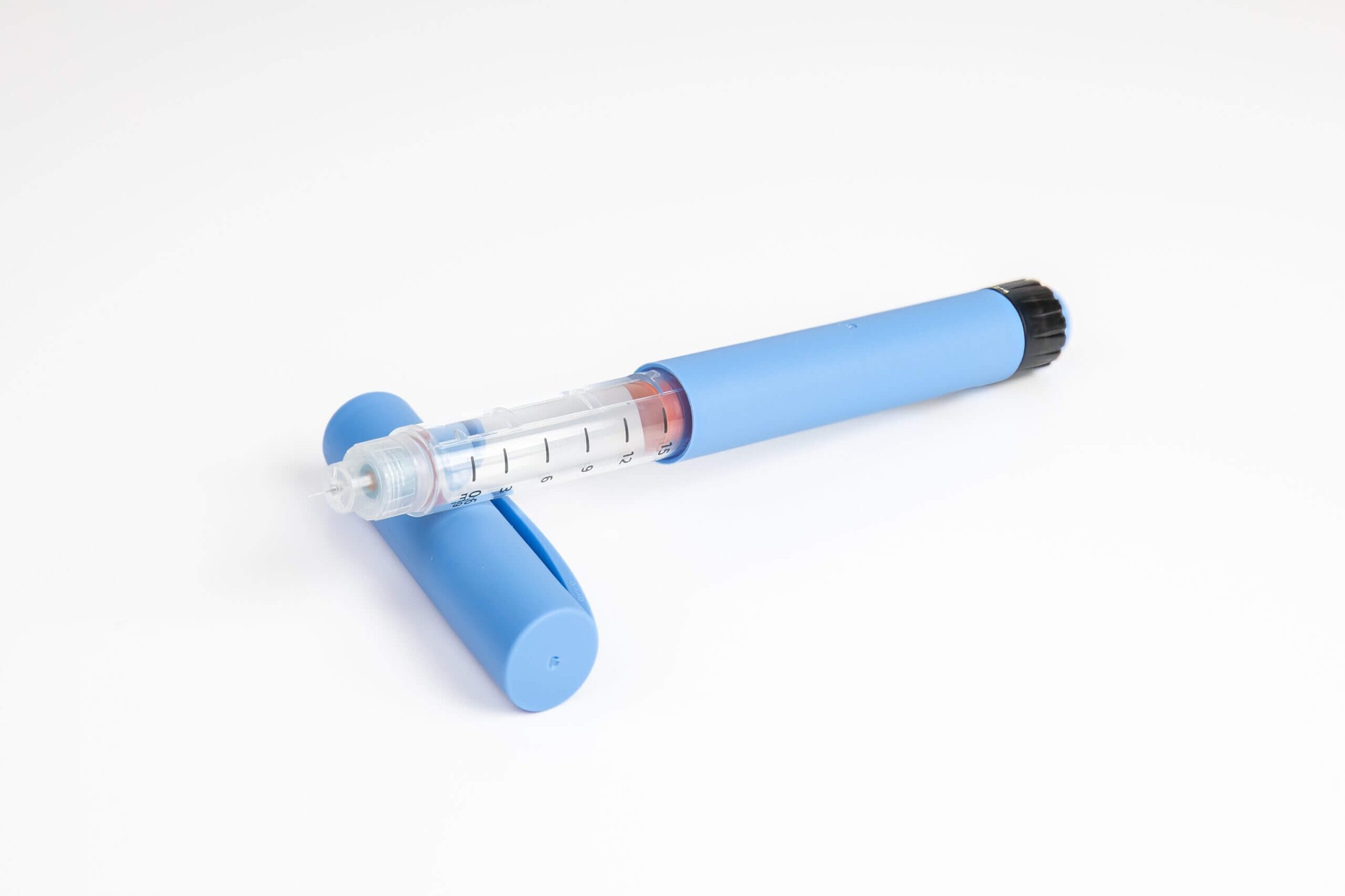
You hear the names Wegovy and Saxenda everywhere these days. Both were originally developed as diabetes medications, but once their striking weight loss effects came to light, they became far better known as weight loss shots.
The active ingredient in these shots mimics a hormone called GLP-1 (Glucagon-Like Peptide-1). Since it is based on a hormone your body already makes, understanding how it suppresses appetite and reduces weight makes the whole picture much easier to follow.
The GLP-1 hormone your body already makes
When you eat, the tail end of your small intestine naturally releases a hormone called GLP-1 (Glucagon-Like Peptide-1). Think of it as a messenger that spreads the news "food has arrived" throughout the body. This messenger sends signals at the same time to the brain, the stomach, and the pancreas.
The compounds in Wegovy and Saxenda are engineered to resemble this natural hormone closely enough that, once inside your body, they behave just like real GLP-1. The difference is timing. The natural hormone breaks down and disappears within 1 to 2 minutes, while the injected version has been redesigned to resist breakdown, so its effect lasts anywhere from a full day to a full week.
The reason this hormone vanishes so quickly in the body is an enzyme called DPP-4. It acts like a pair of scissors, snipping GLP-1 apart and disabling it within 2 minutes. The compounds in Wegovy and Saxenda carry a slightly altered molecular structure that these scissors cannot easily cut. So while the natural hormone flickers on briefly at mealtime and then fades, the injected version stays in the body sending signals for a full day or a full week.
How does Wegovy reduce appetite?
GLP-1 acts directly on the hypothalamus, specifically the region that governs appetite. Think of the hypothalamus as your body's appetite control headquarters. Once the hormone reaches headquarters, it turns down the hunger signal and turns up the fullness signal. As a result, the brain decides you have had enough even after eating less than usual.
Fullness signals also travel through the vagus nerve, the nerve bundle connecting the stomach to the brain. Information that the stomach is full of food climbs up this nerve to the brain more forcefully than usual. Picture it as turning down the volume on the hunger alarm while cranking up the volume on the fullness alarm.
GLP-1 does not stop at fullness signals either. It is also known to influence the brain's reward circuitry. Many people report that the intense pull they used to feel at the sight of food, or the constant thoughts about eating, fade noticeably. This is thought to happen because activity weakens in the brain regions where dopamine, the reward chemical, does its work. That is why people on these shots commonly say they no longer crave late-night snacks or junk food the way they used to.
Why does food stay in the stomach longer?
GLP-1 also slows gastric emptying, the rate at which food moves from the stomach into the small intestine. Normally, a meal empties out of the stomach within 2 to 4 hours, but once this hormone kicks in, that window stretches out considerably.
Picture the stomach as a pot with the lid pressed down slightly, so its contents drain out slowly. Because food lingers in the stomach longer, that full feeling lasts longer too. This naturally stretches the gap until your next meal, and many people report fewer cravings for snacks as a result. That said, if emptying slows down too much, it can lead to discomfort like nausea or bloating, which we will cover further below.
This is why doctors do not start patients on the full target dose right away. Instead, treatment begins with a very small amount and is raised one step at a time at 4 week intervals. If gastric emptying slows down too abruptly, the body has no time to adjust and nausea can hit hard. Raising the dose gradually, on the other hand, lets the stomach and intestines get used to the new pace bit by bit, easing the discomfort. In practice, many people say the first 4 to 8 weeks are the toughest, and things get more comfortable once the body adapts.
How is blood sugar controlled?
GLP-1 was actually studied first as a hormone that helps the pancreas release insulin. When blood sugar rises after a meal, it stimulates the pancreas to release more insulin while suppressing glucagon, the hormone that raises blood sugar.
The key point is that this stimulation kicks in strongly only when blood sugar is high. When blood sugar is already normal or low, it does not force out extra insulin, which keeps the risk of hypoglycemia relatively low. Because of this blood sugar control effect, GLP-1 drugs were originally developed as treatments for type 2 diabetes, and the weight loss effect was only confirmed afterward.
Some older diabetes drugs strongly stimulate the pancreas to squeeze out insulin regardless of blood sugar levels, which carries a relatively higher risk of hypoglycemia. GLP-1, by contrast, only helps release insulin when the pancreas cells acting as blood sugar sensors determine that levels are currently high, making it more like a smart switch that activates only when needed. This distinction is why the GLP-1 class has drawn attention as a way to manage both blood sugar and weight without the burden of hypoglycemia.
How do the injection intervals of Wegovy and Saxenda differ?
Both drugs belong to the same class of GLP-1 receptor agonists, but they differ in ingredient and dosing schedule. Saxenda (active ingredient liraglutide) needs to be injected once a day, while Wegovy (active ingredient semaglutide) only needs to be injected once a week.
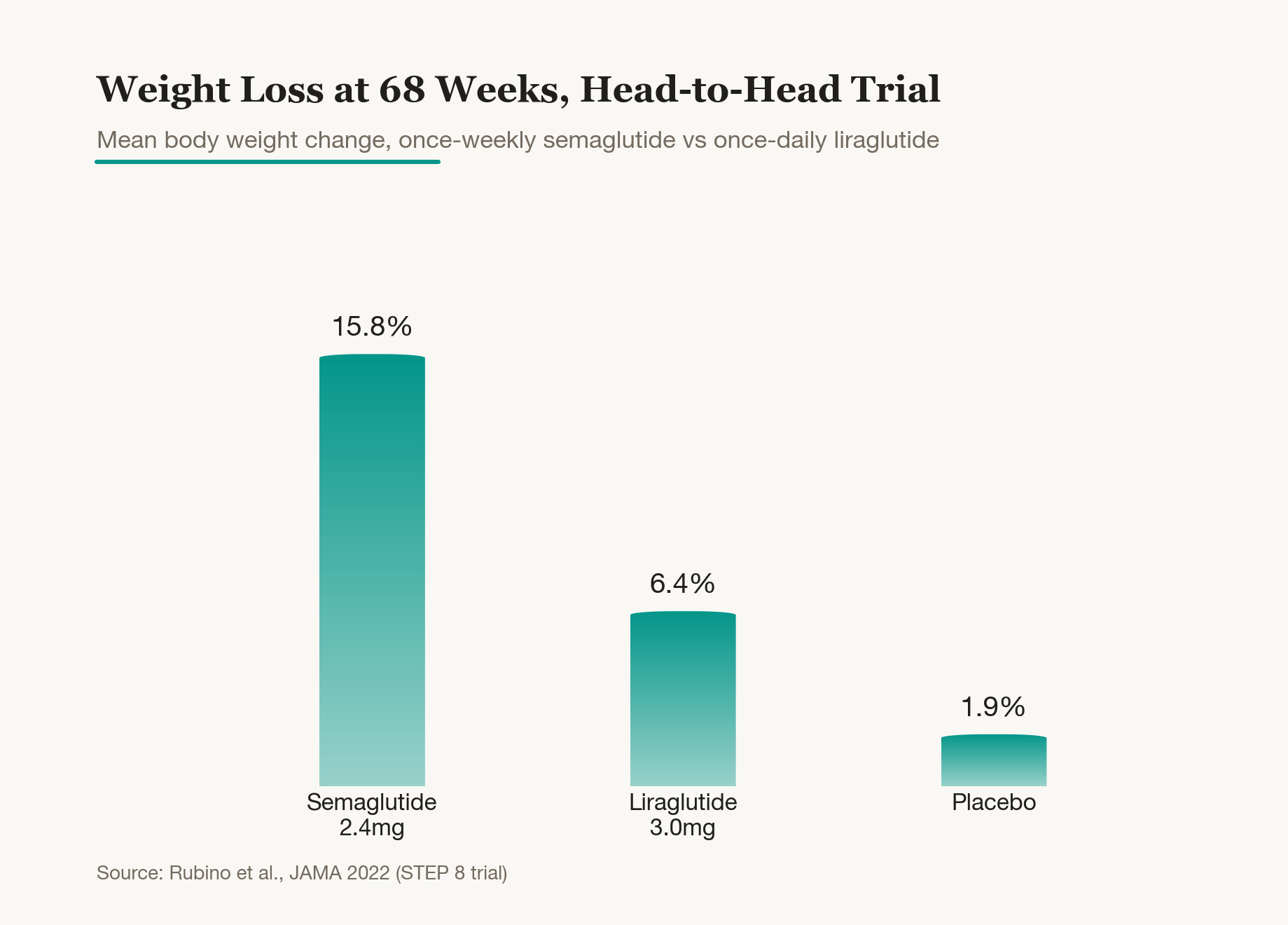
Semaglutide in Wegovy is engineered with a molecular structure that resists breakdown for longer, which is what allows for the longer injection interval. Clinical studies have reported greater weight loss with Wegovy, but individual responses vary considerably, so results can differ from person to person.
With a daily injection, missing even one day can cause blood levels to drop sharply and undercut the effect. A once weekly shot like Wegovy, though, is designed to break down slowly, so blood levels stay fairly steady even if you inject a day or two late. This makes it easier for people who tend to forget doses to keep up with treatment consistently.
Will you regain weight if you stop the injections?
GLP-1 shots are not a cure. They are closer to a treatment that suppresses appetite signals only while you are using them. So once you stop, the hunger signals and food cravings that had been held back gradually return to their original level.
While you are losing weight, the body gradually shifts its metabolism toward conserving energy, essentially entering a mode that braces for starvation. That can leave you prone to gaining weight more easily than before even on the same amount of food. Add back the appetite that had been suppressed, and it is easy to see why weight regain after stopping the shots is a commonly reported outcome.
This is why doctors recommend keeping up with portion control and physical activity even after stopping the injections. Locking in the eating habits the shot helped build can reduce how much weight comes back once the medication is gone.
Common side effects and digestive symptoms
Because GLP-1 shots alter how the stomach and intestines move, most side effects show up in the digestive system.
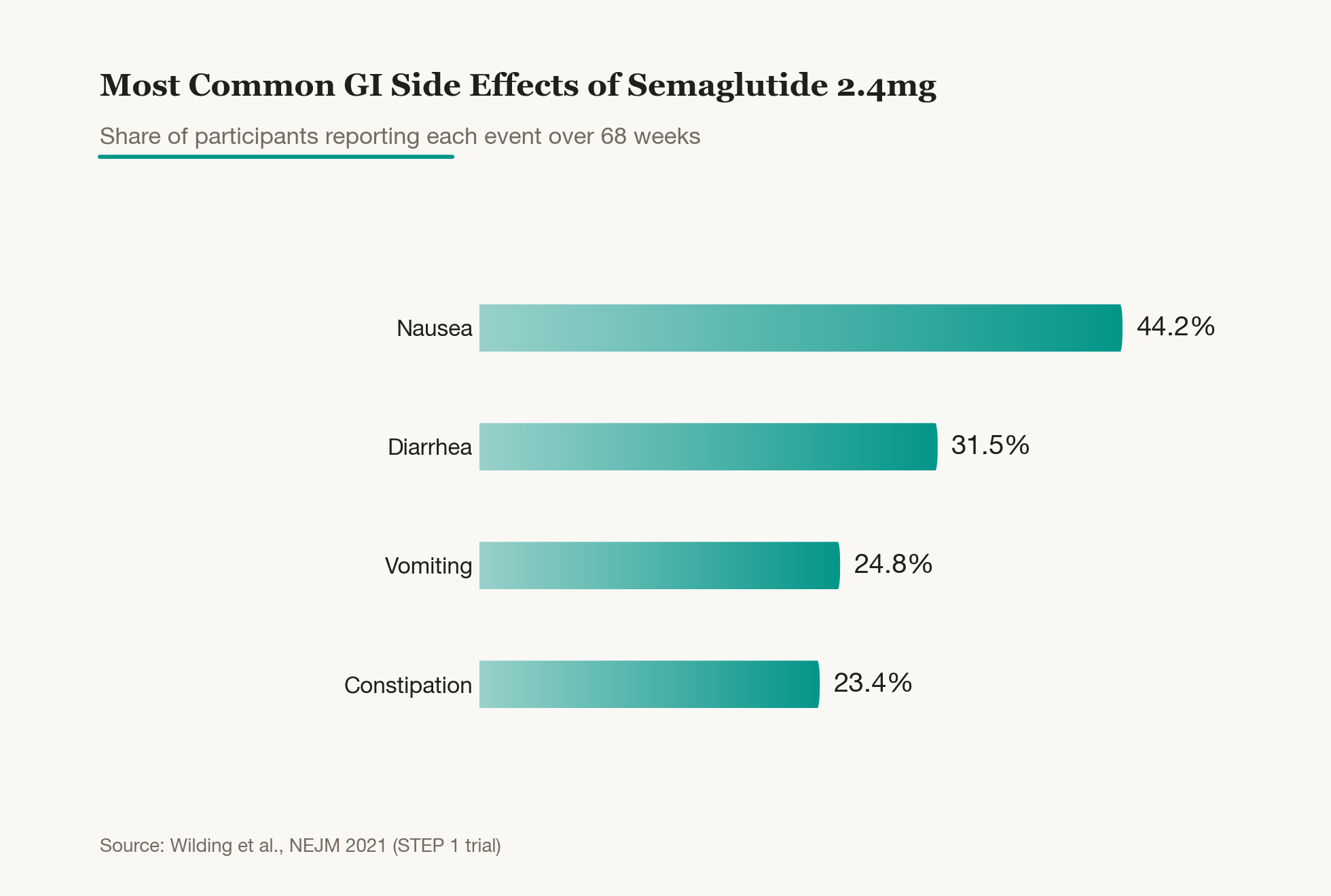
- Nausea and vomiting: The most common reaction, caused by food lingering longer in the stomach as gastric emptying slows.
- Constipation or diarrhea: Bowel habits can shift along with changes in intestinal motility.
- Bloating and burping: Discomfort from food and gas staying in the stomach longer than usual.
- Rare acute pancreatitis: Since this hormone acts directly on the pancreas, cases of pancreatic inflammation have been reported rarely. Seek medical attention right away if you experience severe abdominal pain.
Most of these digestive symptoms cluster around the early dose-escalation period and tend to ease as the body adjusts. So when your stomach feels off, it helps to eat smaller portions 5 to 6 times a day instead of large meals, and to cut back on greasy or spicy food.
Precautions to check before the first injection
- Avoid it if you have a family history of medullary thyroid carcinoma. Animal studies have reported a link to thyroid tumors, so those with relevant family history are often excluded from prescription.
- As a rule, it should not be used during pregnancy or if you are planning one, because safety data for the fetus is still insufficient.
- It must be used only under a doctor's prescription and supervision, since gradual dose increases reduce side effects and suitability varies depending on individual health status.
- Watch for muscle loss as well. Rapid weight loss can reduce muscle mass along with fat, so combining adequate protein intake with exercise is recommended.
References
Korean Dermatological Association, Ministry of Food and Drug Safety (MFDS), American Academy of Dermatology (AAD), and U.S. Food and Drug Administration (FDA).
Was this helpful?
About this article
Written by a practising aesthetic physician and intended for general education — not a substitute for individual medical advice.
Read next

Arm Fat Injection and CoolSculpting: Differences and Effects Compared
Lipolysis injections and CoolSculpting come up together as the go-to answers for stubborn arm fat. They break down fat cells through different mechanisms and on different timelines, and understanding that difference helps you match the right choice to your own arms.
By Dr. Kim

Mounjaro and Wegovy: Results, and Does the Weight Come Back If You Stop?
A physician's breakdown of how tirzepatide (Mounjaro/Zepbound) and semaglutide (Wegovy) suppress appetite, what the clinical trials actually showed, the real differences between the two, and what to expect if you discontinue.
By Dr. Kim
LDM Ultrasound Effects: Soothing Post-Procedure Swelling and Red, Hot Skin
A plain-language look at how LDM ultrasound vibrates millions of times per second to stir up cell metabolism and circulation, why that helps swelling and inflammation settle down, and why it's used even on sensitive skin. Also covers how results build up over repeated sessions and where this treatment fits in practice.
By Dr. Kim