Arm Fat Injection and CoolSculpting: Differences and Effects Compared
By Dr. Kim7 min read
Upper arm fat has a reputation for being especially stubborn, even when the rest of the body slims down. How much fat has settled into the inner arm and how much the skin has loosened varies from person to person, so no single treatment gives everyone the same result.
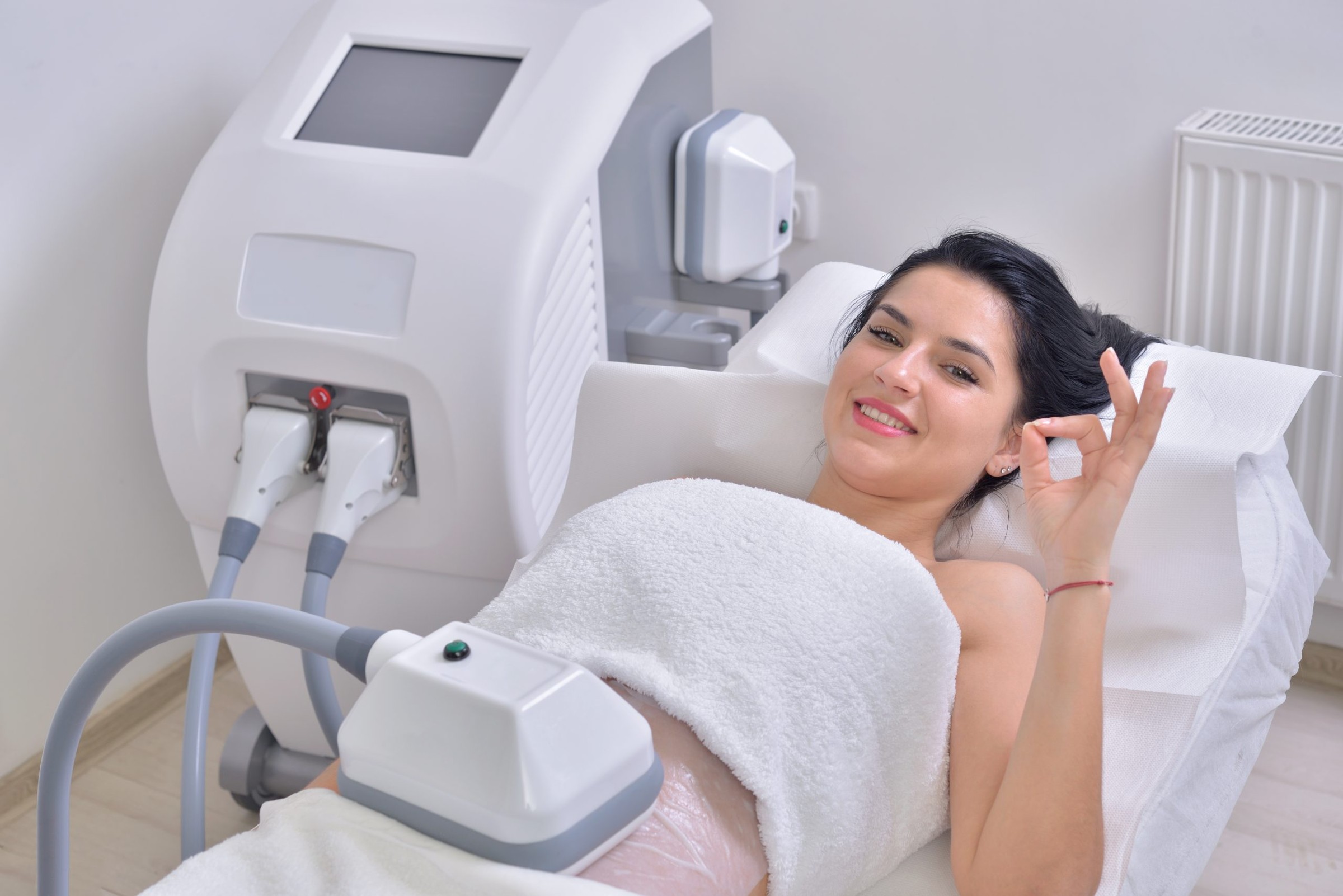
Clinics tend to offer two main options for arm fat. Lipolysis injections dissolve the fat cell membrane with a drug delivered through a needle, while CoolSculpting uses a device to deliver cold temperatures that gradually shut down fat cells. Both aim to reduce the number of fat cells, but how the cells actually die and how fast the body responds to that process are quite different.
Knowing how each one works makes it easier to judge which approach fits your own arms.
Why doesn't arm fat go away with dieting?
Fat on the inner arm is not a large share of total body fat. It stands out mainly because of where it sits, a spot that jiggles visibly every time you lift your arm.
Exercise cannot target fat loss to one specific area either. Fat is a shared energy reserve the whole body draws from and shrinks together, so moving your arms a lot will not make arm fat disappear first.
Sagging skin often complicates the picture too. As collagen and elastic fibers decline with age, skin can loosen and the arm can look like it is jiggling even when fat volume has not increased much. Before choosing a treatment, it helps to figure out whether the issue is really excess fat or loose skin.
How do fat-dissolving injections work?
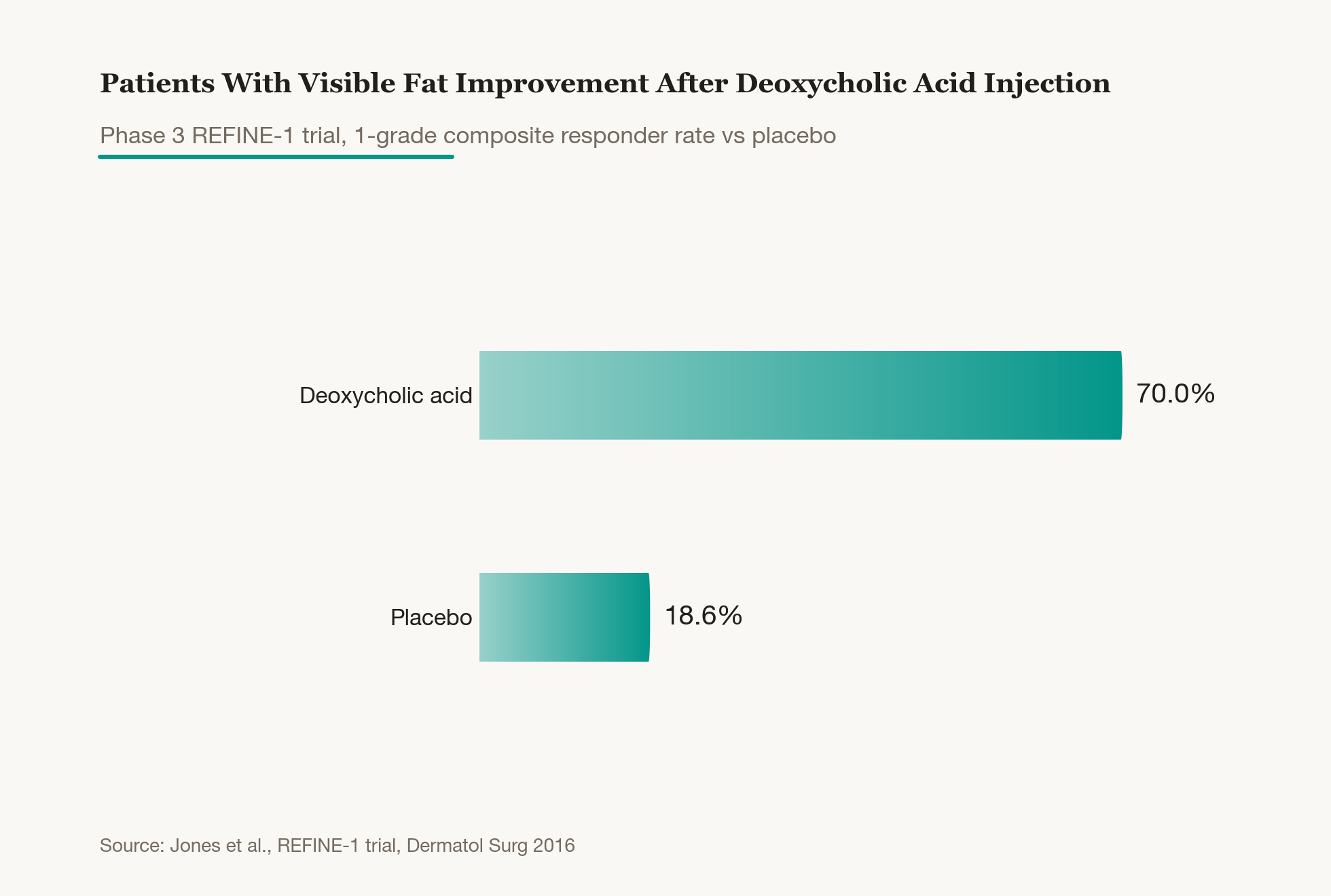
Lipolysis injections deliver a drug directly into the fat layer beneath the skin of the arm. The active ingredients are usually bile acid derivatives or phospholipid compounds, and they work by breaking down the membrane that surrounds each fat cell.
The cell membrane is made of two thin lipid layers, and the drug disrupts that structure much like a detergent dissolving grease. Once the membrane collapses, the fat cell ruptures and spills its contents, a process called cell lysis.
A small inflammatory response follows at the site where cells have burst. Macrophages, the immune system's cleanup cells, gather to clear away the debris the way the body handles any injured tissue. That debris is processed and removed from the body gradually over days to weeks. Because the procedure only involves needle injections with no incision, the session itself is short.
How does CoolSculpting remove fat?
CoolSculpting uses a cooling applicator that wraps around the skin surface of the arm and delivers cold temperatures to the fat layer underneath for a set period. Fat cells are known to be more sensitive to cold than surrounding tissue like skin, nerves, and muscle, because fat crystallizes at a higher temperature than those other tissues.
That difference in cold tolerance lets the device selectively damage fat cells while sparing the skin and nerves from significant harm. The death that follows is not a sudden rupture like lysis but something closer to apoptosis, a programmed process where the cell gradually shuts itself down.
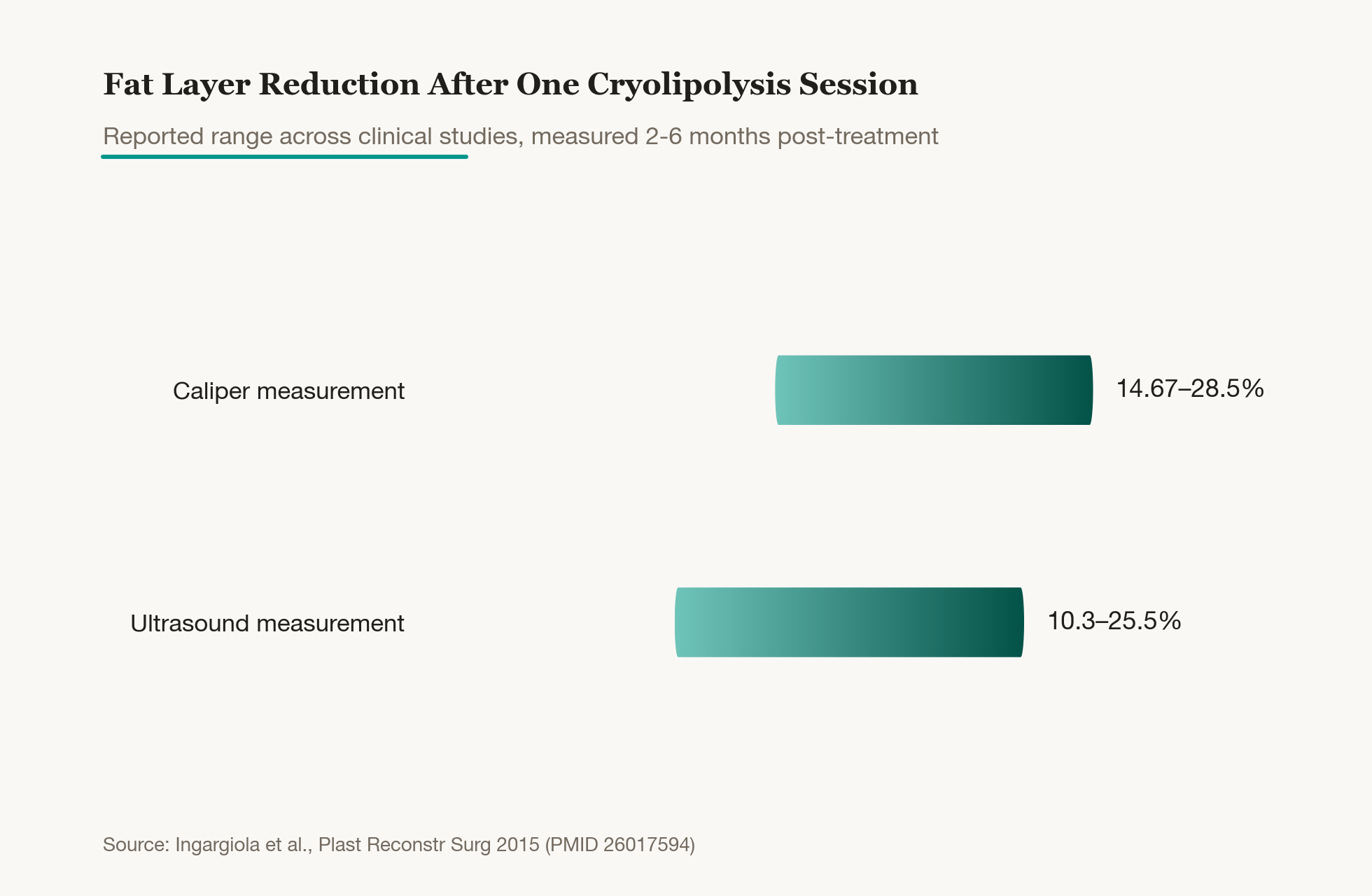
Over the following weeks to months, macrophages recognize and absorb the dying fat cells one by one. The processed debris then drains out slowly through the lymphatic system, the body's internal drainage network. Since the treatment only involves placing a device on the skin with no incisions or injections, it leaves no needle marks behind.
When do results become visible?
Neither treatment slims the arm immediately after the session. It takes time for fat cells to break down and for the body to clear away the debris.
Since the cells die through different mechanisms, the pace of visible change differs too. Lipolysis injections cause the cell membrane to collapse right away, so inflammation starts fairly quickly and early swelling tends to be more noticeable. CoolSculpting, on the other hand, goes through the programmed apoptosis process first before macrophages even begin their work, so changes tend to appear more gradually and slowly.
Neither treatment produces its full effect from a single session. Both require weeks to months for the body to process the debris. Because of that, it makes more sense to judge the result by the change you see over time rather than by how the arm looks right after treatment.
Difference between swelling and numbness after treatment
Since the two treatments clear fat cells through different pathways, the body's response afterward differs slightly as well.
- Lipolysis injections can leave fairly noticeable swelling and bruising. The needle directly disturbs the tissue, and rupturing cells trigger a stronger local inflammatory response.
- Lipolysis injections can leave several needle marks. Covering a wide area requires injecting multiple points in a single session.
- CoolSculpting can leave numbness or a tingling sensation at the treatment site for several days. The cold temperature temporarily affects nerve endings near the skin surface, not just the fat cells.
- CoolSculpting can leave the treated area feeling firm for a while. As dead fat cells and surrounding tissue are gradually absorbed, some localized tissue firmness can appear during that process.
Both are generally described as resolving with time, though recovery speed varies from person to person.
Which treatment suits my arms?
The right choice depends on your specific arm condition and personal preferences.
- If fat is concentrated in a narrow, localized area, lipolysis injections may work better, since a needle can target precise spots with more precision.
- If fat is spread evenly across the whole arm, CoolSculpting may be a better fit, since the flat cooling applicator can cover a wide surface area at once.
- If you strongly dislike needles, CoolSculpting is worth considering, since it only requires placing a device on the skin with no injection needed.
- If you want to avoid noticeable swelling during recovery, CoolSculpting's more gradual response may feel less demanding, since its slower onset means the initial inflammatory reaction is less abrupt.
That said, both treatments have limits when skin sagging is significant. Neither reduces fat cell count in a way that tightens loose skin. Removing fat and restoring skin elasticity work through completely different mechanisms, so if sagging is a major concern, it is worth bringing that up directly during a consultation.
Precautions before and after treatment
A few things are worth keeping in mind both before deciding on treatment and afterward.
- The inner arm has spots where blood vessels and nerves run closer to the skin surface than in other areas. That is why checking this anatomy beforehand is generally recommended.
- It is best not to judge results too quickly in the days right after treatment. Both procedures rely on the body gradually clearing away dead fat cells, so volume changes appear over time.
- Having both fat volume and skin laxity evaluated during the consultation is helpful. When both issues are present together, a single treatment may not deliver the change you expect on its own.
- Even when both arms receive the same treatment, the speed and degree of the response can vary between them. Fat cell size, distribution, and skin condition are never identical from one spot to the next.
References
Korean Dermatological Association, American Academy of Dermatology (AAD), and Ministry of Food and Drug Safety (MFDS).
Was this helpful?
About this article
Written by a practising aesthetic physician and intended for general education — not a substitute for individual medical advice.
Read next
Thigh Fat Treatments: Types, How They Work, Effect Differences and Aftercare
Thighs are one of the areas that stay stubborn even with disciplined exercise and diet. Localized fat treatments that act directly on fat cells through cooling, injections, or heat energy have become a common way to address these areas. Here is how each method actually breaks down fat cells, and how they differ.
By Dr. Kim
Love Handle Fat Freezing and Fat-Dissolving Injections: Differences and Results Compared
Love handles are known as a stubborn pocket of fat that diet and exercise alone rarely touch. Here's how cooling destroys fat cells, how injectable fat dissolving works instead, and what results you can realistically expect from each.
By Dr. Kim
Juvelook: When Effects Appear and How Long They Last, Dewy Glow Versus Volume
The dewy glow you feel right after a Juvelook treatment and the collagen volume that slowly builds over 6 weeks to 6 months actually come from two completely different mechanisms. This article breaks down, step by step with simple comparisons, how PDLLA, Juvelook's key ingredient, drives your body to produce collagen.
By Dr. Kim