Freckles Versus Age Spots: Causes, How to Tell Them Apart, and Treatment
By Dr. Kim7 min read
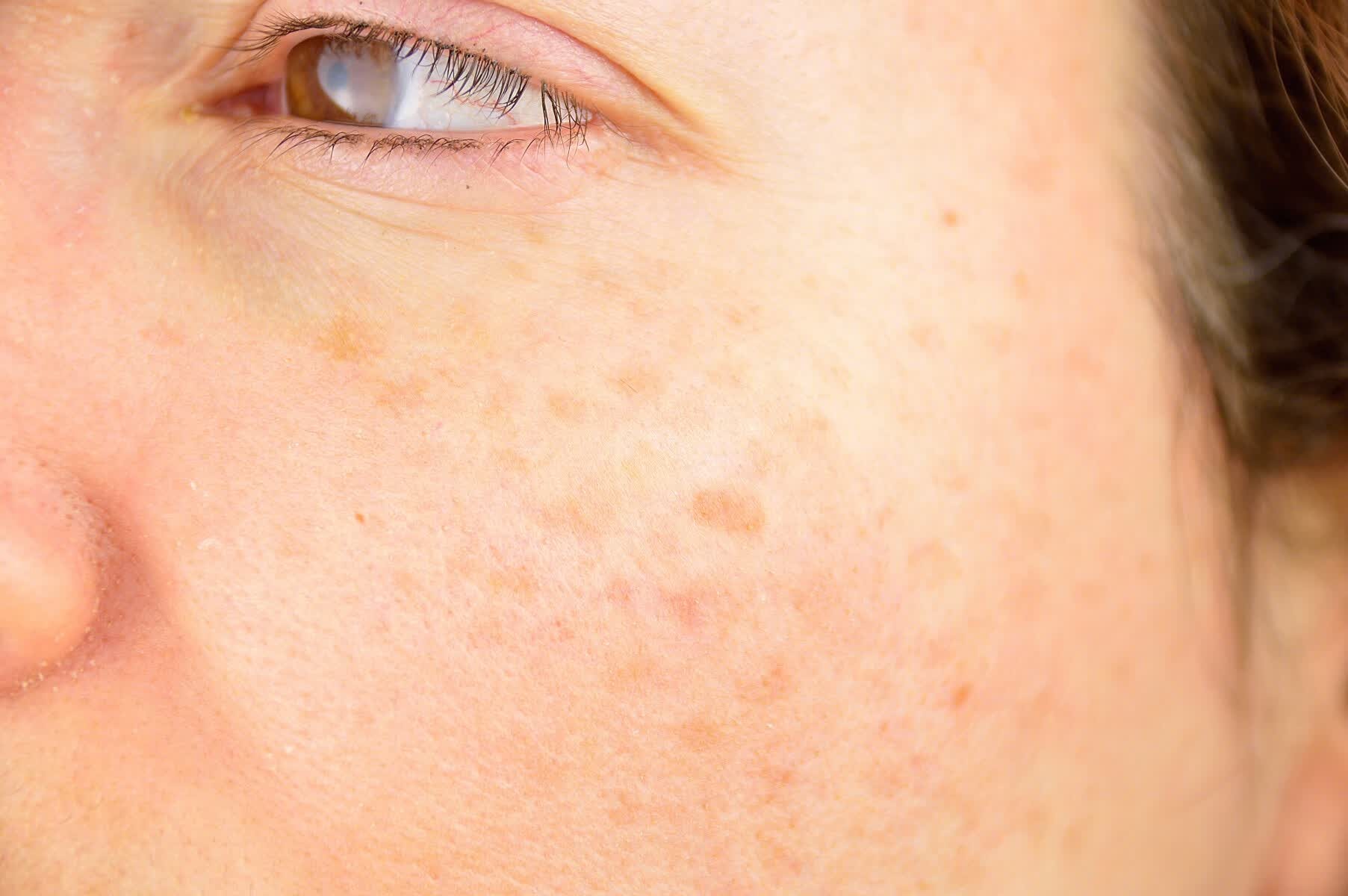
Freckles and age spots both show up as brown marks on the skin, so people mix them up all the time. But they form for different reasons, and what's actually happening underneath the skin is not the same. With freckles, the pigment cells themselves stay the same, it's the amount of pigment those cells make that goes up. With age spots, the number of pigment cells itself increases.
That one difference is enough to change everything else, when they show up, how they behave with the seasons, and how they respond to treatment. Two brown spots that look almost identical on the surface can be telling completely different stories underneath.
How do freckles and age spots differ in size and location?
Freckles are usually small. They show up as tiny dots, just a few millimeters across, scattered mostly over the nose and cheeks, anywhere from a few dozen to a few hundred of them. The color ranges from light to dark brown, and the edges tend to be soft and blurry rather than sharp.
Age spots are the opposite, larger. Some are just a few millimeters wide, others grow past a centimeter. There are far fewer of them than freckles, but each one stands out more. The color is fairly even, brown to dark brownish black, and the borders are usually well defined. Some feel slightly raised to the touch, because it's not just the pigment cells changing, the top layer of skin itself has thickened.
Where they appear differs too. Freckles cluster around the center of the face, especially the nose and cheeks. Age spots can show up anywhere that's had years of sun exposure, the face, sure, but also the backs of the hands, the arms, the shoulders. Decades of accumulated UV exposure leaves its mark over a much wider area.
The numbers make the contrast even clearer. Someone can have anywhere from a few dozen to a few hundred freckles packed onto their face, while the same face usually has only a handful to a dozen or so age spots. Since each age spot forms wherever a patch of skin has been irritated over time, there are naturally fewer of them than freckles, which are simply a matter of increased pigment output.
Why do freckles form?
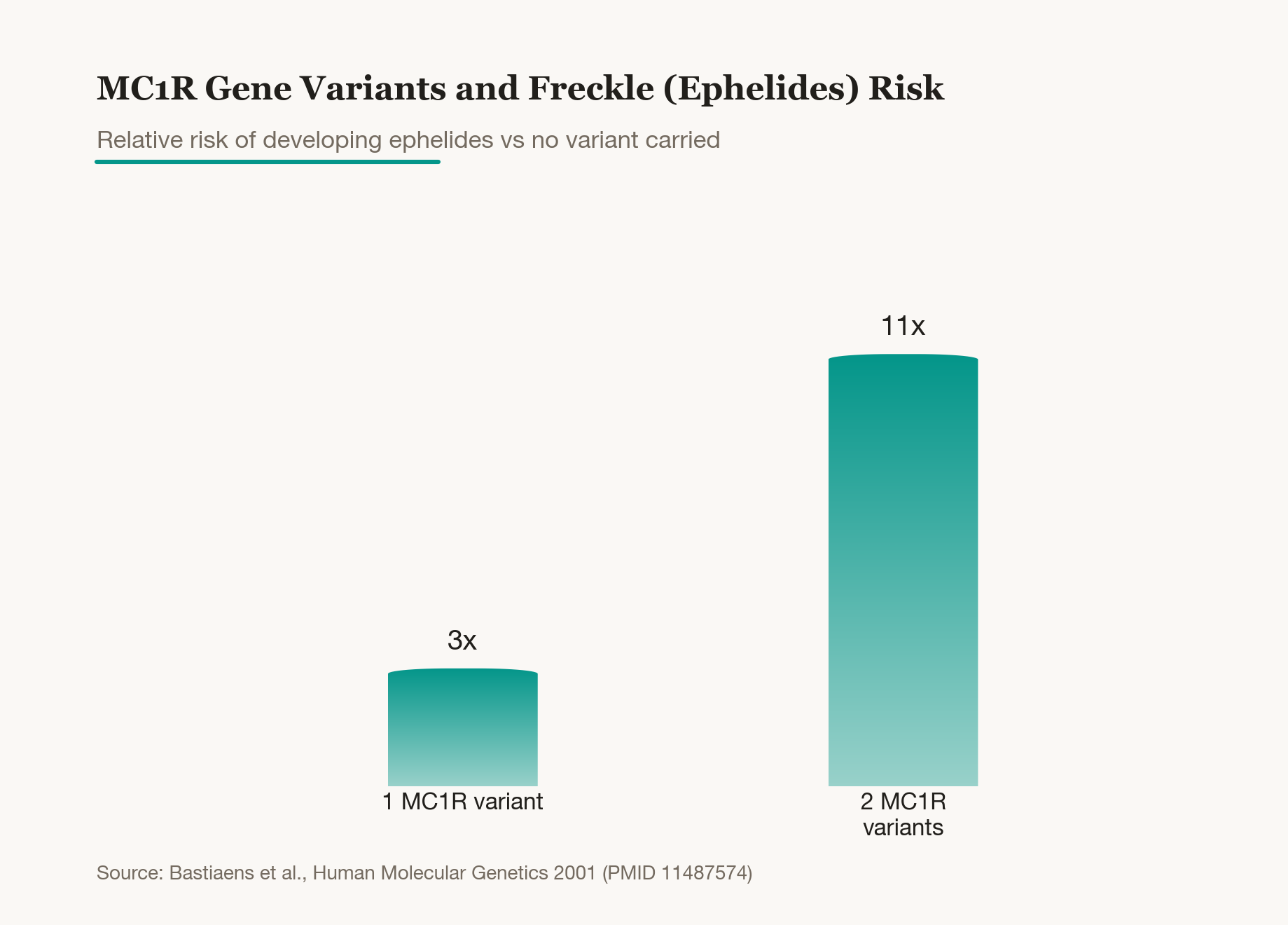
Freckles are heavily influenced by genetics. If one parent has a lot of freckles, their children tend to as well, and they're especially common in people with fair skin and a reddish undertone. This has been linked to specific variants in the MC1R gene (the gene that determines the type of melanin your skin produces).
People who carry this gene variant have pigment cells that produce unusually large amounts of pigment whenever they're exposed to UV light. The number of pigment cells is about the same as anyone else's, what changes is how much melanin each individual cell makes and passes on to the surrounding skin cells. Think of it like a set of factories where every factory is the same size, but one of them has just cranked its output way up.
That's why freckles typically show up in childhood, right around the time a child starts getting a few years of sun exposure under their belt. Once the pigment cells start reacting according to their genetic programming, the results show up right away, there's no need to wait until adulthood.
Causes of age spots
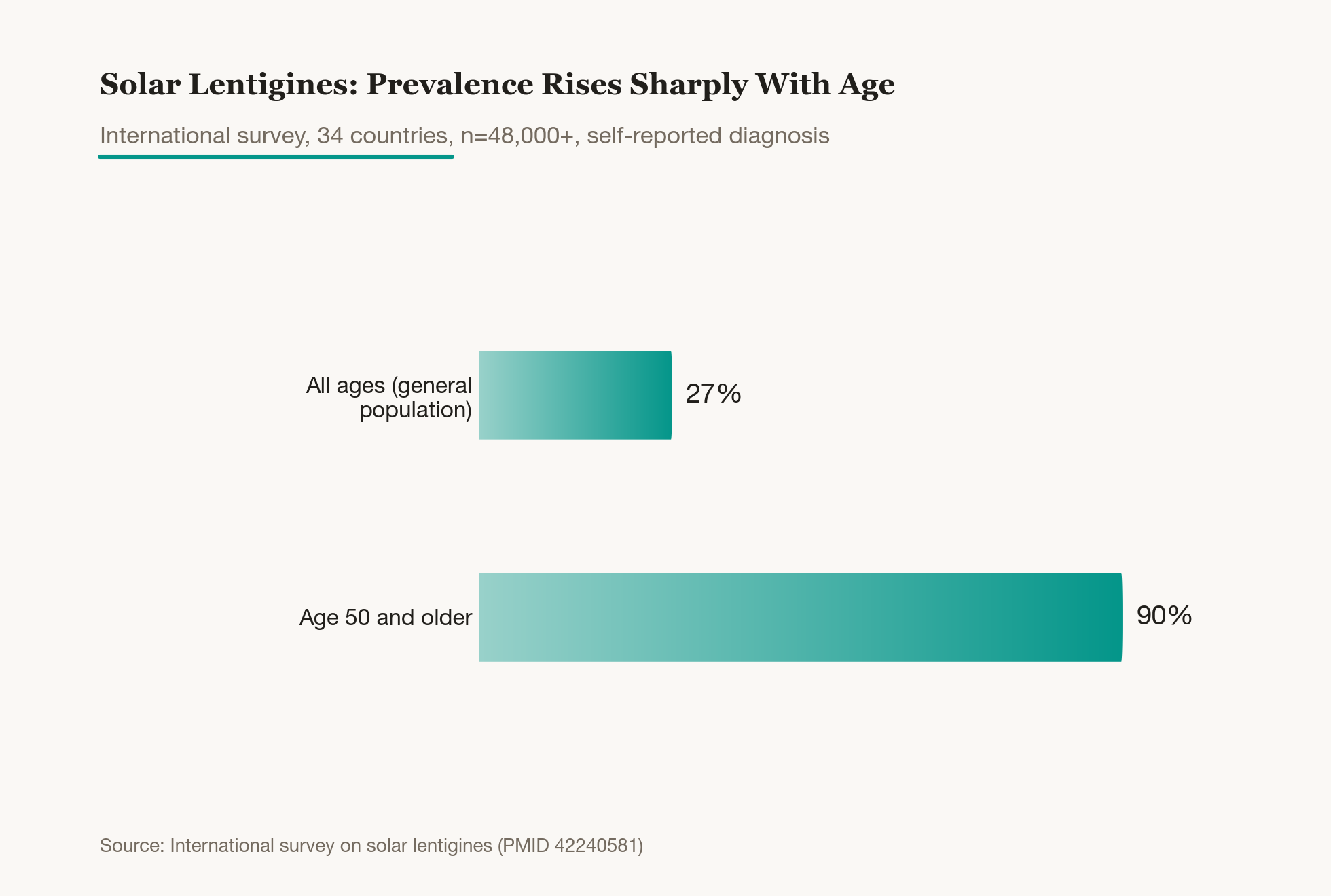
For age spots, decades of accumulated sun exposure matter far more than genetics. Skin that's absorbed years of UV is reported to undergo an actual increase in the number of pigment cells. It's not that the factories are producing more, it's that new factories are being built.
This process is also thought to involve various signaling molecules released by fibroblasts and mast cells (cells involved in the skin's immune response) sitting in the dermis, just below the epidermis. These signals stimulate the pigment cells and the surrounding epidermal cells, driving both the increase in pigment cell numbers and the thickening of the epidermis at the same time.
Once those extra pigment cells settle in, they don't go away on their own. Because the change is in the actual number of cells, cutting back on UV exposure doesn't make the extra cells disappear. That's why age spots, once they appear, tend to stick around and slowly increase rather than fade.
Which fades in winter, freckles or age spots?
Freckles change with the seasons. When UV gets stronger in summer, pigment cells respond by producing more pigment, so the spots darken. When UV weakens in winter, pigment production drops back down and the spots lighten. It's a functional change, output rising and falling with the stimulus.
Age spots, on the other hand, stay roughly the same color year round. Since the underlying change is structural, an actual increase in the number of pigment cells, weaker winter UV doesn't shrink that number back down. It's the same reason a factory's monthly output might rise and fall with the seasons, but the number of factories standing on the ground doesn't just shrink because it's winter.
This seasonal pattern, or lack of one, is actually one of the clues doctors use in the clinic to tell the two apart.
How to tell freckles and age spots apart
Here are the features worth checking when trying to tell the two apart by eye.
- When they appear: Freckles show up from childhood, while age spots usually start appearing after age 40. The genetic response kicks in early, but an actual increase in cell number takes years of accumulated sun exposure to happen.
- Seasonal changes: Freckles darken in summer and fade in winter, while age spots stay fairly consistent year round. This is where the difference between a functional change and a structural one really shows.
- Size and borders: Freckles are small with blurry edges and show up in large numbers, while age spots are relatively larger, with well-defined borders, and fewer in number.
- Surface texture: Freckle-covered skin stays smooth, while age spots can feel slightly raised where the epidermis has thickened.
These features can overlap in some cases, so when it's hard to tell, a dermatology visit is the more accurate way to confirm.
How do treatment and sun protection differ?
With freckles, the pigment cell count is normal, so even after a laser lightens the pigment, the cells themselves are still there. Toning lasers or pico lasers can fade the color, but since UV exposure will simply prompt those same cells to ramp production back up, recurrence is fairly common. Recovery after treatment is generally guided at around 4 to 8 weeks.
Age spots more often require actually eliminating the extra pigment cells, so Q-switched lasers or picosecond lasers are typically used to deliver energy down to the layer where those cells sit. Because this addresses the actual cell count, treated spots are reported to rarely recur in the same location, though this doesn't prevent new age spots from forming elsewhere. Recovery varies by treatment site and method but is generally guided at around 4 to 12 weeks.
In both cases, sun protection is considered the single most important habit for slowing recurrence. UV exposure is the shared trigger behind both freckle pigment production and age spot cell proliferation.
Building daily sunscreen reapplication, avoiding intense midday sun, and physically shielding skin with hats or umbrellas into a routine is said to help slow recurrence for both conditions. Pigment cells tend to ramp up their response the more repeated stimulation they get, so cutting back on UV exposure itself works against both mechanisms at once, pigment overproduction and cell proliferation alike.
References
Korean Dermatological Association, American Academy of Dermatology (AAD), and Ministry of Food and Drug Safety (MFDS).
Was this helpful?
About this article
Written by a practising aesthetic physician and intended for general education — not a substitute for individual medical advice.
Read next
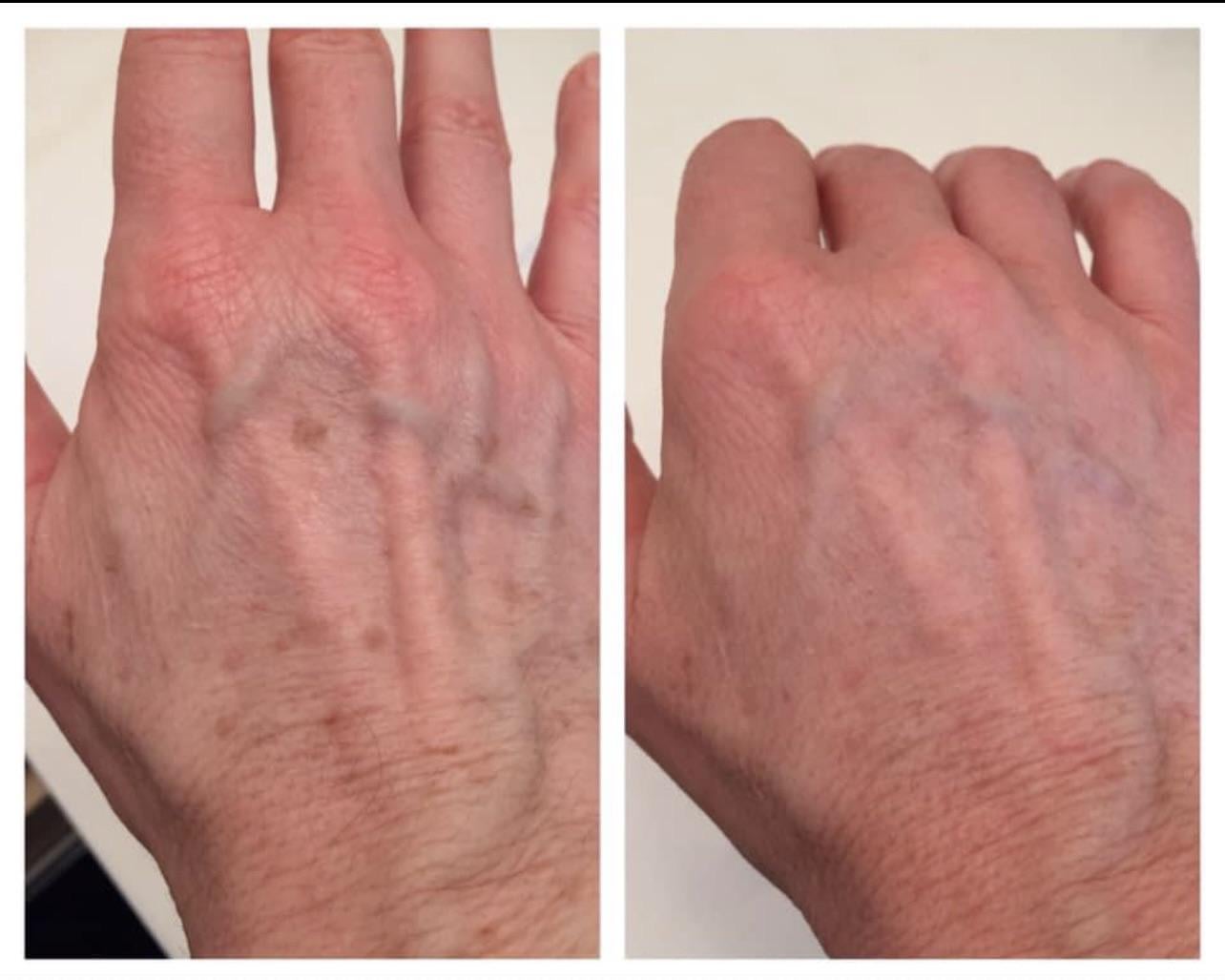
Age Spots on the Hands: Causes, Treatment and Do They Last Longer Than on the Face?
Age spots on the hands form when melanin clusters in skin that has absorbed years of sun exposure. Here is why they take root more stubbornly than the same spots on the face, and how the treatments clinics actually use work to fade them.
By Dr. Kim
Red Acne Marks: Causes, How to Tell Them Apart, and Laser Treatment
The red marks left behind after acne clears up often aren't pigment at all, but dilated blood vessels showing through the skin. Since the cause and the way they fade differ from pigmentation, they call for a different care approach. Here's how to tell the two apart and how each one recovers.
By Dr. Kim
Enlarged Pores Versus Scar Pores: How to Tell Them Apart and Care Compared
Enlarged pores and acne scar pores can look like the same small dark dots from a distance, but what's happening underneath the skin is completely different. Here's why each one forms, how to tell them apart, and how the treatment approach differs.
By Dr. Lee