Age Spots on the Hands: Causes, Treatment and Do They Last Longer Than on the Face?
By Dr. Kim8 min read
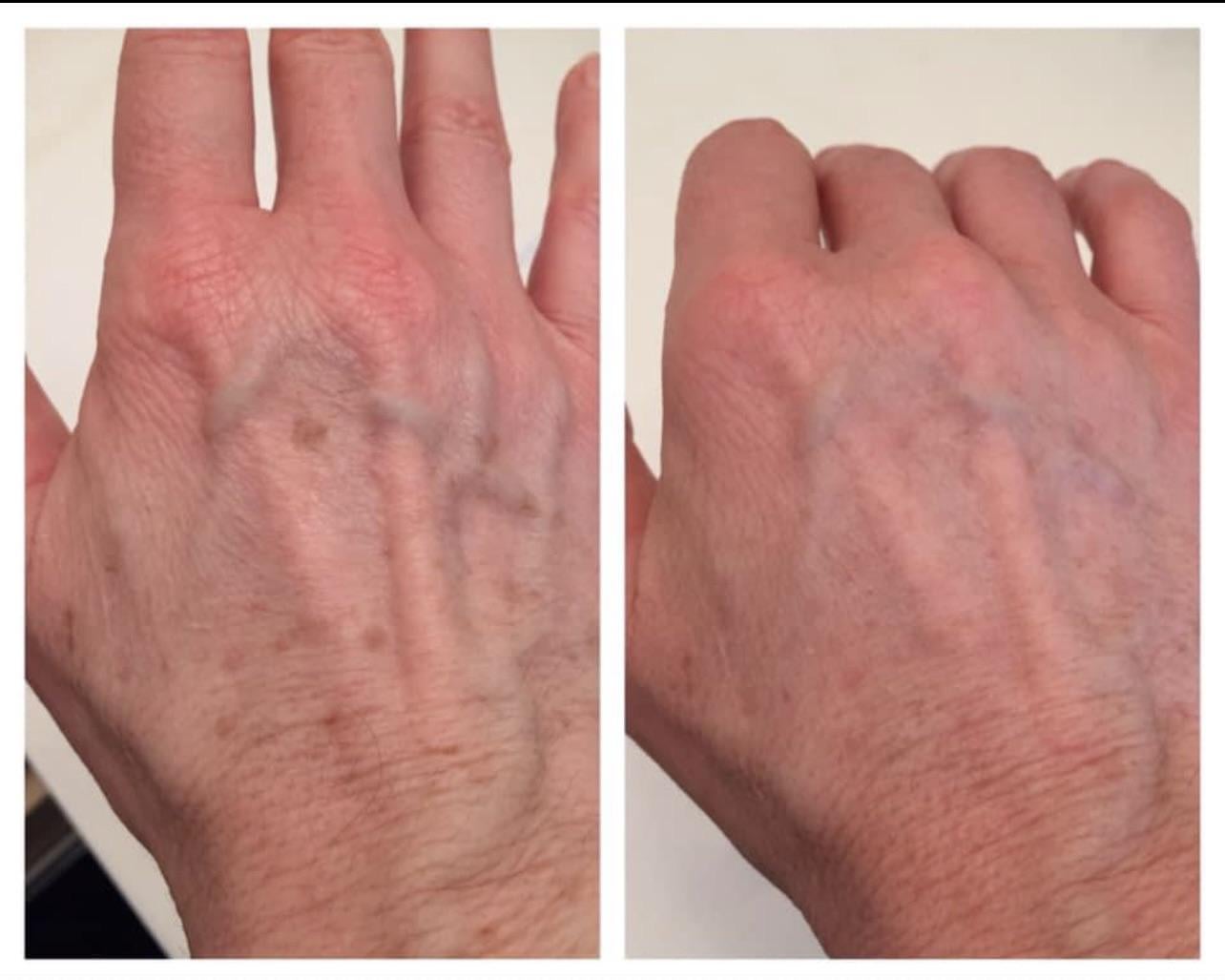
Brown spots that creep onto the backs of the hands over time are usually called age spots, or more precisely, solar lentigines. They have less to do with age itself and more to do with how much cumulative UV exposure the skin has taken on. The underlying cause is close to what drives melasma or sunspots on the face, but on the hands these marks tend to show up darker and stick around far longer. Here is why the hands get hit harder, and what it actually takes to fade them.
Why do age spots appear on the hands first?
The backs of your hands spend almost no part of the day covered by clothing or sunscreen. Your face gets shaded by a hat brim or a car window while you drive or walk, but your hands are out in the open the entire time. Add it all up over a lifetime, and the hands can end up with more total UV exposure than the face ever gets.
On top of that, the skin on the back of the hand is thinner than facial skin and carries less fat underneath it. That means less of a buffer against UV rays, so the melanocytes sitting in the basal layer of the epidermis get triggered more easily by the same amount of sunlight. The result is that pigment clumps together into visible spots sooner than it would on the face.
None of this happens overnight, though. It is the outcome of repeated sun exposure building up over years, sometimes decades, until one day a spot becomes noticeable. That is also why there is such a wide gap between people who protected their hands from the sun starting young and those who did not, both in when the spots appear and how many show up.
How does UV build up pigment?
Melanocytes sit in the deepest layer of the epidermis, the basal layer, and their job is to produce the melanin pigment that shields skin from UV rays. When UV light hits the skin, melanocytes read it as a threat and respond by producing more pigment, essentially draping it over the nucleus like a small umbrella to protect the DNA inside. This is a normal, protective reflex built into the skin.
The problem starts when the same patch of skin takes UV hits over and over, so the melanocytes never really get a break and keep churning out pigment. Over time, the number of melanocytes themselves increases, and the melanin they produce starts clustering close to the surface of the skin. That cluster of pigment is exactly what shows up as the visible brown spot people call an age spot.
Melasma tends to spread more diffusely from within the dermis, while age spots are known to sit closer to the epidermis in denser clusters with relatively defined edges. That is why they feel flat to the touch, not raised or textured, even though the border looks sharp to the eye.
Why do hands fade more slowly than the face?
Even when the pigment issue is the same, the face and the hands recover at very different speeds. The face has richer blood circulation and a faster skin cell turnover cycle, meaning cells loaded with old pigment and dead skin get shed relatively quickly.
The hands, by contrast, get less blood flow than the face and turn over cells more slowly. On top of that, hands are constantly exposed to irritants like dishwashing, hand sanitizer, and frequent washing, which often leaves the skin barrier thinner than it should be. A thinner barrier means fewer resources available for repair, and less force pushing pigment back out.
This gap only widens with age. Skin regeneration naturally slows down as people get older, and areas that were already sluggish to begin with, like the backs of the hands, tend to feel that slowdown earlier and more severely than the rest of the skin.
What clinic treatments are there?
There is more than one way to fade age spots on the hands, and clinics choose an approach based on how deep the pigment sits, how many spots there are, and the patient's skin tone. The main options are:
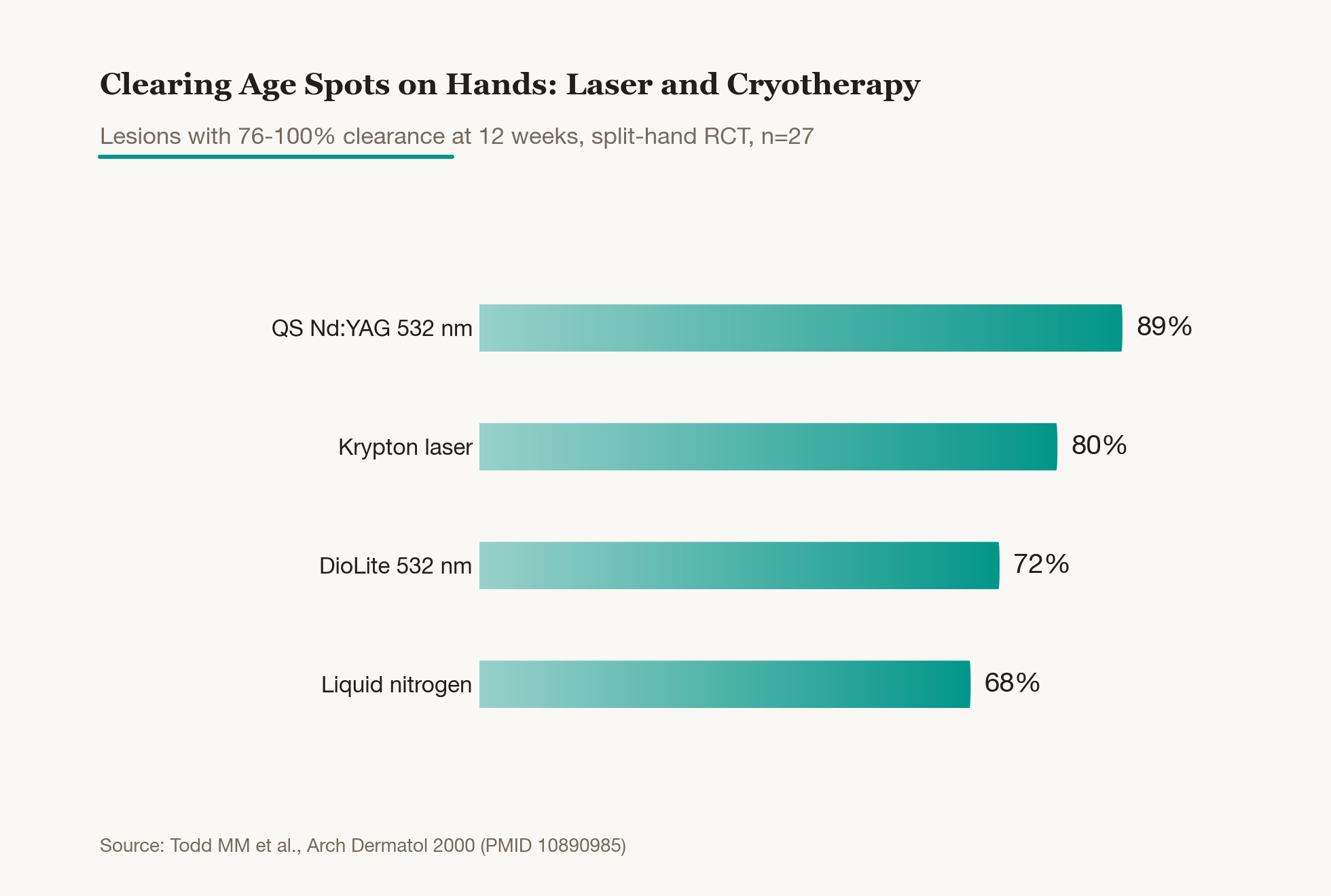
- Q-switched laser: fires an intense burst of light for an extremely short pulse to selectively break apart melanin clusters without damaging the surrounding skin. The body then gradually clears out the shattered pigment, which is how the spot fades.
- Cryotherapy: uses liquid nitrogen to freeze the spot instantly and slough off the affected cells. Because it removes the pigment-carrying cells along with the surrounding tissue, results come fast, but blistering or temporary pigment changes can follow, so careful control of freeze time matters.
- IPL (intense pulsed light): delivers a broad spectrum of light in one pass to ease both pigment and redness at the same time. It tends to be gentler than laser treatment, which makes it a good fit for treating larger areas in one session.
- Topical lightening agents: hydroquinone, tretinoin, or low-concentration acids applied consistently to suppress new pigment production and support skin turnover. Results build more slowly than a procedure, but pairing a topical routine with in-office treatment helps delay recurrence.
Recovery time and recurrence after treatment
Whichever method you choose, how you care for the skin right after treatment shapes the outcome. After laser or cryotherapy, a recovery window of one to two weeks is typical, and if scabbing or redness lingers, it can stretch to as long as four weeks. Sun exposure during this window can actually make the pigment settle in darker, so protection matters more than ever right after treatment.
While the treated area is healing, resist the urge to pick at any scab that forms. New skin is forming underneath it, and pulling the scab off early raises the risk of post-inflammatory hyperpigmentation taking hold in that exact spot.
Recurrence is also worth planning for. Even after a treated spot is cleared, repeated UV exposure can trigger nearby melanocytes to form new spots. So rather than treating this as a one-time fix, ongoing sun care afterward is what actually extends the results. In practice, how likely a spot is to come back tends to track closely with how consistent someone's sun protection habits are.
Daily habits that prevent age spots
Slowing down how fast new spots appear matters just as much as treating the ones you already have. The hands are one of the most commonly skipped spots for sunscreen, so it takes a bit of deliberate effort to remember them.
- Apply sunscreen to the backs of your hands in the morning, not just your face, and reapply after every hand wash. Washing with soap or hand sanitizer strips off the protective layer along with the dirt.
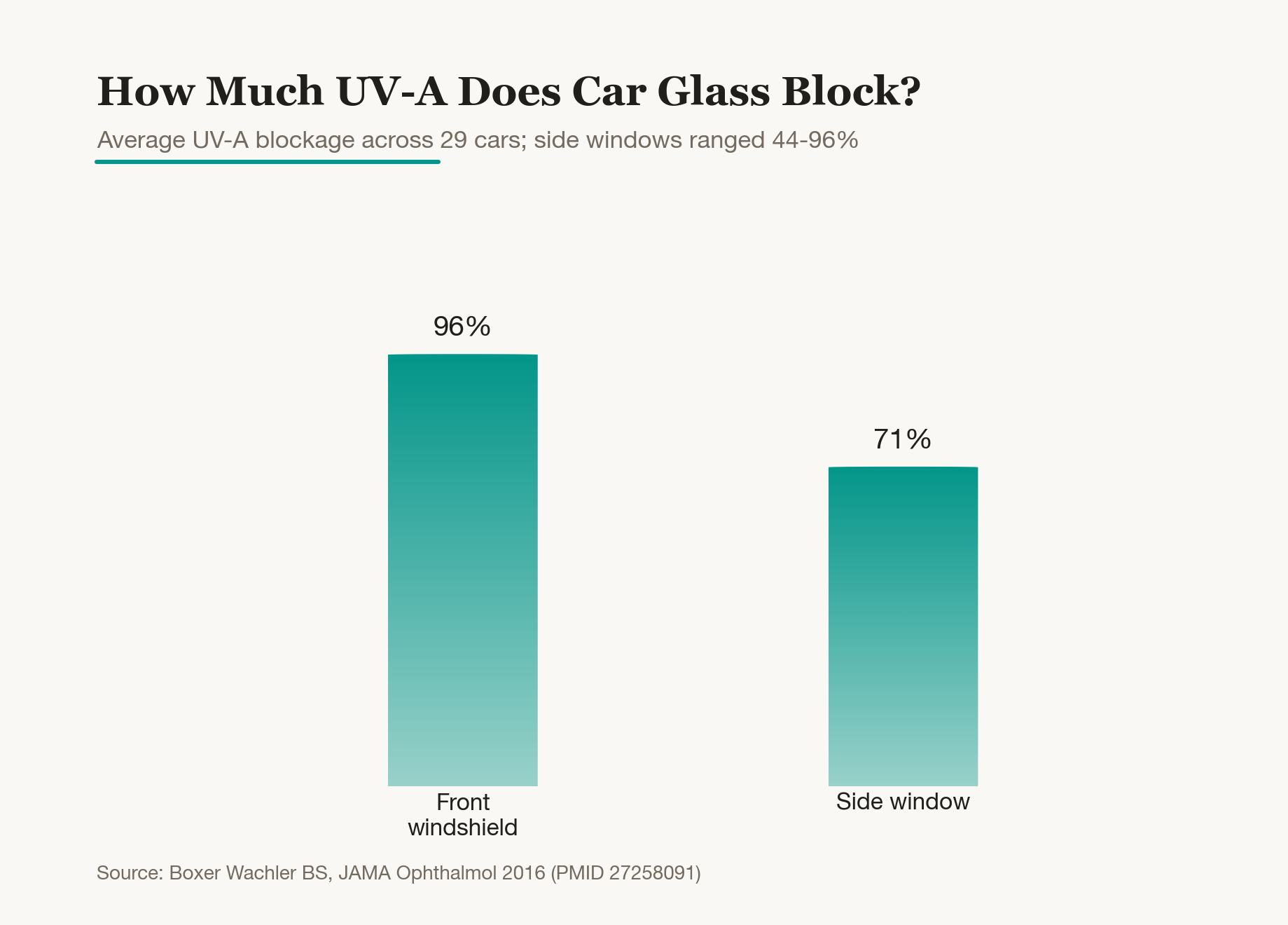
- Wear UV-protective gloves or long sleeves while driving. Car windows let a significant portion of UVA rays through, so being behind closed glass is not enough protection on its own.
- Consistent use of products with niacinamide or vitamin C is known to help suppress the pigment production process itself. That said, this is more about slowing down new darkening than fading spots that are already there.
- Follow up hand washing with moisturizer to help rebuild the barrier. Skin with a compromised barrier reacts more sensitively to UV exposure.
Do age spots have to be removed?
Age spots on the hands are almost always benign, so unless it bothers you cosmetically, there is no medical need to remove them. That said, the picture changes if a spot suddenly changes shape, develops an asymmetrical or spreading border, or shows a mix of different colors within it. Changes like these can, in rare cases, resemble early skin cancer, so it is safer to get a dermatologist's evaluation first before assuming it is a simple age spot.
Once a straightforward age spot diagnosis is confirmed, the treatments described above have a long track record, so there is not much reason for concern on the safety front. Still, darker skin tones tend to be more prone to temporary pigment changes after laser or cryotherapy, so it is worth discussing the right intensity for your skin type with your provider before treatment.
In the end, an age spot on the hand is not something that needs to be rushed off. The more sustainable approach is fading it gradually while also managing the underlying cause, ongoing UV exposure.
References
Korean Dermatological Association, American Academy of Dermatology (AAD), and Ministry of Food and Drug Safety (MFDS).
Was this helpful?
About this article
Written by a practising aesthetic physician and intended for general education — not a substitute for individual medical advice.
Read next
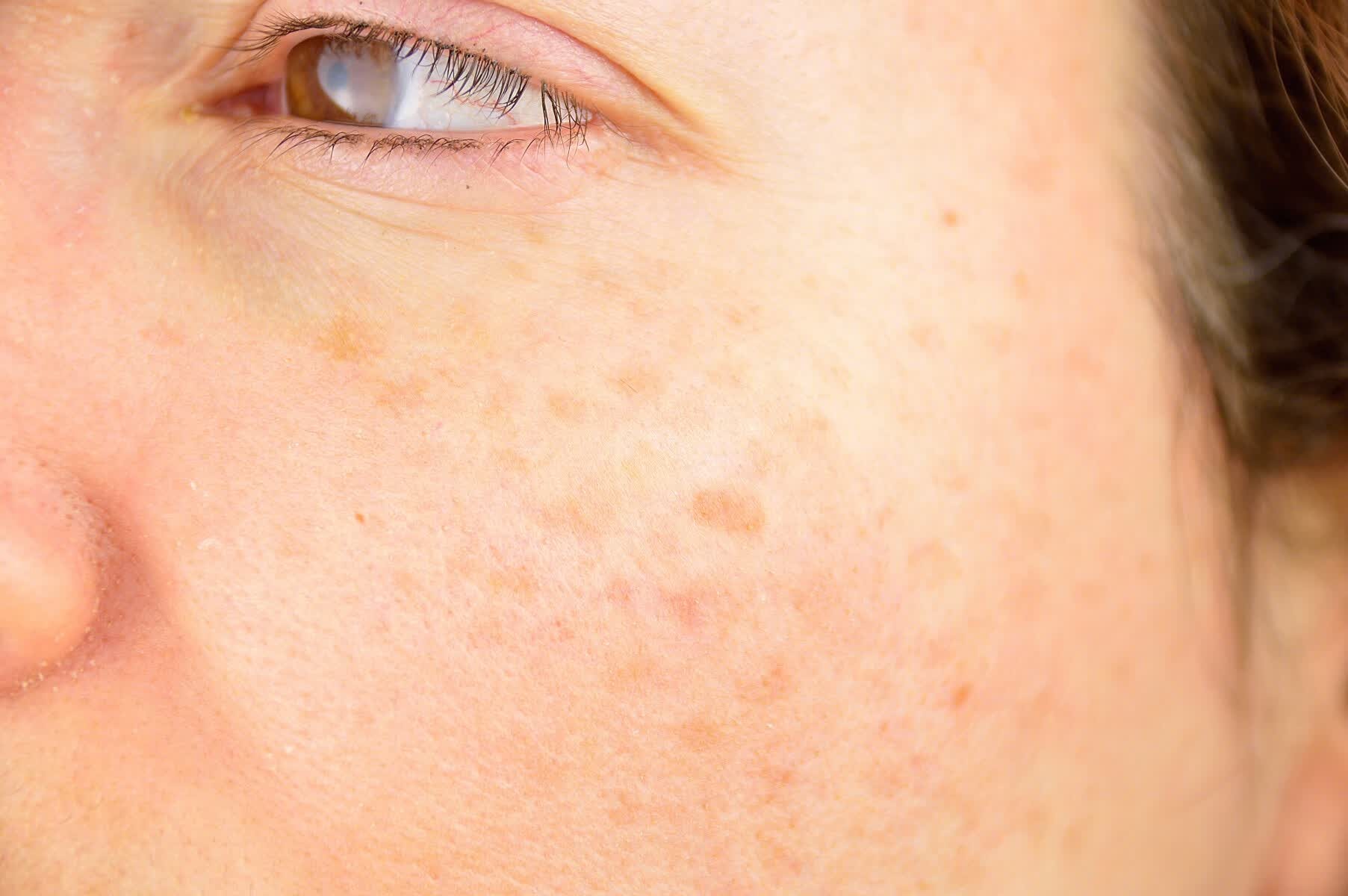
Freckles Versus Age Spots: Causes, How to Tell Them Apart, and Treatment
Freckles happen when the number of pigment cells stays the same but each one produces more pigment, a genetic response. Age spots happen when the number of pigment cells itself increases with age. Here's why they form differently and how they diverge in seasonal behavior and response to treatment.
By Dr. Kim

Exosome Treatment Effects: How Are They Different From Stem Cells?
Exosomes are tiny signal packets that cells release into their surroundings, delivering only the messages a stem cell creates rather than the stem cell itself to the skin. Here is a plain look at how exosomes carry regeneration and calming signals, why clinics so often pair them with laser treatments, and how much evidence has actually built up so far.
By Dr. Kim
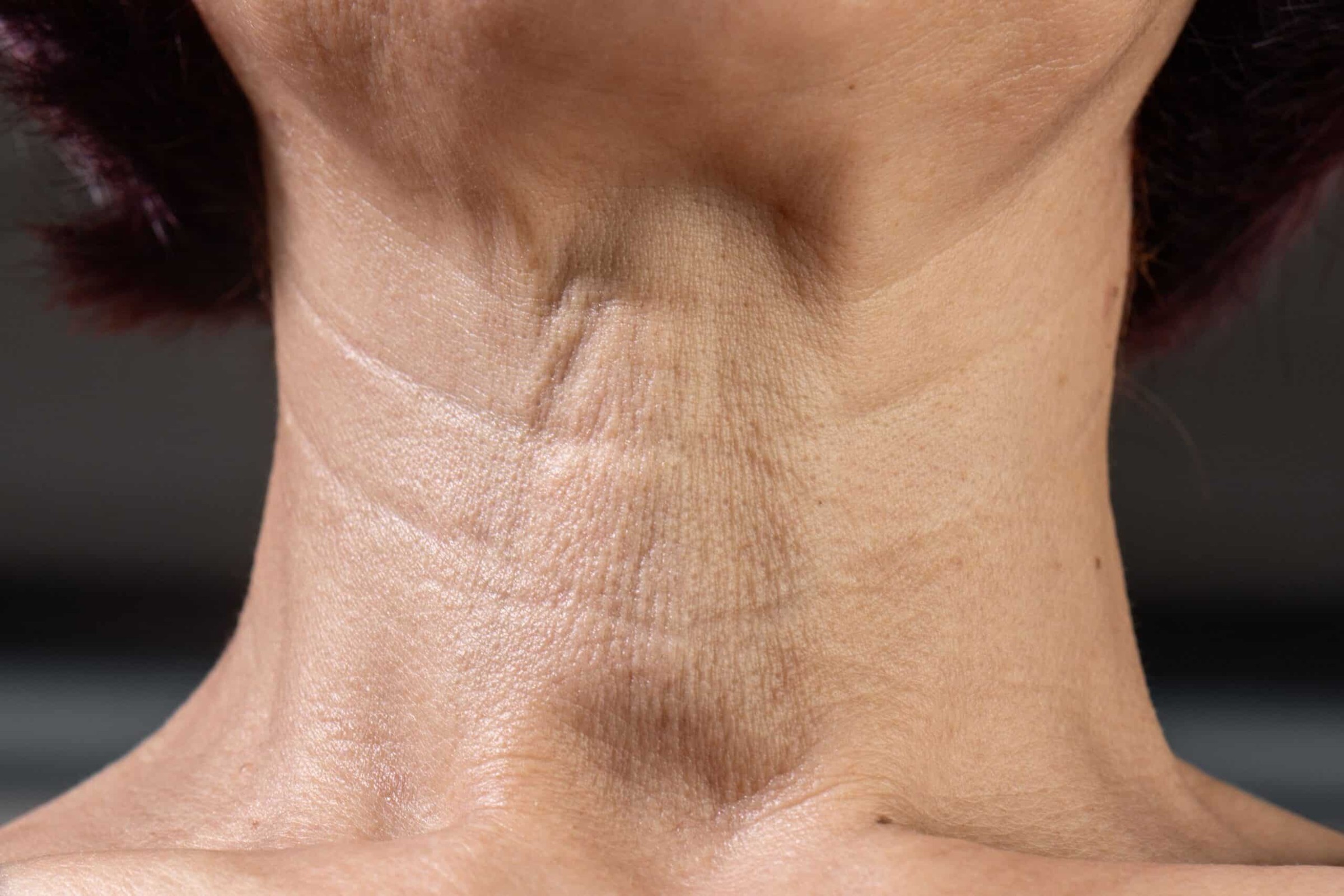
Neck Wrinkles: Causes and Treatment, and Can Botox and Lifting Help?
The neck has thinner skin and fewer oil glands than the face, so it tends to lose firmness earlier, and because it moves constantly, vertical bands and horizontal lines often show up together. Here is why sagging and lines overlap on the neck, and how both skincare and treatments work to address them.
By Dr. Kim