Freckle Laser Effects: Is Pico or Q-Switched Laser Better?
By Dr. Lee9 min read
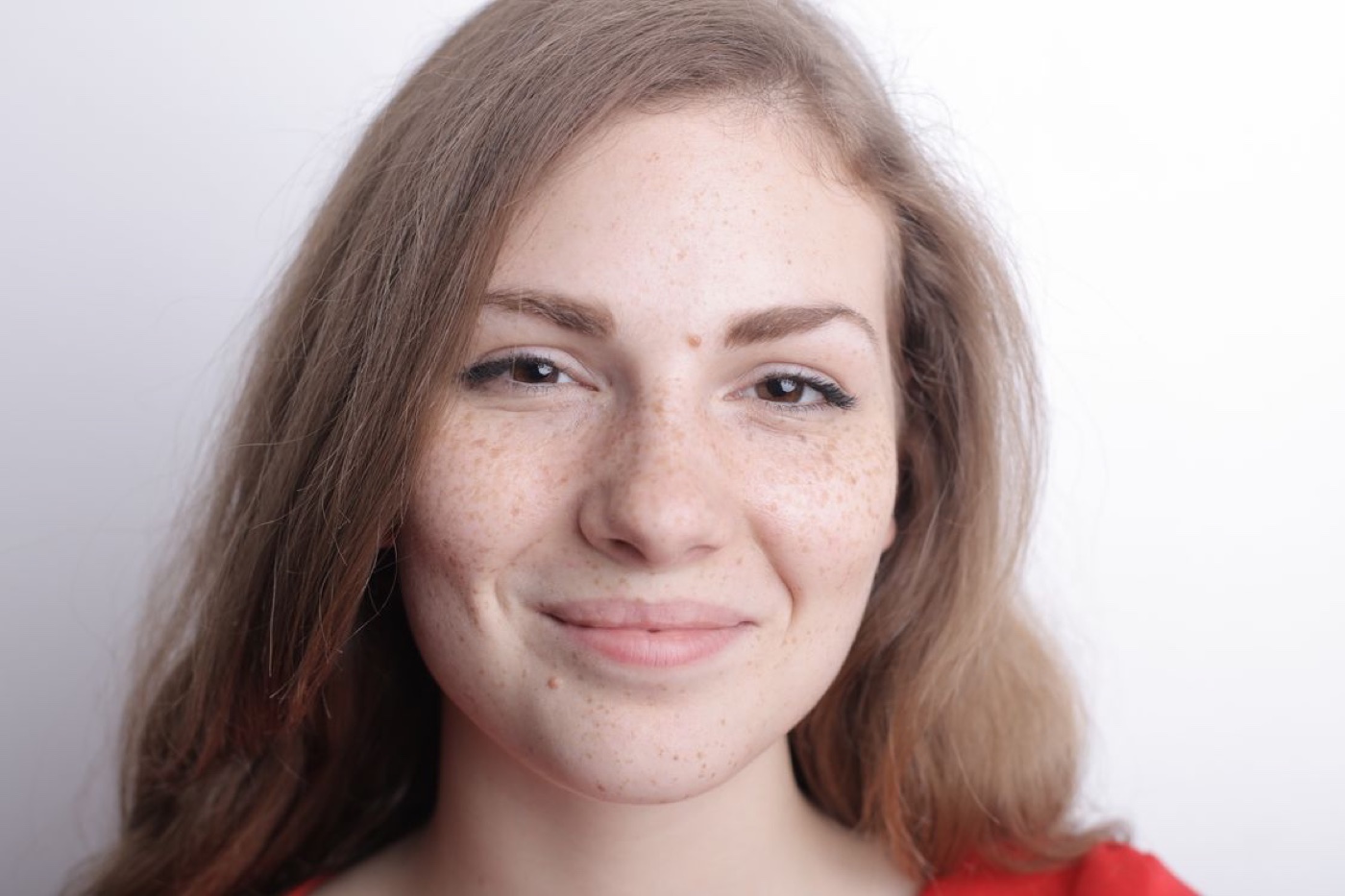
Small freckles scattered across the nose and cheeks often show up from childhood, resist coverage with makeup, and tend to darken and become more noticeable in summer. Topical brightening products only go so far, so lasers and light-based treatments that target pigment directly are widely used.
Fortunately, freckles sit in a shallow layer of the skin, which makes them a type of pigment that responds well to laser treatment. They tend to fade much more easily than melasma, and patient satisfaction tends to be high. That said, Korean skin can develop hyperpigmentation after treatment, so which device you use and how matters more than you might expect. We'll go through how freckles differ from melasma, whether to choose pico or Q-switched, and how to care for your skin afterward.
Why do freckles darken in the sun?
Freckles form from a combination of genetic tendency and UV exposure. In people whose melanocytes respond sensitively to UV light because of the MC1R gene, sun exposure doesn't produce pigment evenly. Instead it clumps into small dots. That's why freckles tend to appear on sun-exposed areas like the nose and upper cheeks, and why they darken in summer and fade in winter.
This pigment sits in a shallow layer close to the skin's surface. The principle behind how lasers fade freckles is called selective photothermolysis. Melanin, the pigment granule, absorbs certain wavelengths of light particularly well, and 532nm, in the green range, is a prime example. Firing this wavelength targets melanin specifically, heating it instantly so it breaks apart, without significantly damaging the surrounding skin.
The broken-down pigment either forms a fine crust that sheds within a few days, or gets cleared away by the body's immune cells, fading the color. Because freckle pigment sits shallow, it tends to respond relatively well to this light, which is why treatment results are often better than they are for melasma. IPL works on the same principle, using multiple wavelengths of light to heat and lift shallow pigment. But being shallow also means the pigment is easily re-triggered by UV exposure, which is why aftercare matters just as much as the treatment itself.
How freckles differ from melasma
Freckles and melasma are easy to confuse since both show up as brown pigment on the face. But they differ in cause, age of onset, seasonal pattern, and how they respond to treatment, so telling them apart matters. Getting it wrong can send treatment in the wrong direction.
| Category | Freckles | Melasma |
|---|---|---|
| Cause | Genetics and UV | UV, hormones, heat |
| Onset age | Childhood | After the 30s |
| Shape | Small, well-defined dots | Broad, hazy patches |
| Location | Nose, upper cheeks | Cheekbones, forehead |
| Seasonal change | Darkens in summer | Little change |
| Laser response | Generally fades well | Tricky, recurs often |
Freckles usually appear from childhood and show up as small, well-defined dots. They darken with summer sun and fade in winter, which is a defining trait. Melasma appears after the 30s as broad, hazy patches, and because hormones and heat play a role alongside UV, it shows less seasonal variation. Most importantly, melasma is sensitive to lasers and can actually get darker if treated carelessly, so it calls for a cautious approach. The two often appear together, so it's safer to have an experienced provider correctly identify the type of pigment before setting a treatment plan.
Pico, Q-switched, or IPL: which one suits you?
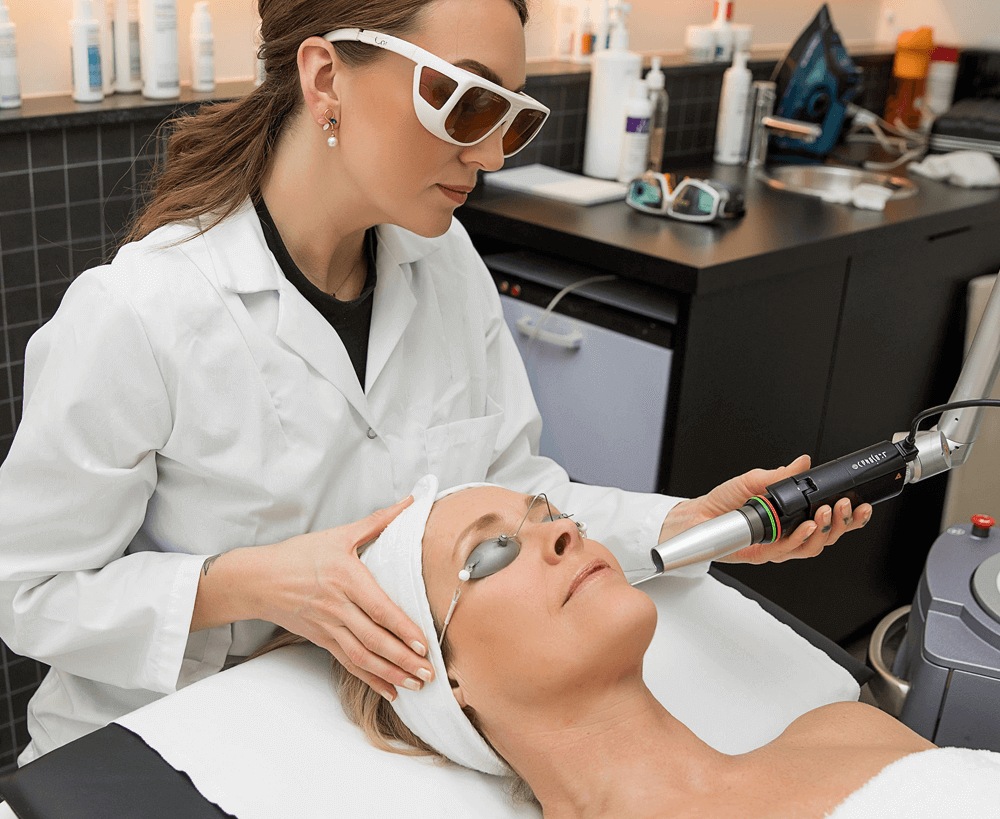
Light-based treatments for freckles generally fall into three categories. The first is the Q-switched Nd:YAG at 532nm. It's strong at breaking down pigment forcefully, making it good for fading well-defined freckles in a single pass. This method has been used to treat pigment in Korea for a long time, and devices like the Hollywood Spectra and RevLite SI belong to this category.
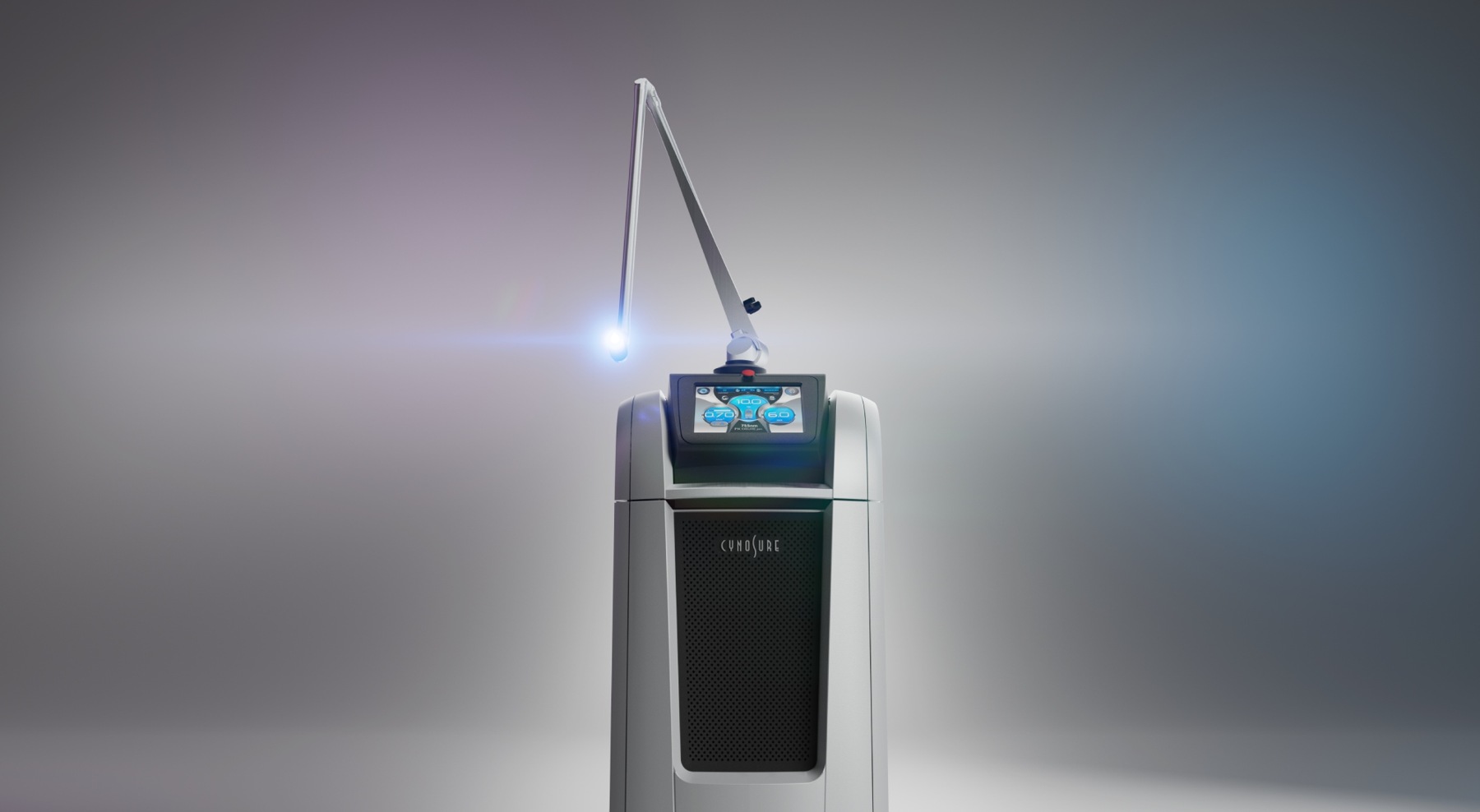
The second is the picosecond laser. Its pulse duration is far shorter, measured in trillionths of a second, so it breaks down pigment more through mechanical shock than heat. Because heat spreads less to the surrounding tissue, side effects like hyperpigmentation are less common, which makes it well-suited to darker skin tones. PicoSure and PicoPlus, widely used in clinics across Korea, are the leading picosecond devices.
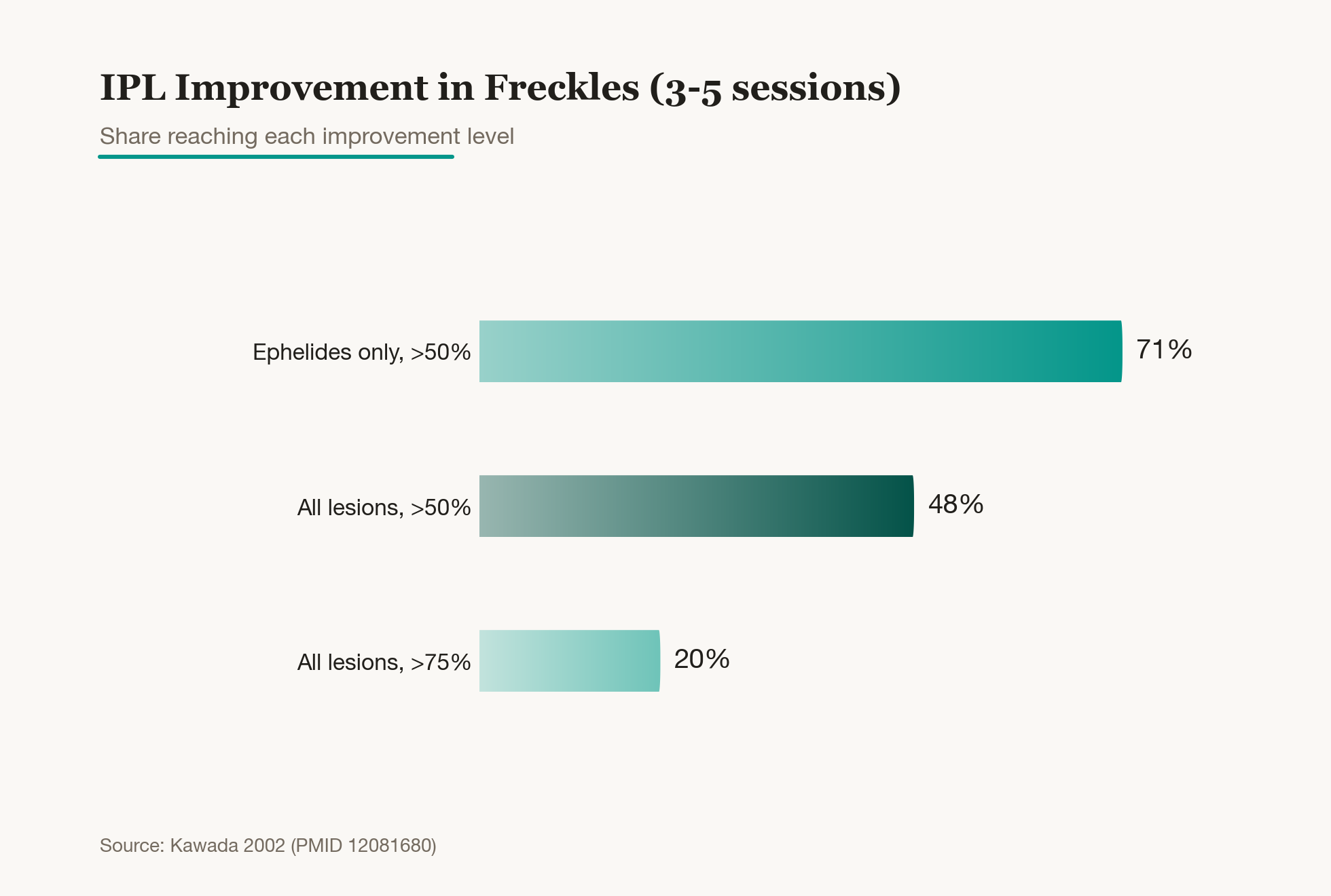
The third is IPL, a broadband light treatment. Using multiple wavelengths at once, it's effective at clearing freckles along with faint blemishes and redness across a wider area. In one study, 71% of people with freckles alone saw their pigment fade by at least half after 3–5 IPL sessions. That said, IPL is better suited to evening out overall facial tone than to reliably erasing one very dark spot. If dark, well-defined freckles are the main concern, a laser is the better fit; if the concern is widespread, faint freckles and dullness, IPL fits better. In practice, the two are sometimes combined, using IPL to even out overall tone first, then finishing off any remaining dark spots with a laser. Getting an accurate read on what form your freckles take has a big influence on the outcome, and it's worth choosing the device accordingly.
Does pico cause less pigmentation?
Even at the same 532nm, results differ depending on how briefly the light is fired. As the name suggests, a picosecond laser fires light in trillionths of a second. Q-switched lasers operate on the longer nanosecond scale. The shorter the pulse, the more the pigment-breaking force comes from mechanical shock rather than heat, leaving less time for heat to spread into the surrounding skin.
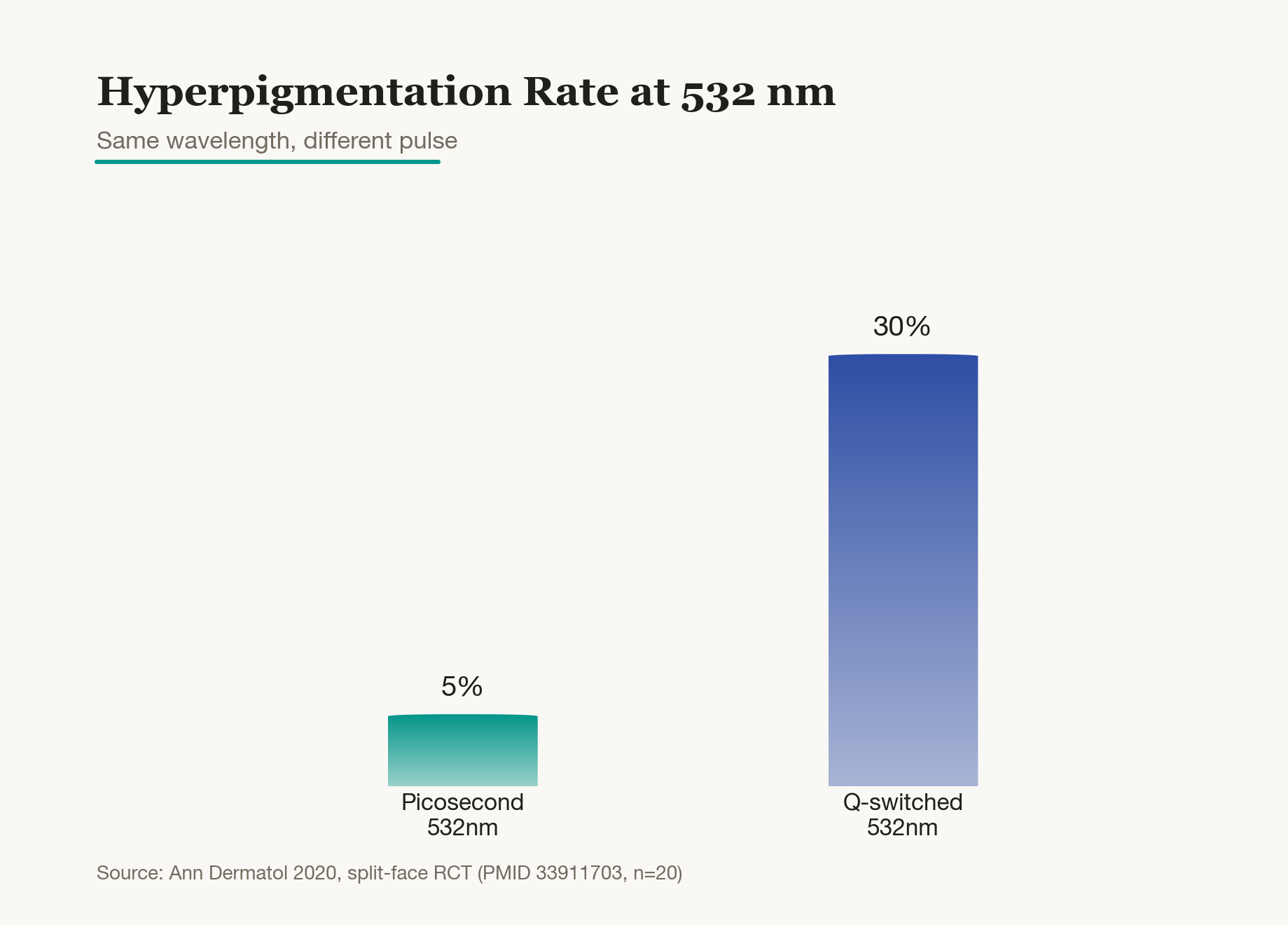
This difference shows up clearly in side effects. In a split-face study comparing both sides of the same face, post-treatment hyperpigmentation occurred in 5% of picosecond-treated sides versus 30% of Q-switched sides. Pigment clearance was actually better with picosecond, while hyperpigmentation was lower. For skin types prone to post-treatment hyperpigmentation, like Korean skin, this is a significant advantage.
That doesn't mean Q-switched falls short, though. It's strong at forcefully breaking down well-defined freckles and is reasonably priced, so with the intensity properly matched to skin tone and pigment condition, it delivers plenty of satisfying results. Q-switched devices have also shown excellent improvement across various pigment types in darker skin tones in some reports. Rather than one being the clear answer, it's a matter of matching the device to your skin and pigment. If you're prone to post-treatment hyperpigmentation or have a mix of pigment types, picosecond is a safe bet, and if you want a few well-defined freckles reliably erased, Q-switched is also a solid choice.
Number of sessions and how long scabs last
Freckle lasers often produce a noticeable change after just one session. Well-defined freckles fade visibly after one or two laser sessions, while widespread cases or IPL are spread across 3–5 sessions to even out tone gradually. Results build up with each additional session.
Downtime is generally mild. The treated spots darken slightly and form a fine crust, which typically sheds naturally within 5–7 days. Forcing the crust off during this period can lead to hyperpigmentation or scarring, so it's best to leave it alone until it falls off on its own and keep the skin well moisturized. IPL leaves little to no crust, so it allows a quicker return to daily life.
You may notice mild redness or a stinging sensation for a day or two after treatment, but this usually settles quickly. The side effect that deserves the most attention is hyperpigmentation. The risk rises if your skin tone is darker or if you've been sunburned recently, so lowering the treatment intensity and being strict about sun protection is the safer route. You can usually wash your face and wear light makeup starting the next day, and you only need to avoid hot saunas or aggressive exfoliation for a few days. The spot where the crust fell off can stay red or lighter for a while, and exposure to UV during this time makes it easy for pigment to settle back in, so sun protection during the first few weeks matters especially.
Do removed freckles come back?
One thing worth addressing honestly in freckle treatment is recurrence. Since freckles stem from a genetic tendency to react to UV exposure, even after a laser clears the pigment, continued strong sun exposure can bring faint freckles back over time. Summer UV exposure is a common trigger.
That's why treating freckles is less a one-time fix and more about maintaining the improvement you've achieved. The most important factor is sun protection. Applying sunscreen generously every day and reapplying it every few hours is the key to making laser results last. Reducing sun exposure with a hat or umbrella helps too.
| Care | Method |
|---|---|
| Sun protection | Daily SPF, reapply |
| Physical blocking | Hat, umbrella |
| Recurrence risk | Summer UV |
| Crust care | Don't peel it off, moisturize |
| Maintenance treatment | Check in each season |
If freckles start to reappear, a light touch-up session when the seasons change can smooth things back out. Consistent sun protection slows the pace of recurrence, and when freckles do reappear, they're often fainter than before. Freckles aren't a stubborn problem to eliminate. With consistent care, they're a type of pigment you can keep in check for clear skin over the long term. Confirming whether your pigment is freckles or melasma, and finding a provider who sets the device and intensity to match your skin tone, leads to safe and satisfying results.
Was this helpful?
About this article
Written by a practising aesthetic physician and intended for general education — not a substitute for individual medical advice.
Read next
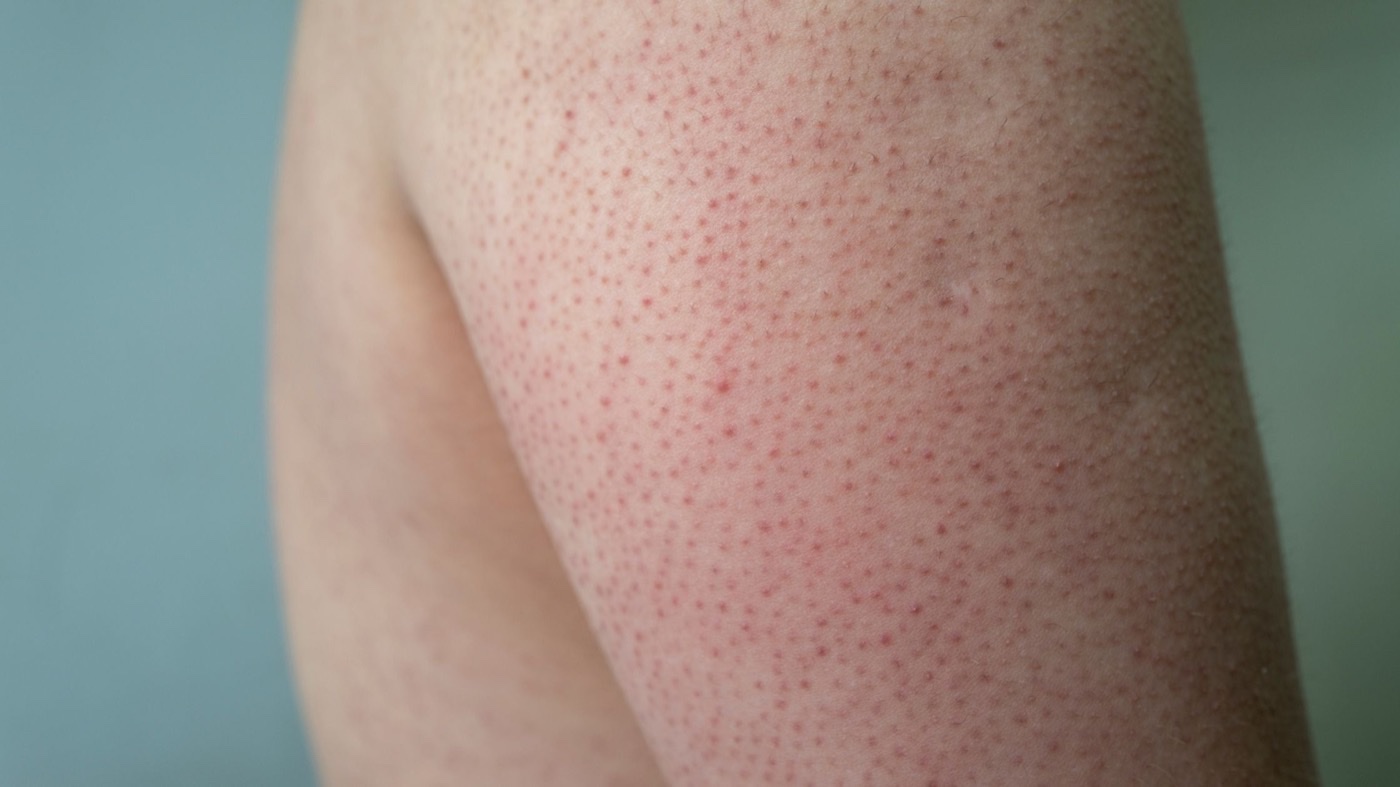
Keratosis Pilaris Causes, Keratolytics, and Laser Effects
Keratosis pilaris, the bumpy skin on the arms and thighs often called chicken skin, is extremely common. We'll cover why it happens, how to choose a keratolytic like urea, salicylic acid, or a retinoid, and how much lasers can actually help. It's not a condition that clears up in one treatment, it's one you manage over time, and understanding that changes how you approach it.
By Dr. Kim
Under-Eye Syringoma Laser Effect: Which Is Better, CO2 or Erbium YAG?
Why the little bumps under your eyes are so stubborn, how to tell syringoma from milia, how CO2 and Erbium YAG lasers differ in results and recovery, and how to manage recurrence and pigmentation, explained simply with real study numbers.
By Dr. Kim
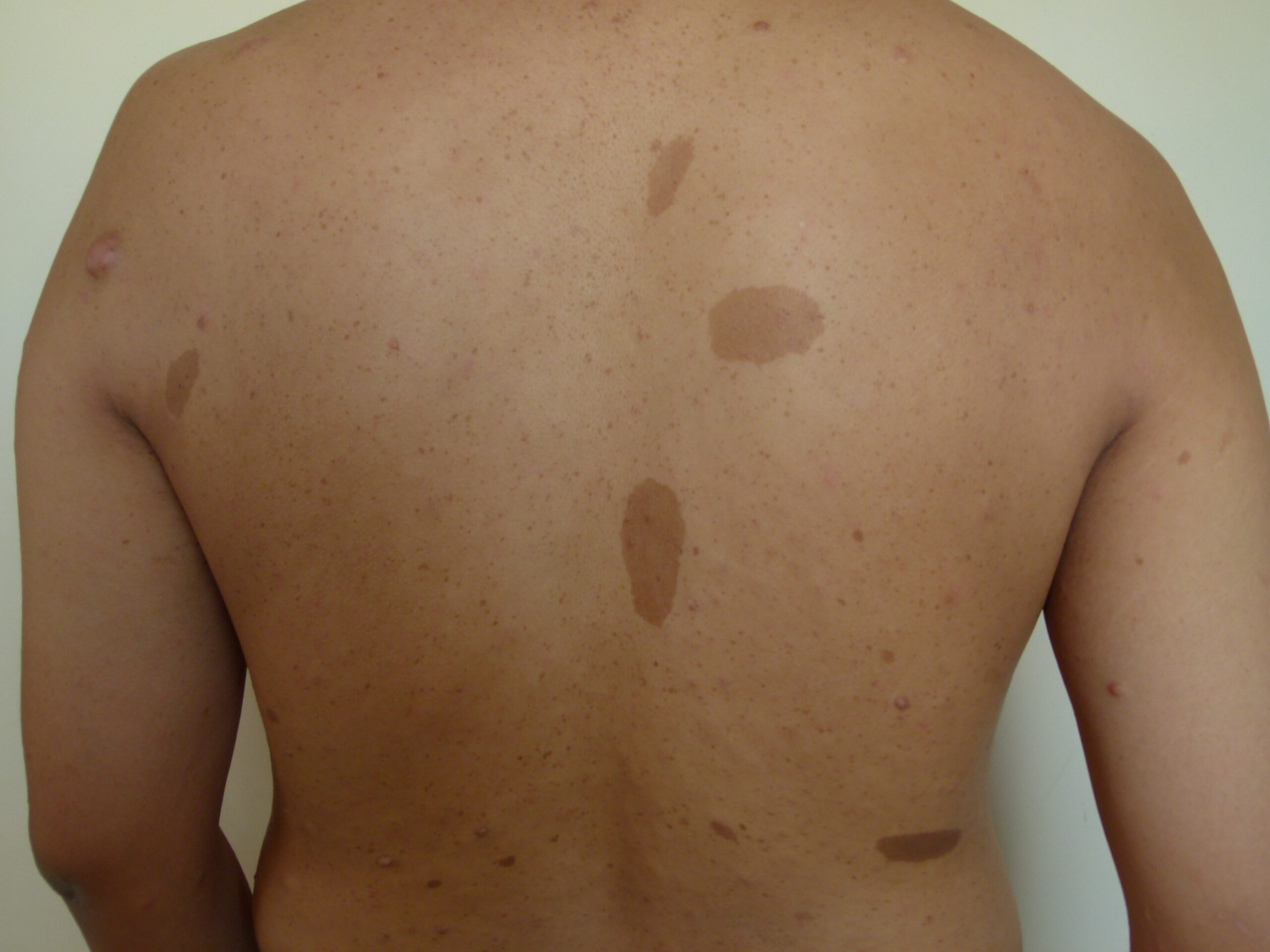
Cafe-au-Lait Spots: Laser Effect, Recurrence and Telling Them From Moles and Melasma
A cafe-au-lait spot is a light milk-coffee brown patch on the cheek or arm, and because its pigment sits in the shallow epidermis, laser light reaches it easily, though it also tends to come back. Here's how to tell it apart from moles and melasma, why multiple spots call for a check-up, how much laser treatment can fade it, and how to manage recurrence.
By Dr. Kim