Keratosis Pilaris Causes, Keratolytics, and Laser Effects
By Dr. Kim7 min read
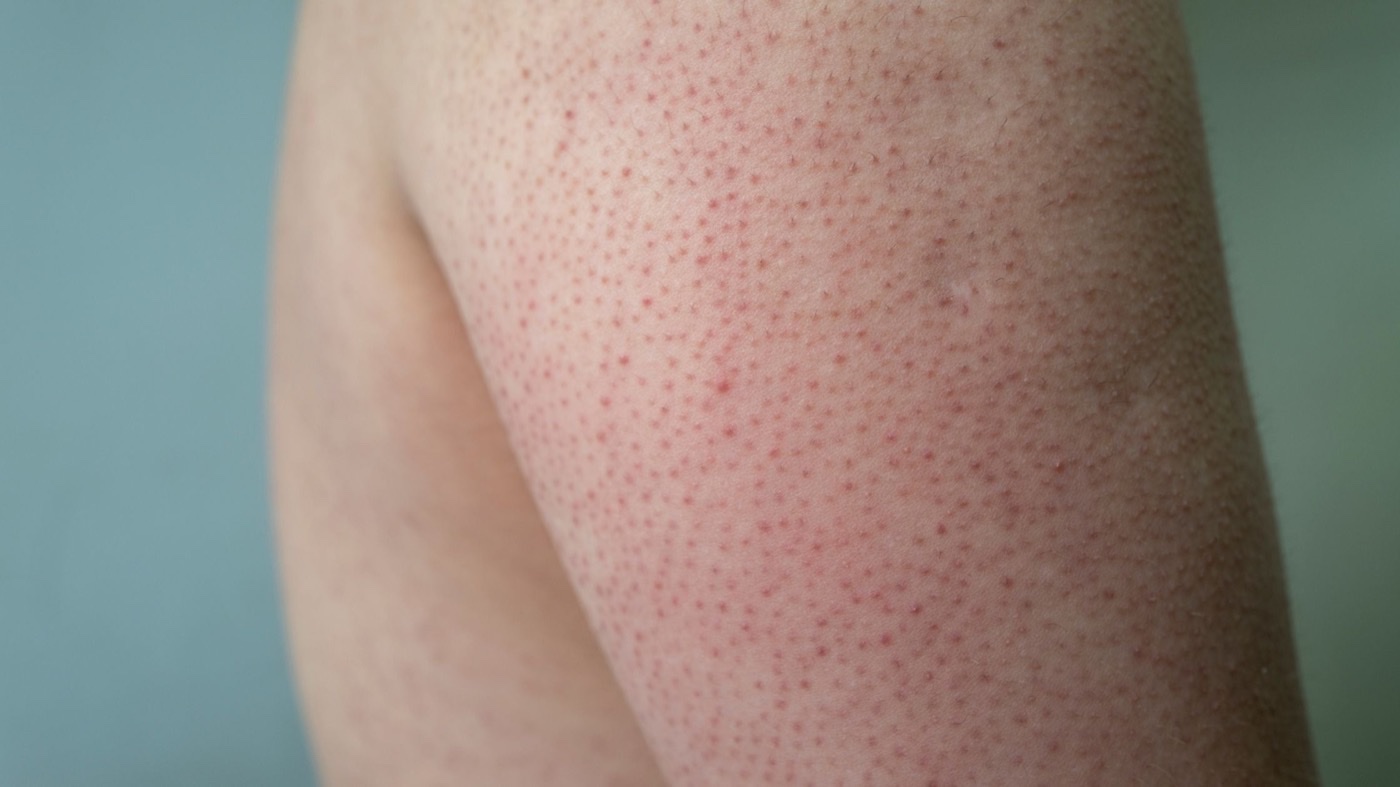
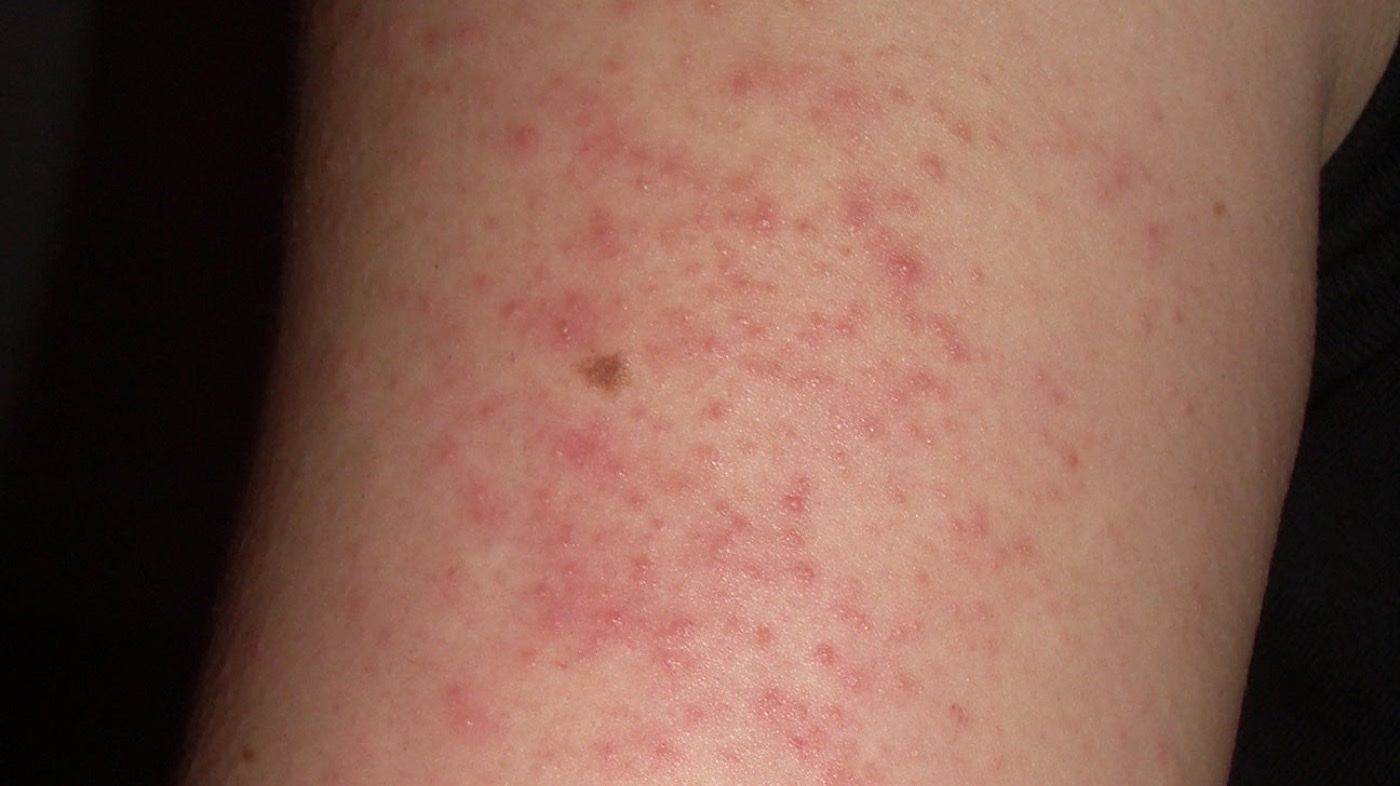
If you run a hand over the outside of your upper arms, your thighs, or your cheeks, you may feel small, sandpaper-like bumps. They can look red or leave behind pigment, which makes them easy to mistake for acne or breakouts, but in most cases, this is keratosis pilaris. Often called chicken skin, it's extremely common, appearing in more than half of teenagers, and it doesn't go away from squeezing or picking at it.
We'll go through why keratosis pilaris happens, how to choose an at-home keratolytic, and how much lasers can help. First, it helps to know that keratosis pilaris isn't a condition that clears up in one treatment. It's one that responds to ongoing management. Understanding this explains why the right ingredients and consistency matter, and why claims of a complete cure deserve some skepticism.
Why does keratosis pilaris form?
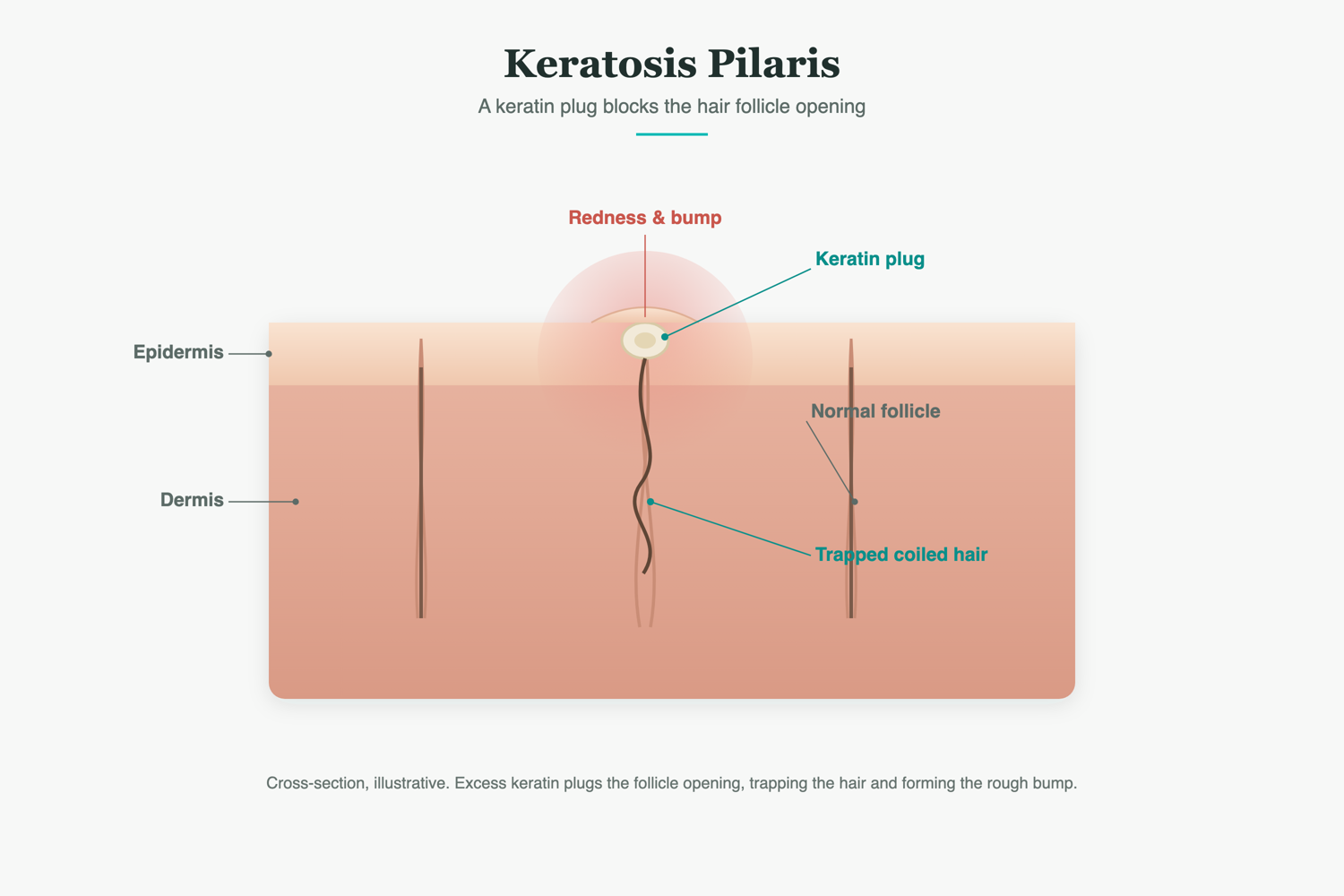
Keratosis pilaris happens when keratin builds up more thickly than normal at the opening of a hair follicle. Normally, old skin cells shed away naturally, but when this process goes wrong at the follicle opening, keratin plugs it up like a stopper. Each of these tiny keratin plugs is what you feel as a small bump, and a fine, coiled hair is often trapped inside.
Exactly why this keratin buildup happens isn't fully understood yet. For a long time, the plug itself was seen as the cause, but recent research has found that the sebaceous gland next to the follicle appears shrunken from an early stage. The explanation is that when the gland produces less sebum than it should, keratin can't shed properly, leading to buildup and abnormal hair growth.
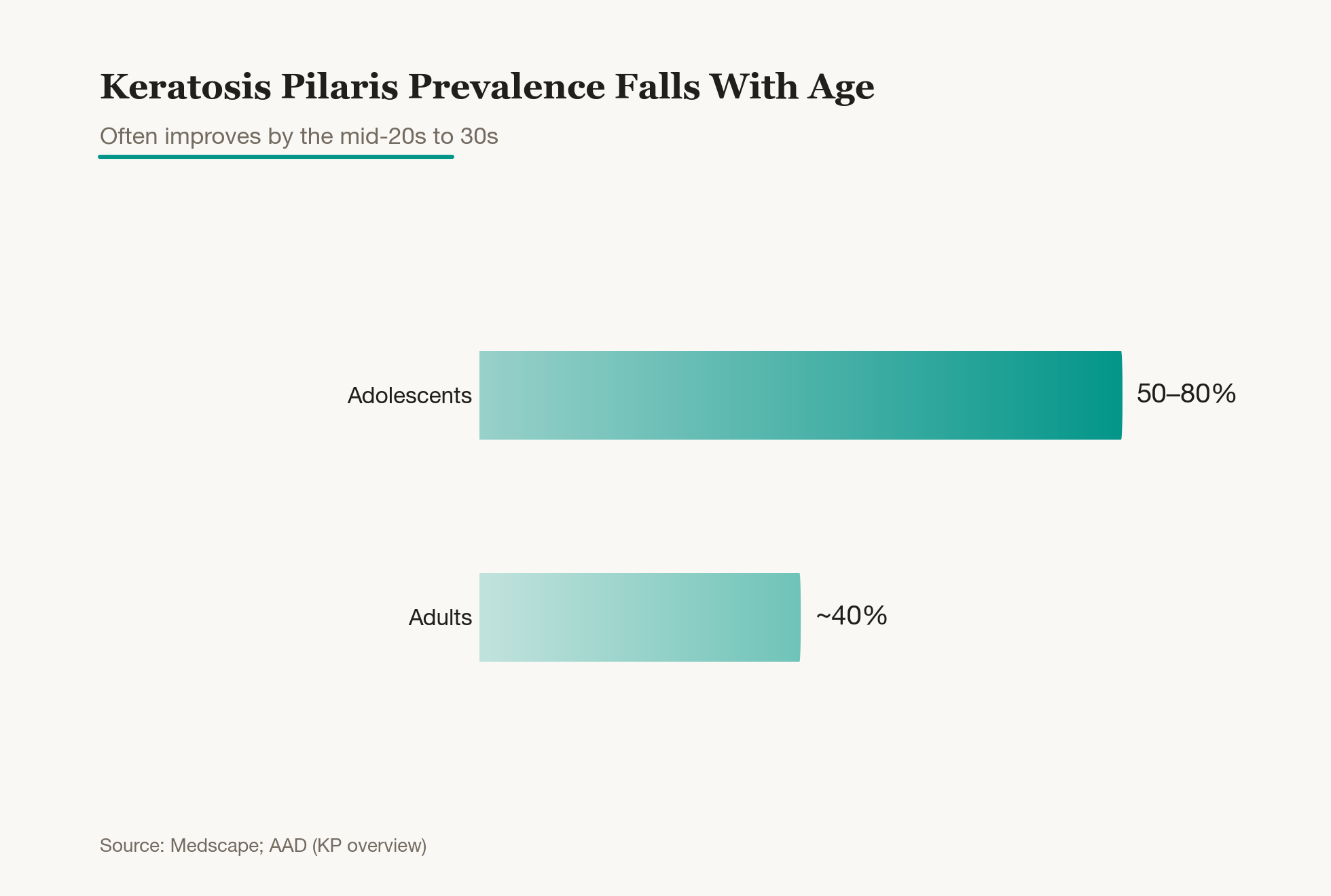
Keratosis pilaris frequently appears alongside dry skin, atopic dermatitis, and ichthyosis. These are all linked to filaggrin, a protein that helps build the skin barrier, which is why it's more common in people who are genetically prone to dry skin. In fact, it's common enough that 50–80% of teenagers have it. It's less a disease than a very common trait of the skin.
Does it go away on its own with age?
Keratosis pilaris usually appears in childhood or adolescence and tends to fade gradually with age. Many people who developed it in their teens see a noticeable improvement by their mid-20s, and for a good number of them, it has faded substantially by around age 30. As the chart above shows, prevalence is high during adolescence and drops to around 40% in adults.
That said, it doesn't disappear completely for everyone. For some people it lingers into adulthood, and even later in life, on areas like the arms or thighs. It tends to stick around longest in spots where keratin naturally accumulates, like the outer upper arms and front thighs. It can improve and then flare up again during the dry winter months. So keratosis pilaris isn't something that gets cured in one go. It's something you manage to help the natural improvement along and keep flare-ups in check.
It's worth knowing this upfront. Advertisements that promise a complete cure or claim to eliminate it with one treatment deserve some caution. In reality, consistent care can noticeably soften your skin's texture and redness, and it's more realistic to expect that kind of improvement alongside the natural fading that happens over time. Thinking of it as keeping the bumps less noticeable, rather than eliminating them, is both more accurate and easier to live with.
Four keratolytics you can use at home
The core of at-home care is a keratolytic that gently dissolves the buildup. There are four main ingredients.
The first is urea. It softens keratin while holding onto moisture at the same time, which makes it well suited to the dry, rough texture of keratosis pilaris. Moisturizers typically contain around 10%, while products for thicker buildup use 20–40%. A study using 20% urea showed a clear improvement in skin texture satisfaction.
The second is salicylic acid. Being oil-soluble, it's good at dissolving keratin inside the pore, and it's usually used at 2–5%. The third is lactic acid and ammonium lactate, which loosen the bonds between keratin cells while also providing moisture, so formulas typically run at 10–12%.
The fourth is topical retinoids like tretinoin and adapalene. These normalize the cycle of skin cell growth and shedding and are added for cases that don't respond well to other treatments. They can be irritating, though, so it's best to start with a small amount. Regardless of which ingredient you choose, starting at a low concentration and increasing it as your skin adjusts is the safer approach rather than going strong from the start.
Concentration by ingredient and suitable skin types
Each ingredient works a little differently and suits different skin types. Here's a summary.
| Ingredient | Common concentration | How it works | Things to know |
|---|---|---|---|
| Urea | 10–40% | Softens keratin, holds moisture | Higher concentrations can irritate, start low |
| Salicylic acid | 2–5% | Dissolves keratin inside the pore | Avoid overuse on large areas |
| Lactic acid, ammonium lactate | 10–12% | Loosens keratin bonds, moisturizes | May sting or have an odor |
| Retinoids (tretinoin, adapalene) | Low concentration | Normalizes cell turnover | Can irritate, avoid tretinoin during pregnancy |
In practice, sticking with one ingredient consistently works better than rotating through several at high strength. Keratolytics absorb better and irritate less when applied right after a bath, while the skin is still damp. Following up with a moisturizer to protect the skin barrier also helps reduce stinging.
One thing to watch out for: scrubbing the bumps with a rough exfoliating cloth or harsh scrub only irritates the skin further and increases redness and pigmentation. The goal is to gently dissolve the buildup with active ingredients, not physically scrape it off.
Does laser work for keratosis pilaris?
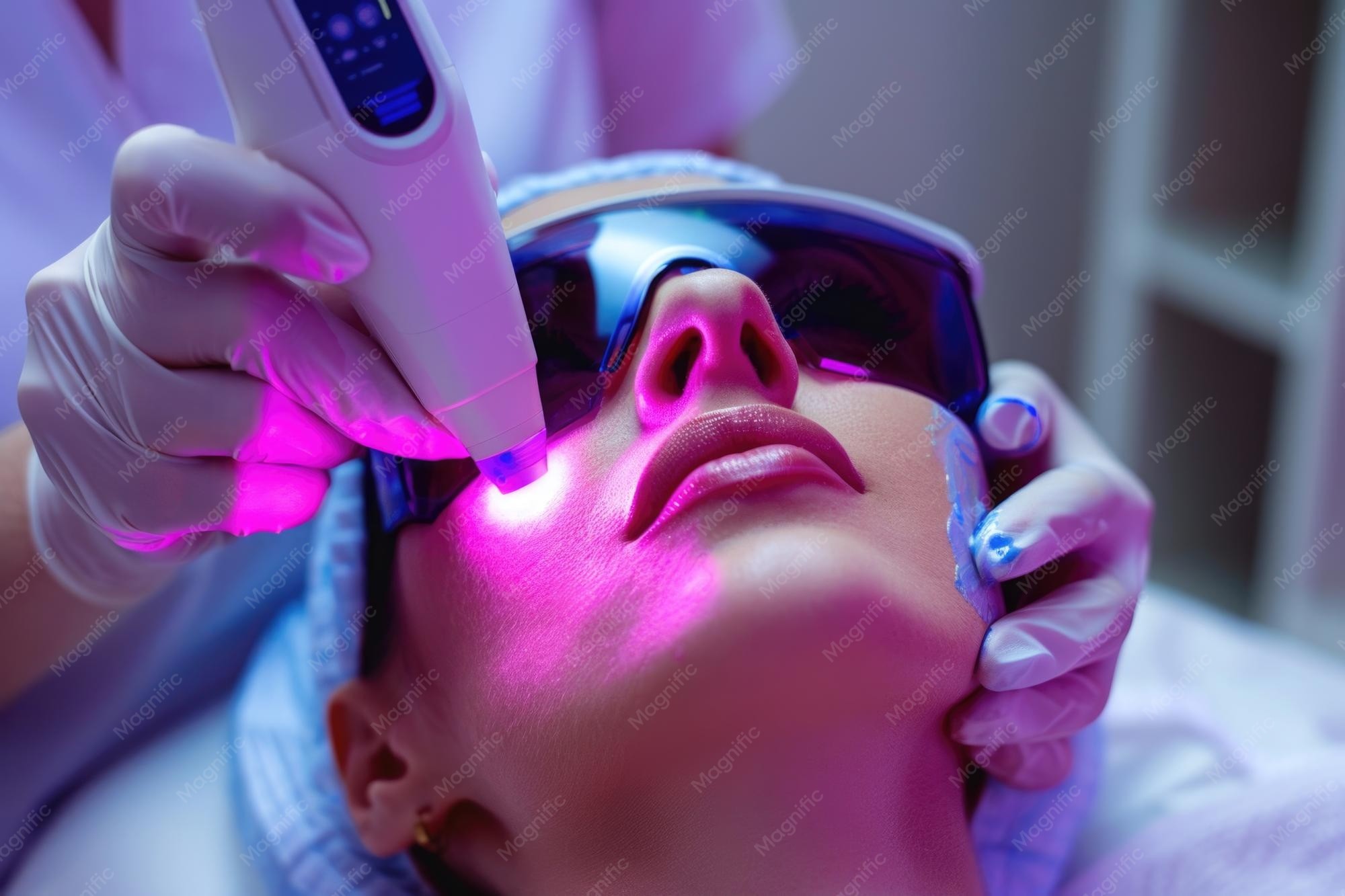
When topical care doesn't fully resolve the redness or texture, lasers become an option. Lasers address the two separate problems in keratosis pilaris, redness and bumpy texture, one at a time.
For cases with prominent redness, vascular lasers or KTP lasers that target blood vessels are used, reducing the redness from dilated tiny blood vessels. For rough texture, long-pulsed 1064nm Nd:YAG lasers have been studied. In one study, treating only one arm three times at 4-week intervals produced a noticeably greater reduction in redness and keratotic bumps compared with the untreated arm. Another study found a meaningful reduction in skin roughness after four treatments, with no burns or pigment changes reported.
One thing should be clear here. Lasers can improve redness and texture, but they don't cure keratosis pilaris. The underlying keratin buildup and skin tendency remain, so if you stop maintenance care, it can become noticeable again over time. Lasers aren't a substitute for topical care. They're better thought of as a way to help with redness or texture that isn't responding well to topical treatment on its own.
Why steady care matters
Managing keratosis pilaris comes down to three basics: moisturizing, gentle exfoliation, and not scratching or picking at it.
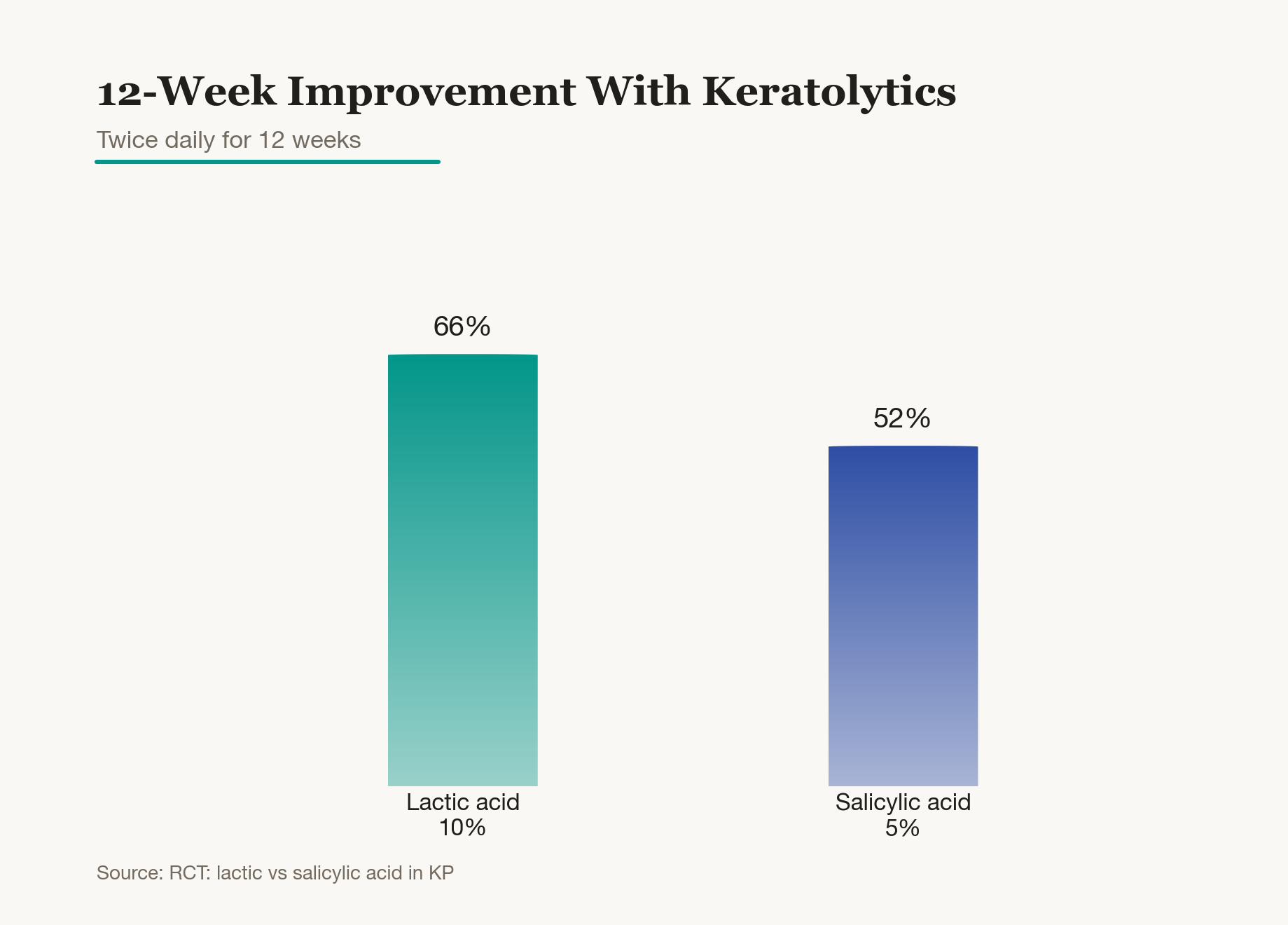
Consistency matters most. As the chart above shows, in a study where a keratolytic was applied twice a day for 12 weeks, lactic acid showed about a 66% improvement and salicylic acid about a 52% improvement. Both ingredients worked, with gradual improvement over the course of several weeks. Stopping after just a few applications tends to bring things back to where they started.
Since dry skin leads to more keratin buildup, don't skip moisturizing. Applying moisturizer within 3 minutes of bathing helps lock in hydration. Avoid long, hot baths or aggressive scrubbing. If redness or pigment has lingered, use sun protection on exposed areas too, since UV exposure can deepen that pigment.
Keratosis pilaris isn't a flaw you need to eliminate. It's an extremely common skin trait you manage over time. Rather than rushing toward the idea of a cure, finding ingredients that suit your skin and using them consistently will noticeably soften your skin's texture and redness. And the natural fading that comes with age is working in your favor too.
Was this helpful?
About this article
Written by a practising aesthetic physician and intended for general education — not a substitute for individual medical advice.
Read next
Seborrheic Keratosis Removal Methods: Laser and Cryotherapy Compared
Seborrheic keratosis, often called an age spot or wart-like growth, is a common benign skin lesion that can be removed with laser or cryotherapy. Here is how each method actually clears the lesion, and how to tell it apart from a mole or, rarely, a malignant spot.
By Dr. Lee

Tiny Facial Bumps: How to Tell Flat Warts, Milia and Skin Tags Apart, and How to Treat Them
The small bumps that show up on the face can look alike, but flat warts, milia, and skin tags have different causes and different treatments. Here is how to tell the three apart at a glance, the right CO2 and Er:YAG laser or electrocautery approach for each, how common they are, how they tend to recur, and real evidence on why removing them at home is risky.
By Dr. Lee
Cafe-au-Lait Spots Returning After Laser: Causes, Number of Sessions and Expectations
A café au lait spot forms because the pigment-making cells in that one patch of skin are locally overactive. Laser treatment breaks up the pigment that has already built up, but it doesn't switch off those cells, which is why the color so often returns. Here's the biology behind it, why results differ so much from person to person, and what a realistic treatment timeline actually looks like.
By Dr. Kim