Filler and Fat Grafting: Differences, Duration, and Reversibility Compared
By Dr. Lee7 min read
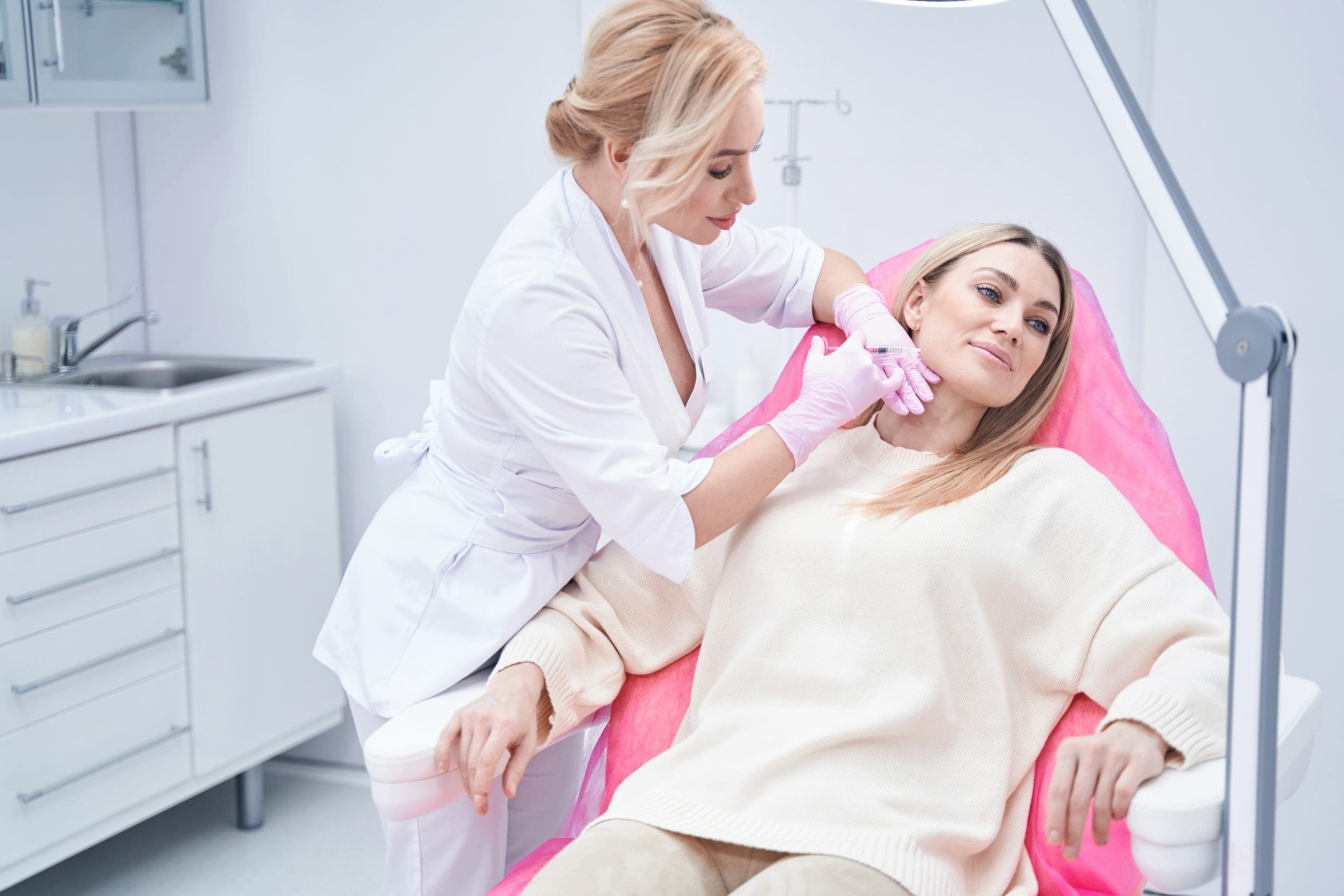
Filler and fat grafting both add volume to the face, but what happens inside the body afterward is completely different. Filler fills the space with hyaluronic acid, a manufactured gel. Fat grafting moves living fat cells from one part of your body to your face. Because the materials themselves are so different, how quickly they fade and whether a problem can be reversed end up being very different stories too.
Anyone weighing these two options usually wants answers to the same two questions: how long will it last, and can it be undone if something goes wrong or I simply do not like the look. To answer that, it helps to walk through what is actually happening under the skin.
How do filler and fat grafting differ?
Filler is a gel made by chemically cross linking hyaluronic acid (HA). HA itself is a substance your skin and joints already contain naturally, but the HA inside a filler has been chemically bonded strand to strand, like threads tied together, so it resists breaking down on its own. Because of that bonding, the body treats the gel as something that is not quite its own tissue.
Fat grafting works differently. Fat is drawn from an area like the abdomen or thighs and transferred to the face. Since the transplanted cells were always living tissue from your own body, the body does not treat them as a foreign substance. That single distinction is the first fork in the road that determines everything else, from how fast each material fades to whether it can be reversed later.
How filler is gradually absorbed
The HA inside a filler is gradually cut apart by hyaluronidase, an enzyme your body already produces to break down hyaluronic acid. Think of it as scissors trimming a piece of thread bit by bit. The enzyme snips the cross linked chains one at a time, and the gel slowly loses volume as it goes.
How tightly the HA was cross linked when the filler was made determines how fast this happens. A densely cross linked, firmer filler takes the enzyme longer to cut through, so it lasts longer. A more loosely cross linked filler breaks down faster. That is why reported longevity ranges so widely, from just a few months to a year or two, depending on the product and the area treated.
How much the injected area moves also affects the pace of absorption. Areas that flex constantly with facial expression, like the lips and the skin around the mouth, tend to break the filler down faster because the gel is repeatedly stressed by movement. Areas that barely move tend to hold the same product longer. It helps to picture the difference between a thread left alone and one that keeps getting tugged.
Why does grafted fat shrink so much right after transfer?
The moment fat cells are transplanted, their original blood supply is cut off. For those cells to survive, new blood vessels have to grow in to deliver oxygen and nutrients, and that process takes anywhere from several days to a few weeks. During that window, a significant number of cells simply cannot survive without enough oxygen and die off.
It is a bit like transplanting a potted plant. The plant wilts for a while until its roots can draw water from the new soil, and fat cells face a similar rough patch until new vessels take hold. That is why volume naturally drops in the days right after the procedure, and only the cells that make it through go on to settle permanently. How much survives varies quite a bit from person to person, depending on the graft site, how the fat was handled during the procedure, and each patient's own circulation.
Differences in how long filler and fat grafts last
Filler goes through a steady, ongoing process where enzymes nibble away at it from start to finish, so its volume keeps shrinking over time. Fat grafting is different. Once it gets past that early period of significant cell loss, the fat cells that survive become a normal, blood supplied part of your body.
Since surviving fat cells are no longer a foreign material but simply your own fatty tissue, they are not targeted by any specific breakdown enzyme. That is why the graft is described as essentially permanent once it clears the initial absorption phase. That said, if you gain or lose a significant amount of weight, this fat can change in volume along with the rest of your body fat, just as it always does. Being living tissue is exactly what makes that kind of change possible.
Is there a reversing injection only for filler?
One of the biggest advantages of filler is that it can be reversed. Injecting a hyaluronidase based dissolving shot into the treated area speeds up the same breakdown process the body was already doing slowly, compressing it into a much shorter window. In effect, a concentrated dose of the enzyme finishes in days what the body would otherwise have taken months to do on its own.
Fat grafting has no equivalent option. Once fat cells survive and integrate, they gain their own blood supply and become indistinguishable from the surrounding tissue, so there is no injection or medication that can selectively dissolve fat in just one spot. Reducing the volume generally means considering a physical removal method like liposuction. In short, filler is a manufactured chemical substance, so it can be chemically reversed. Fat is living tissue, which is exactly why it is so much harder to undo.
How are problems handled?
If a filler procedure ever leads to a complication like a blocked blood vessel, injecting hyaluronidase can quickly dissolve the filler causing the blockage and restore blood flow. Having that kind of immediate remedy available is one of the reasons filler is considered relatively safe.
With fat grafting, some of the cells that do not survive can leave behind a firm lump or an oil cyst, a pocket like structure that forms around dead fat cells, known as fat necrosis. There is no way to dissolve these instantly, so the typical approach is to monitor over time, or use massage, needle aspiration, or, if needed, a small incision to remove it. That is why the management approach for fat grafting complications leans toward physical intervention rather than chemical dissolution.
Both procedures share one thing in common: the practitioner's skill has a major effect on the outcome. With filler, how precisely the injection depth and layer are placed determines whether you end up with swelling or lumps. With fat grafting, how gently the fat is harvested and processed determines the survival rate of the transplanted cells. The materials behave differently, but in both cases, the skill of the person performing the procedure plays a critical role in the result.
Filler or fat grafting: which one suits you?
The right choice ultimately comes down to how you weigh longevity against reversibility. A few points worth considering:
- If this is your first time trying an area, filler is the lower risk option. If you are not happy with the result or a problem comes up, there is a dissolving injection that can reverse it.
- If you want a result that lasts a long time, fat grafting has the advantage. Once it survives the initial absorption phase, it settles in as living tissue and is described as essentially permanent.
- If you need to fill a large area, fat grafting offers more material to work with. Because the fat comes from your own body, it is often possible to handle a larger volume in a single session than filler allows.
- If you need a short recovery, filler tends to be easier on you. Since there is no liposuction step involved, swelling and bruising are generally reported to be milder.
These two treatments are less like competitors and more like different tools that answer different needs. Which one fits you better depends on which area you want to treat, how long you want the result to last, and what kind of approach you are comfortable with.
References
Korean Dermatological Association, American Academy of Dermatology (AAD), and Ministry of Food and Drug Safety (MFDS).
Was this helpful?
About this article
Written by a practising aesthetic physician and intended for general education — not a substitute for individual medical advice.
Read next

REJUVIEL Filler Lineup: How Long It Lasts and Aftercare
REJUVIEL is a hyaluronic acid filler made by Pharma Research, built from a French medical grade raw material that is crosslinked so it does not break down too quickly in the body. The V, W, and C lines differ in particle size and firmness, so each is used for different areas. Here is how the crosslinked structure creates volume and absorbs slowly, and how the lines differ from one another.
By Dr. Kim

Recessed Chin Filler and Implant: Differences, Duration and Recovery Compared
Filler and implants both correct a recessed chin, but they build volume through different mechanisms, last for different lengths of time, and differ in whether the result can be reversed. Here is how each one works, what recovery looks like, and how to decide which fits you.
By Dr. Kim
Cafe-au-Lait Spots Returning After Laser: Causes, Number of Sessions and Expectations
A café au lait spot forms because the pigment-making cells in that one patch of skin are locally overactive. Laser treatment breaks up the pigment that has already built up, but it doesn't switch off those cells, which is why the color so often returns. Here's the biology behind it, why results differ so much from person to person, and what a realistic treatment timeline actually looks like.
By Dr. Kim