Fat Freezing Results: When Do They Appear and How Long Do They Last?
By Dr. Kim7 min read
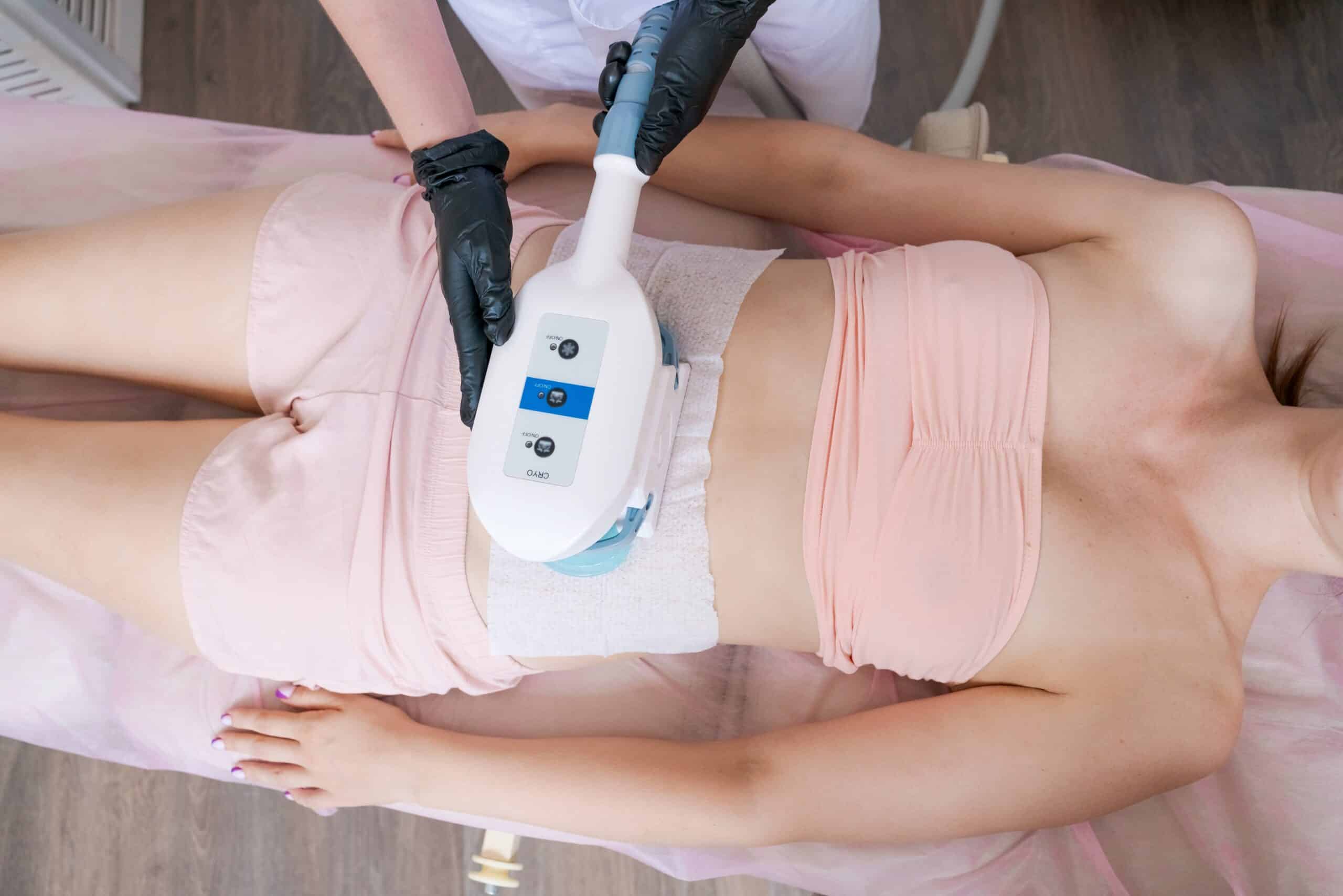
Fat freezing is often described as a treatment that "freezes fat away." That's not wrong exactly, but the cold itself doesn't melt or burn the fat. What actually happens is that chilling the fat cells damages them slowly, and the body clears away the debris over time, which is what causes the fat layer to shrink.
That raises an obvious question, though. Skin and muscle get just as cold during the treatment, so why do only fat cells disappear? And why is there no visible change right after the session? Both answers come down to a property that's unique to fat cells.
Why are fat cells especially sensitive to cold?
Fat cells are packed with lipid, an oily substance, rather than water, and lipid solidifies at a higher temperature than water does. It's the same reason that if you put butter and a glass of water side by side in the fridge, the butter turns hard well before the water even starts to freeze.
Fat freezing devices take advantage of that gap. They cool the skin surface just enough to avoid damaging it, while lowering the temperature of the fat layer underneath to the point where the lipid inside starts to solidify. So even though muscle, nerves, and skin cells are exposed to the same cold, they come through relatively unscathed while the fat cells are the first to react.
When the lipid solidifies, tiny crystals form inside the cell. These crystals poke at the cell membrane from the inside, and to the cell, that feels a lot like a foreign object suddenly showing up inside it. In response, the cell switches on a signal that shuts down its own function.
How do frozen fat cells leave the body?
Fat cells damaged by these lipid crystals don't rupture or die right away. Instead, they go through apoptosis, a form of programmed cell death. Because it's a built-in, orderly process, the cell quietly winds down without harming the tissue around it.
Along the way, a mild inflammatory response called panniculitis shows up in the treated area. It's similar to how a cut in the skin swells and warms up as healing kicks in; the frozen fat layer goes through a much milder version of that same reaction.
After that, macrophages, the body's cleanup cells, move into the area. Macrophages engulf and clear away damaged or dead cell debris, not unlike a cleanup crew showing up once construction wraps. The dead fat cells are gradually carried out of the body through this process.
The skin itself plays almost no part in any of this. Because lipid solidifies at a higher temperature than what would actually damage skin cells, the surface skin only feels briefly cold and a little numb before returning to normal soon after. That's why fat freezing is described as a scar-free treatment that targets just the layer beneath the skin.
When can you see results?
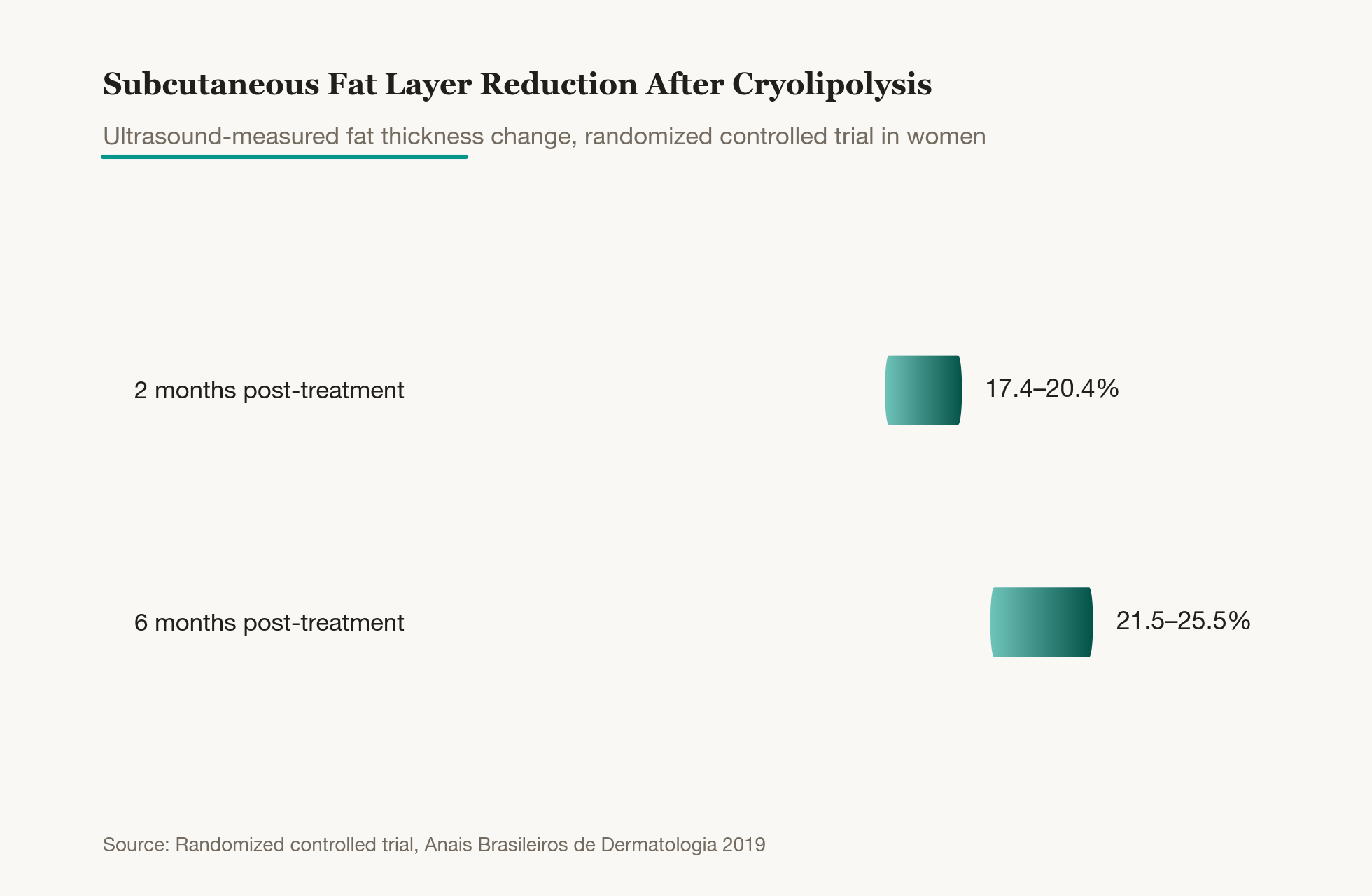
On the day of treatment, you'll barely notice any change in volume. That's because it takes time for macrophages to clear away all the debris. The cleanup itself doesn't happen overnight, so the volume shrinks gradually, at whatever pace the body is working through it.
Visible changes typically start appearing a few weeks after treatment, and the final result is reported to emerge gradually over roughly four to twelve weeks. That's why comparing before-and-after photos really only makes sense when you're comparing the day of treatment with photos taken months later, not days later.
Depending on the area, a single session might not be enough. If the fat layer is thick or the change you're after is substantial, some patients repeat treatment on the same spot. That comes down to the fact that each individual fat cell can only respond so much in one go.
Do cells that are gone ever grow back?
The number of fat cells in adults is known to stay roughly stable past childhood, without increasing much from that point on. And fat cells that have been cleared through apoptosis don't come back to life. Between those two facts, the cells eliminated by fat freezing are generally understood to stay eliminated for good.
That doesn't mean the treated area can never get bigger if you gain weight, though. The fat cells still sitting in the untreated part of that area are alive and well, and if more fat builds up in the body overall, those remaining cells can expand and bring the volume back up. What's changing there is cell size, not cell number, which is exactly why keeping your weight steady matters for the results to hold.
How long the effect lasts depends on how much your weight fluctuates, but when weight stays fairly stable, results are generally reported to last six to twelve months or longer. And the fact that the eliminated cells themselves never return is what really sets this apart from other approaches to losing fat.
The rare case where fat becomes firmer
Very rarely, instead of shrinking, the treated area has been reported to grow firmer and larger. This is known as paradoxical adipose hyperplasia, a name that reflects how the fat increases in a way that's the exact opposite of what's expected.
Why it happens isn't fully understood yet. The explanations that come up include a temporary drop in oxygen supply somehow stimulating the remaining fat cells, the device's suction pressure putting physical stress on the tissue, and nearby fat precursor cells overreacting and maturing into new fat cells. None of these fully accounts for it on its own.
The reaction is uncommon, and when it does occur, it can reportedly be corrected surgically, through liposuction for instance, so it isn't considered a reason to avoid fat freezing altogether. Still, it's worth being informed about this rare possibility during your pre-treatment consultation.
One interesting detail is that this reaction has been reported somewhat more often in men and in areas with a thicker fat layer, like the abdomen. That doesn't mean those areas can't be treated; it just means the device settings and treatment plan need to be worked out with a bit more care.
Reactions after treatment and aftercare
Several reactions tend to show up in the treated area, but most of them are simply the normal, expected part of fat cells breaking down.
- Cold sensation and numbness: Common during and right after treatment, caused by nerves being temporarily affected by the cold. This usually fades gradually within a few days.
- Swelling and bruising: Caused by a mild inflammatory response around the frozen tissue, and typically reported to settle within one to two weeks.
- Temporary loss of sensation: Happens because the cold also affects small nerves just beneath the skin, and it usually returns to normal within a few weeks, according to reports.
- Massaging the treated area: Massaging the area right after treatment has been reported to help the body clear the damaged fat cells more effectively, which is why it's often recommended.
It also matters that you don't gain significant weight during recovery. As mentioned above, if the remaining fat cells expand, the volume you worked to reduce can creep back up. Rather than going on an aggressive diet during this period, it's better to simply hold steady at your usual weight.
And if the treatment area is large or spans several regions, some providers will divide it into sections and treat them one at a time instead of all at once. That approach limits how much dead cell material the body has to process at a given time, so recovery doesn't become too demanding.
References
Korean Dermatological Association, American Academy of Dermatology (AAD), and Ministry of Food and Drug Safety (MFDS).
Was this helpful?
About this article
Written by a practising aesthetic physician and intended for general education — not a substitute for individual medical advice.
Read next

Body Onda: Effects, Approach by Area, Number of Sessions and How Long It Lasts
Body Onda is a non-surgical body contouring treatment that uses microwave energy to selectively heat the fat layer beneath the skin, shrinking fat cells while tightening the skin above them. Here is why the heat targets fat rather than skin, why fat reduction and tightening happen together, how the approach differs for the abdomen, arms, and flanks, and how many sessions it takes to see lasting results.
By Dr. Kim
CoolSculpting Effects: When Do Results Show and How Many Sessions Are Needed?
CoolSculpting works because fat cells are far more sensitive to cold than the cells around them. Here is why skin and muscle come through unharmed, how the body actually clears the dead fat, and what changes to expect session by session.
By Dr. Kim
Sagging Upper Arm Treatment: How Long Do Ultrasound and Radiofrequency Results Last?
Sagging upper arms aren't just extra weight, they happen when skin, fat, and muscle all lose firmness together. Here's how ultrasound and radiofrequency treatments stimulate collagen in the skin to reverse that sag, plus what shapes recovery and how long results hold.
By Dr. Lee