CoolSculpting Effects: When Do Results Show and How Many Sessions Are Needed?
By Dr. Kim8 min read
If you want to lose fat but are tired of dieting and gym sessions, CoolSculpting is probably one of the first things you search. The name itself promises to cool (cool) and shape (sculpt) your body, which sounds almost too simple to believe. An ice pack held too long just gives you frostbite, so it is fair to wonder how a treatment can melt away fat while leaving the skin completely fine.
The idea actually came from an accident. Doctors noticed that children who sucked on popsicles often developed a dimple in the cheek, a small hollow where fat had thinned out. That observation led to the discovery that fat cells are unusually sensitive to cold compared with other cells in the body. CoolSculpting is that principle refined into a safe, controlled procedure. Below is a walkthrough of why fat cells are so vulnerable to cold, and why the skin sitting right next to them is not.
Why are fat cells so sensitive to cold?
Different types of cells in the body tolerate temperature differently. Skin cells and muscle cells hold a lot of water and get a steady supply of blood, so they handle a drop in temperature reasonably well.
Fat cells are different. Inside, they are packed almost entirely with oil. Think of butter that turns rock hard in the refrigerator but stays soft at room temperature. Fat undergoes a similar change called crystallization, where it shifts from a liquid to a solid state once the temperature drops below a certain point. That crystallization point sits well above the temperature at which skin or muscle actually starts to get damaged. So when the same cold is applied, fat cells are hit first, and hit harder.
You have probably noticed that coconut oil turns solid white almost immediately in the fridge, while olive oil stays soft and liquid for much longer. Each oil solidifies at a different temperature. The fat inside our own fat cells behaves the same way, hardening well before the surrounding cells even begin to feel the cold.
What happens inside a frozen fat cell?
Once the fat inside a cell hardens into crystals, those sharp-edged crystals press against and tear the cell membrane and the structures inside it, causing physical damage. Picture shaking a balloon filled with jagged ice chips and you get the idea.
That damage becomes the trigger for the fat cell to enter apoptosis, a form of programmed cell death. Apoptosis is the body's built-in cleanup process, a way for a damaged cell to quietly shut itself down without setting off a major inflammatory response nearby. Rather than bursting open and harming everything around it, the cell follows an orderly shutdown sequence. Once this switch is flipped, the fat cell moves slowly toward death, and that process is not instant. It plays out over 3 to 7 days, which is why nothing looks noticeably different on the day of treatment itself.
Crystallization itself does not happen instantly either. It takes time for the cold to spread evenly through the deeper layers of fat, and it takes further time for the hardened crystals to gradually damage the cell membrane. That is why a single CoolSculpting session typically runs for around an hour. A quick chill would not give the fat enough time to fully crystallize.
Why are skin and muscle unharmed?
This is the question people ask most often, and the answer comes down to precise temperature control and timing. CoolSculpting devices are calibrated to cool tissue down to exactly the point where fat cells start to be damaged, without ever reaching the lower temperature that would actually harm skin or muscle.
On top of that, skin sits much closer to the surface than the fat layer, so it keeps receiving warmth from blood flow and, thanks to its high water content, tolerates temperature swings better in general. The applicator also monitors skin surface temperature in real time and automatically adjusts if things get too cold, adding another layer of protection. The entire treatment is built around targeting a narrow window: cold enough to crystallize fat, but never cold enough to cross the threshold where skin and muscle get hurt.
That is also why a gel sheet gets applied to the skin before treatment starts. The sheet acts as a buffer so the skin does not cool down too abruptly, similar to how wearing gloves instead of bare hands makes packing a snowball far less painful on your fingers.
How is the dead fat cleared from the body?
A fat cell that has entered apoptosis does not simply vanish overnight. Macrophages, the immune system's cleanup cells, gather around the dying fat cells. True to their name, macrophages engulf dead or damaged cell debris whole and break it down.
Once a macrophage has broken down and absorbed a damaged fat cell, the leftover material travels slowly through the blood vessels and lymphatic vessels, the body's existing drainage network, before being processed by the liver and eliminated. Because this drainage system already exists throughout the body, there is no need to build any new pathway for a treated area. Waste simply moves out through the routes the body already uses. This entire process is not a matter of a day or two. It unfolds gradually over 3 weeks to 4 months, which is why nothing feels different right after treatment while the contour keeps changing quietly as time passes.
A single macrophage can only handle a small amount of fat cell debris at a time. That is why it takes a large number of macrophages working over an extended period to clear out an entire fat layer. Think of it as moving apartments, not with one truck making a single trip, but with several trucks hauling loads back and forth. That is why the process takes as long as it does.
When do CoolSculpting results appear?
Because apoptosis and the macrophage cleanup process happen one after another in sequence, it is completely normal for changes to appear slowly. Fat cells do not disappear on the day of treatment. What actually begins that day is a slow process of cell death that unfolds afterward.
Generally, people start to notice some change around the 3-week mark, and as the body continues clearing out the dead fat cells, the most noticeable results tend to show up between 2 and 4 months. The exact pace can vary somewhat from person to person depending on metabolism and lifestyle.
Unlike liposuction, where fat is physically removed during surgery, CoolSculpting requires waiting for the body to clear things out on its own, so the timeline is fundamentally different. Rather than checking the mirror in disappointment the morning after treatment, it helps to remind yourself that at least a month needs to pass before you can judge the results at all.
How many sessions, and how many weeks apart?
Damaging every fat cell in an area with a single session is difficult. That comes down to the physical limits of how much skin the applicator can grip and how deep the cooling reaches evenly.
The applicator works by using gentle vacuum suction to draw skin and fat between two cooling panels, pressing them into close contact. Because there is a physical limit to how much fat can be pulled in and how deep the cooling reaches, some fat naturally goes untouched in a single pass.
- Smaller areas sometimes show noticeable change after just one session, since the fat layer itself is thin enough that a single round of cooling reaches a large share of it.
- Larger areas like the abdomen or flanks usually need two to three sessions spaced apart, since a thicker fat layer means one session's depth of cooling cannot damage the whole thing at once.
- Sessions need to be spaced at least 6 to 8 weeks apart, since the body needs that time to clear out the previously treated fat cells and let swelling in the tissue settle down.
Areas CoolSculpting doesn't suit and its limits
CoolSculpting is generally described as best suited for subcutaneous fat, the kind you can pinch between your fingers, which is exactly what the applicator is designed to grab. Areas like the abdomen, flanks, and inner thighs, where fat can be pinched by hand, tend to respond well.
On the other hand, it is not considered suitable for visceral fat, the kind that sits deep around the internal organs, or for reducing overall body weight in a broad sense. That comes down to a simple physical limit: the cooling only reaches as deep as the fat layer just under the skin. Subcutaneous fat spreads out in a thin layer right below the skin, easy for the applicator to grip and pull up, while visceral fat sits much deeper, wrapped around the organs, in a spot that is neither reachable by hand nor by the cold. For that reason, it makes more sense to think of this treatment not as a weight loss method, but as a way to refine the contour of specific areas that diet and exercise alone tend not to budge. Once a significant number of fat cells in an area have been destroyed, new fat cells are not thought to regenerate in that spot, so keeping up healthy eating habits afterward helps prevent the remaining fat cells from expanding and keeps the results in place longer.
References
Korean Dermatological Association, Ministry of Food and Drug Safety (MFDS), American Academy of Dermatology (AAD), and U.S. Food and Drug Administration (FDA).
Was this helpful?
About this article
Written by a practising aesthetic physician and intended for general education — not a substitute for individual medical advice.
Read next

Body Onda: Effects, Approach by Area, Number of Sessions and How Long It Lasts
Body Onda is a non-surgical body contouring treatment that uses microwave energy to selectively heat the fat layer beneath the skin, shrinking fat cells while tightening the skin above them. Here is why the heat targets fat rather than skin, why fat reduction and tightening happen together, how the approach differs for the abdomen, arms, and flanks, and how many sessions it takes to see lasting results.
By Dr. Kim
CoolSculpting Effects: How Many Sessions Until You See Results?
How does CoolSculpting fat freezing (cryolipolysis) actually melt fat away? Here is what the studies show about how much a fat layer shrinks per session, how many sessions you need, when results show up, how it stacks up against fat-dissolving injections and liposuction, and the rare case of paradoxical fat growth, all explained in plain terms with real published numbers.
By Dr. Kim
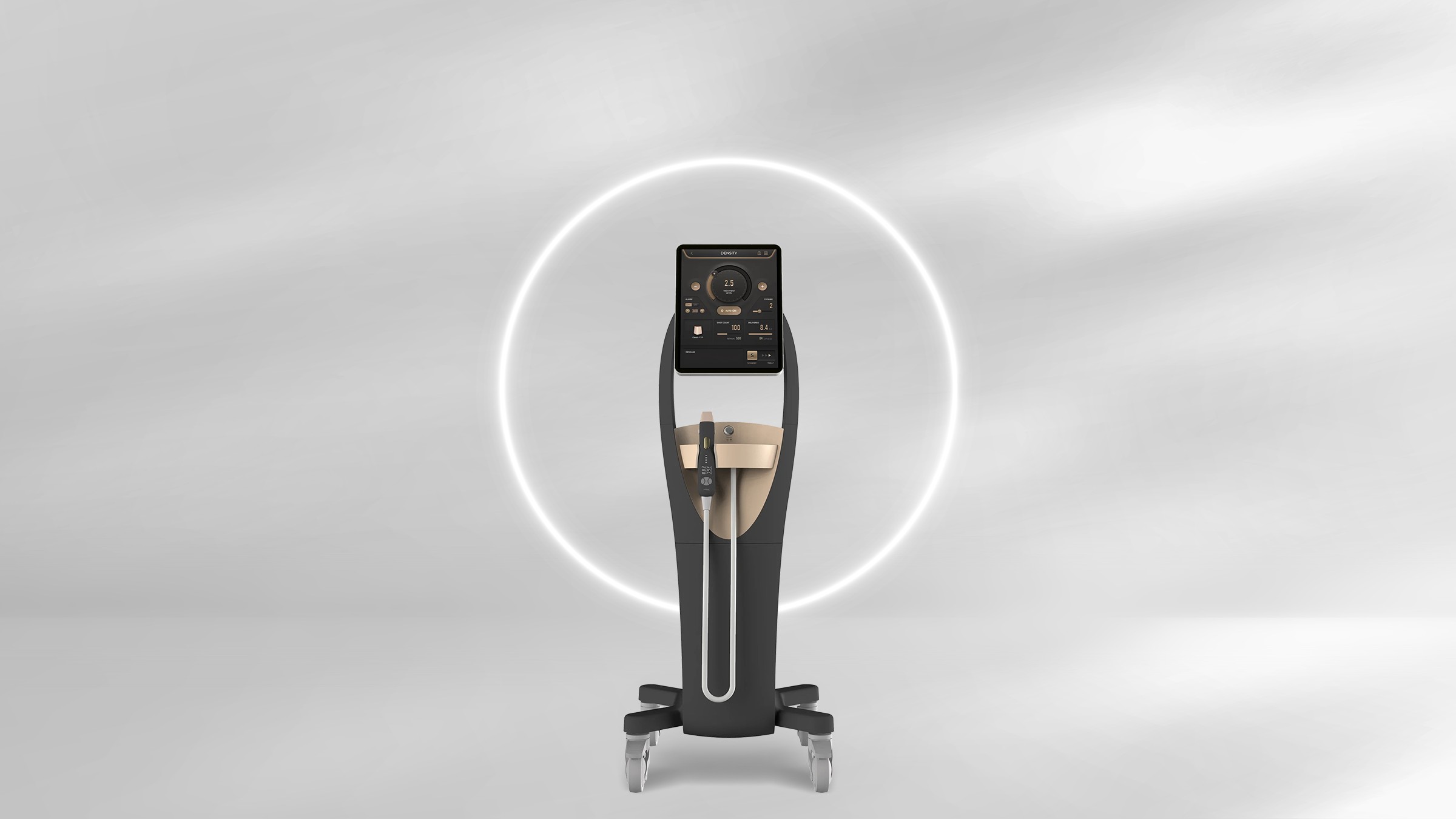
Density RF Effects: How Many Sessions and How Long Do Results Last?
Density RF pairs two radiofrequency modes with very different personalities to chase two goals at once: the instant tightening you feel right after treatment, and the collagen renewal that builds slowly over the following 4 to 12 weeks. Here is why two modes are needed, the order in which heat actually works inside the skin, and why the treatment is spread across multiple sessions instead of done all at once.
By Dr. Kim