CoolSculpting Effects: How Many Sessions Until You See Results?
By Dr. Kim10 min read
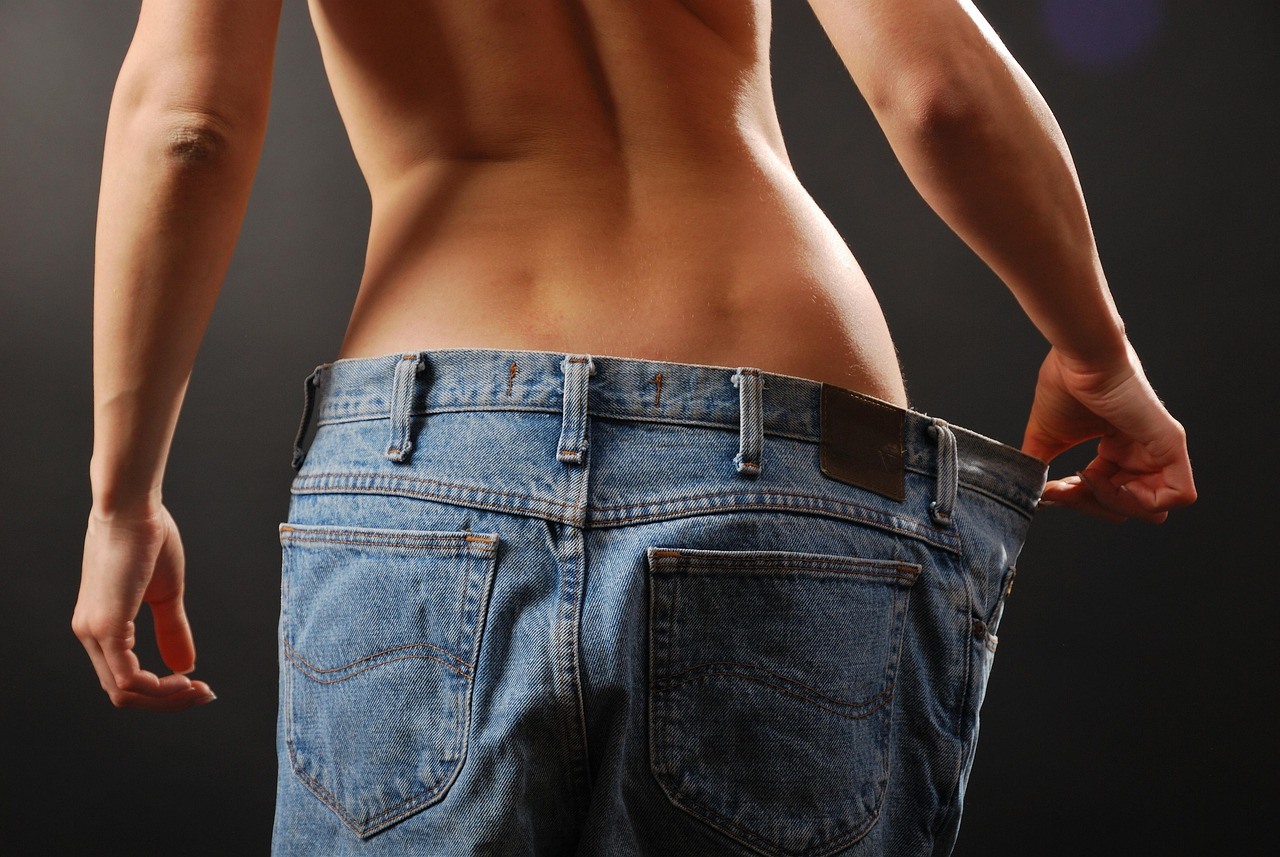
Even with regular exercise, some areas just will not budge. The flanks, the lower belly, the inner thighs. That is exactly why people who are already at a healthy weight but still want to clean up one stubborn spot keep bringing up CoolSculpting, known clinically as cryolipolysis. It is a needle-free, incision-free treatment that reduces fat by chilling the area.
The name might sound technical, but the idea behind it is simple. Fat cells are more sensitive to cold than skin cells are, and this treatment leans entirely on that one fact. Used the right way, it lets a clinician target the fat layer underneath while leaving the skin on top untouched. Below, we walk through how the freezing actually kills fat cells, how much a treated area shrinks after one session, how many sessions you typically need and when the results show up, how it compares with fat-dissolving injections and liposuction, and the rare but real phenomenon of paradoxical fat growth, all backed by the published research.
How does fat freezing remove only fat?
The whole treatment rests on one fact: fat cells are more vulnerable to cold than skin cells are. Fat starts to freeze at a noticeably higher temperature than skin does. So if you cool an area to just the right degree, the skin on top stays completely fine while the fat cells underneath take the hit.
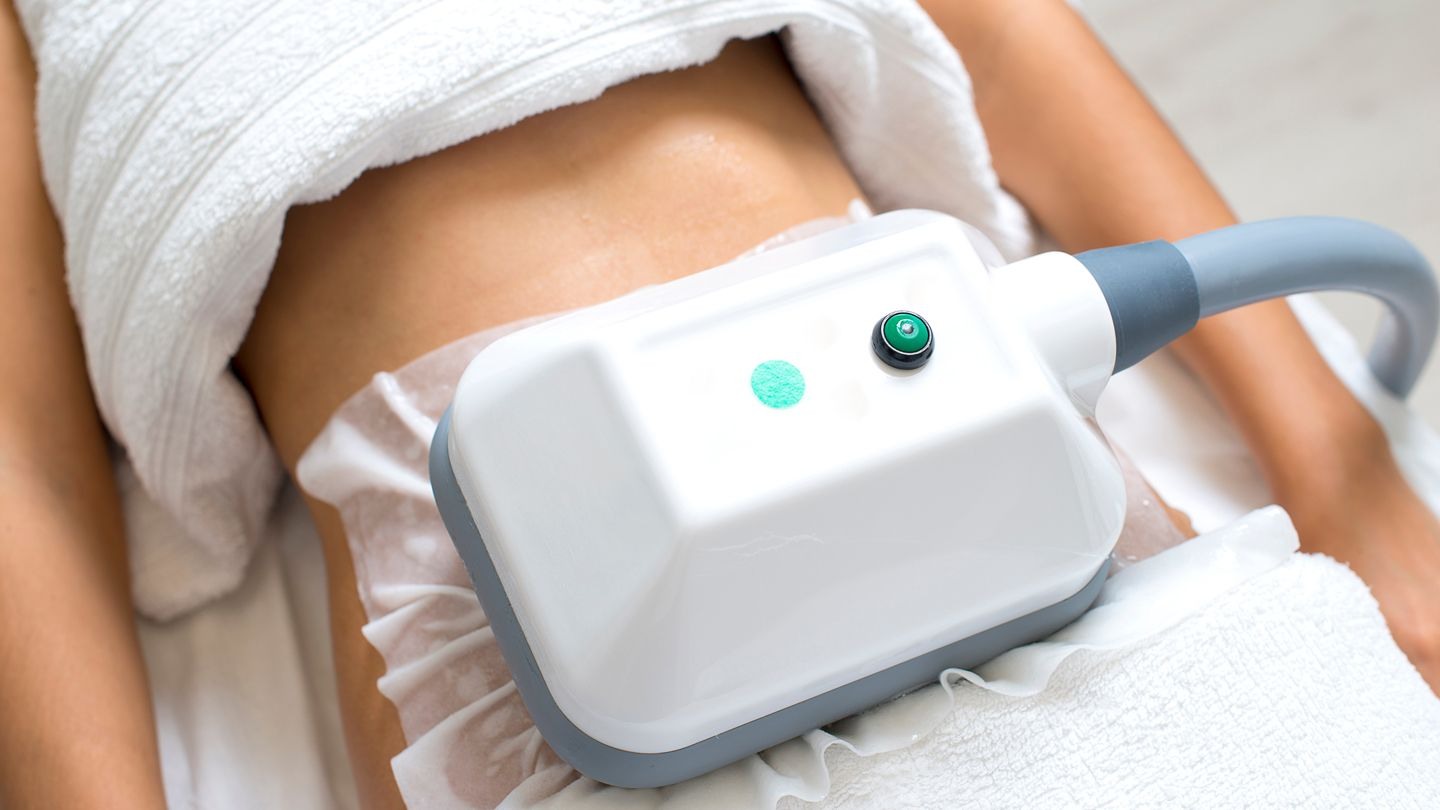
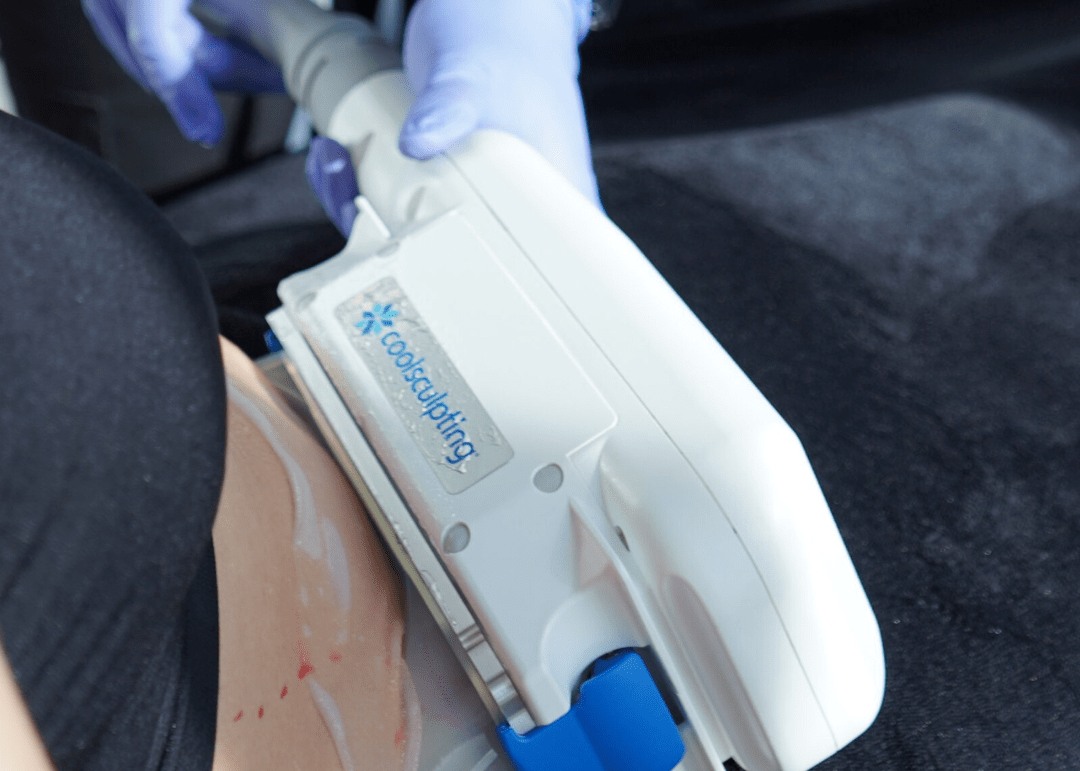
Here is how a session actually goes. A cup-shaped cooling applicator is placed over the fat you want to target, and the temperature inside drops to roughly minus 10 degrees Celsius. At that temperature, the oil inside the fat cells starts to crystallize, and the cells begin a slow, controlled process of dying off. This process is called apoptosis. Rather than the cells bursting suddenly, think of it as them quietly shutting down on their own.
From there, the body takes over the cleanup. Over the following weeks, macrophages, your body's cleanup cells, gradually digest and clear out the dead fat cells. As those frozen fat cells disappear one by one, the fat layer in that area gets thinner. Because the cleanup happens gradually, the results show up gradually too, never overnight.
What matters most here is that the surface stays completely untouched. Skin and the dermis hold a lot of water, which means they freeze at a much lower temperature than fat does. So at the temperature used to freeze fat, the skin passes through unharmed. That is exactly why the treatment works without any needles or incisions, targeting only the layer you actually want to reduce.
In Korea, this treatment goes by the name "fat freezing" or "cryo fat dissolving." The original device is CoolSculpting from the American company Zeltiq, but the equipment most Korean clinics actually use today is domestic: Classys's Clatuu and the newer Clatuu Alpha. Some clinics also use devices like CoolTech. The brand names differ, but the underlying principle, freezing an area to reduce fat cells, is the same across all of them. So instead of fixating on the device name, it makes more sense to check whether the clinic has a cup sized right for your area and whether the practitioner has real hands-on experience.
How much does the fat layer thin in one session?
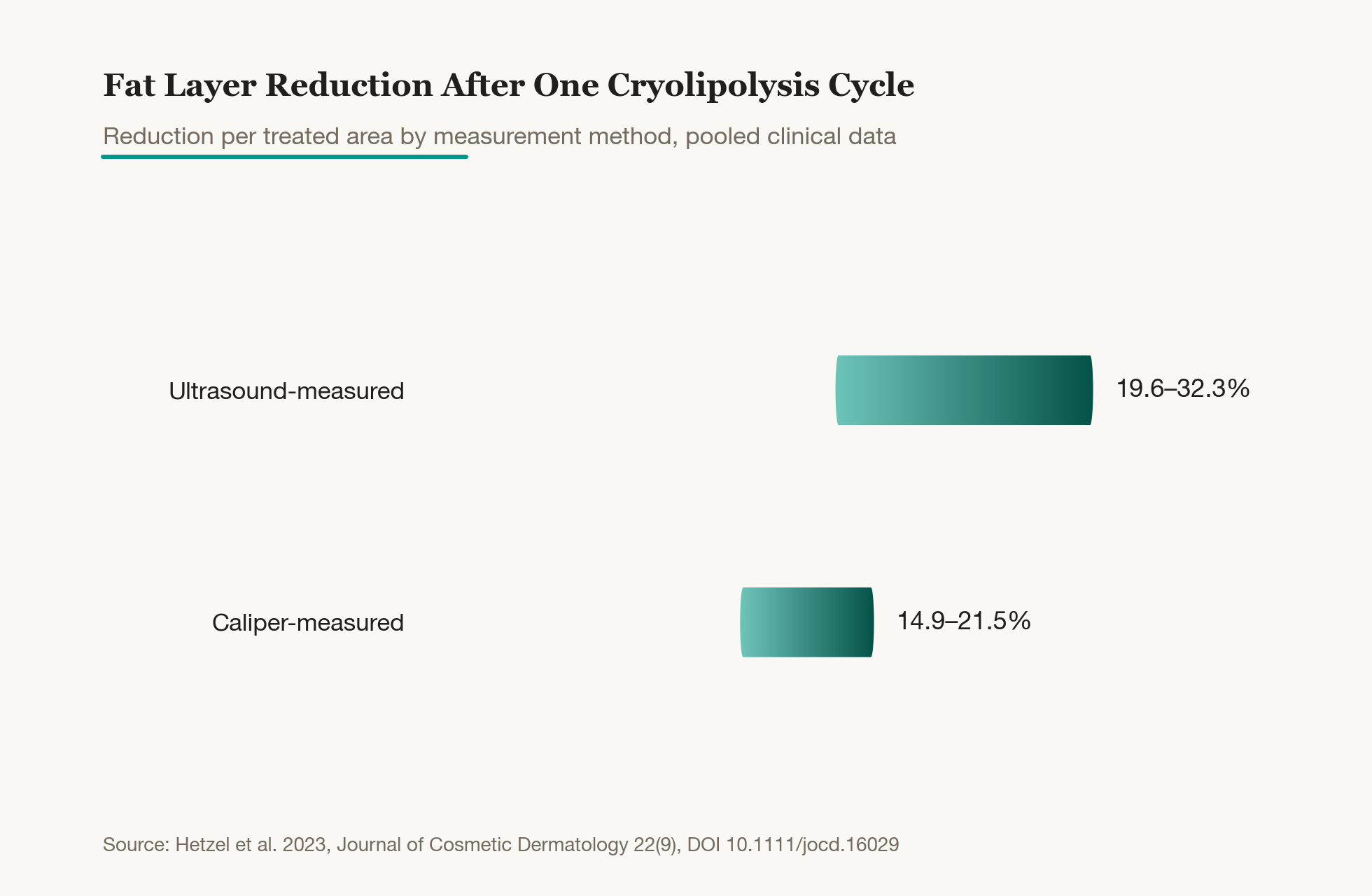
The numbers make this easier to picture. A review that pooled multiple clinical studies found that a single session in one area produced a clearly measurable drop in fat layer thickness. Ultrasound measurements showed a reduction of roughly 20% to 32%, while caliper measurements, the pinch-and-measure kind, showed roughly 15% to 21%. The exact number depends on how it is measured, but a rough rule of thumb is that one session reduces the fat layer in that spot by about a fifth.
It helps to keep this number in perspective. A 20% or so reduction in fat layer thickness is not the same as losing that much body weight. So the real-world change is less about what the scale says and more about the flanks or lower belly looking a bit smoother and more streamlined. Many people are perfectly happy with pants fitting more comfortably or their side profile looking a bit more defined.
Given that, it makes more sense to think of this treatment as a way to refine a stubborn area rather than a way to lose significant weight overall. It works especially well for people who are already at a normal weight but have one area that just will not cooperate. If the goal is broader weight loss, diet and exercise should come first, with this treatment as more of a finishing touch afterward.
It also helps to know how to track your own progress. Taking before-and-after photos in the same pose and the same lighting makes it much easier to notice the gradual change. Measuring the circumference of the area is worth doing too.
How many sessions, and when do results appear?
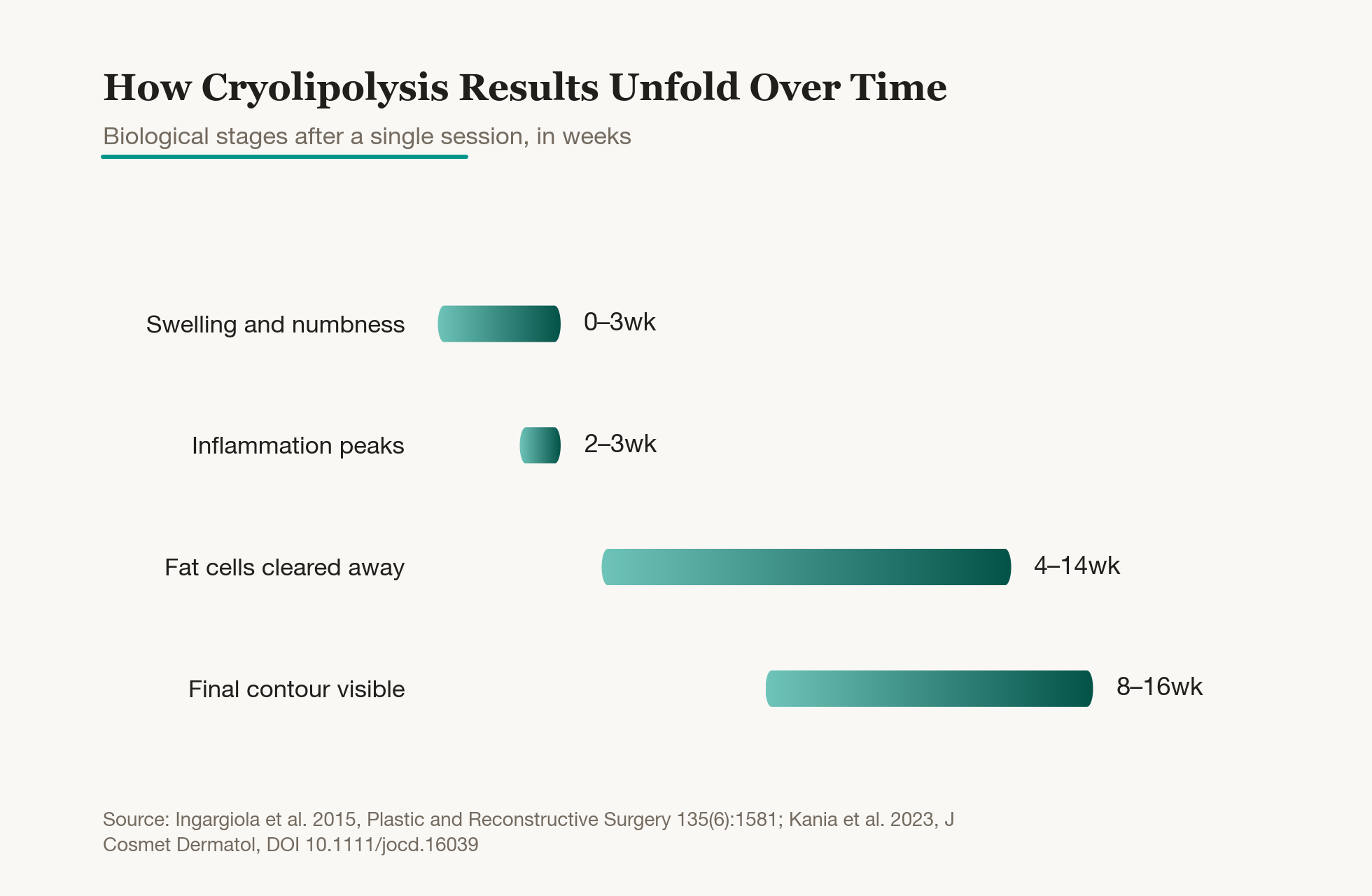
First, on timing: CoolSculpting does not produce any visible change right after the session. The body needs time to clear out the frozen fat cells. For the first two to three weeks, the treated area will feel swollen and slightly numb, and this is roughly when the cleanup cells start clearing the fat. That clearing process continues over several weeks, and the final contour usually settles in somewhere between two and four months.
That means it is best to judge the results only after giving it plenty of time. There is no need to feel disappointed if not much has changed after just a month. This is a treatment where the real result only shows up around the three-month mark.
The number of sessions you need depends on the area and how thick the fat layer is. In areas with a moderate amount of fat, one session is sometimes enough. If you want a more noticeable reduction, the same area is typically repeated two to three times. Since each session reduces the fat layer by roughly a fifth, people who want a more dramatic change often build it up gradually, checking the first result before deciding on another round. When repeating the same area, clinics usually leave a gap of about two to three months so the previous result has time to fully settle in.
One genuine advantage here is that fat cells destroyed by freezing do not come back. That is why the results tend to hold up well over time. That said, the fat cells that remain do not disappear, so if you gain a significant amount of weight afterward, those remaining cells can expand and mask the results. Keeping your weight stable after treatment is the key to holding onto the results for the long run.
How is it different from fat-dissolving injections and liposuction?
All three treatments aim for a similar outcome, but the way they get there is quite different. CoolSculpting is a non-invasive treatment that freezes fat cells until they die off. With no needles and no incisions, there is essentially no downtime, and it is comfortable enough that many people read a book or check their phone during the session. The tradeoff is that results appear gradually, and the reduction per session is modest, around 20% per area.
Fat-dissolving injections work by injecting medication directly into the fat layer to break it down. Since the medication is delivered through multiple small injections, swelling can last a few days, and this approach suits smaller areas treated repeatedly with small amounts. Liposuction, on the other hand, is a surgical procedure performed under sedation or general anesthesia, where a cannula physically suctions the fat out. It can remove a large amount in a single session, but recovery takes one to two weeks, and it places the most demand on the body of the three.
Here is a side-by-side comparison.
| Category | Fat freezing | Fat-dissolving injections | Liposuction |
|---|---|---|---|
| Method | Freezes fat away | Dissolves fat with medication | Suctions fat out |
| Invasiveness | Non-invasive | Needle injection | Surgery |
| Anesthesia | None needed | Local | Sedation or general |
| Downtime | Almost none | A few days of swelling | 1 to 2 weeks |
| Fat reduction | About 20% per area | Small amounts, repeated | Large amount at once |
| When results show | 2 to 4 months | Multiple sessions | Right after surgery |
There is no single right answer here. CoolSculpting suits people who want a subtle refinement with no recovery time. Fat-dissolving injections suit people who want precision in a small area. Liposuction suits people who want a large amount removed in one go. The best choice really comes down to the area and how much change you are looking for.
Can fat actually increase after treatment?
If you look into CoolSculpting long enough, you will eventually come across stories about it making fat grow instead of shrinking it. And yes, that is genuinely true. In very rare cases, the exact area that was frozen to reduce fat ends up bulging out larger than before. It typically shows up several months after treatment as a firm mass of fat forming in the treated spot. The medical term for this is paradoxical adipose hyperplasia, which literally means fat growing in the opposite direction from what was expected. Exactly why it happens is still not fully understood.
The reassuring part is that this side effect is extremely rare. Large-scale surveys put the rate at around 0.2%, which works out to fewer than one in every 100 patients. There is one curious pattern worth noting, though: this reaction shows up far more often in men. In one survey, men made up only 15% of all patients treated, yet they accounted for 55%, more than half, of the people who developed this reaction.
As the technology has improved, the rate has been falling too. Some reports show that newer cooling equipment has cut the rate by more than 75% compared to earlier devices. Still, since it is not zero, it is worth knowing about before going in for treatment.
If it does happen, there is a way to fix it. The fat mass that forms will not go away on its own, but it can later be corrected with a procedure like liposuction. Choosing a clinic that explains this possibility upfront and follows up carefully afterward means that even in the rare case this happens, it can be handled calmly and effectively.
Who is this treatment right for?
CoolSculpting is a great fit for anyone who is already at a healthy weight but has one stubborn spot, the flanks, lower belly, or inner thighs, that just will not cooperate. If you want to refine an area without going under the knife or losing any recovery time, this is a strong option. Being able to relax comfortably during the session and go straight back to your normal routine afterward is a real advantage.
It helps to stay optimistic but keep expectations grounded in reality. This is not a treatment that transforms your body overnight. It is a treatment that trims fat gradually, area by area, to refine your overall line. If you have several areas you want addressed, or need a large volume reduced, another approach might suit you better, so it is worth talking through what you actually want with your clinic.
Aftercare matters just as much as the treatment itself. Fat cells destroyed by freezing will not return, but if you gain weight afterward, the remaining cells can expand and mask the results. Keeping your weight stable through diet and exercise after treatment is what lets you hold onto that refined line long term.
CoolSculpting suits anyone who wants to refine a stubborn area without much hassle. If you are drawn to a subtle change that lasts, and you have the patience to wait a couple of months, it is well worth considering. Talk through your specific area and fat condition with an experienced clinic, and it tends to lead to a result you will be happy with.
Was this helpful?
About this article
Written by a practising aesthetic physician and intended for general education — not a substitute for individual medical advice.
Read next
CoolSculpting Effects: When Do Results Show and How Many Sessions Are Needed?
CoolSculpting works because fat cells are far more sensitive to cold than the cells around them. Here is why skin and muscle come through unharmed, how the body actually clears the dead fat, and what changes to expect session by session.
By Dr. Kim

Body Onda: Effects, Approach by Area, Number of Sessions and How Long It Lasts
Body Onda is a non-surgical body contouring treatment that uses microwave energy to selectively heat the fat layer beneath the skin, shrinking fat cells while tightening the skin above them. Here is why the heat targets fat rather than skin, why fat reduction and tightening happen together, how the approach differs for the abdomen, arms, and flanks, and how many sessions it takes to see lasting results.
By Dr. Kim
Crow's Feet Botox: Effects, Duration and Dose
A clear look at how crow's feet Botox works. It eases the orbicularis oculi muscle that creases the outer eye corner when you smile, softening the lines it leaves behind. This guide covers the standard 24-unit dose split across both sides, where the injections go, when results show up, the roughly four-month duration, the limits for deep static wrinkles, and side effects, all backed by real clinical study numbers.
By Dr. Kim