Under-Chin Fat-Dissolving Injection Effects, Sessions Needed, and Side Effects
By Dr. Lee8 min read

Even after losing weight, submental fat can be oddly resistant. That pocket under the chin stays, making the side profile look heavier than it actually is, regardless of the number on the scale. For people who want to address that one area without surgery, deoxycholic acid injections are often the first thing that comes up.
Deoxycholic acid is a bile acid the body naturally produces to help digest fat. When injected directly into the submental fat layer, it destroys fat cells on contact. The treatment is FDA-approved in the United States under the brand name Kybella, and sold as Belkyra in Europe and Canada. Here is how the mechanism works, what the clinical data actually shows, and what to keep in mind going in.
How do fat-dissolving injections remove fat?
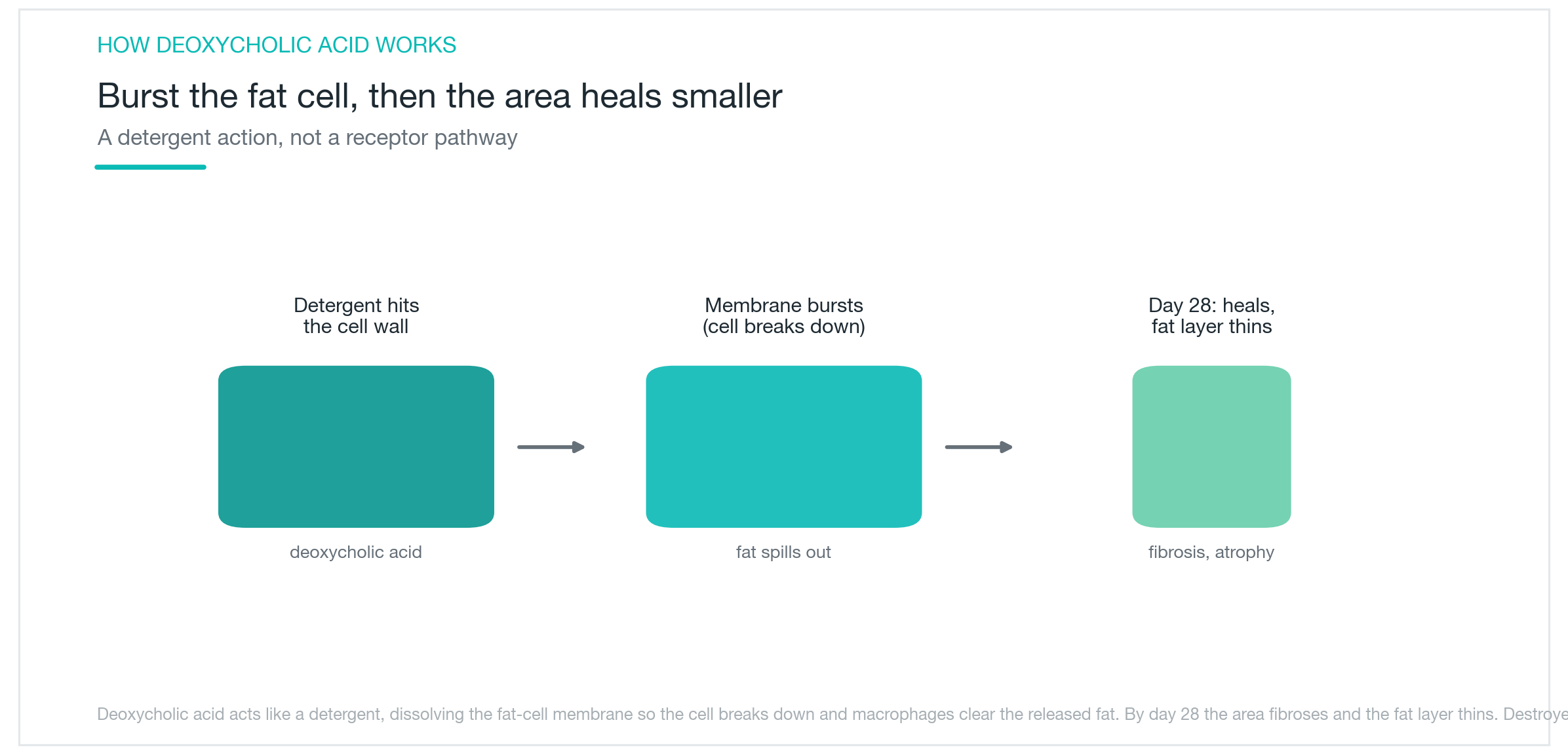
The mechanism is surprisingly physical. Deoxycholic acid has surfactant properties, similar to soap, that allow it to disrupt lipid membranes. When injected into a fat layer, it inserts itself into fat cell membranes and breaks them apart. The disrupted cells are destroyed, and the released fat is gradually cleared by macrophages, the body's natural cleanup cells.
What makes this significant is that the destruction is permanent. Once a fat cell is gone, the surrounding tissue heals over the course of about four weeks, becoming slightly firmer (fibrosis) as volume decreases. Tissue research has confirmed the timeline: fat cell lysis by day 1, macrophage clearance by day 7, and a thinned, healed fat layer by day 28. Because destroyed fat cells do not regenerate, this is the biological basis for long-lasting results.
Worth noting: deoxycholic acid is not strictly selective for fat cells. Protein-rich tissue around the treatment area can neutralize the compound to some degree, but fat tissue cannot, which is why the effect ends up concentrated on fat. Precise placement at the right depth is what separates an effective result from an avoidable complication.
The approved ingredient and injection method
Deoxycholic acid was FDA-approved in 2015 for moderate to severe submental fat in adults. Among fat-dissolving injections, it is one of the rare cases where large-scale clinical trials led to official regulatory clearance, giving it a genuinely solid evidence base.
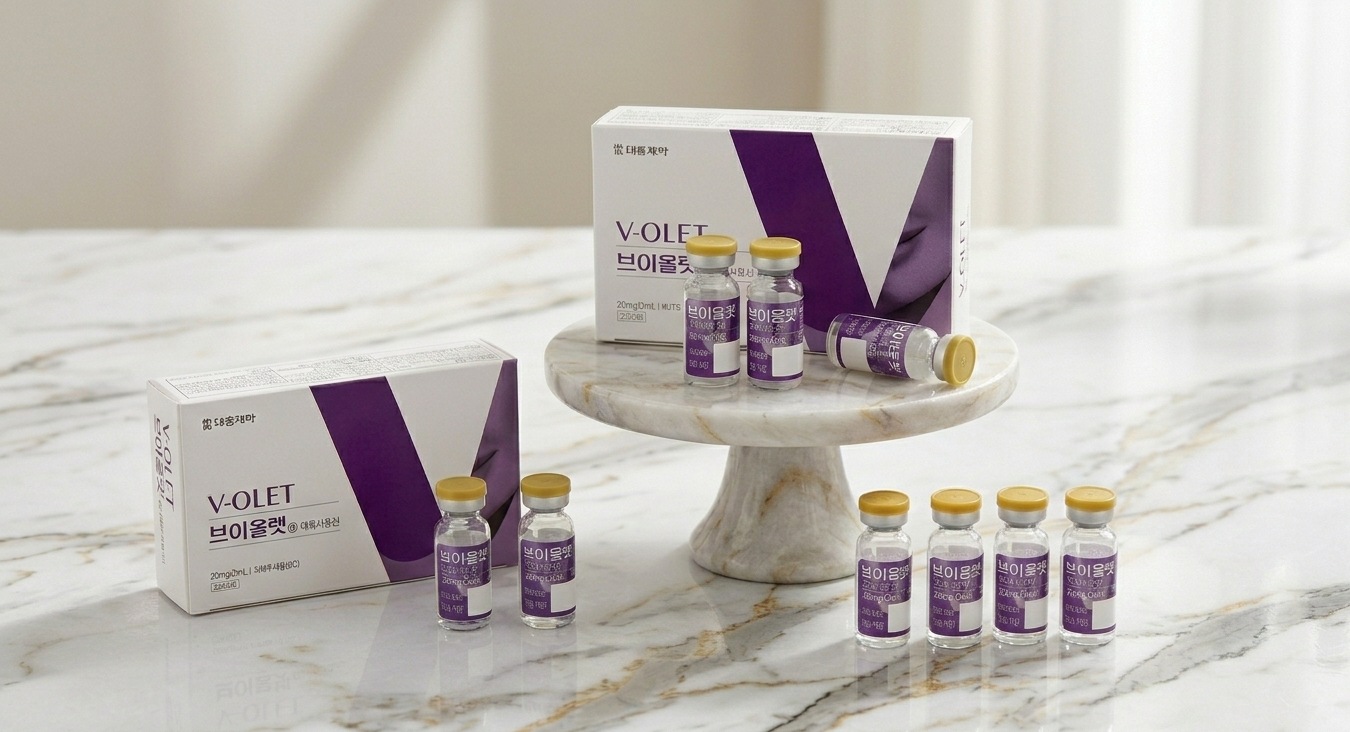
In the US the brand is Kybella, while in Europe, Canada, and Australia the same compound is sold as Belkyra. In Korea, V-olet by Daewoong Pharmaceutical holds MFDS approval for submental fat treatment and is widely used in clinics. One thing to keep in mind: not every fat-dissolving injection uses deoxycholic acid. Some products use phosphatidylcholine, a soy-derived compound, and the evidence profile and characteristics differ by ingredient. It is worth confirming which compound is being used before starting treatment.
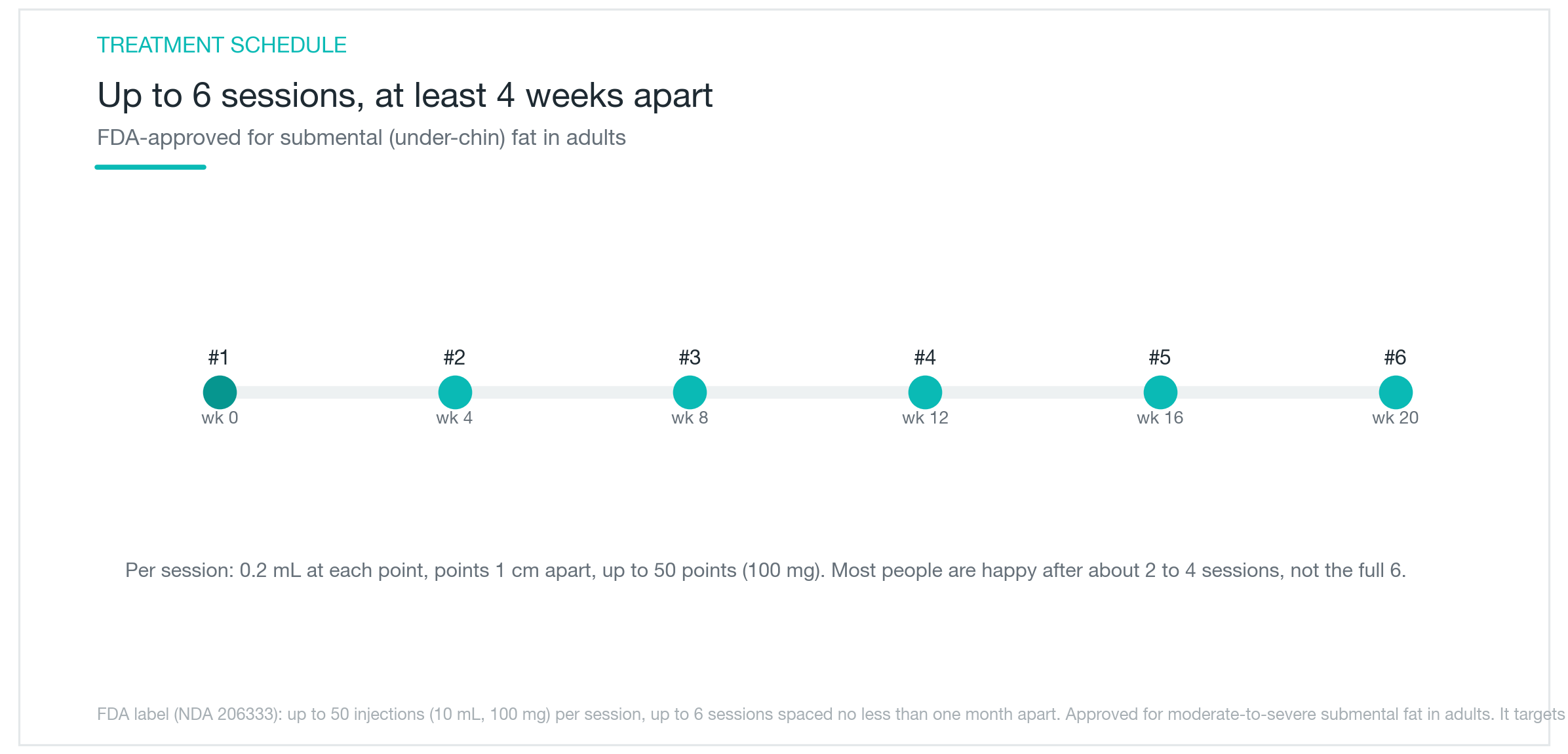
The injection protocol is standardized. Multiple injections are placed about 1 cm apart across the submental area, with 0.2 mL at each point and a maximum of 50 points per session. The procedure itself takes just a few minutes, and local anesthesia or ice is typically used to manage discomfort. Sessions can be repeated up to 6 times, with at least 4 weeks between each to allow swelling to resolve. In practice, many people reach a satisfying result somewhere between 2 and 4 sessions, depending on how much fat is present.
One thing to be clear on: this treatment is not designed to reduce fat across the face or large body areas. The approved indication is submental fat specifically. It is a precise, localized approach, best suited to refining a persistent pocket rather than serving as a substitute for broader contouring.
Improvement rates from clinical trials
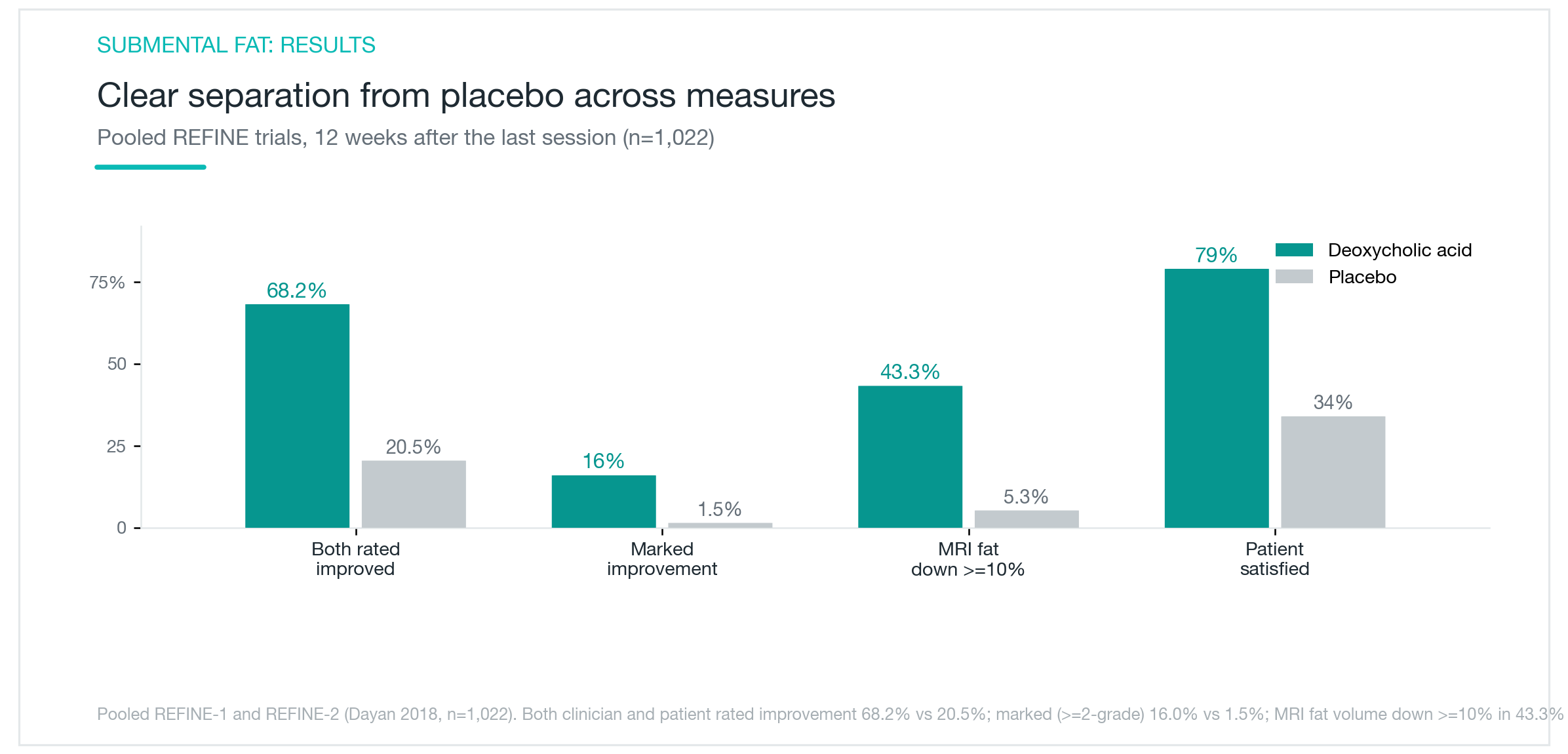
The evidence comes from two large REFINE trials involving more than 1,000 participants, comparing active treatment to placebo, which gives the results genuine credibility.
The combined trial numbers: about 68% of patients and clinicians agreed that improvement had occurred, versus roughly 21% in the placebo group. Marked improvement (2 or more grades) was seen in 16% of the treatment group compared to 1.5% with placebo. MRI-measured fat volume reduction of 10% or more was achieved in about 43% of treated patients versus 5% with placebo. Patient satisfaction came in at 79%, well above the 34% reported in the placebo group. A gap that wide between active and placebo makes a strong case that the results are driven by the compound itself.
It helps to keep expectations realistic here: results come gradually across multiple sessions rather than all at once, and people with a moderate amount of submental fat tend to see the most satisfying outcomes. The change many people notice first is in the profile, where the jaw and neck meet with a cleaner, more defined line. Photographing the area every few weeks makes it easier to appreciate progress that feels subtle day to day.
How many sessions are needed for results?
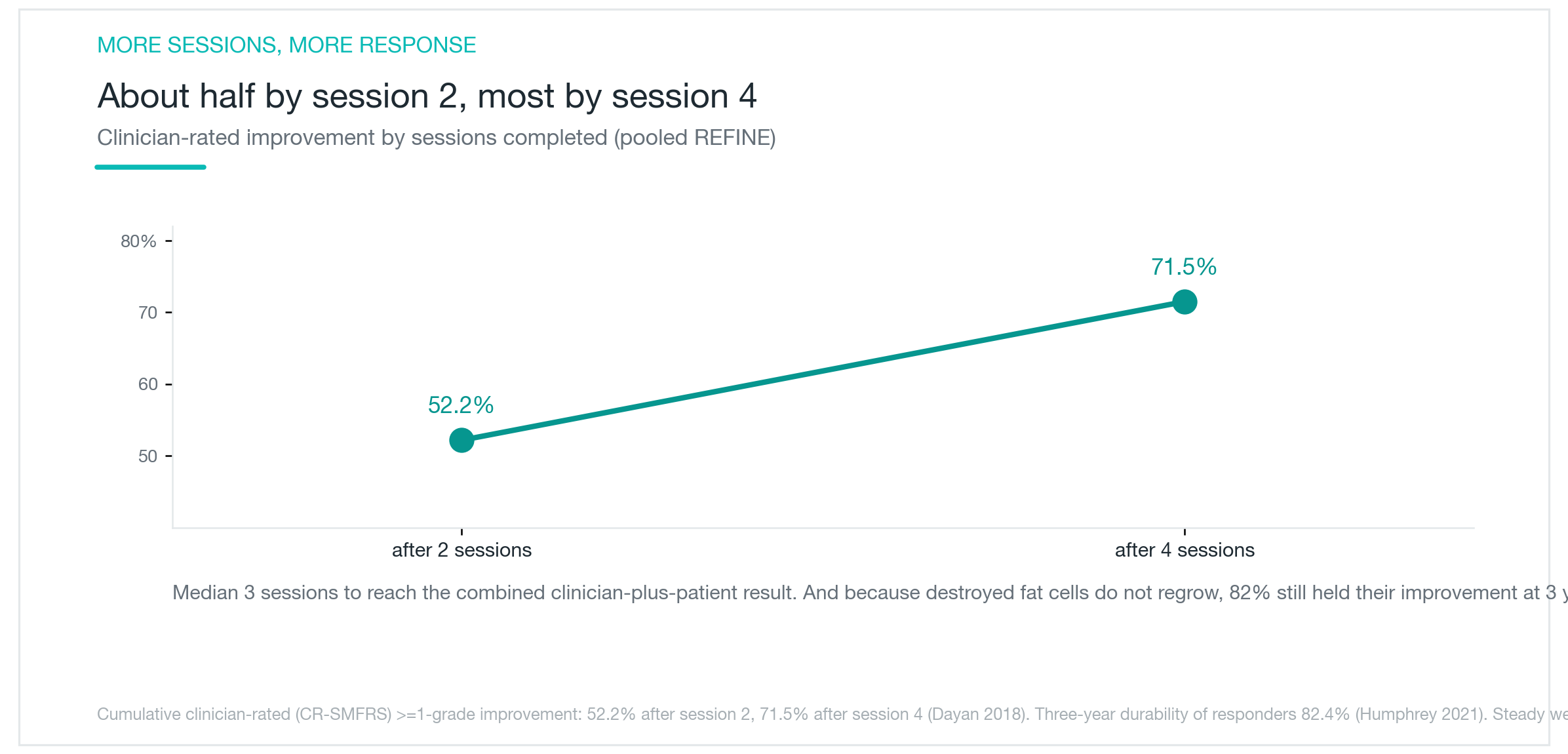
Session count depends on starting volume, but improvement rates climb with each round. Clinical data shows about 52% of patients demonstrating improvement after 2 sessions and around 72% after 4, based on physician assessment. Using a composite endpoint requiring agreement from both clinician and patient, the median number of sessions to reach a response was 3.
In practice, a sensible approach is to reassess after each session and decide on additional rounds based on what remains. In the trials, a meaningful proportion of participants completed treatment in 4 sessions or fewer, either because they were satisfied or because little submental fat remained. There is no need to push toward 6 sessions if the result is already there. People starting with more fat generally need more rounds, while those with a smaller amount often reach their goal in two or three.
Durability is genuinely good. Because destroyed fat cells do not regrow, one clinical study found that about 82% of patients maintained their improvement at the 3-year mark. Remaining fat cells can still expand with significant weight gain, so it is not an unconditional guarantee, but staying close to a stable weight after treatment helps preserve the result long-term.
How common are side effects?
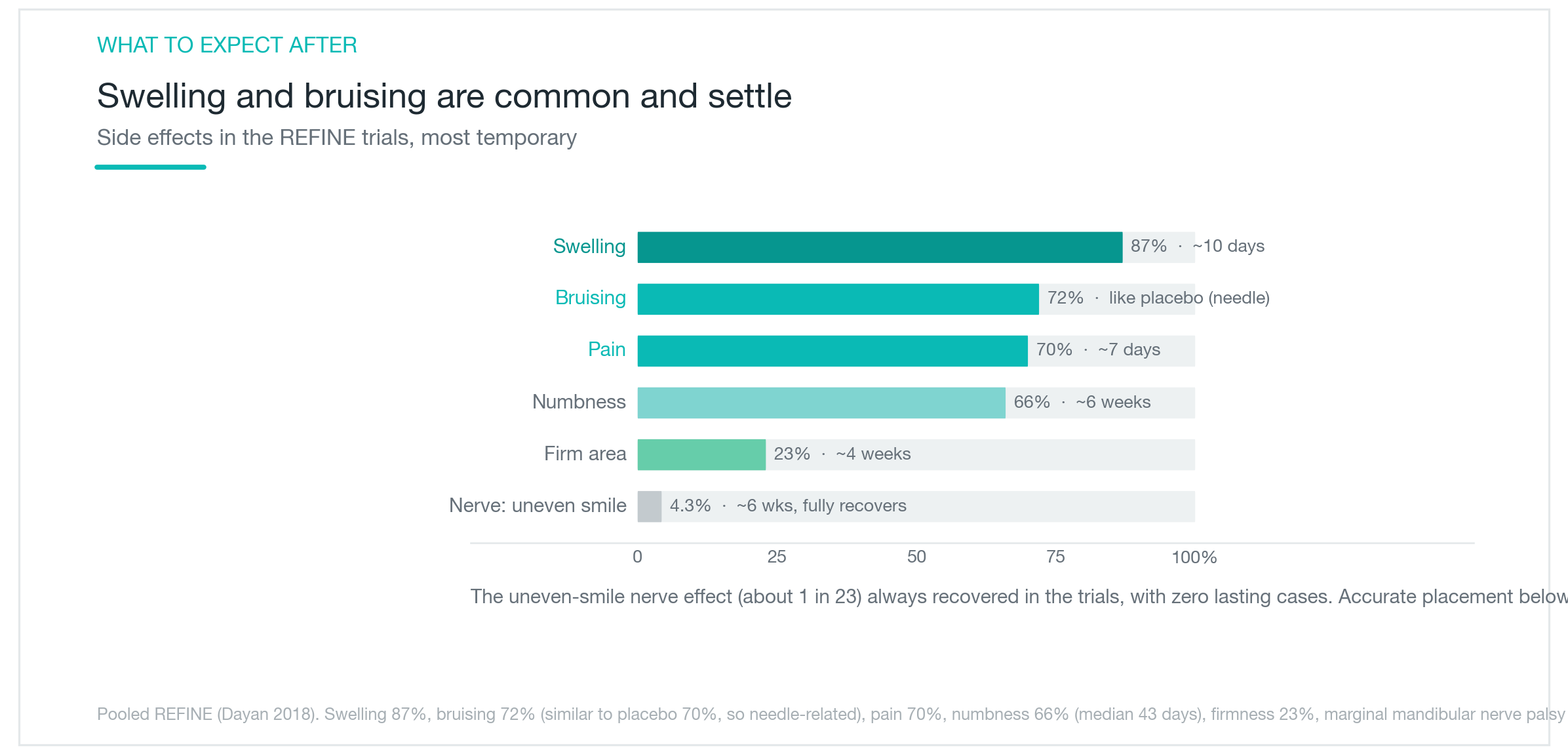
Because the treatment works by lysing fat cells, swelling and bruising are very common and expected. Knowing what to anticipate going in makes the recovery feel far more manageable.
Swelling is the most frequent response, occurring in about 87% of patients, and typically resolves within around 10 days. Pain was reported in about 70% and bruising in about 72%, though interestingly the bruising rate was similar in the placebo group, suggesting it is mostly from the needle itself rather than the compound. Temporary numbness or reduced sensation at the injection site was reported in about 66% of patients and tends to last a bit longer than other effects, averaging around 6 weeks.
The side effect that gets the most attention is temporary involvement of the marginal mandibular nerve, which controls the muscles that lift the corners of the mouth. About 4% of patients experienced a temporary asymmetry in their smile. All reported cases resolved, and no permanent nerve damage has been documented in the clinical literature. Most cases normalized within around 6 weeks. Because this nerve runs below the jawline, accurate injection placement is the key preventive factor, which is why working with a practitioner familiar with submental anatomy makes a real difference.

Who the under-chin injection suits best
Deoxycholic acid injections are an excellent option for anyone bothered by submental fat that simply will not respond to diet or exercise. For people who want to reduce a double chin without surgery, or who find liposuction more than they want to take on, this is a genuinely appealing middle ground. The fact that destroyed fat cells do not regenerate means results can last for years.
The most useful first step is figuring out the actual cause. If the double chin comes primarily from loose skin, a wide jaw, or tongue posture rather than fat, injections alone will only go so far. When skin laxity is part of the picture, a lifting treatment can complement or take priority; when fat is the main issue, deoxycholic acid is well worth prioritizing. A consultation to determine the cause is the right starting point.
After treatment, swelling and numbness linger for a while, so it is worth building some recovery time into the schedule before major events. Results arrive gradually, refining the profile over multiple sessions rather than delivering a dramatic change overnight. Working with a practitioner experienced in submental anatomy, someone who places each injection precisely, makes the biggest difference for both comfort and outcome. For anyone who has tried everything else and still cannot shake that profile-softening pocket under the chin, this treatment is worth a serious look.
Was this helpful?
About this article
Written by a practising aesthetic physician and intended for general education — not a substitute for individual medical advice.
Read next

Fat-Dissolving Injection Effects and Swelling, Dose by Area and Number of Sessions
Why is a fat-dissolving injection said to work on stubborn areas like a double chin or upper arms that diet alone won't touch? Here's an easy breakdown of how the drug breaks down fat cell membranes, how the dissolved fat actually leaves the body, how dosing and sessions differ by area, and why swelling happens along the way.
By Dr. Lee
CoolSculpting Effects: How Many Sessions Until You See Results?
How does CoolSculpting fat freezing (cryolipolysis) actually melt fat away? Here is what the studies show about how much a fat layer shrinks per session, how many sessions you need, when results show up, how it stacks up against fat-dissolving injections and liposuction, and the rare case of paradoxical fat growth, all explained in plain terms with real published numbers.
By Dr. Kim

Filler and Fat Grafting: Differences, Duration, and Reversibility Compared
Filler is made of hyaluronic acid that the body's own enzymes slowly break down, so it can be reversed with a dissolving injection if needed. A fat graft is different: the fat cells that survive settle in permanently, which means the result is much harder to undo once it takes. Here is the biology behind why these two treatments behave so differently under the skin.
By Dr. Lee