Contour Injection Ingredients and How They Work, and When the Swelling Goes Down
By Dr. Kim7 min read
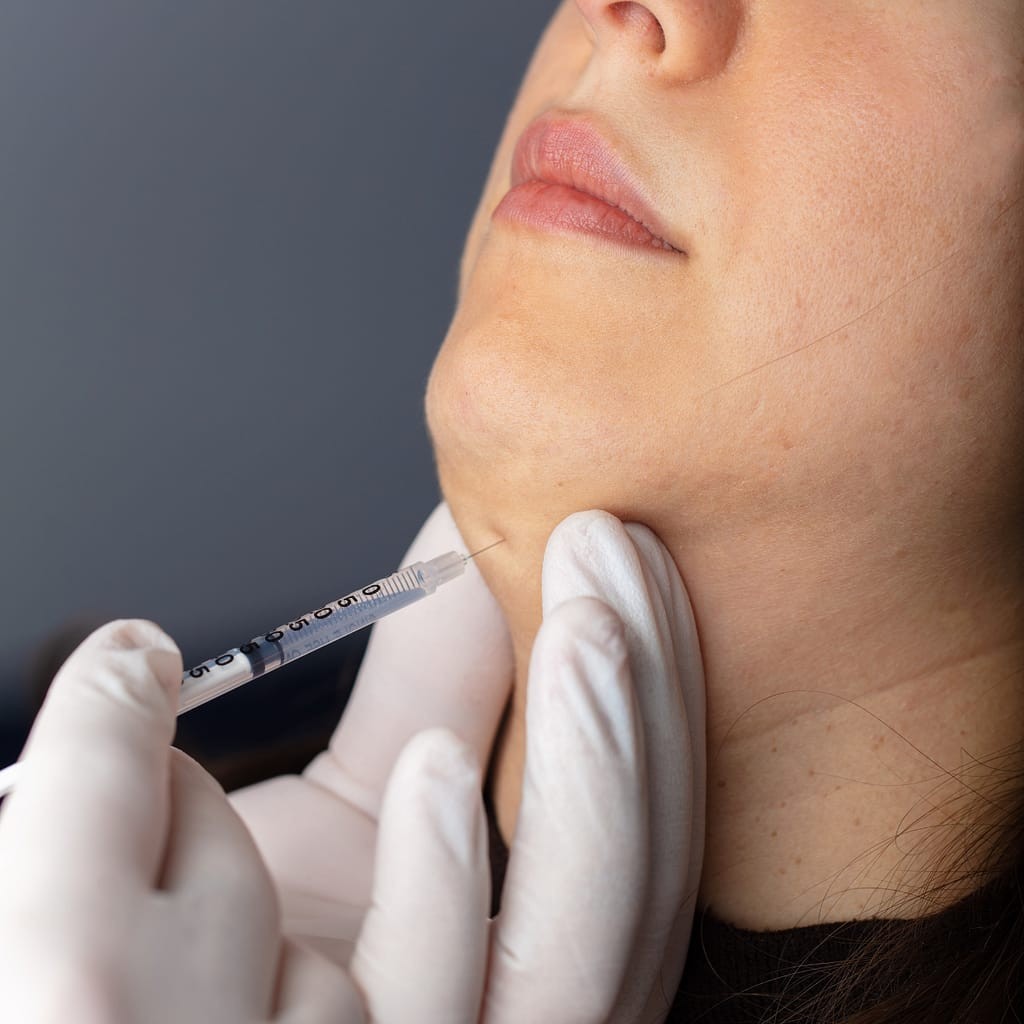
Face-line injections are commonly known as a treatment for slimming a square jaw or a double chin. The name makes it sound like a single drug picks out fat in one spot and dissolves it, but in reality it is a mixed injection containing several ingredients together. One group of compounds breaks down fat cells directly, while another clears out the swollen tissue around them, and together they make the jawline look more defined. Let's walk through why both actions are needed and how each one actually works.
What ingredients are in contour injections?
A face-line injection is not one drug but a mix of several ingredients. The most common combination is PPC (phosphatidylcholine, a type of phospholipid) and L-carnitine, and some clinics also add deoxycholic acid, an acidic compound that breaks down fat cell membranes directly.
Phospholipids are a building block of cell membranes, and they also happen to help fat mix better with water. It works a bit like using dish soap on a greasy pan. Just as the soap breaks up the oil so it rinses away with water, these compounds do something similar around fat cells.
Because clinics vary in which ingredients they use and in what ratio, "face-line injection" is really an umbrella term that covers different formulas depending on where you go. That means results and recovery time can differ from one clinic's mix to another.
How do fat cells break down?
A fat cell is like a balloon, a thin membrane packed full of fat. The membrane has to stay intact for the cell to hold its shape, and deoxycollic acid is one of the ingredients that breaks that structure apart directly. It wedges itself into the lipid layers that make up the membrane and splits them open.
Once the membrane breaks down, the fat cell can no longer hold its contents and starts leaking them out as it collapses on itself, much like a balloon with a small hole slowly losing air and shrinking. A fat cell that has broken down this way does not go back to its original state, because the cell itself sustains damage it cannot recover from.
PPC and L-carnitine are thought to work more gently. Rather than destroying the membrane directly, they seem to stimulate the metabolic process that breaks down fat, helping the fat inside the cell shrink gradually over time.
The role of the lymph in clearing debris
When a fat cell breaks down, the fat content and cellular debris inside it leak out into the space between tissues. The lymphatic vessels are the channels that carry this debris out of the body. If blood vessels are the pipes that circulate blood, lymphatic vessels work more like a drainage system that filters out waste from between tissues.
Some of the ingredients in a face-line injection stimulate this lymphatic circulation to speed up drainage. Just as water pools up when a drain is clogged, if lymphatic flow is slow, the broken-down fat debris and fluid stay put between the tissues and show up as swelling. It's only once circulation picks up and that space clears out that the jawline starts to look more defined.
In other words, the compounds that break down fat cells and the ones that support lymphatic circulation have different jobs. One releases the fat, and the other actually carries it away. If only one of the two is working, the debris can stay trapped in the tissue, and the jawline may not slim down as much as expected.
Why does swelling get worse right after the shot?
It is common for the face to look more swollen right after the injection, not less. The needle passes through the tissue multiple times, leaving behind small areas of damage, and the body responds by sending more fluid to that area to start repairing it. It's the same kind of response you see when an injured area turns red and puffy.
On top of that, the fat and debris released from broken-down cell membranes have not yet had time to drain through the lymphatic vessels, and that also adds to the swelling. It's a bit like construction debris still sitting there before the site has been cleared. Clearing it out is said to take anywhere from a few days to a few weeks.
So judging the treatment's effect by how the face looks right after the injection can actually give you the opposite impression. The point where swelling starts to go down is really when the true change becomes visible.
When do results start to show?
For the first few days after the injection, swelling tends to stand out the most. This is because the tissue's repair response overlaps with fat debris that hasn't drained away yet.
Over the following days to one or two weeks, the initial swelling starts to go down as the debris gradually clears out through the lymphatic system. This is reportedly when changes in the jawline start becoming noticeable.
It takes anywhere from a few weeks to a couple of months for the broken-down fat cells to fully clear, though this varies from person to person. Time is needed both for a fat cell to disappear completely and for the fluid that had filled in around it to drain away. Treatments are often split into multiple sessions partly for this reason, since there's a limit to how many fat cells can be broken down at once and how quickly the body can process the resulting debris.
Right after treatment is a period where damage and debris overlap, which paradoxically makes swelling more noticeable. It's only after one to two weeks, once circulation has cleared out the debris, that the real change shows up. Keeping these two phases separate helps avoid misjudging how well the treatment is working.
How long do results last?
Fat cells broken down by a face-line injection are not known to regenerate, but that doesn't mean the resulting jawline stays exactly the same forever. A few factors play into this together.
- The number and size of the fat cells that remain: The treatment only breaks down a portion of the fat cells in the area. The cells that remain can still grow larger with weight gain, so significant changes in body weight can shift the jawline again.
- Individual fat metabolism: Even with the same treatment, how quickly someone naturally breaks down and stores fat varies from person to person, which affects both how fast changes appear and how long they hold.
- Treatment area and depth: The thickness and location of the fat layer affect how evenly the ingredients spread, which in turn affects how many fat cells actually break down.
- Number and spacing of sessions: Since there's a cap on how many fat cells can be broken down in one session, spreading treatment across multiple sessions is reported to produce a more noticeable cumulative change.
Aftercare
The core of aftercare is helping the swelling go down and letting the debris drain out properly.
- It's recommended to avoid firmly massaging or pressing on the face for the first few days after treatment. Stimulating tissue that hasn't settled yet can trigger a stronger repair response and more swelling.
- Cutting back on salty or spicy food is said to help. High sodium intake tends to make the body hold onto more fluid, which can slow down how quickly swelling resolves.
- Drinking enough water is recommended, since lymphatic circulation and waste drainage both rely on the body's fluid movement.
- Light cardio is known to promote both blood and lymphatic circulation, so once the swelling isn't too severe, easing into gentle activity can help, as long as it isn't overdone.
Initial swelling and bruising are often said to settle naturally over time, though recovery speed varies from person to person.
References
Korean Dermatological Association, American Academy of Dermatology (AAD), and Ministry of Food and Drug Safety (MFDS).
Was this helpful?
About this article
Written by a practising aesthetic physician and intended for general education — not a substitute for individual medical advice.
Read next

Tiny Facial Bumps: How to Tell Flat Warts, Milia and Skin Tags Apart, and How to Treat Them
The small bumps that show up on the face can look alike, but flat warts, milia, and skin tags have different causes and different treatments. Here is how to tell the three apart at a glance, the right CO2 and Er:YAG laser or electrocautery approach for each, how common they are, how they tend to recur, and real evidence on why removing them at home is risky.
By Dr. Lee

How Does Fine Dust Affect the Skin Barrier and Collagen?
Fine dust particles are so small they slip past the pores and into the gaps of your stratum corneum, unsettling the skin barrier from the inside. Along the way, free radicals surge and enzymes that break down collagen switch on, leaving skin more reactive and less firm. Here is how fine dust actually affects skin, and what genuinely helps.
By Dr. Kim
Fat-Dissolving Injection Effects and Swelling, Dose by Area and Number of Sessions
Why is a fat-dissolving injection said to work on stubborn areas like a double chin or upper arms that diet alone won't touch? Here's an easy breakdown of how the drug breaks down fat cell membranes, how the dissolved fat actually leaves the body, how dosing and sessions differ by area, and why swelling happens along the way.
By Dr. Lee