Facial Hair Removal Effects: Is It True That Skin Looks Brighter?
By Dr. Kim6 min read
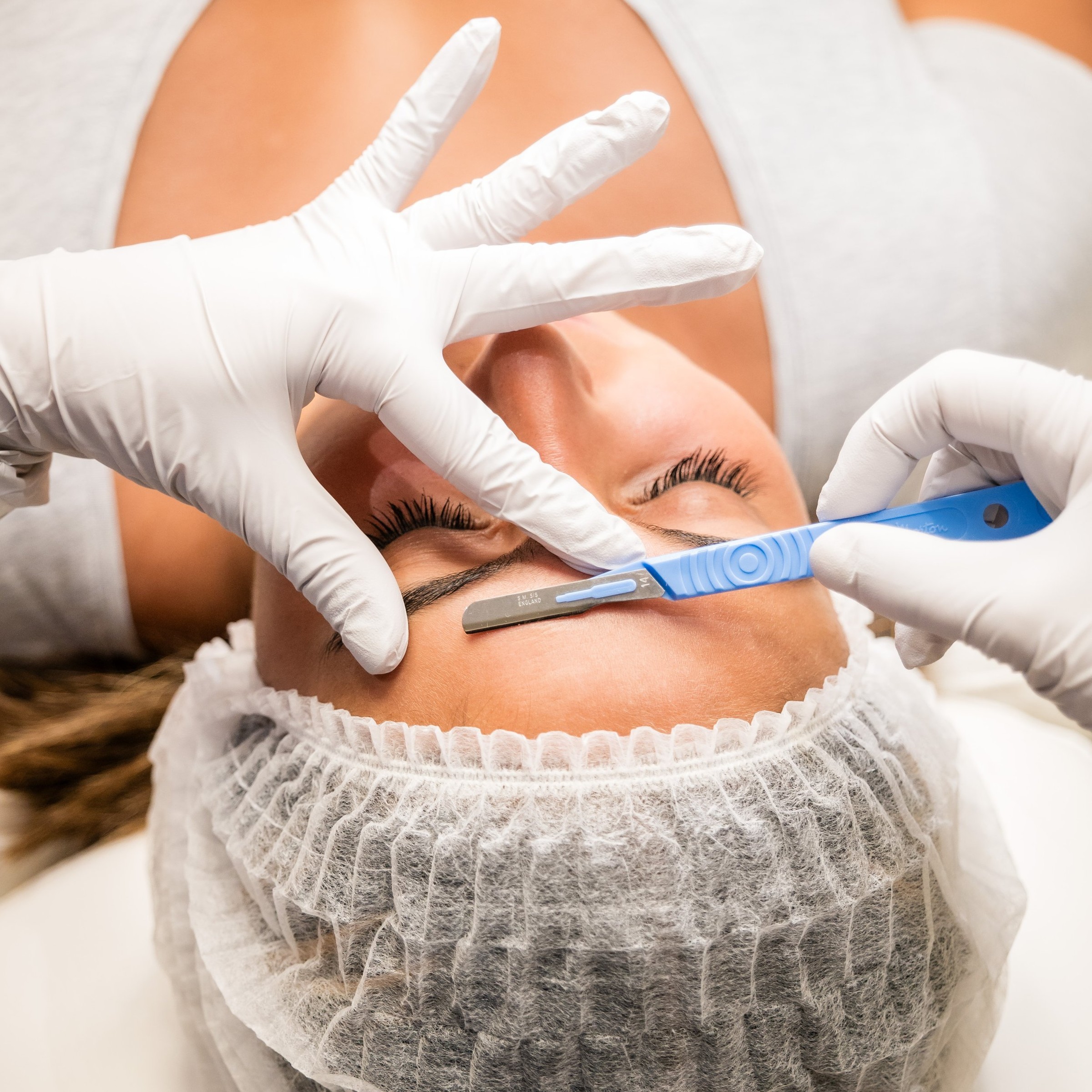
Wash your face and lean close to the mirror, and you will notice a fine layer of hair covering your cheeks, forehead, and the sides of your nose. This is peach fuzz, sometimes called vellus hair. Unlike the thick, dark strands on your head, it carries almost no pigment and is extremely thin, so it usually goes unnoticed. Put on makeup or step in front of a camera, though, and it suddenly matters.
Plenty of people say their skin looks a shade brighter right after they clear away this fuzz. That is not just in their heads. Peach fuzz genuinely changes how light behaves on your skin and how makeup sits on the surface. Here is why removing a few strands of hair can shift how your whole complexion looks.
Why does peach fuzz stand out more in photos?
The fine hair on your face is medically called vellus hair. Thick, pigmented hair such as scalp hair or eyebrows is called terminal hair, and vellus hair is different from the root up. The cells that produce pigment inside the follicle are far less active, so the hair comes out pale and noticeably thinner.
Vellus hair is always there. It just becomes more obvious at certain times, depending on lighting angle or the state of your skin surface. When skin is dry or dead cells have built up, the surface turns rougher, and the fuzz caught in those uneven patches catches light and glints more than usual. It is similar to how dust on a window seems to sparkle when sunlight hits it at a low angle.
The glare is especially strong under harsh, direct light, like a camera flash or a phone screen. Natural light comes from many directions and wraps around softly, but a flash fires from one direction at full strength, so every individual hair reflects it back at a sharp angle. That is exactly why peach fuzz feels so much more noticeable in photos.
Does fuzz make skin look dull?
Peach fuzz itself is nearly colorless, so it is not directly darkening your skin. The real issue is what it holds onto. Because fine hair has a large surface area relative to its size, dead skin cells and oil catch on it easily.
Think of dust clinging to hair that has not been brushed in a while. Peach fuzz works the same way, acting like a tiny net that traps flaking skin and sebum. The result is a surface that is not quite smooth, closer to slightly fuzzy or textured. Light hits that texture and scatters instead of reflecting evenly, so your face reads as duller and flatter than it actually is.
Shaving, waxing, and laser hair removal compared
There is more than one way to remove peach fuzz, and each works on a slightly different principle. Knowing how each one operates makes it easier to pick the right method for you.
- Razors or dermaplaning tools: The blade glides nearly flat against the skin and shaves off only the hair sitting above the surface. Because it never touches the follicle itself, recovery is fast and irritation is minimal.
- Waxing or threading: These pull hair out by the root, leaving the follicle completely empty, so regrowth takes noticeably longer. The trade-off is direct physical stress on the follicle, which can leave sensitive skin red or stinging for a bit.
- Laser hair removal: Lasers work by having pigment inside the hair absorb light and convert it to heat, which then disrupts the follicle. Because vellus hair has so little pigment, there is less target for the laser to grab onto, and results tend to be weaker or require more sessions compared to thick, dark hair.
Does shaving really make hair grow back thicker?
You have probably heard that shaving makes hair grow back coarser and darker. That is not a change in the follicle itself. It is closer to an optical illusion.
Hair that grows out naturally, uncut, tapers to a fine, soft point. Hair cut with a razor or dermaplaning tool ends in a blunt, flat tip, so in the early days of regrowth it feels stiffer and more noticeable against your fingertips. It is the same reason a freshly sharpened pencil point feels different from one snipped flat with scissors.
The cells that produce hair inside the follicle keep working at a fixed thickness and rate no matter what happens to the surface. Multiple studies looking specifically at this have found no evidence that shaving changes hair thickness, color, or growth rate.
Once the tip naturally tapers again over the following days, that stiff feeling disappears with it. Give it a little time, and the peach fuzz almost always settles back into the same texture it had before.
Why does makeup go on better after hair removal?
Clearing away peach fuzz makes the skin surface physically smoother. On a flatter surface, products like foundation or sunscreen spread thinner and more evenly.
Where fuzz is left behind, makeup tends to lift or clump slightly right on top of it, sometimes leaving patchy, uneven marks. It is a bit like painting a gravel path compared to painting a smooth wall. On an even surface, a thin layer looks consistent, and light bounces back evenly instead of scattering in different directions, which is what gives skin that bright, smooth appearance.
Is looking brighter the same as whitening?
One thing worth being clear about here. The brightening you notice after removing peach fuzz is not a drop in melanin. It is an optical shift caused by a smoother surface reflecting light more evenly. That is a different mechanism entirely from skin whitening, which actually changes the amount of pigment produced inside the skin.
This smoother state is also temporary and gradually fades on its own. Peach fuzz regrows, and dead skin builds back up. In most cases, it becomes noticeable again within days to a few weeks. So if you want to hold onto that brighter look, consistent upkeep matters more than a single session.
It helps to keep these two ideas separate. Clearing peach fuzz changes the physical state of the surface. Whitening reduces the actual amount of melanin your pigment cells produce. They work on different layers of the skin through completely different mechanisms. That is why removing peach fuzz on its own will not permanently lighten your underlying skin tone.
Aftercare for hair removal
Right after cutting or pulling out hair, the skin's protective barrier is a little thinner than usual. How you treat it during this window determines whether you end up with lingering irritation or a smooth result that lasts.
- Avoid strong exfoliants or high concentration active ingredients for a few hours right after removal. Applying anything harsh while the surface is sensitized can trigger stinging or redness.
- Replenish the surface generously with a moisturizer. When the outer layer of skin lacks moisture, the area where hair was removed can feel rougher and take longer to recover.
- Apply sunscreen a bit more carefully than usual. With the surface smoother, ultraviolet exposure reaches it more evenly, so extra sun protection helps lower the chance of pigmentation forming.
- Always use freshly sanitized tools. A contaminated blade or thread can cause small inflammations around the follicle, which can lead to redness or breakouts instead of clearer skin.
If you have sensitive skin or an area with active inflammatory acne, it is worth checking the skin's condition before removing any hair there. Adding physical hair removal on top of skin that is already irritated can slow recovery considerably.
References
Korean Dermatological Association, American Academy of Dermatology (AAD), and Ministry of Food and Drug Safety (MFDS).
Was this helpful?
About this article
Written by a practising aesthetic physician and intended for general education — not a substitute for individual medical advice.
Read next
FCR Peeling Effects: Is It Okay for Sensitive Skin?
FCR peeling is a physical peel that works by massaging tiny needle-shaped crystals from coral into the skin to clear away dead skin and sebum together. Because it stimulates the skin differently than acid-based chemical peels, it tends to be more comfortable to try even on sensitive or acne-prone skin. Here's how it works and how to care for your skin afterward.
By Dr. Kim

Exosome Treatment Effects: How Are They Different From Stem Cells?
Exosomes are tiny signal packets that cells release into their surroundings, delivering only the messages a stem cell creates rather than the stem cell itself to the skin. Here is a plain look at how exosomes carry regeneration and calming signals, why clinics so often pair them with laser treatments, and how much evidence has actually built up so far.
By Dr. Kim
Cafe-au-Lait Spots Returning After Laser: Causes, Number of Sessions and Expectations
A café au lait spot forms because the pigment-making cells in that one patch of skin are locally overactive. Laser treatment breaks up the pigment that has already built up, but it doesn't switch off those cells, which is why the color so often returns. Here's the biology behind it, why results differ so much from person to person, and what a realistic treatment timeline actually looks like.
By Dr. Kim