Earlobe and Protruding-Ear Filler: Amount and Duration Compared
By Dr. Lee8 min read

Some patients come in for a consultation about the shape of their ears. A common concern is a thin, drooping earlobe that looks flat, or an ear that sits pinned close to the head and looks a bit closed off when viewed from the front. There is also an old saying that a plump earlobe brings good fortune, so quite a few people want to restore volume to an earlobe that has thinned with age.
Both concerns are now often approached with hyaluronic acid (HA) filler. For the earlobe, the goal is adding volume. For a pinned-back ear, filler is placed in the hollow behind the ear to open up the angle. That said, it helps to understand exactly what filler can and cannot change. Here we go through the injection volumes, how long results last, and the side effects, all based on actual research.
Why do earlobes thin and ears stick out?
A thin, drooping earlobe usually comes down to one of two things: naturally having less tissue there, or losing collagen and fat in the skin with age. The earlobe has no muscle or bone, only skin, fat, and fibrous tissue, which means it can actually lose volume more easily, and earlier, than the rest of the face.
A pinned-back ear is a different story. It happens when the ear cartilage, the soft tissue that gives the ear its shape, grows at an angle that is folded further back than usual. This is simply how the ear is built from birth, and because the ear is barely visible from the front, it can look a little closed in.
The old belief that a fuller earlobe brings more luck adds to the demand as well. A study of Chinese patients even noted that a plump earlobe has traditionally been seen as a symbol of prosperity, and this was cited as one reason patients sought out filler. This is not medical evidence, just useful context for understanding why some people want extra volume there.
How much earlobe filler goes in, and how long does it last?
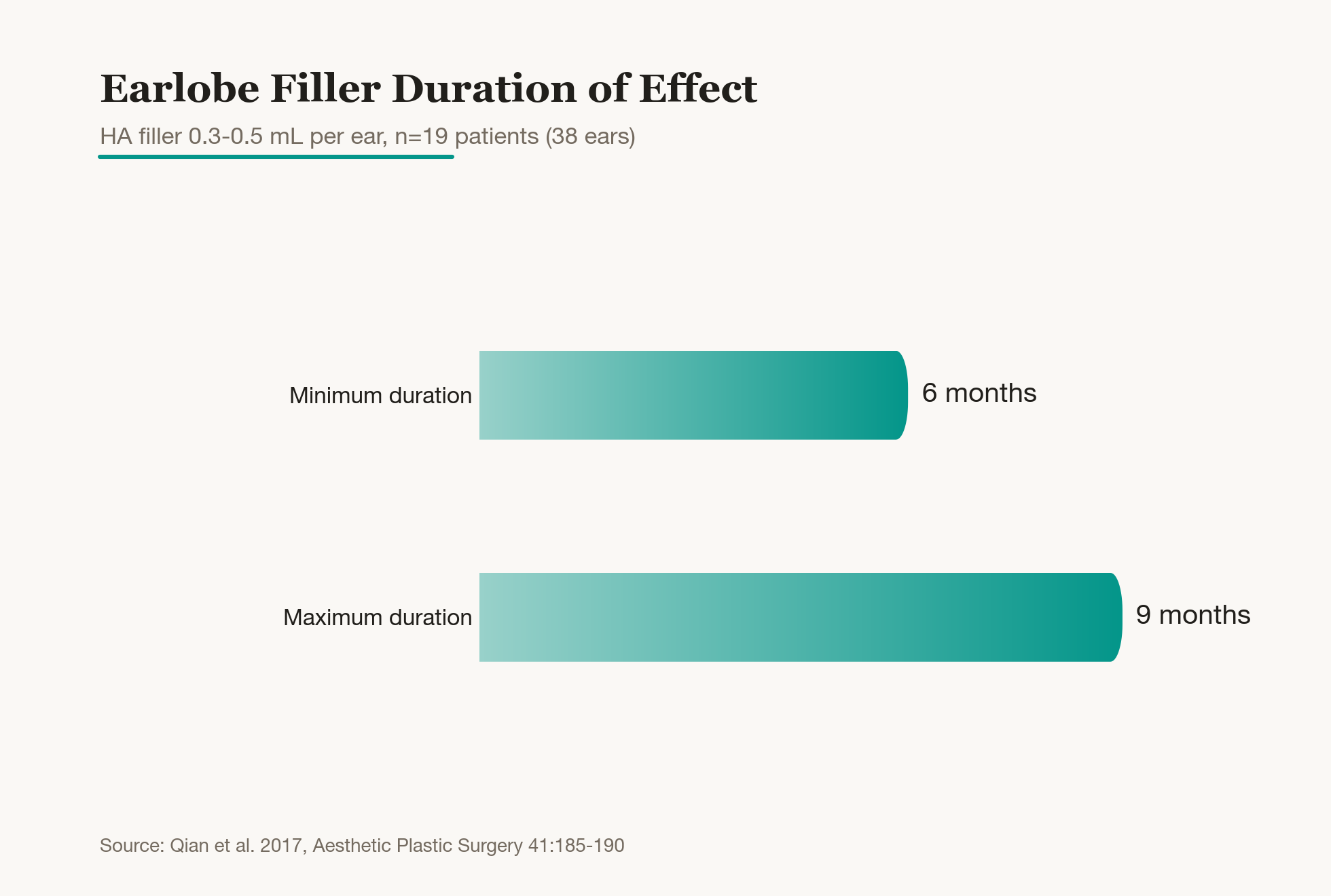
The technique for earlobe filler is fairly simple. A fine needle or cannula is used to inject small amounts of HA filler into the center of the earlobe to build up volume. The amount used is not large either. In a study of 19 Chinese patients covering 38 ears, each ear received just 0.3 to 0.5 mL, an amount so small it is barely visible to the eye.
The results showed up right after injection. All 38 ears showed a noticeably improved earlobe shape. Results lasted about 6 to 9 months, and the only side effect reported was mild bruising in 3 ears, which cleared up within a week.
A more recent study added one more step. A firmly cross-linked HA filler, meaning one woven tightly like a mesh so it holds its shape well, fills the deeper layer, then a hydrating skin booster goes into the shallower layer on top. This combination reportedly improves not just volume but also skin texture and hydration. Either way, the amount injected stays small, which is why this is considered a low-commitment procedure.
Where and how much filler goes in for protruding ears?
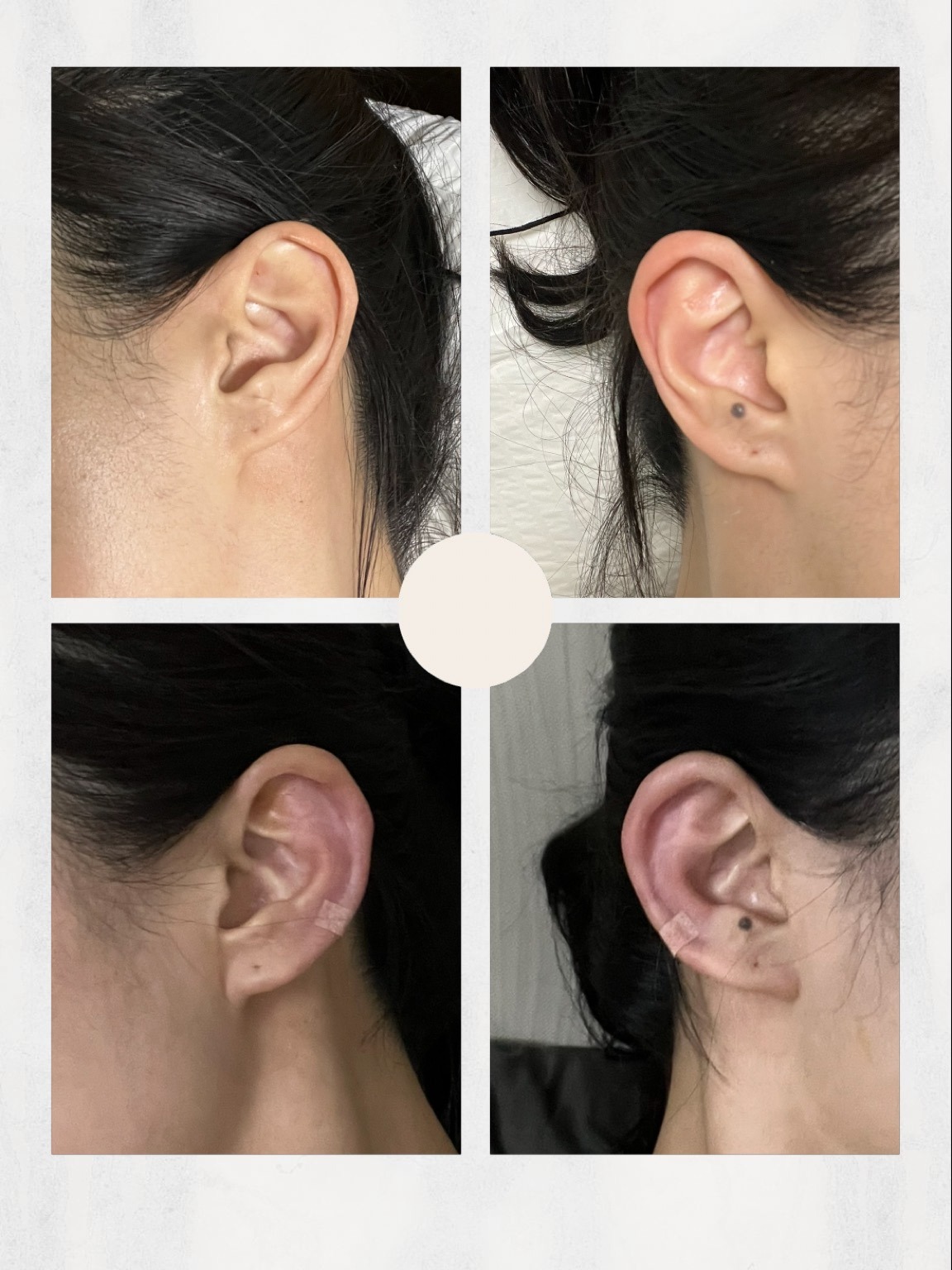
A pinned-back ear means the angle between the ear and the head, known as the cephaloauricular angle, is narrower than average. Think of a door that only opens partway instead of swinging fully open. Because the treatment lifts the ear slightly so it stands out more, it is now often called elf-ear filler. To widen the angle, filler is not placed in the earlobe but in the hollow groove behind the ear, where it meets the head.
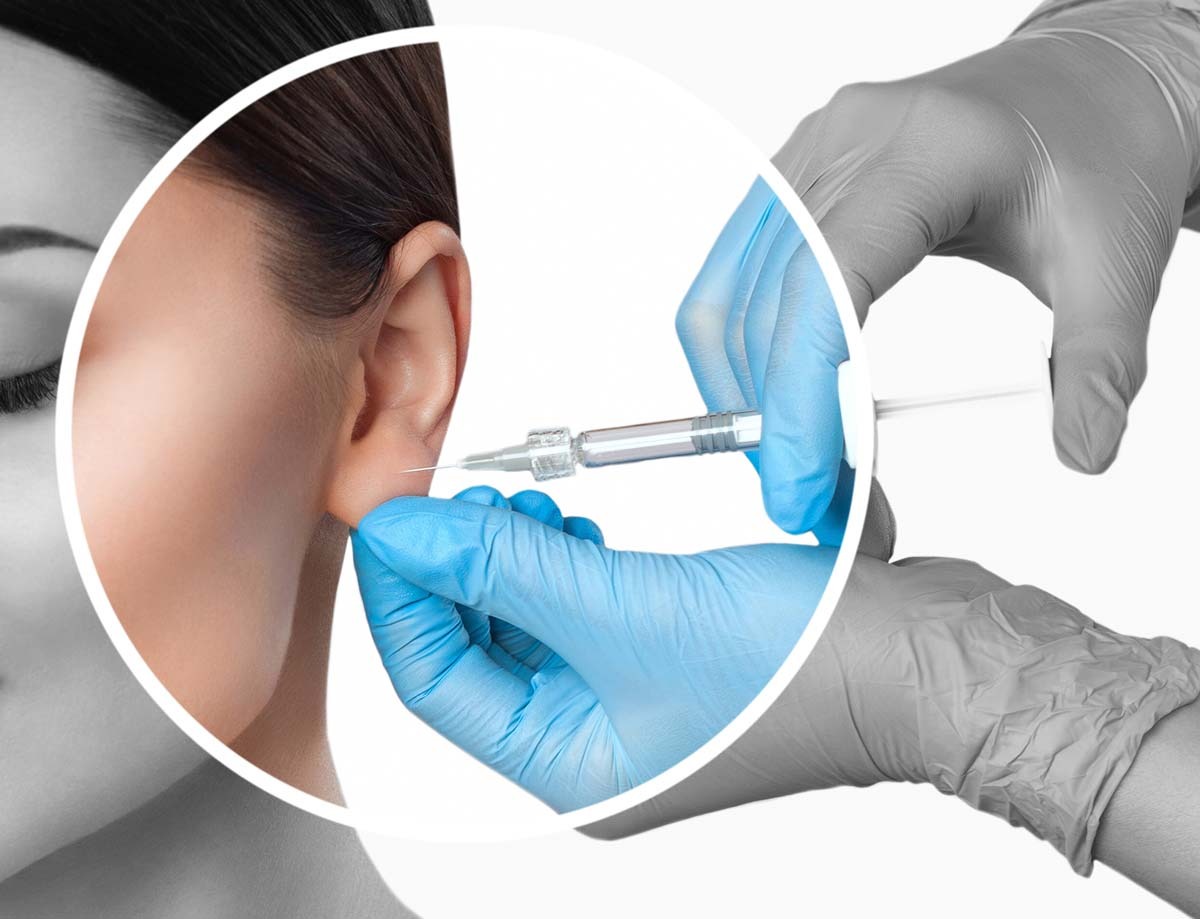
A study covering 46 Chinese patients and 92 ears placed the needle upright into this groove and injected filler just above the periosteum, the thin membrane covering the bone. Each ear received 2 to 4 mL, far more than earlobe filler, since pushing the entire ear outward takes more volume at this spot.
There is an important limit to keep in mind, though. This filler works by filling the space behind the ear to push it forward, not by reshaping the cartilage that is folded back. If the cartilage is severely twisted or the inner folds of the ear are not well defined to begin with, that case falls more into the territory of surgical otoplasty, where the cartilage itself is trimmed and stitched, rather than filler. The first step is checking whether your ear is a good candidate for filler at all.
Here is how earlobe filler and pinned-back ear filler compare side by side.
| Category | Earlobe filler | Pinned-back ear filler |
|---|---|---|
| Goal | Add volume | Correct angle |
| Injection site | Center of earlobe | Hollow groove behind ear |
| Volume per session | 0.3-0.5 mL | 2-4 mL |
| Change | Immediate volume increase | Immediate angle improvement |
| Limit | Cartilage structure unchanged | Cartilage itself unchanged |
Change in ear angle and how long it lasts
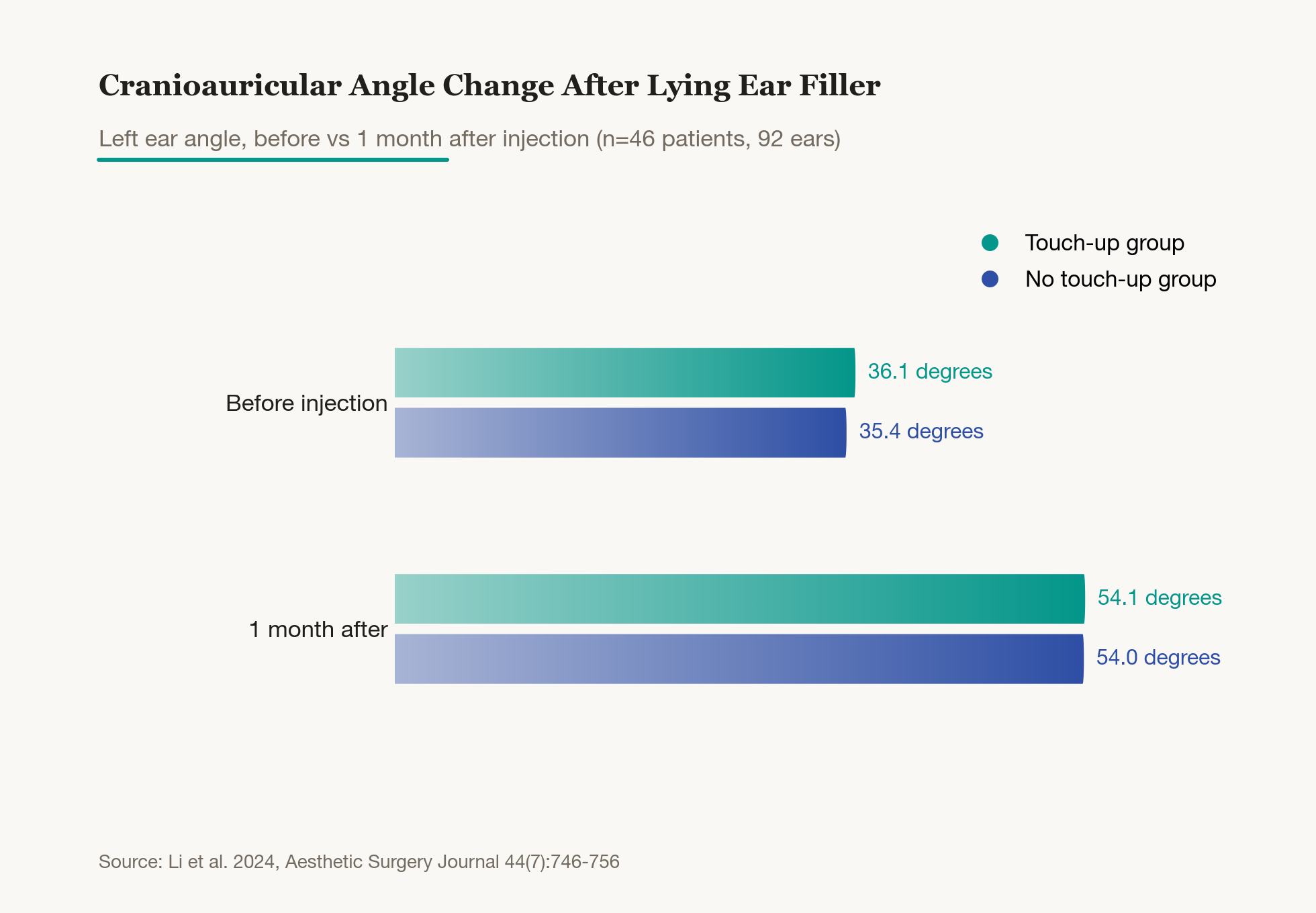
The 92-ear study mentioned earlier actually measured the change in angle. The cephaloauricular angle averaged 35 to 36 degrees before treatment, then widened to around 54 degrees a month later. That is like going from a door barely cracked open to one swung much wider.
The catch is that the angle narrows again over time. Without any touch-up, the effect noticeably faded after about 6 months. On the other hand, when patients received a top-up of 30 to 50% of the original volume between 3 and 10 months, the improvement lasted 1 to 1.5 years.
Both patients and physicians rated satisfaction highly, too. Over 90% in the touch-up group and over 70% in the group without a touch-up rated the result as much improved. That said, these findings cover only the immediate response and short-term maintenance, so whether the ear fully returns to its original shape once filler is stopped altogether still needs more follow-up research.
How dangerous are vascular side effects?
The area around the ear has a dense, interconnected web of blood vessels. A recent cadaver study confirmed that the posterior auricular artery, which runs behind the ear, connects to the temporal artery on the side of the head through many shared pathways. In simple terms, the blood vessels of the ear, eyes, and head are linked together through multiple routes, like a network of side roads.
Because of this, rare but serious complications have been reported. In one case, a 45-year-old woman nearly lost vision in one eye right after receiving HA filler in the ear. It turned out the filler had traveled backward through a vessel and blocked blood flow to the eye. Her vision only partially recovered after treatment with hyaluronidase, an enzyme that dissolves filler, along with steroids and hyperbaric oxygen therapy.
Cases like this are uncommon, which is exactly why precise anatomical knowledge and skill matter so much. If you experience unbearable pain, a sense of skin turning pale, or sudden blurred vision during or right after treatment, you should let the clinic know immediately. It also helps to remember that if something does go wrong, HA filler can be dissolved and reversed with hyaluronidase.
Common reactions and how long they take to settle
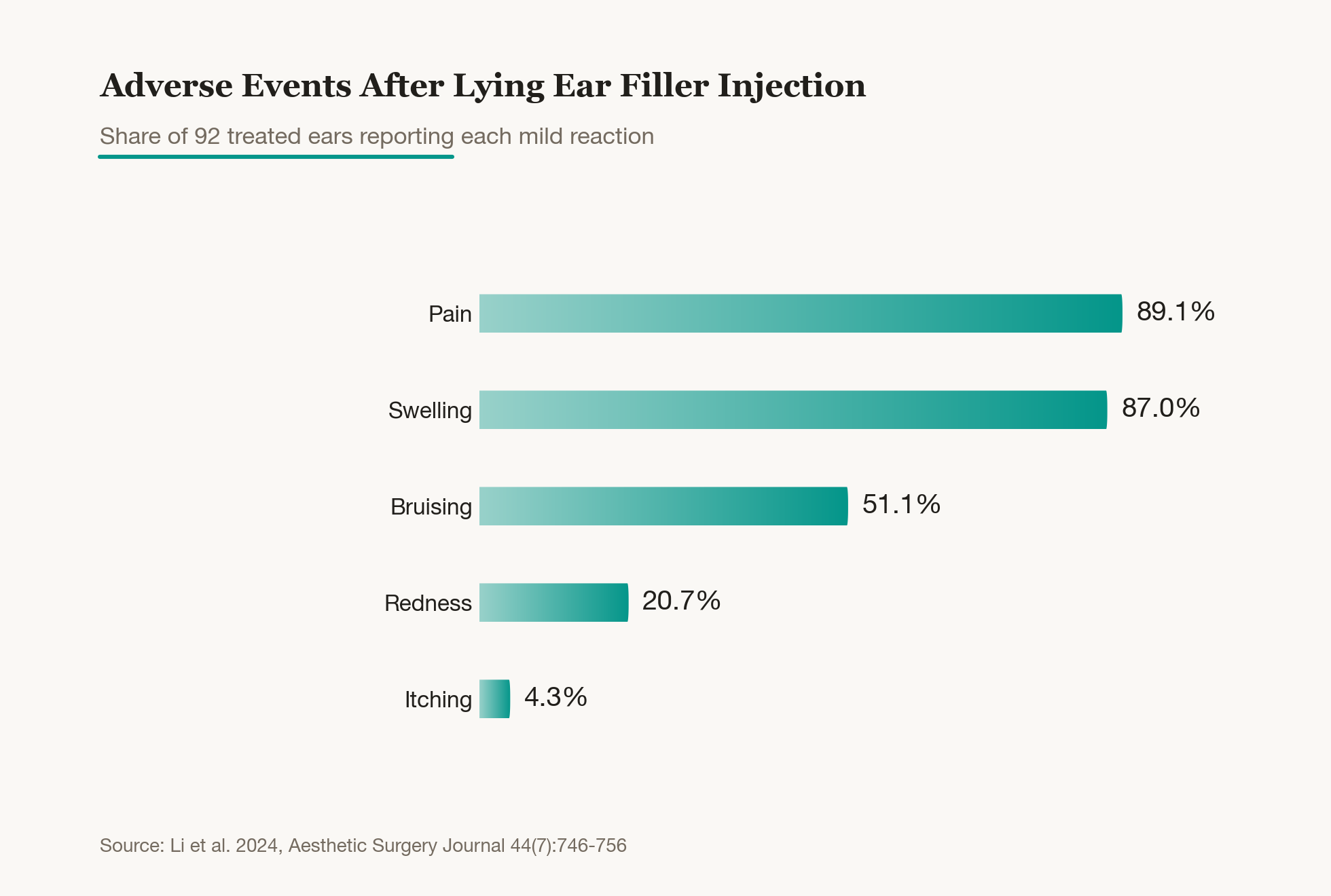
Unlike the alarming case above, the reactions that actually show up most often are much milder. In the same 92-ear pinned-back ear filler study, pain was the most common at 89%, followed by swelling at 87%, and both usually settled within 1 to 3 days. Bruising appeared in about half of cases and took just over a week to fade.
Redness or itching was relatively rare, and even when it appeared, it went away within a few days. In the same study, there were zero cases of serious complications like vascular blockage, infection, or nodules. In other words, for most people the only thing to expect is a mild reaction that fades within days, while the rare serious complications are a separate story entirely.
Whether you are considering filler for an earlobe or a pinned-back ear, the most important factor is choosing a practitioner who knows the anatomy precisely. Smaller amounts injected slowly and in stages tend to be safer. If you want to add volume to a drooping earlobe or lift an ear that looks a bit closed in, get a consultation first to see whether your ear is a good candidate for filler, both for the results and for safety.
Was this helpful?
About this article
Written by a practising aesthetic physician and intended for general education — not a substitute for individual medical advice.
Read next
Recessed Chin Filler: Effects, Duration and Aftercare
A weak chin often gets blamed on bone structure, but in most cases it comes down to the chin point sitting further back than it should. Chin filler fills in that missing volume to reshape the side profile, and here we break down how it works without touching bone, plus how long results actually last.
By Dr. Lee
Tear Trough Filler Duration and Side Effects, Including Vessel Risks
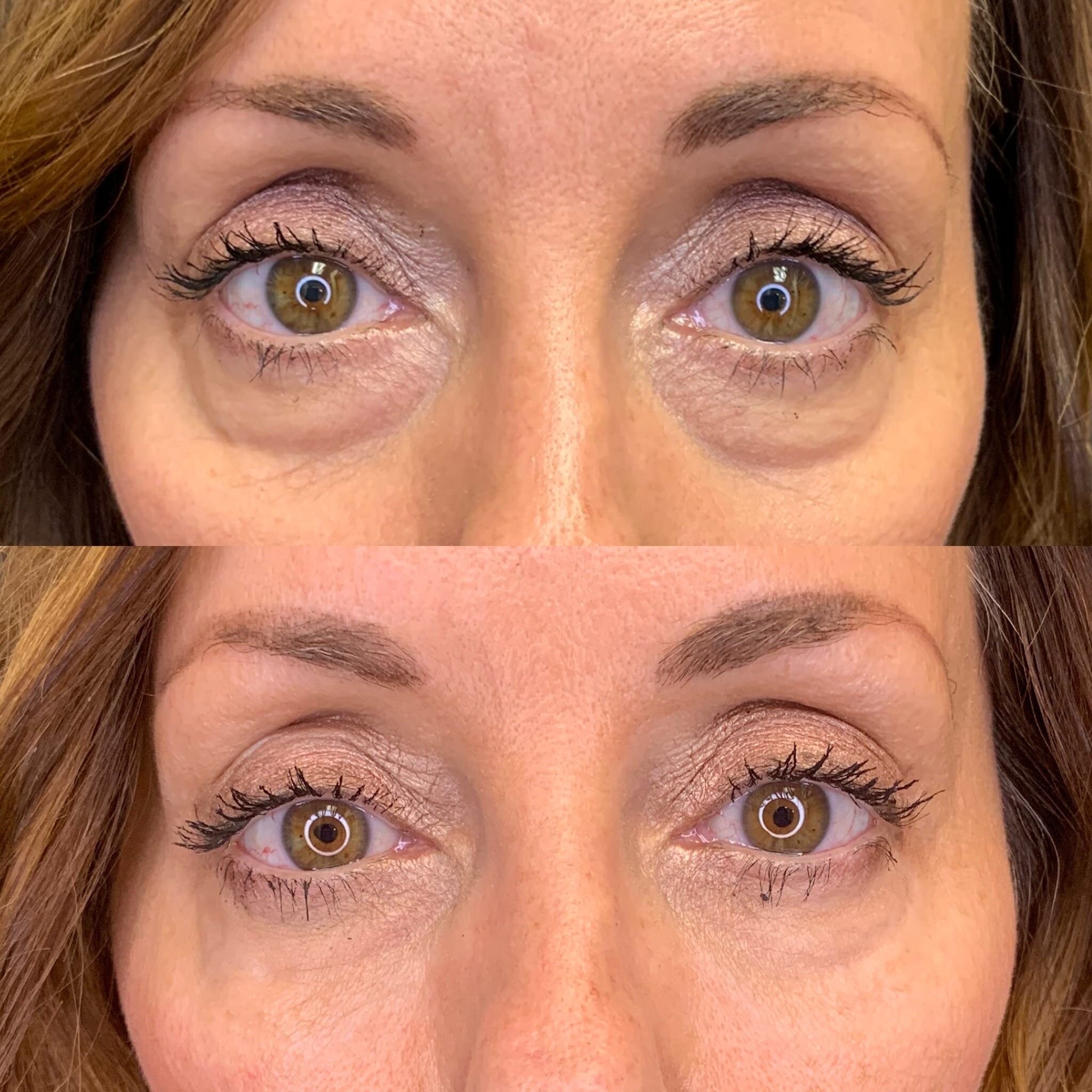
The hollow that forms just under the under-eye fat pad, the tear trough, improves when filler physically fills that empty space. But skin and blood vessels are thin in this area, so there are separate precautions around cannula technique and the Tyndall effect. Here is how the filling works, how long results last, and what recovery looks like.
By Dr. Kim

Pebbled Chin Botox: Results, How Long It Lasts, Dosage, and Side Effects
Chin botox (mentalis botox) smooths out the pebbled, orange-peel texture that shows up on an overactive chin. Here's how relaxing the mentalis muscle evens out the skin, the typical dose and injection points, when results appear and how long they last, how this differs from a weak or protruding chin, and the side effects worth knowing about, all backed by real evidence.
By Dr. Kim