Recessed Chin Filler: Effects, Duration and Aftercare
By Dr. Lee7 min read
When people hear "weak chin," they usually assume the jaw itself is just small. But in the clinic, what we actually see more often is that the chin point sits further back than the rest of the face, not that the bone is undersized. Look at the profile: the line running from the nose tip through the lips to the chin should flow smoothly, and instead it breaks sharply right around the chin.
Chin filler works by adding volume to that recessed area so the profile line connects again. Unlike surgery that shaves bone or places an implant, this is an injection of hyaluronic acid (a substance your body already makes, known for how strongly it binds water), so recovery tends to be much quicker. Let's look at why this approach changes the jawline, and how long the results actually hold up.
Is a recessed chin caused by a small chin?
There's no single cause. Sometimes the jawbone itself grows smaller than average. Other times the bone is a completely normal size, it just grows positioned further back. From the outside, both look like a weak chin, but the underlying reason is different.
During growth, the direction and pace of jaw development is shaped by a mix of genetics, chewing habits, and breathing patterns. For instance, long-term mouth breathing is known to push the jaw to grow more downward than forward, since the muscles that normally pull the jaw forward get less stimulation.
Once you're an adult, bone shape doesn't change much anymore. So if you want to correct the position of a jaw that's already finished growing without surgery, filling in the space in front of it becomes the practical option. That's exactly what chin filler does.
Which layer is chin filler placed in?
Chin filler is usually placed close to the bone surface, right above the periosteum (the thin membrane wrapping the bone). Sitting the filler that close to bone is what makes the resulting line look like the bone itself actually grew forward.
Placed at that depth, the filler follows the contour of the bone underneath and builds volume forward from there. If it's injected too superficially instead, it tends to look soft and puffy. Placed near the bone, the volume sits on top of a firm structure, so the forces acting on it come out looking natural.
The filler itself is made of hyaluronic acid molecules linked together into a mesh, a process called cross-linking. The tighter that cross-linked network, the firmer the filler and the better it holds its shape, which is why structural areas like the chin typically use these firmer formulations. That's also why the product used here is different from the softer ones used for lips, where a plusher kind of volume is the goal.
How does filler connect the side profile?
Hyaluronic acid is a molecule that grips water strongly. Once injected, each particle pulls in the surrounding moisture and swells with it, creating volume, similar to how a sponge puffs up as it soaks up water.
As that added volume fills the space in front of the chin, the profile line running from nose tip to lips to chin point connects smoothly again. A line that used to break backward now extends forward, and that single shift changes how the whole face reads in proportion. Changing just the chin can transform the entire side profile impression, because that one line plays an outsized role in how the eye perceives facial balance.
The skin and muscle over the treated area also settle in around the new volume. As the area expands, the skin and muscle stretch to match the new shape and take their position accordingly, so over time the filler and the surrounding tissue start moving together as a single unit.
When does swelling go down and the shape settle?
Right after the procedure, you can expect some swelling and light bruising where the needle passed through and where the filler was placed. That's a normal response to the tissue being disturbed and small blood vessels being pressed or grazed.
This initial swelling usually starts settling within a few days, and it typically takes 2 to 4 weeks for it to fully resolve and reveal the actual result. While swelling is present, the chin can look larger than it will end up, or slightly asymmetric, so it's more accurate to judge the final shape only after this period has passed.
Around the chin, small blood vessels run between the muscles that move the lips and chin, supplying them with blood. That's why it matters that the procedure is done with a precise understanding of the anatomy in this area. If filler is accidentally injected into a vessel, it can block blood flow and lead to tissue damage, but even in that scenario, hyaluronidase (an enzyme that breaks down hyaluronic acid) can be injected to rapidly dissolve the filler and reverse the situation, which is one of the key safety advantages of this material.
What decides how long chin filler lasts?
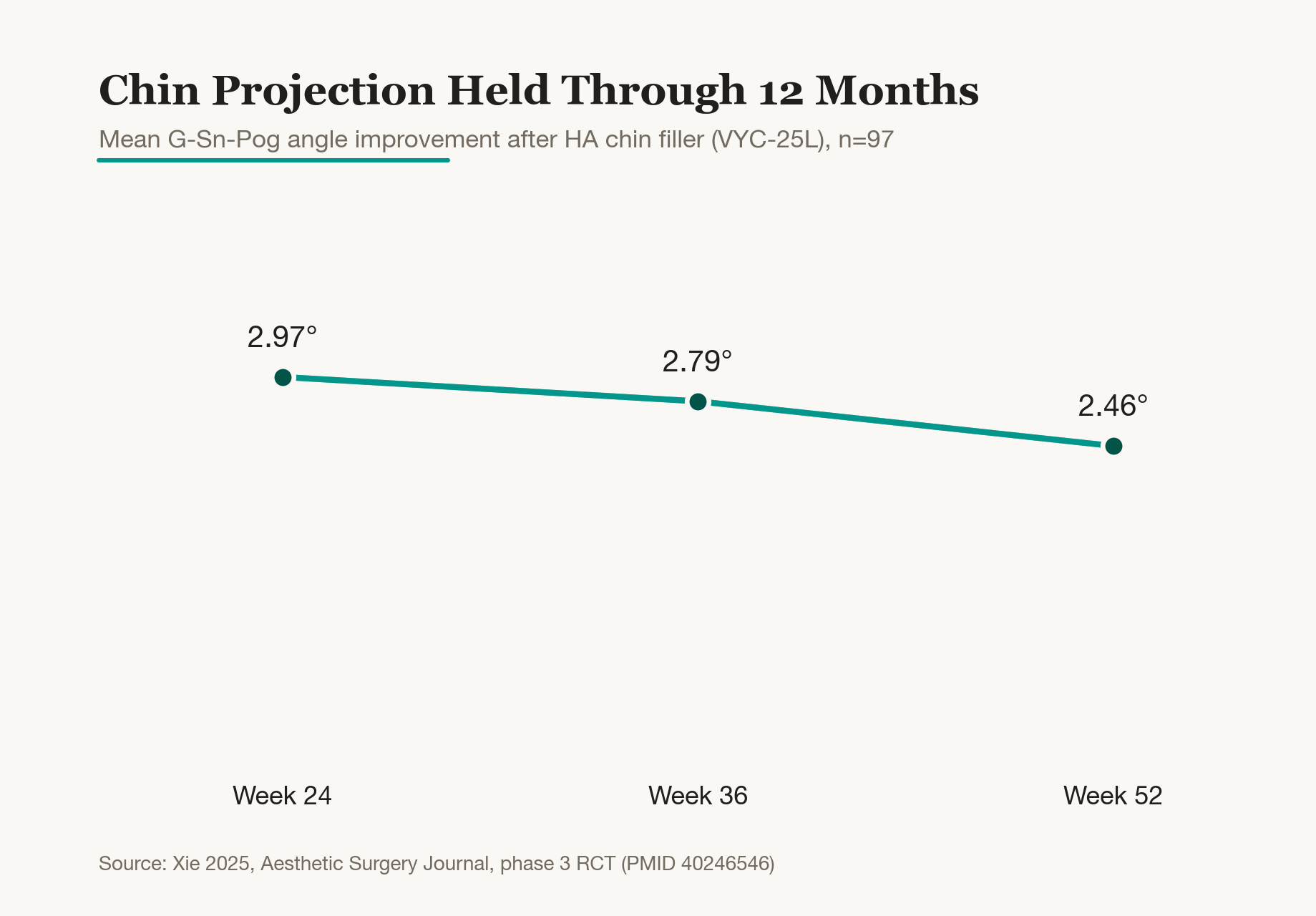
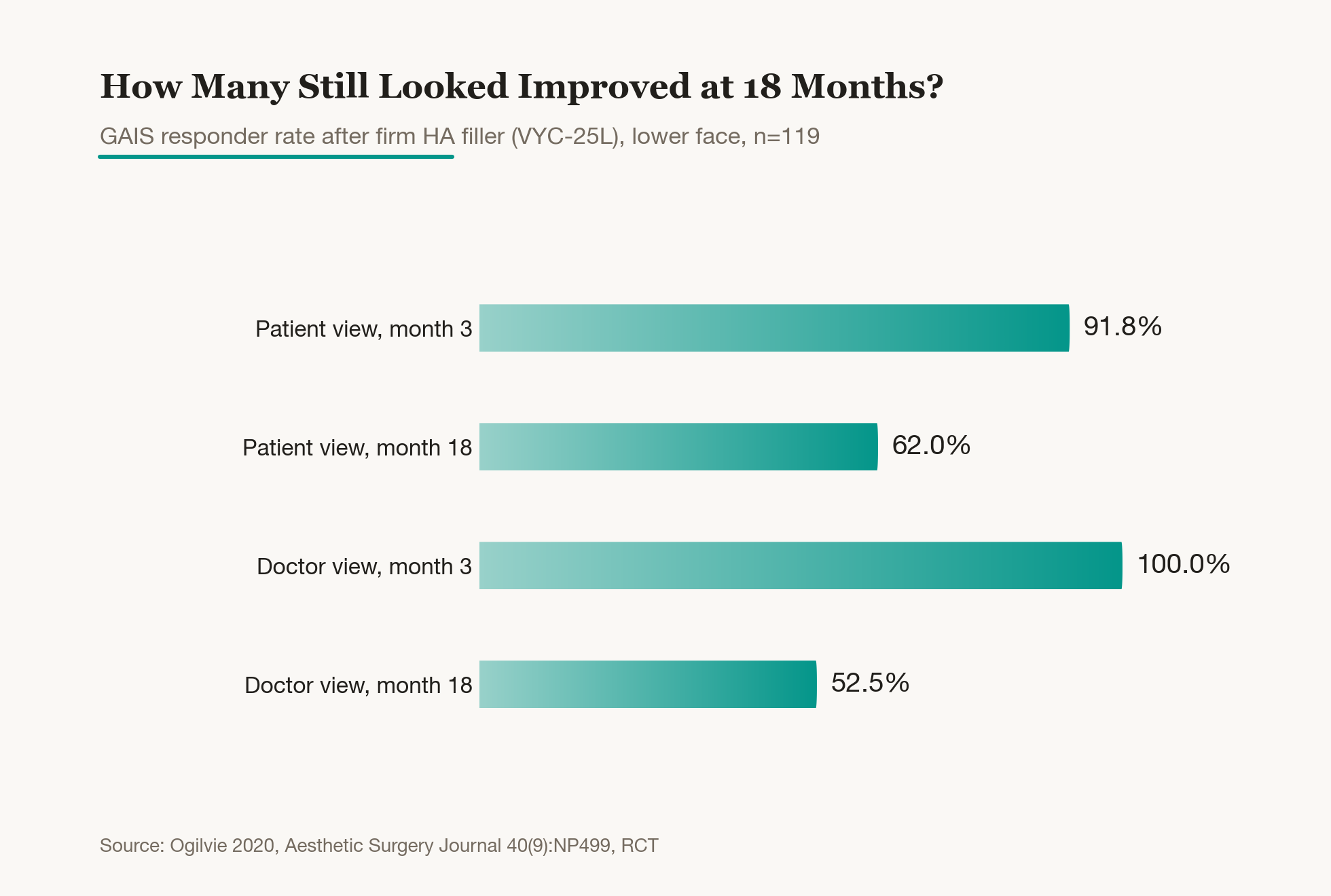
How long chin filler lasts varies a lot from person to person and product to product. Some studies show effects still present after 12 months, and denser, firmer cross-linked products have been reported to last close to 24 months. A few factors combine to create that range.
- Cross-link density of the filler: The more densely cross-linked a product is, the more slowly enzymes in the body break it down, so it holds its position longer. Looser filler structures still grip water well, but they break down faster and don't last as long.
- Injection location and depth: Placed closer to the bone, filler is less exposed to the movement of muscles used for chewing and speaking, so it tends to hold its shape longer. Placed more superficially, it's directly exposed to the pull of facial expression muscles.
- Movement of the chin and mouth muscles: The chewing muscles and muscles around the mouth beneath the chin move thousands of times a day. The more active these muscles are, the more physical pressure the filler is exposed to, which can speed up breakdown somewhat.
- Individual metabolic rate: How active the enzymes that break down hyaluronic acid are varies from person to person. People with a faster metabolism tend to absorb the same product somewhat more quickly.
Because of all this, it's hard to pin the duration of chin filler down to a single number. A realistic way to think about it is a range of roughly 9 to 18 months, with individual variation built in.
Aftercare and when to repeat
The core of aftercare is helping the filler settle into place and stay there.
- For the first few days after the procedure, it's best to avoid pressing hard on the chin or sleeping face-down. The filler hasn't fully settled yet, and pressure can push it out of position.
- Saunas and steam rooms are generally best avoided for about a week. Heat can cause tissue to swell and increase blood flow, which can prolong swelling.
- Early bruising and swelling usually settle on their own over time, though recovery speed varies by individual.
- Vigorous massage or strong pressure can distort the filler's shape, so it's best to avoid these during the recovery period.
As time passes and the duration nears its end, you may start to notice the volume gradually decreasing. At that point, there's no need to rush a decision. The sensible next step is to discuss a possible touch-up with your provider, based on when the last treatment was done and which product was used. Since the bone position itself hasn't changed, refilling the volume brings the line back using the same underlying principle as the first time.
References
Korean Dermatological Association, American Academy of Dermatology (AAD), and Ministry of Food and Drug Safety (MFDS).
Was this helpful?
About this article
Written by a practising aesthetic physician and intended for general education — not a substitute for individual medical advice.
Read next
Under-Eye Hollow Filler: Effect and Side Effects, and the Tyndall Effect to Watch
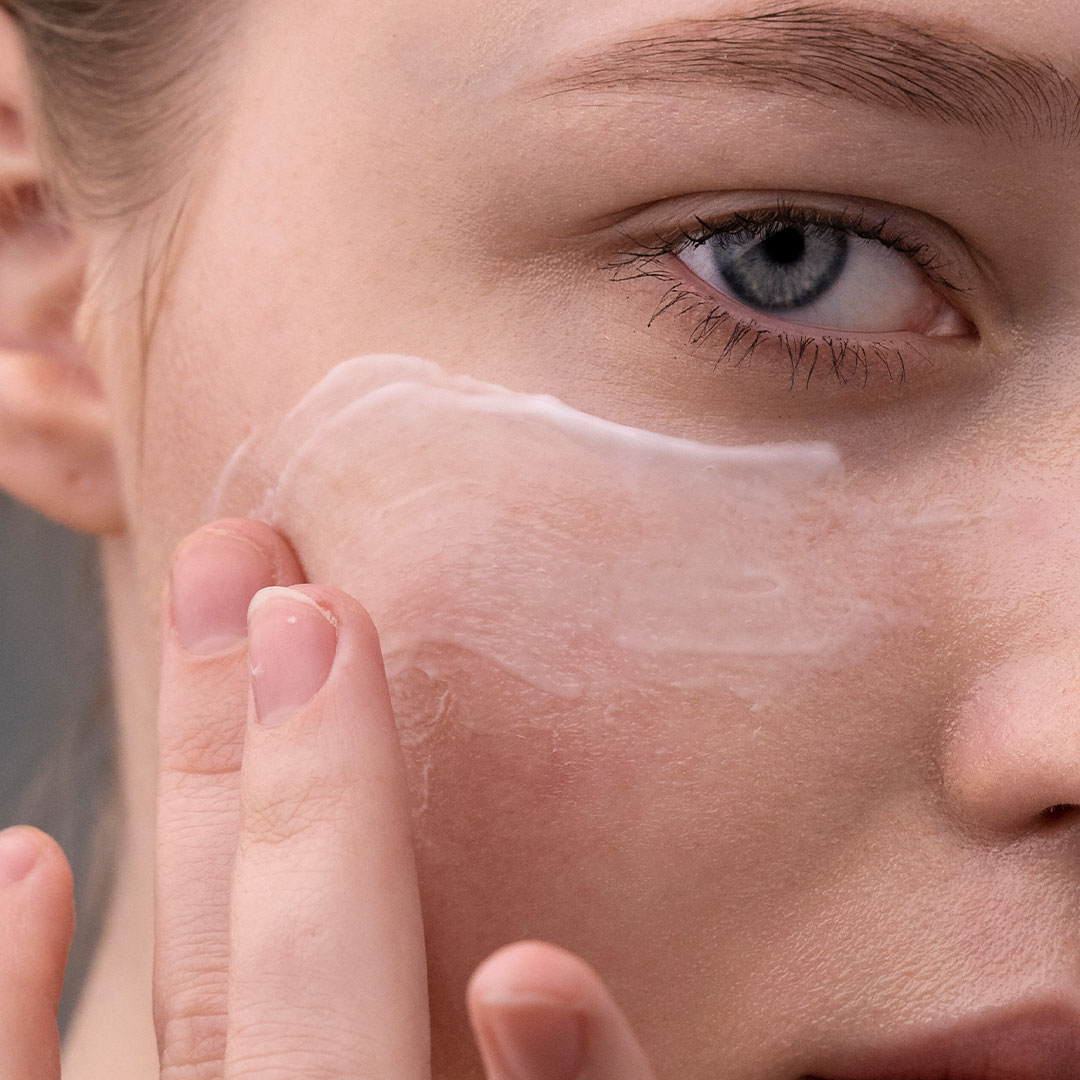
The dark, sunken look under the eyes often comes less from pigment than from hollowing and the shadow it casts. Here's how the tear trough ligament and lost volume under the eye create that shadow, how a soft hyaluronic acid filler placed shallowly and sparingly smooths it out, why thin skin and the bluish Tyndall effect make this area tricky, and how long results actually last, all backed by real published numbers.
By Dr. Kim

Lip Filler Duration and Side Effects, Including Aftercare
Lip volume filler works by drawing in water through hyaluronic acid as it settles into place. Because lips move more than other areas, how long results last and how recovery unfolds differ too. Here's a full rundown of the texture differences between filler types and how to care for results safely.
By Dr. Kim
Gummy Smile Botox Effects, Duration, and Side Effects
A gummy smile happens when your gums show more than usual as you smile, and an overactive lip-lifting muscle is one of the most common causes. Botox works by slightly reducing the strength of that muscle so your lip doesn't rise as high when you laugh. Here's how to tell whether muscle is really the cause, plus how long the results tend to last.
By Dr. Lee