DermaV Laser for Redness: Effects, Two Wavelengths and Aftercare
By Dr. Lee7 min read
If your face keeps turning red and just will not calm down, the cause often sits beneath the surface, in the blood vessels themselves. DermaV laser is a treatment built to target the dilated vessels that produce this kind of redness, and it comes equipped with two different wavelengths, 532nm and 1064nm. Here is why one wavelength is not enough, and how the two work together.
Why does redness persist instead of settling?
Facial redness happens when the tiny capillaries just under the skin widen and become visible through it. Normally, these vessels expand briefly in response to heat or irritation, then contract back down. Redness sets in when that contracting force weakens and the vessels get stuck in their widened state.
Years of sun exposure break down the collagen that supports the vessel walls from the outside. Once that support is gone, the vessels lose their elasticity, much like a rubber band that has been stretched too many times, and they stay visibly enlarged. Add repeated temperature swings or irritation on top of that, and the vessels become even more prone to staying dilated.
This is why redness rarely responds to surface calming alone. Soothing creams and moisturizers can reduce irritation and ease redness temporarily, but they cannot shrink vessels that have already stretched out and stiffened. To make a real dent in visible redness, the vessels themselves need to shrink, and that is where a laser aimed directly at blood vessels comes in.
How does the DermaV laser target vessels?
DermaV laser relies on a simple principle: light is absorbed much more strongly by certain colors than others. Hemoglobin, the pigment that gives red blood cells their color, absorbs specific wavelengths of light unusually well. When that light hits hemoglobin, it converts to heat, and the heat coagulates the vessel wall.
Think of a magnifying glass burning a hole through black paper while leaving white paper untouched. Black absorbs more light and heats up faster. In the same way, vessels rich in hemoglobin selectively absorb heat while the surrounding skin stays relatively cool.
Heat spreads over time, though. That is why the duration of each laser pulse needs to match how long a vessel can hold onto that heat. Too short, and not enough heat reaches the vessel wall. Too long, and the heat leaks into surrounding tissue, which can cause swelling or irritation. It works a bit like dipping a hot ladle briefly versus leaving it in for a while, the handle barely warms up with a quick dip but heats up fully if left too long. DermaV is designed to adjust this pulse duration to match vessel thickness, so it can respond with different intensities for thin vessels and thick ones.
Which vessels does the 532nm wavelength treat?
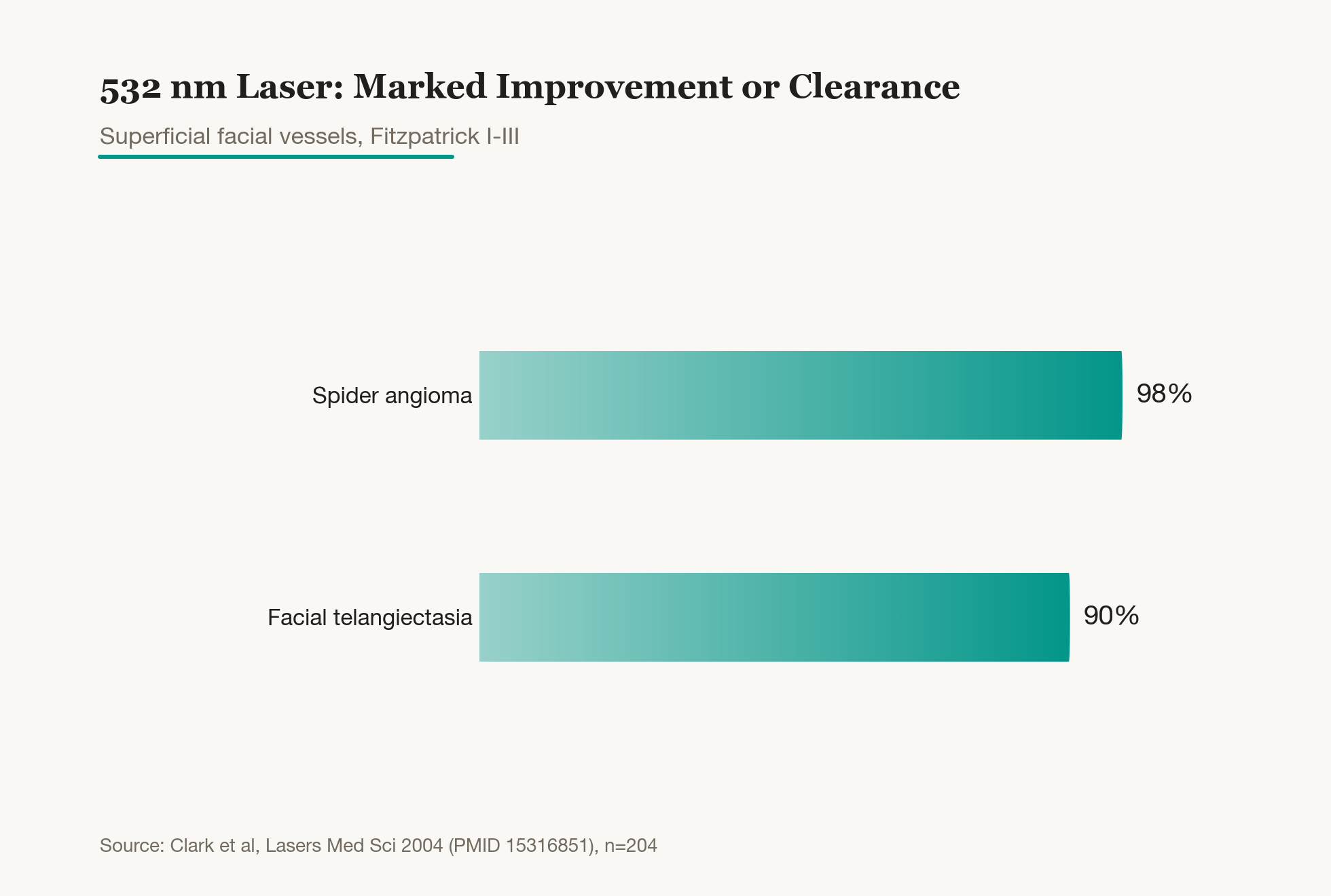
At 532nm, close to green light, the wavelength sits in a range that hemoglobin absorbs particularly strongly. That means even a small amount of energy can produce a clear response in the vessel.
The tradeoff is that this wavelength gets absorbed almost entirely near the skin surface and cannot penetrate deep. Because of that, it is mainly used on capillaries and spider-web-like vessel clusters sitting right under the surface, the kind you see as fine red lines around the nose or on the cheeks.
One thing to keep in mind is that this wavelength is also absorbed to some degree by melanin. On tanned skin or areas with more pigment, some of the heat gets diverted into melanin instead of the vessels, which is exactly why sun protection matters so much both before and after treatment.
Which vessels does the 1064nm wavelength treat?
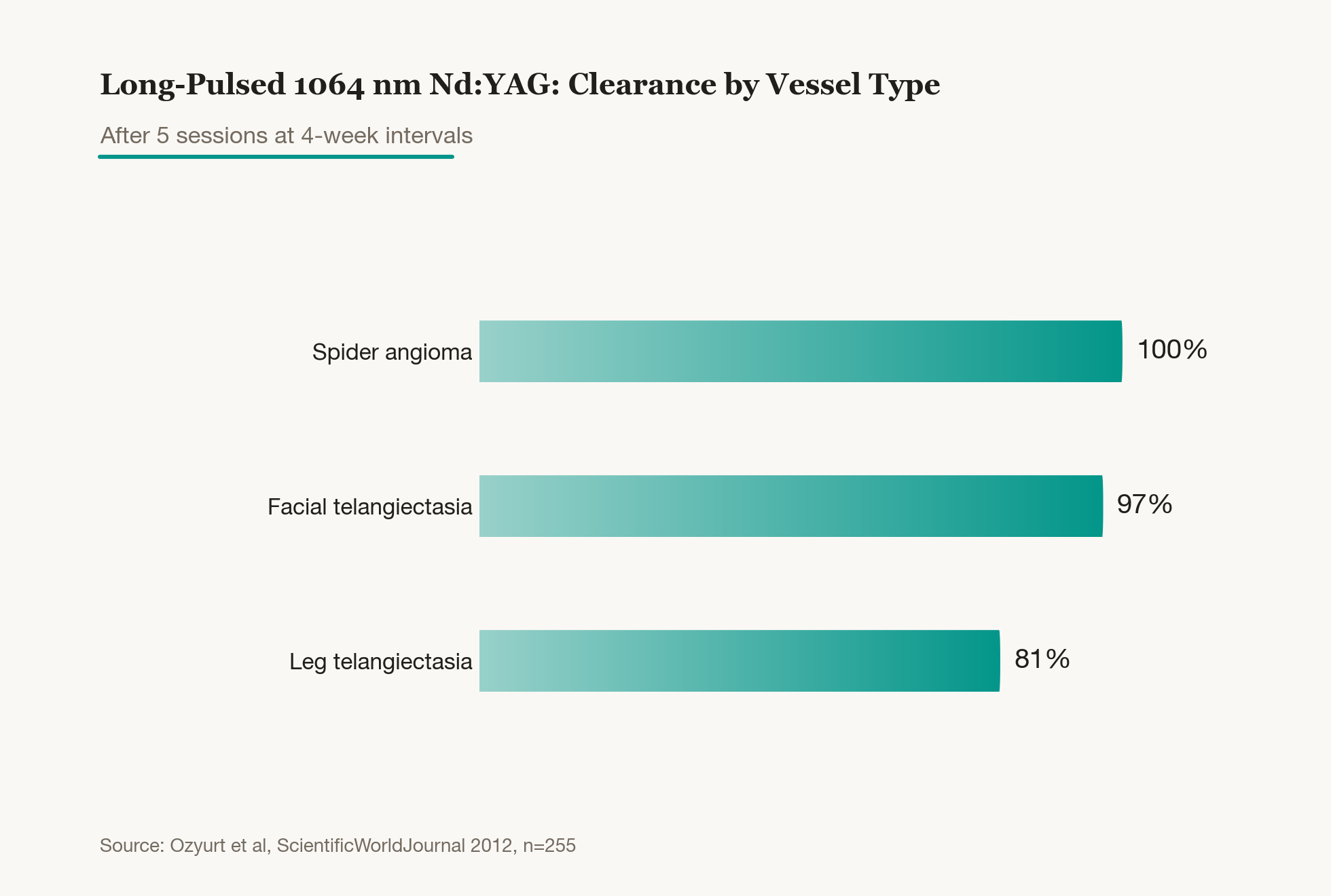
At 1064nm, in the invisible near-infrared range, the wavelength is absorbed by hemoglobin less strongly than 532nm, but it penetrates much deeper into the skin. A higher rate of transmission, rather than absorption, means more energy survives to reach the deeper layers.
That makes this wavelength suited for the larger, deeper vessels that sit below the surface and are not directly visible. These feeder vessels keep supplying blood to the visible surface capillaries above them, and reaching them is exactly where 1064nm has an edge.
Melanin absorption is also lower at this wavelength than at 532nm, which makes it a relatively safer option for skin with more pigment. And because it typically runs on longer pulses, it tends to produce less of the bruise-like purpura reaction that shorter-pulse lasers are known for.
Why are the two wavelengths used together?
Redness rarely stays confined to a single depth. Fine capillaries near the surface often coexist with a larger feeder vessel deeper down that keeps pumping blood into them.
Using 532nm alone can shrink the surface vessels while leaving the deeper feeder vessel untouched, similar to trimming a tree's branches while leaving the roots in place. Given time, new branches grow back. If the deeper vessel remains, the surface vessels can refill with blood and the redness can return.
This is exactly why DermaV was built to combine both wavelengths as needed. Shallow vessels get treated with 532nm, deeper feeder vessels with 1064nm, so a single session can address vessels at different depths at once. Combining wavelengths tends to help most when the redness covers a wide area or involves vessels at mixed depths.
On the other hand, if the redness is limited to a small area made up mostly of surface capillaries, 532nm alone is often sufficient. Deciding how much of each wavelength to use usually comes down to examining the visible vessel pattern along with overall skin condition.
How to care for skin before and after
Since this treatment works directly on blood vessels, care before and after the session affects the outcome. A few points worth keeping in mind:
- Sun protection and brightening care beforehand: Tanned skin means melanin competes with hemoglobin for the light, which reduces how much heat reaches the vessels and raises the risk of pigment side effects. Sun protection matters especially in the days leading up to treatment.
- Cold compresses right after treatment: Cooling the treated area helps ease the burden on the surface skin. The vessel's coagulation response has already started by then, so surface cooling does not interfere with it.
- Avoiding saunas or steam rooms for a few days after: Heat pushes vessels to widen again. If newly coagulated vessels get hit with heat before the surrounding tissue has settled, recovery can slow down.
- Understanding that results build gradually: A coagulated vessel does not vanish instantly. The body absorbs it over days to weeks, and the redness fades along with that process. Deeper vessels generally take longer to clear.
Since vessel thickness and depth vary from person to person, spreading treatment across several sessions and watching how the skin responds is commonly recommended. When both surface and deeper vessels are involved, alternating between the two wavelengths over multiple sessions tends to produce a more thorough result.
Spacing between sessions matters too. Rushing into another treatment before a vessel has fully been absorbed can add irritation on top of tissue that is still responding, so sessions are usually spaced a few weeks apart while progress is monitored. That interval can vary depending on vessel thickness and how quickly an individual recovers.
References
Korean Dermatological Association, American Academy of Dermatology (AAD), and Ministry of Food and Drug Safety (MFDS).
Was this helpful?
About this article
Written by a practising aesthetic physician and intended for general education — not a substitute for individual medical advice.
Read next
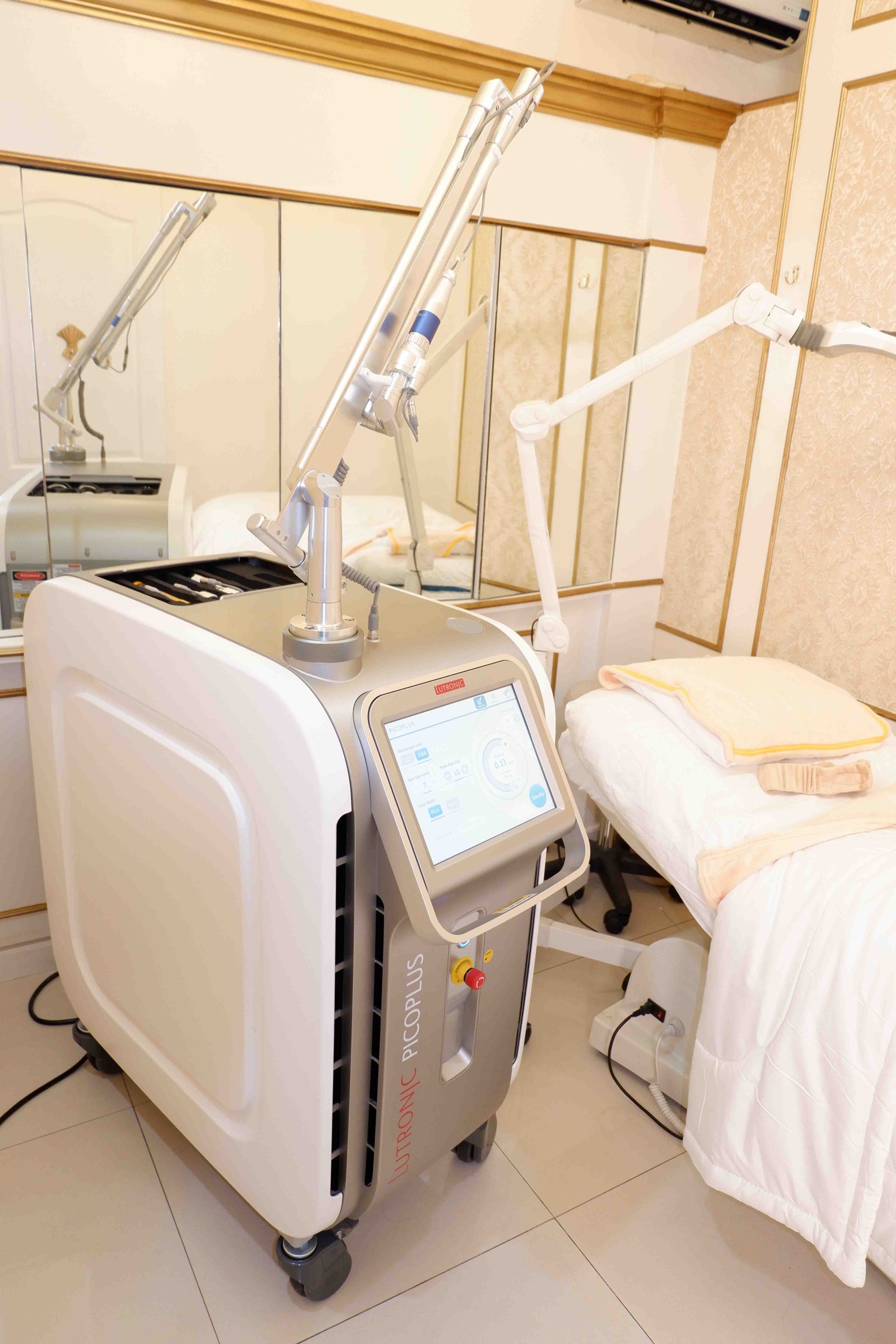
PicoPlus Laser: Effects by Wavelength and Aftercare
PicoPlus is a laser that switches between picosecond and nanosecond modes and uses four wavelengths, 532nm, 595nm, 660nm, and 1064nm. Because each pigment absorbs a different wavelength best, switching wavelengths lets a single device treat a wide range of pigmented lesions. Here is how pigment absorbs each wavelength differently.
By Dr. Lee
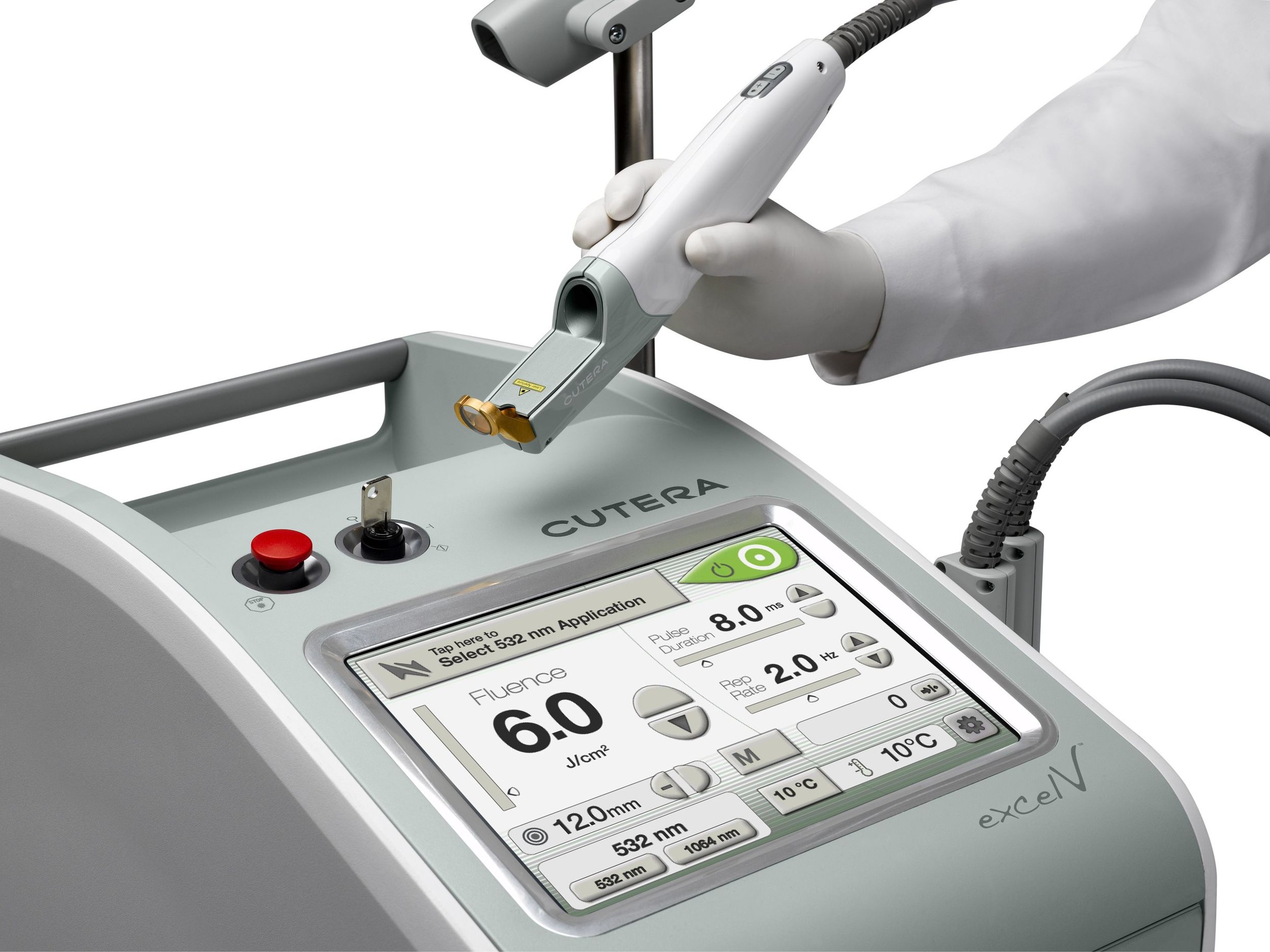
Excel V Laser for Redness and Dark Spots, Including Sessions and Downtime
The Excel V laser uses two different wavelengths of light to target blood vessels and pigment separately in the same session. Here is why redness and brown spots can be treated by a single machine, explained through how the device actually works.
By Dr. Kim
Exosome Treatment Effects: How Are They Different From Stem Cells?
Exosomes are tiny signal packets that cells release into their surroundings, delivering only the messages a stem cell creates rather than the stem cell itself to the skin. Here is a plain look at how exosomes carry regeneration and calming signals, why clinics so often pair them with laser treatments, and how much evidence has actually built up so far.
By Dr. Kim