Dandruff Causes: Dry Skin, or Scalp Yeast and Oil?
By Dr. Kim7 min read
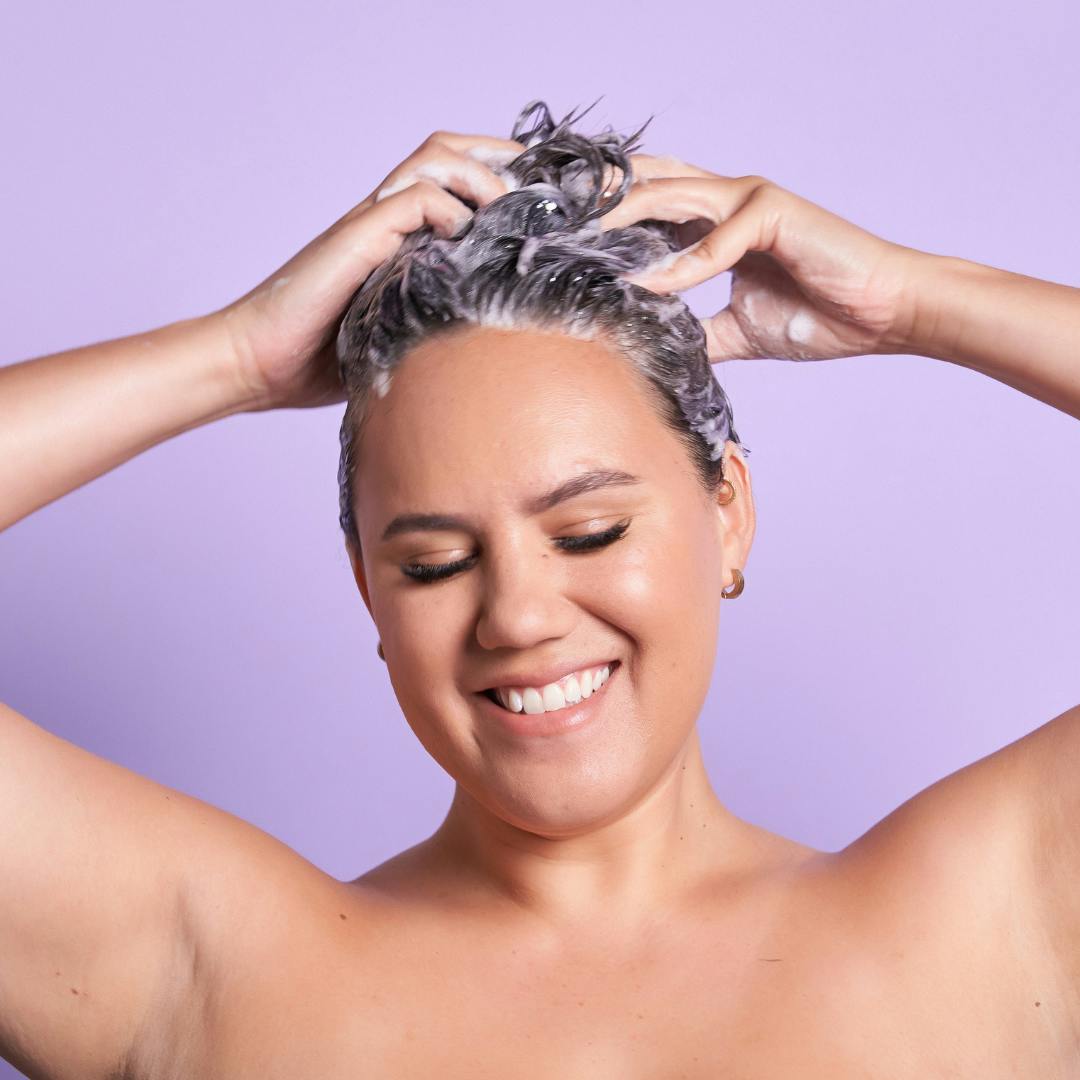
Dandruff is usually explained as "flaking caused by a dry scalp." That's not wrong, but it's only half the story. If dryness were the whole cause, it wouldn't explain why people with oily scalps often have worse dandruff than people with dry ones.
In reality, dandruff comes from three things working together: yeast that lives on the scalp, sebum, and how sensitively your own skin reacts to it all. Let's break down how these three interact, and what you can actually do about it.
Are flakes and dandruff the same thing?
Skin cells naturally shed from the surface as part of a normal renewal cycle. Skin remakes itself roughly every four weeks, pushing old cells out as new ones form underneath. That process itself is completely healthy, not a problem.
Dandruff is what happens when this shedding speeds up abnormally and the flakes become noticeably larger. Because the cells are pushed out before they've fully matured, they don't come off one at a time. They stick together and fall off in visible clumps, which is why it looks like white powder settling on your shoulders.
Normal flaking is so fine that it's barely visible as it sheds. Dandruff flakes, on the other hand, clump together instead of separating cleanly, so they end up big enough to see with the naked eye. In the end, it's the same basic process of skin cell turnover, just faster and clumpier.
Does Malassezia yeast naturally live on the scalp?
A yeast called Malassezia naturally lives on everyone's scalp as part of the normal skin microbiome. The issue isn't that this yeast exists, it's that under certain conditions it becomes overly active.
Malassezia secretes an enzyme called lipase that breaks down sebum on the scalp. The byproducts of that breakdown irritate the skin, and studies report that scalps with dandruff tend to carry higher counts of this yeast, particularly the species Malassezia restricta, compared to healthy scalps.
What irritants does the yeast leave when it breaks down oil?
Sebum itself isn't harmful. The real problem is oleic acid and other free fatty acids that form when Malassezia breaks down the triglycerides in sebum.
In one study, applying oleic acid to the scalps of people prone to dandruff actually triggered visible flaking. In other words, what irritates the scalp and speeds up cell turnover isn't the oil itself, but the acidic leftovers the yeast produces after feeding on it. It's easier to understand once you realize the oil isn't the villain, what it breaks down into is.
Why does the same yeast affect people differently?
Even with the same yeast and the same amount of sebum, dandruff severity differs from one person to the next. That comes down to how sensitively each person's skin barrier reacts to those irritants.
People with a strong skin barrier don't develop much of an inflammatory response even when irritants like oleic acid seep in. People with a weaker or more reactive barrier, on the other hand, experience more flaking and itching from the exact same trigger. That's why managing dandruff means addressing the yeast and protecting the barrier at the same time.
How much sebum your scalp naturally produces also plays a role. If you produce a lot of sebum, that simply means more food for Malassezia, so the yeast multiplies more easily and generates more irritants. A scalp that produces less sebum gives the yeast less to work with, so dandruff tends to be milder.
How season and habits affect dandruff
Many people notice their dandruff gets worse in fall and winter. As temperatures drop, scalps tend to dry out, and that dryness weakens the barrier, making it more sensitive to irritants.
Stress, irregular sleep, and habits like touching or rubbing the scalp too often can also play a role. Stress can affect the hormones that regulate sebum production, and repeatedly irritating the scalp physically damages a barrier that's already compromised. That said, these lifestyle factors aren't as directly causal as the yeast and sebum themselves, they tend to amplify a condition that's already there.
How often you wash your hair matters too. Washing too frequently dries out the scalp and weakens the barrier, while washing too rarely lets sebum and dead skin cells sit on the scalp longer, giving Malassezia more time to multiply. Rather than washing extremely often or extremely rarely, it helps to find a frequency that suits your own scalp.
How do dandruff shampoo ingredients differ?
Most dandruff shampoos on the market rely on a handful of recurring active ingredients, and each one targets a slightly different point in the process.
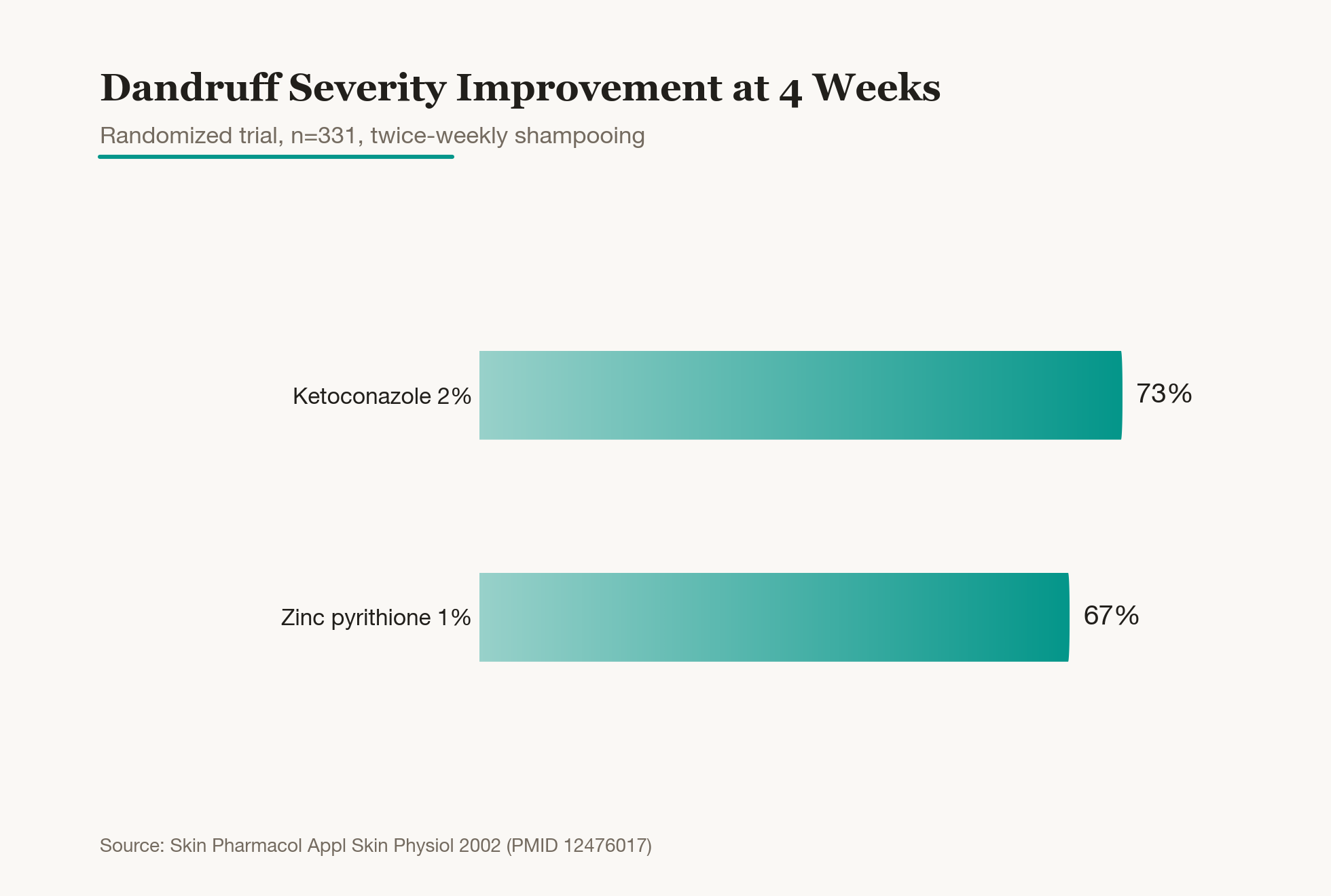
- Zinc pyrithione: pushes zinc ions into Malassezia cells to disrupt the yeast's energy metabolism. Because it blocks the yeast from generating its own energy, resistance is known to develop slowly even with long-term use.
- Ketoconazole: blocks the synthesis of ergosterol, a compound the fungus needs to build its cell membrane. Without a properly formed membrane, the yeast struggles to grow or survive.
- Selenium sulfide: suppresses yeast metabolism while also slowing down the rate of skin cell turnover itself.
- Salicylic acid: doesn't kill the yeast directly, but dissolves clumped flakes so they shed more easily. Think of it as softening and loosening the buildup rather than fighting the yeast.
Since each ingredient targets a different point in the process, switching to a different active is worth trying if one isn't working for you. With consistent use, most people notice a difference somewhere between four and eight weeks.
Sticking with a single active for too long can sometimes let the yeast gradually adapt, dulling its effect, so rotating between ingredient classes every few months is often recommended. Switching from a zinc-based formula to an antifungal one, for example, works because the two hit completely different targets, so alternating keeps the yeast facing a different kind of attack each time.
How to use dandruff shampoo and prevent recurrence
Reducing the yeast and protecting the barrier at the same time is the core of good dandruff management.
- When using a dandruff shampoo, let it sit on the scalp for three to five minutes before rinsing instead of washing it out immediately. The active ingredients need time in contact with the scalp to work.
- Avoid scratching or scrubbing hard with your nails. Adding physical irritation on top of an already weakened barrier can actually make flaking worse.
- Avoid washing with very hot water. Hot water strips away sebum too aggressively and can leave the scalp even drier.
- Managing stress and getting enough sleep helps too, since both can affect sebum production and inflammation throughout the body.
If symptoms persist for a long time, or if the scalp becomes red and starts oozing, it could be a different scalp condition such as seborrheic dermatitis, and it's worth seeing a dermatologist in that case. Plain dandruff is mostly about flaking and itching, while seborrheic dermatitis tends to show more pronounced redness and inflammation.
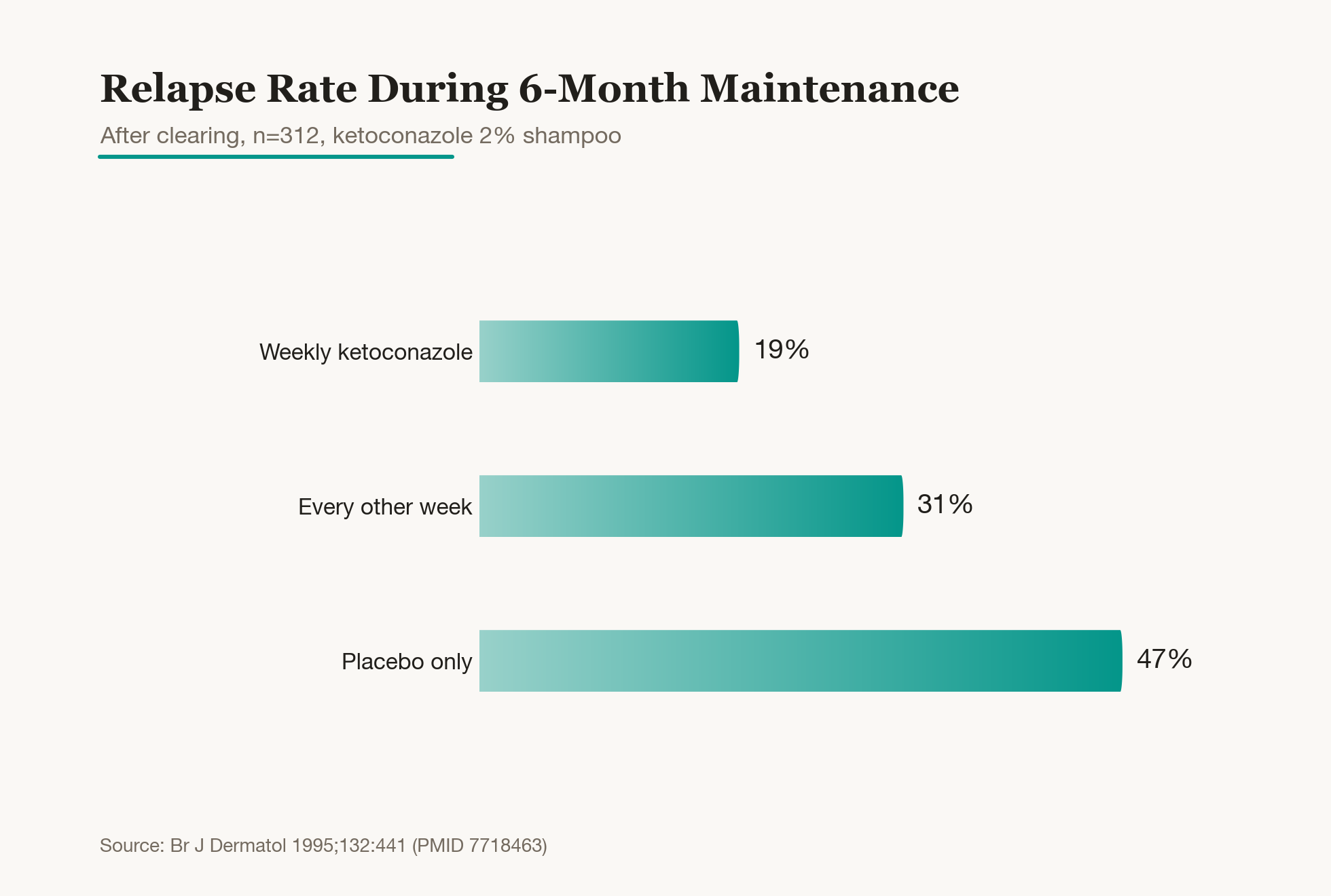
Scalp care isn't a one-time fix, consistency is what matters. Malassezia is a resident organism that can multiply again whenever conditions are right, so rather than stopping care completely once symptoms calm down, tapering off gradually while keeping some routine in place helps prevent it from coming back.
References
Korean Dermatological Association, American Academy of Dermatology (AAD), and Ministry of Food and Drug Safety (MFDS).
Was this helpful?
About this article
Written by a practising aesthetic physician and intended for general education — not a substitute for individual medical advice.
Read next

AHA and BHA Differences: Choosing by Skin Type and Comparing Effects
AHA and BHA are both acids that clear away dead skin cells, but where they actually work depends on one simple thing, whether they dissolve in water or in oil. AHA breaks down the bonds holding surface buildup together, while BHA rides through oil to reach the sebum sitting deep inside your pores. Here is how each one works, and which fits which skin type.
By Dr. Kim
Seborrheic Scalp: Causes, Care and Why Dandruff Keeps Coming Back
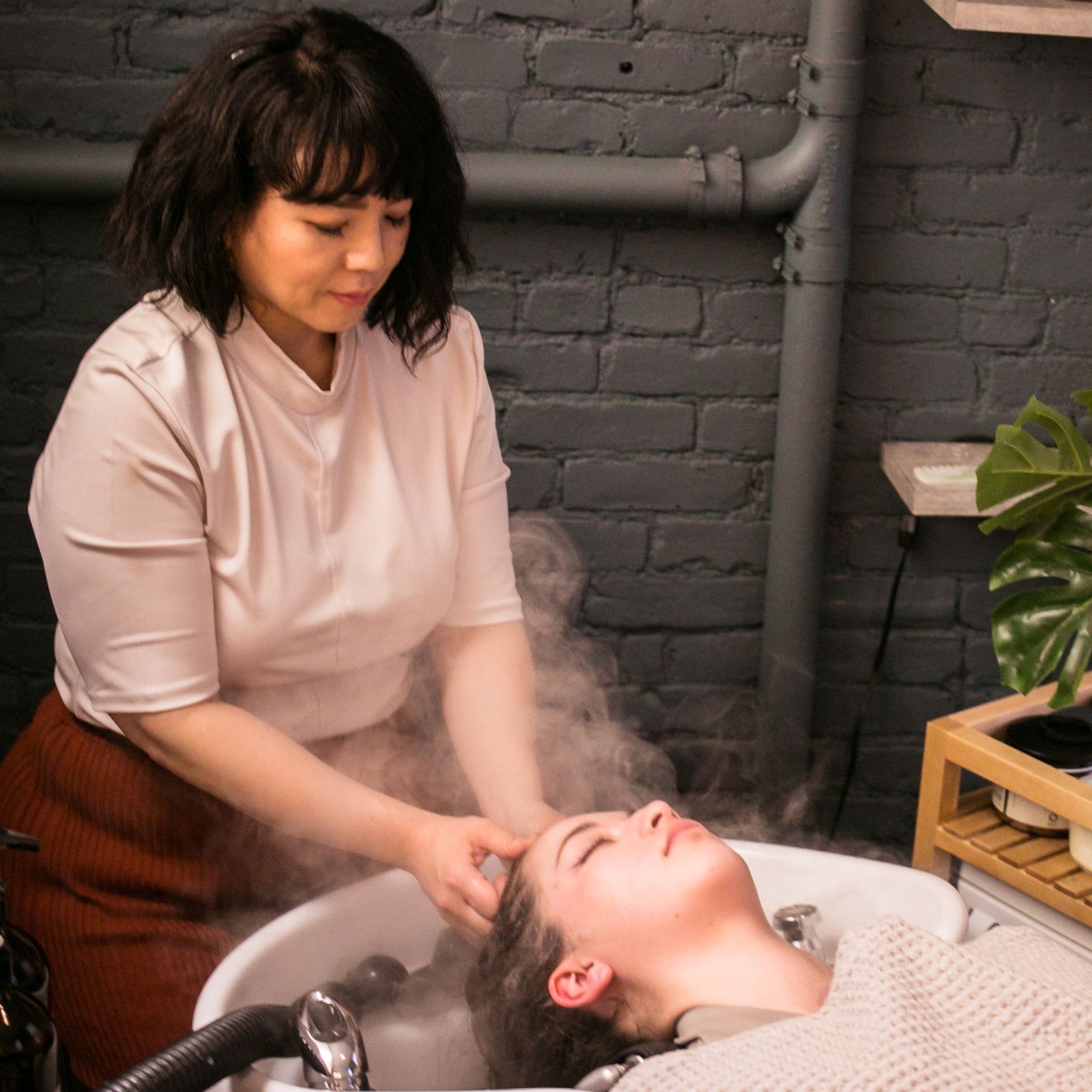
Seborrheic scalp happens when sebum, fungus, and the inflammatory response to that fungus all feed into each other. Here is an easy breakdown of why dandruff shows up in the oiliest spots and why the itch returns just 2 to 3 days after washing, no matter how carefully you clean.
By Dr. Lee
Causes of Acne and How It Forms: Sebum, Dead Skin Cells and Inflammation
Acne develops as four factors line up in sequence: excess oil, trapped dead skin cells, bacterial growth, and inflammation. Here's a clear walkthrough of why each stage happens and what's really going on inside a clogged pore.
By Dr. Kim