Cystic Acne: Causes, Treatment and Why You Shouldn't Squeeze It
By Dr. Kim6 min read
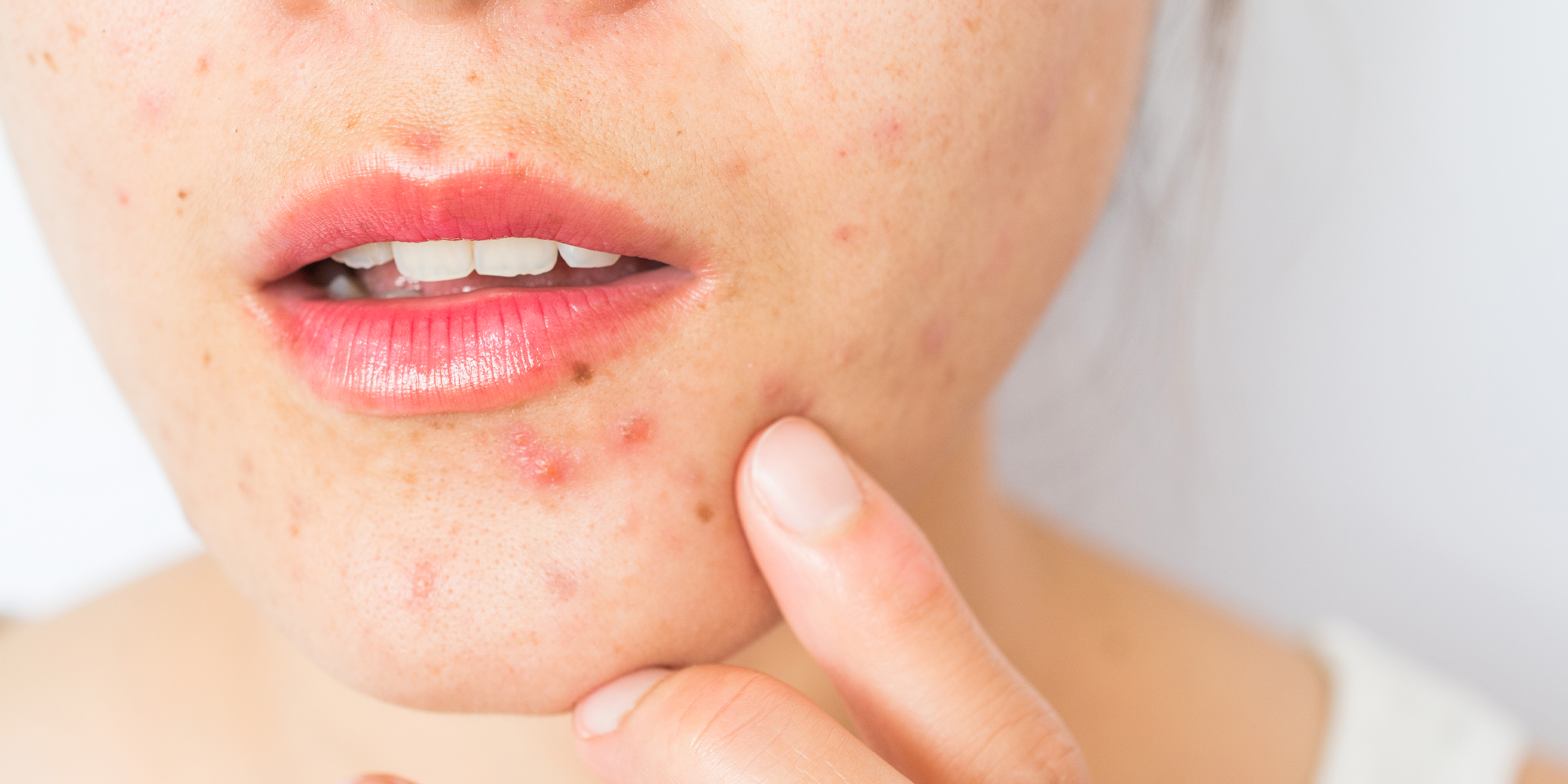
Cystic acne looks and behaves nothing like ordinary breakouts. Whiteheads and small pustules usually settle down within a few days, but cystic acne sets up camp deep under the skin as a large, firm lump. Pressing on it barely helps, it hurts to the touch, and it can stick around for weeks.
When these lesions keep coming back, they often leave marks or scars behind. That is exactly why it matters to understand what is happening underneath and step in early with real treatment, rather than waiting it out.
It tends to show up most on the jawline and cheeks, where oil glands are larger, and it is common to see several lumps overlapping in the same spot. So cystic acne is not simply "severe acne." The inflammation is sitting in a different layer of skin altogether, which is why it needs a different approach.
How is cystic acne different from regular acne?
Cystic acne forms much deeper than blackheads or pustules. Instead of a visible white tip on the surface, it shows up as a hard, sizable lump you can feel under the skin. It usually measures more than 5 millimeters across, and pressing on it brings a throbbing ache.
Medically, the term covers both nodules (solid, packed-together lumps) and cysts (pockets filled with fluid or pus). True to the name, a small sac-like space forms under the skin and fills with inflammatory material. That is why trying to squeeze it from the surface rarely works, and more often just irritates the inflammation sitting underneath.
With a typical pustule, the inflammation stays near the top of the pore, close to the skin's surface, so you can see the white pus and get some relief by extracting it. Cystic acne is different because the inflammation itself sits lower down. From the outside you only see a red, hard bump, and there is no real way to gauge what is happening beneath it just by pressing on it.
How does a clogged pore build up pressure?
Acne starts with a clogged pore. Skin cells inside the pore build up and thicken faster than normal, narrowing the channel that oil is supposed to flow out through. It is a bit like hair and dead skin cells tangling in a drain until water stops draining properly.
As oil keeps being produced inside that narrowed channel, pressure builds up. That pressure pushes outward against the pore wall, and instead of staying near the surface, the inflammation spreads down into the dermis, a much deeper layer of skin. This is exactly why cystic acne feels so hard and so painful: the inflammation is happening in that deep layer, not on the surface.
The dermis is packed with far more pain-sensing nerves and blood vessels than the epidermis above it. So once inflammation reaches this layer, you get redness and swelling, plus a throbbing ache even without touching it. That is also why a cyst often hurts more than its visible size would suggest.
Why do acne bacteria worsen inflammation?
A small amount of Cutibacterium acnes, commonly called acne bacteria, naturally lives in every pore. Everyone has it, so its mere presence is not the problem. Recent research points to which bacterial strain dominates, rather than how much bacteria is present, as the real driver of how intense the inflammation becomes.
A clogged pore is low in oxygen and rich in oil, which happens to be an ideal environment for this bacteria to multiply. As bacteria increase, immune cells rush to the area and the inflammatory response ramps up, eventually causing the pore wall to rupture. Once that happens, the inflammatory material spills into the surrounding dermal tissue, and that is how a cystic lesion forms.
This is also why cystic acne tends to flare around puberty or right before a period. During these times, androgens (hormones that stimulate the oil glands) drive up oil production, which shifts the environment inside the pore even further in favor of bacterial growth and inflammation.
Why do scars and pigment remain?
Surface-level acne usually heals without a trace, since the problem starts and resolves within the outer skin layer. Cystic acne is different. As inflammation spreads into the dermis, it damages the collagen fibers that hold that layer of skin in place.
Collagen works like a supporting pillar underneath the skin. When that structure collapses and the body cannot rebuild it back to its original shape, the result is a pitted or uneven scar. And because the damage spreads further the longer and larger the inflammation runs, leaving cystic acne untreated for a long stretch raises the risk of scarring right along with it.
Dark marks are also common even after the inflammation itself has calmed down. Prolonged inflammation stimulates pigment cells in the skin to overproduce melanin. Unlike true scarring, this discoloration tends to fade on its own over time, but consistent sun exposure noticeably slows that fading down.
How is it treated at a clinic?
Cystic acne is often hard to control with over-the-counter products alone, which is why dermatology treatment is generally recommended. Depending on how deep and severe the lesions are, these approaches are used together or in stages.
- Topical retinoids (such as tretinoin): slow down how fast skin cells build up inside the pore, reducing clogging before it starts.
- Oral antibiotics (such as doxycycline): reduce both the bacteria driving inflammation and the inflammatory response itself, bringing down acute flare-ups quickly.
- Hormonal treatment (such as spironolactone): lowers the androgen response that increases oil production in hormonal acne, addressing the root cause of excess oil.
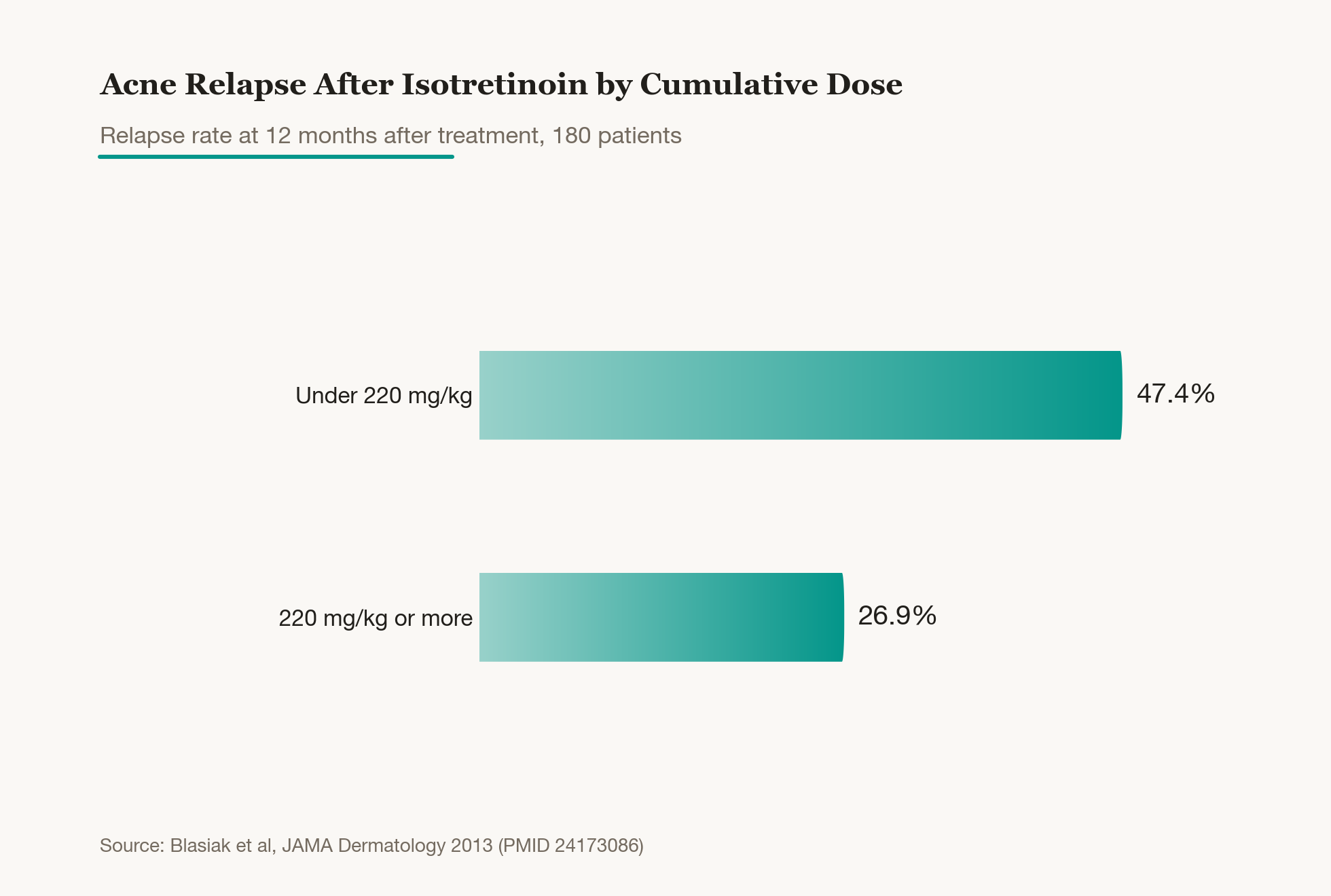
- Isotretinoin (oral retinoid): shrinks the oil glands themselves, offering the most fundamental control for severe, recurring cystic acne.
- Intralesional steroid injection (intralesional triamcinolone): a small dose injected directly into a large, hard cyst, shrinking its size and pain within a day or two.
Why does squeezing by hand make it worse?
It is tempting to try to squeeze or press a cystic lesion away, but doing so tends to make things worse. Because the inflammatory material sits deep in the dermis, pressing on it rarely pushes anything out through the surface.
Instead, that pressure ruptures the pore wall from the inside and pushes the trapped inflammatory material into the surrounding tissue. It is similar to pressure building up in a sealed room until it breaks through the wall into the room next door. That spread can leave scarring across a wider area than the original lesion, so leaving it alone and letting treatment do the work actually leads to faster recovery.
How long does it take to settle?
With treatment, a single acute cyst usually shrinks and stops hurting noticeably within 4 to 12 weeks. That timeline is for one lesion, though. Managing cystic acne as a whole takes considerably longer.
Treatment aimed at reducing recurrence and controlling the oil glands themselves typically needs to continue steadily for 6 to 12 months before results stabilize. Staying consistent with sun protection during that time helps keep post-inflammatory dark marks from settling in deeper. Gentle cleansing and moisturizing also help protect the skin barrier, which makes it easier to manage the irritation and dryness that can come up during treatment.
References
Korean Dermatological Association, American Academy of Dermatology (AAD), and Ministry of Food and Drug Safety (MFDS).
Was this helpful?
About this article
Written by a practising aesthetic physician and intended for general education — not a substitute for individual medical advice.
Read next
Nodulocystic Acne: Causes, Symptoms, Scarring, and Treatment
Nodulocystic acne forms deep in the dermis rather than at the pore surface. Here is why the swelling and pain feel so much worse, and how the inflammation spreads to leave lasting scars.
By Dr. Lee
Closed Comedones: Causes, Care and Why You Shouldn't Squeeze Them
Closed comedones, the small bumps often called whiteheads, form when dead skin cells trap themselves at the pore opening in the earliest stage of acne. Here is why that buildup happens, and how it differs from open comedones.
By Dr. Kim

Keloid Scar Causes and Treatment, Including Recurrence and Management
A keloid is a scar that keeps piling up collagen even after the wound has fully healed, growing larger than the injury that started it. Here's why the collagen never seems to know when to stop, how a keloid differs from an ordinary scar, how injections and laser treatments work to calm it down, and why it tends to come back so often.
By Dr. Lee