Closed Comedones: Causes, Care and Why You Shouldn't Squeeze Them
By Dr. Kim7 min read
Run a fingertip over the forehead or cheeks and you might notice small, grainy bumps that are not red and do not hurt, but are clearly there under the skin. These are closed comedones, the tiny whiteheads that are easy to ignore because they barely show. Understanding how they form, though, can go a long way toward stopping them from turning into inflamed acne later.
A closed comedone is a plug of dead skin cells and sebum trapped just beneath the skin's surface, sealed under a thin layer of skin so that from the outside it just looks like a small, whitish or skin colored bump. The real question is why skin cells end up clogging the pore in the first place. Let's walk through it step by step.
What are closed comedones, and how do they differ from blackheads?
Every pore has a narrow channel that normally lets sebum and dead skin cells make their way out to the surface. Think of it as a drain. Water flows fine as long as nothing is blocking it, but the moment hair or debris catches in the pipe, everything backs up.
In a closed comedone, this drain is almost completely sealed at the opening, so the sebum and skin cells packed inside barely touch air. An open comedone, better known as a blackhead, is the opposite case: the pore stays open, so its contents oxidize on contact with air and turn dark. Both start the same way, but whether the opening stays shut or stays open changes how they look entirely.
Why don't dead skin cells shed on time?
The inner wall of a pore is lined with skin cells, just like the surface of the skin. Under normal conditions, these cells mature, shed on schedule, and get replaced by new ones underneath. But when shedding slows down, or when the cells start sticking to each other more than they should, they cannot exit the channel fast enough and begin piling up inside.
Dermatologists call this abnormal keratinization of the pore lining. Picture a narrow stairwell meant for one person at a time. Instead, people link arms and try to squeeze down together, creating a jam right at the entrance. Individually, each cell is perfectly normal. The problem is timing and stickiness getting out of sync, which is what creates the clump.
Add sebum, the oily substance produced by the sebaceous glands, and that clump of dead skin becomes even stickier. During puberty or other hormonal shifts, androgen level hormones stimulate the sebaceous glands directly, so more oil flows through the same narrow channel and the blockage tends to get worse. In short, closed comedones form because two ingredients, dead skin cells and sebum, are increasing in the same passage at the same time.
How a clogged pore turns inflamed
Once a pore stays blocked for a while, the environment inside becomes nearly oxygen free. Cutibacterium acnes, a bacterium that lives on everyone's skin as part of the normal microbiome, actually thrives in exactly that kind of low oxygen space, similar to how mold grows well in a sealed, airless room.
If this bacteria multiplies inside a blocked pore, the surrounding tissue can read it as a threat and mount an inflammatory response. Once that happens, a closed comedone can progress into a red, swollen papule or a pus filled pustule. So while the closed comedone itself is not inflamed, the sealed environment inside quietly sets the stage for bacteria to grow and raises the risk of moving to the next stage.
What happens if you squeeze them by hand?
The urge to pop a closed comedone is completely understandable. But pressing hard with your fingers can force the trapped contents out sideways into the surrounding tissue instead of through the proper channel, the same way squeezing a narrow tube too hard makes the contents leak out the side rather than the tip.
Once that material spreads into nearby tissue, inflammation can spread with it, and the chances of leftover redness or pigmentation after healing go up. Repeated pressing also pushes bacteria from your fingers into the area, which can aggravate inflammation even further. It might look smaller right away, but the same buildup of dead skin and sebum is still happening underneath, so it is common for the exact same spot to come back within days.
Habits that clog pores
Closed comedones rarely come from a single cause. They usually show up when several of the following factors overlap.
- Comedogenic ingredients in cosmetics: Certain oils and waxes are known to make skin cells at the pore opening stick together more easily. Using products with these ingredients regularly effectively narrows the drain opening over time.
- Leftover sunscreen or makeup residue: If cleansing is not thorough, these product residues can stay in the pore and tangle with dead skin cells, essentially adding one more piece of debris to the channel.
- Frequent friction and contact: Masks, helmets, and the habit of touching your face repeatedly irritate the skin in that area, which can trigger thickening of the outer skin layer as a defensive response. As the skin thickens to protect itself, the pore opening narrows along with it.
- Hormonal changes: Menstrual cycles, stress, and certain hormonal shifts increase sebum output, which simply means more oil flowing through the same channel. More material moving through means a higher chance of a blockage.
These factors tend to stack up rather than act one at a time, so addressing the problem from several directions at once usually works better than changing just one habit.
How to care for closed comedones
The core of managing closed comedones is reopening the blocked channel while slowing down how quickly it clogs again. Working on both at the same time tends to give results that last longer.
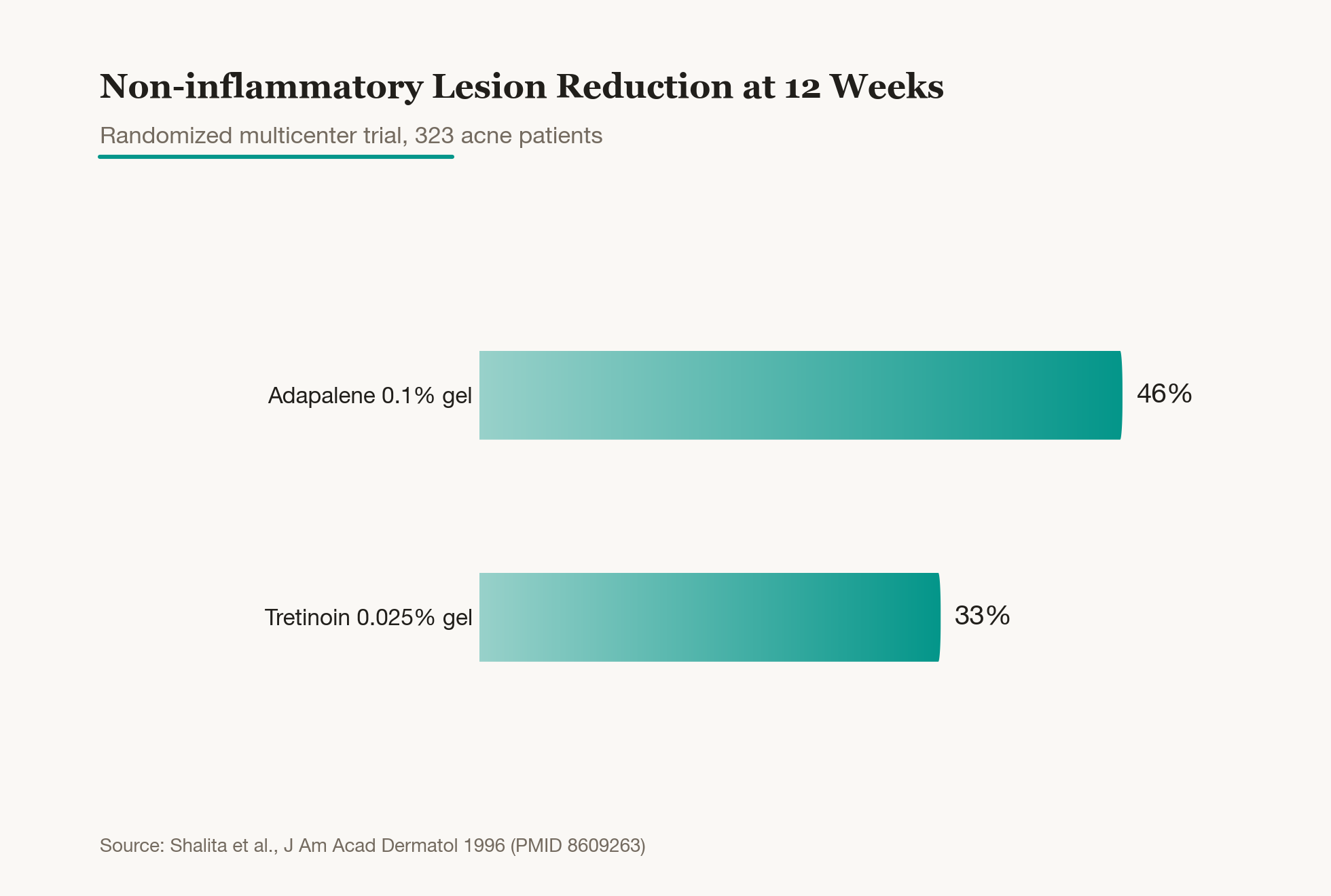
Salicylic acid and retinoid type ingredients are known to weaken the stickiness between skin cells, helping restore a more normal shedding rate. Salicylic acid is oil soluble, meaning it can travel into a pore that is already filled with sebum, while retinoids work by normalizing the entire cycle of how skin cells grow and shed. Both ingredients are best introduced in small amounts at first, giving the skin time to adjust and reducing the chance of irritation.
In office procedures such as professional exfoliation or comedone extraction differ from squeezing at home because they use sterilized tools with controlled pressure and direction, which keeps damage to surrounding tissue to a minimum. That controlled approach is really the biggest difference from doing it yourself.
Cleansing habits matter too. Washing about twice a day is usually enough to clear away excess oil and debris, but scrubbing too often can thin the skin barrier and trigger the skin to thicken defensively, making things worse rather than better. Striking a balance between gentle cleansing and the right exfoliating ingredients is what makes a real difference.
What if they don't clear after several months?
If closed comedones keep appearing for several weeks despite consistent home care, or if they keep turning red and inflamed even when you have not touched them, it is worth booking a dermatology visit. Recurring breakouts around the jaw and cheeks in particular can point to hormonal factors, so getting the underlying cause checked can be helpful.
If a few months of over the counter products have not made much difference, switching to a prescription strength retinoid or a different exfoliating ingredient often changes the picture. Rather than guessing on your own, having a dermatologist assess your skin directly and choose the right ingredient and concentration is usually the fastest way to see real progress.
References
Korean Dermatological Association, American Academy of Dermatology (AAD), and Ministry of Food and Drug Safety (MFDS).
Was this helpful?
About this article
Written by a practising aesthetic physician and intended for general education — not a substitute for individual medical advice.
Read next
Blackheads: Causes, Care and Is It Okay to Squeeze Them by Hand?
Blackheads aren't trapped dirt. They're a plug of sebum and dead skin cells inside the pore that turns dark through oxidation. Here's why extracting them often leaves marks, and which ingredients actually help, explained through the science behind it.
By Dr. Kim

Flat Wart Causes and Symptoms: Why They Spread When Squeezed, and Treatment
Flat warts are a viral skin condition, so picking or scratching at them doesn't clear them up, it spreads them further. Here's why that happens, how to tell them apart from moles or acne, and the logic behind removal and preventing recurrence.
By Dr. Kim
Pore Scaling: How It Works and How It Differs From Home Care
Pore scaling clears out the sebum and dead skin packed inside pores using a combination of chemical and physical steps. Here is why pores look enlarged in the first place, and how the process brings them back to looking tighter.
By Dr. Lee