Collaum PDO Threads and Cog Threads: Differences and Collagen Effects Compared
By Dr. Kim7 min read

When people hear thread lifting, most picture a handful of thick threads hauling sagging skin upward by force. Collaum takes a different approach. Instead of thick threads, it uses many strands of PDO thread, each finer than a human hair, packed closely into the shallow layer of the skin. A single thread holds very little tension on its own, but bundled together, the area of skin they actually touch and stimulate becomes much larger.
It helps to think of this as a treatment built around triggering a collagen response rather than yanking tissue into place. That is why it tends to get used less for heavy sagging and more for early aging, when skin is starting to thin and lose a bit of elasticity, or simply for improving overall texture. Below is a closer look at why the fine multi-thread approach was chosen, and what actually happens inside the skin once the collagen response kicks in.
The method of placing many smooth threads
The threads used in Collaum are smooth mono PDO threads, with no barbs or hooks. Unlike thick cog threads (threads with barbs designed to grip tissue), these are fine strands loaded onto a needle and passed through the shallow skin layer in multiple directions.
A single thread in one spot only stimulates a narrow strip. That is why Collaum places many threads close together, either running in parallel or crossed into a grid pattern. Add up every path the threads travel and you get something like a mesh of stimulation lines running through the skin. It is a bit like embroidery: one strand alone does not show a pattern, but layer enough strands and a solid field of texture appears.
How do thick and thin threads differ?
A single thick thread and a bundle of fine threads interact with the body very differently. A thick thread grips strongly at a specific point, but the area it actually stimulates is limited to the narrow path it follows. Fine threads are individually weak, but spread across a wide area, they can deliver a more even stimulus.
Fibroblasts, the cells that produce collagen, respond along the path each thread travels. More thread paths mean more points where fibroblasts get activated. It is similar to planting a single seed versus scattering seeds across several rows. A row of seeds covers far more ground than one seed alone, and in the same way, more threads can mean a wider area where new collagen ends up taking hold.
Fine threads also place less strain on tissue than thick ones. Because the insertion path is narrower, early reactions like bruising and swelling tend to be milder. That gentler recovery is part of why the multi-thread approach was developed in the first place.
How does collagen build along the thread's path?
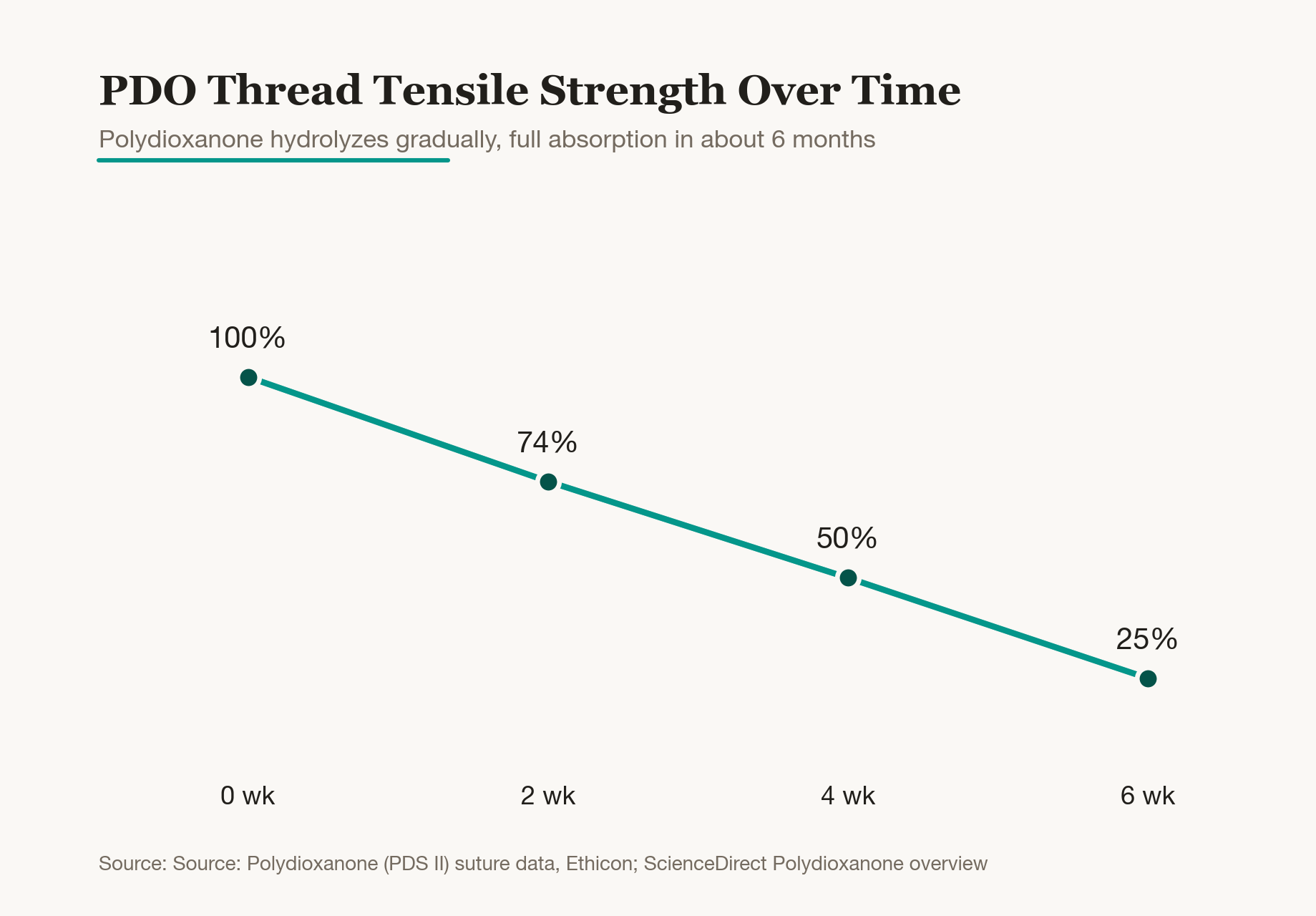
The PDO used in Collaum is polydioxanone, a synthetic polymer that has been used in heart surgery sutures for decades. Inside the body, it breaks down gradually through hydrolysis into water and carbon dioxide, then disappears entirely.
The body treats the thread as a foreign material. Along the path each thread takes, a mild healing response switches on, similar to what happens after an injury but far weaker. Fibroblasts migrate to that spot and start producing new collagen. It is the same basic reaction as a small splinter under the skin causing a bit of redness and swelling around it, except here the response runs at a much gentler intensity.
Collagen works like a supporting pillar underneath the skin. As new pillars form along each thread's path, the skin gradually gains more of its own structural support. The thread itself eventually disappears from the body, but the new collagen it leaves behind carries the change forward.
How is it different from cog threads?
Thick cog threads are built to grip tissue with their barbs and generate an immediate pulling force. They tend to be the choice when sagging is significant and a fast, visible line correction is the goal.
Collaum focuses less on that pulling force and more on the collagen-triggering stimulus itself. The immediately noticeable tightening after treatment tends to be milder than with cog threads, but in exchange, it works gradually across a wider area to improve overall skin texture and elasticity. Neither approach is simply better than the other; the right choice depends on how much sagging is present and what result someone is after.
In practice, the two are sometimes combined. Thick threads set the contour line, while a bundle of fine threads fills in texture across the surrounding skin. It is a way of layering two different kinds of stimulation into a single session.
How long does collagen take to build?
Right after the threads go in, there is not much visible change. New collagen simply takes time to accumulate. In the first few weeks, the threads are settling into place while the healing response around them slowly begins.
Over the following months, collagen continues to build steadily, and reports describe gradual changes in texture and elasticity. Because the threads are fine and placed shallow, they tend to break down faster than thick cog threads. That said, it is hard to state a precise timeline for exactly how much changes by which month. Age, skin condition, and the number and density of threads used all affect how quickly and how strongly any individual responds.
Collagen is not a protein that gets made once and stays put; it exists in a constant cycle of synthesis and breakdown. So even after the initial reaction from the threads settles down, how long the resulting collagen sticks around depends on each person's own skin metabolism.
Which skin and areas does it suit?
Collaum tends to suit early-stage changes, where skin is thinning and texture is just starting to roughen, more than areas with significant sagging. Because the stimulation spreads out broadly, it can feel underpowered in spots that need strong, localized pulling.
It is commonly used around the eyes and mouth, where skin is thin and fine lines show up easily, as well as on the cheeks, where a wider area benefits from even elasticity. Reports point to relatively strong responses in the following cases.
- Thinning skin with early fine lines: since collagen is already declining at this stage, the boost from new collagen production tends to translate into a more noticeable change.
- Enlarged pores and rough texture: the healing response along each thread path can help tighten the connective tissue underneath the skin.
- Early sagging that has not progressed far: since there is no need for aggressive pulling yet, Collaum's stimulation-first approach fits the goal well.
- Maintenance after thick thread treatment: cog threads set the contour line first, then Collaum fills in surrounding texture as a follow-up.
Aftercare following treatment
The core of aftercare is simply not disrupting the collagen-building process while it is underway.
- Avoiding saunas and steam rooms for the first few days is generally recommended. Heat can cause tissue to swell and loosen, which may shift threads before they settle in place.
- Firm rubbing or deep massage is best avoided in the first few days for the same reason: physical pressure before the threads settle can move them out of position.
- Swelling and bruising vary from person to person but tend to fade over time. Since the threads are fine, early reactions are generally milder than with thick threads.
- Sunscreen is known to help slow the breakdown of newly formed collagen, so it is worth keeping up consistently even after the procedure.
References
Korean Dermatological Association, American Academy of Dermatology (AAD), and Ministry of Food and Drug Safety (MFDS).
Was this helpful?
About this article
Written by a practising aesthetic physician and intended for general education — not a substitute for individual medical advice.
Read next
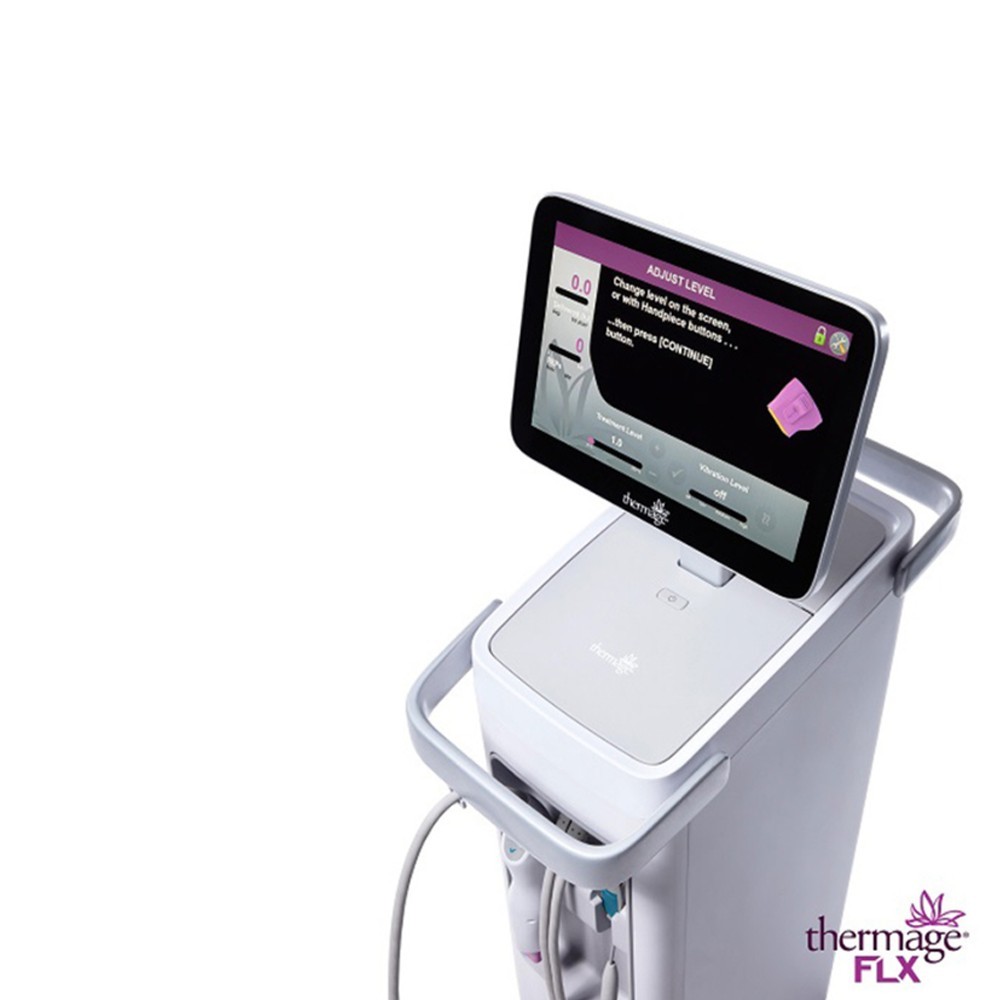
Eye Shurink, Eye Thermage and Eye Oligio: Differences and Effects Compared
Eye Shurink, Eye Thermage and Eye Oligio are the three names that come up most often for eye area lifting, and they work through two different kinds of energy: ultrasound and radiofrequency. Here is how each one actually works on the delicate skin around the eyes, and which one fits which concern.
By Dr. Lee
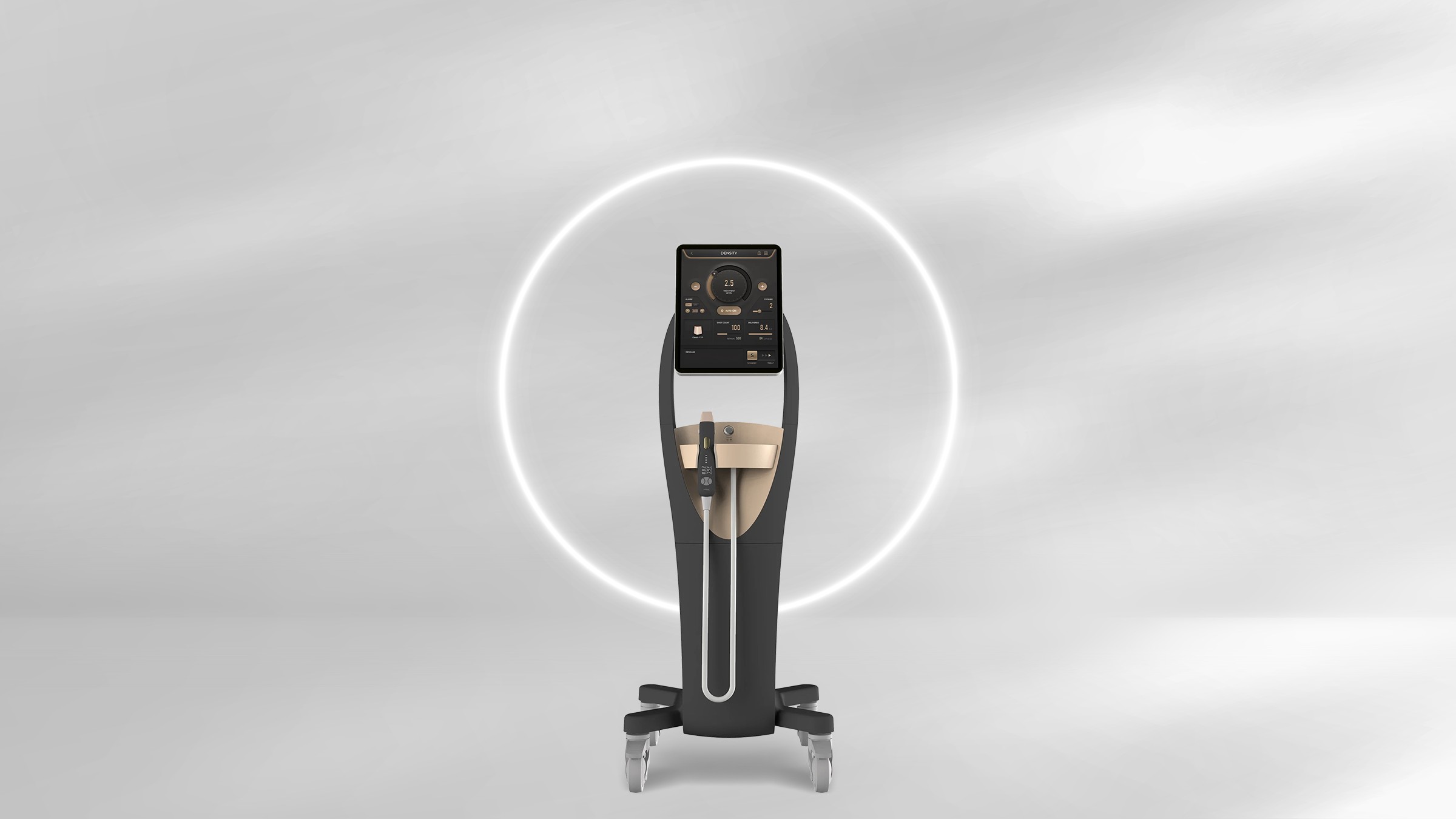
Density RF Effects: How Many Sessions and How Long Do Results Last?
Density RF pairs two radiofrequency modes with very different personalities to chase two goals at once: the instant tightening you feel right after treatment, and the collagen renewal that builds slowly over the following 4 to 12 weeks. Here is why two modes are needed, the order in which heat actually works inside the skin, and why the treatment is spread across multiple sessions instead of done all at once.
By Dr. Kim

AHA and BHA Differences: Choosing by Skin Type and Comparing Effects
AHA and BHA are both acids that clear away dead skin cells, but where they actually work depends on one simple thing, whether they dissolve in water or in oil. AHA breaks down the bonds holding surface buildup together, while BHA rides through oil to reach the sebum sitting deep inside your pores. Here is how each one works, and which fits which skin type.
By Dr. Kim