Cellulite: Onda and HIFU, How Much Do They Help?
By Dr. Kim8 min read

That uneven texture on the thighs and buttocks tends to stick around no matter how much weight you lose. Treatments like Onda and body HIFU have been getting a lot of attention lately for reducing it without surgery, and it's natural to wonder whether they actually work.
First, here's something worth knowing up front: cellulite is a normal characteristic of the body, not a medical condition. The majority of women develop it after puberty. It's not a flaw. If you'd like to improve the appearance, though, different devices work through different mechanisms and offer different results. Here's a clear look at why cellulite forms, how Onda and body HIFU each work, how they compare to RF, and where their real limits lie.
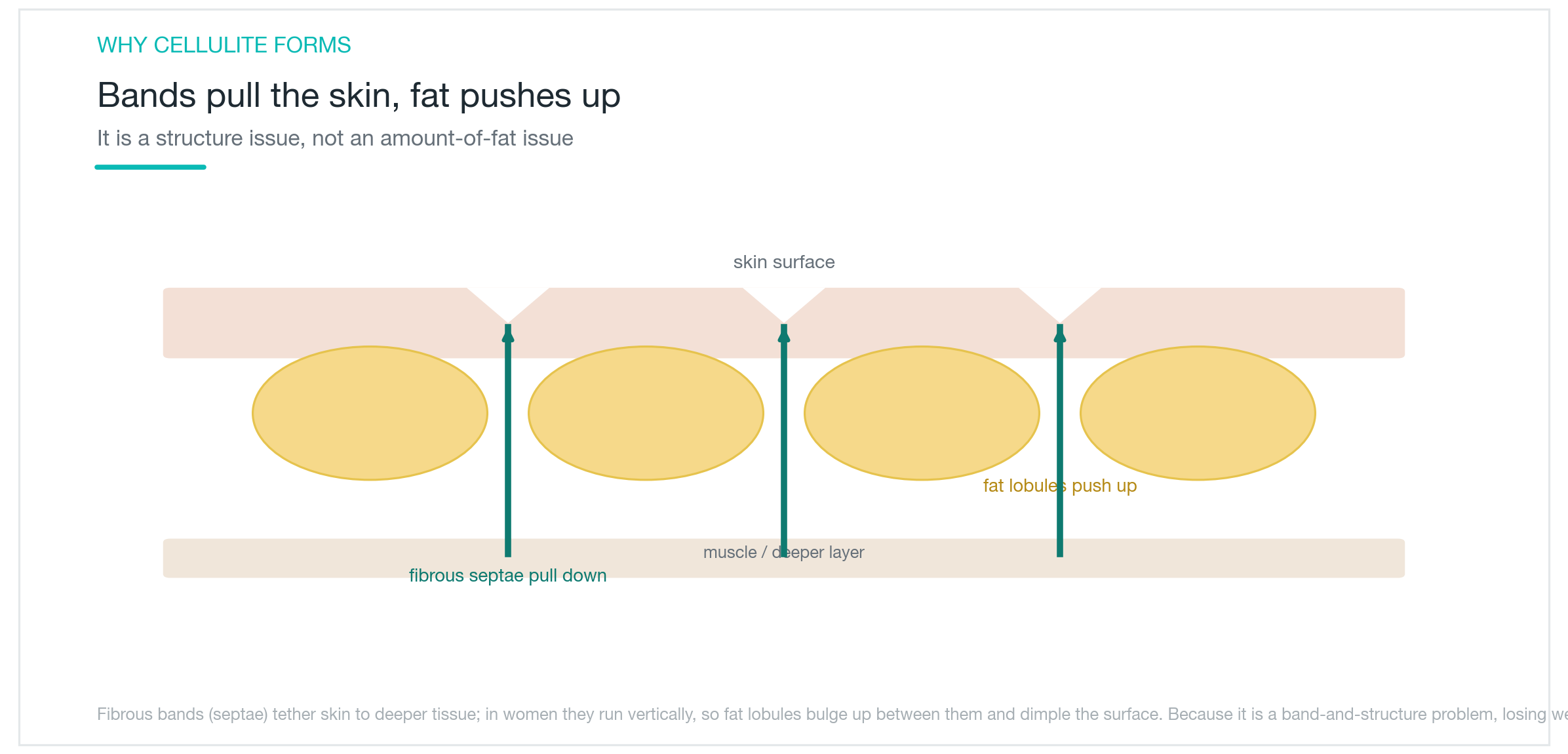
Why does cellulite remain even after weight loss?
The key is structure, not fat volume. Beneath the skin, fibrous bands (septa) run between the skin and the underlying fascia. When these bands pull the skin downward, fat between them gets pushed upward, creating that bumpy, dimpled texture. Think of a cushion with buttons sewn into it: the fabric gets pulled in and the filling bulges between them.
The reason cellulite is so much more common in women comes down to this same structure. In women, the fibrous bands run vertically, allowing fat to push upward more easily. In men, they're arranged in a crisscross pattern, which keeps fat in place. Hormonal differences play a role as well. This is also why cellulite can appear in people with very little body fat.
Here's the important implication: because cellulite is a structural issue rather than a fat-volume issue, losing weight doesn't reliably eliminate it. Research has found no strong correlation between subcutaneous fat thickness and cellulite severity, and liposuction has not been shown to improve it. The underlying cause is the pulling of the fibrous bands and loss of skin elasticity, which is why energy-based treatments have been developed to target both fat reduction and skin tightening together.
How does Onda work on cellulite?
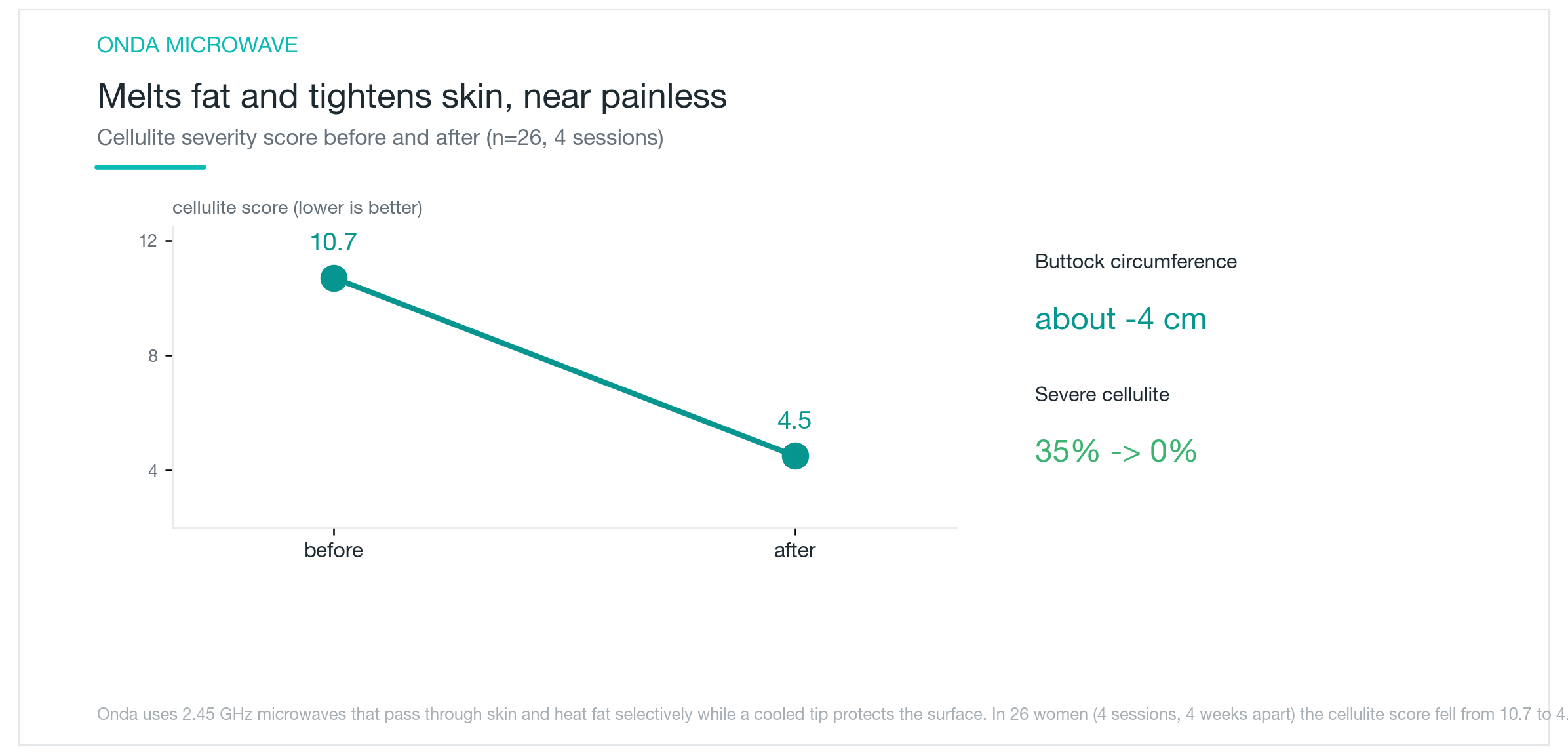
Onda uses microwave energy (specifically, shortwave radio frequency). This wavelength passes through the skin and is selectively absorbed by the subcutaneous fat layer. With the surface cooled to protect the epidermis, the underlying fat is heated in a targeted way. Fat cell membranes are disrupted, releasing their contents, which are then gradually cleared through the lymphatic system. At the same time, the heat stimulates collagen production, tightening and firming the skin surface.
The evidence has been building. In a study of 26 women, four sessions spaced four weeks apart brought cellulite scores down from 10.7 to 4.5, with a notable reduction in the proportion of participants with severe cellulite. Hip circumference decreased by approximately 4 cm. Across other studies, abdominal circumference reductions of 3-4 cm have been reported. These studies are relatively small, so the numbers are best understood as a rough expected range rather than a guarantee.
One of Onda's biggest appeals is how comfortable it is. The cooling handpiece makes the experience feel more like a warm massage than a medical procedure, with minimal pain and essentially no downtime. Typical protocols are 3-4 sessions at four-week intervals, with changes appearing gradually over several weeks after each session. It's a strong option for people who want to address both fat and skin texture together.
How does body HIFU reduce fat?
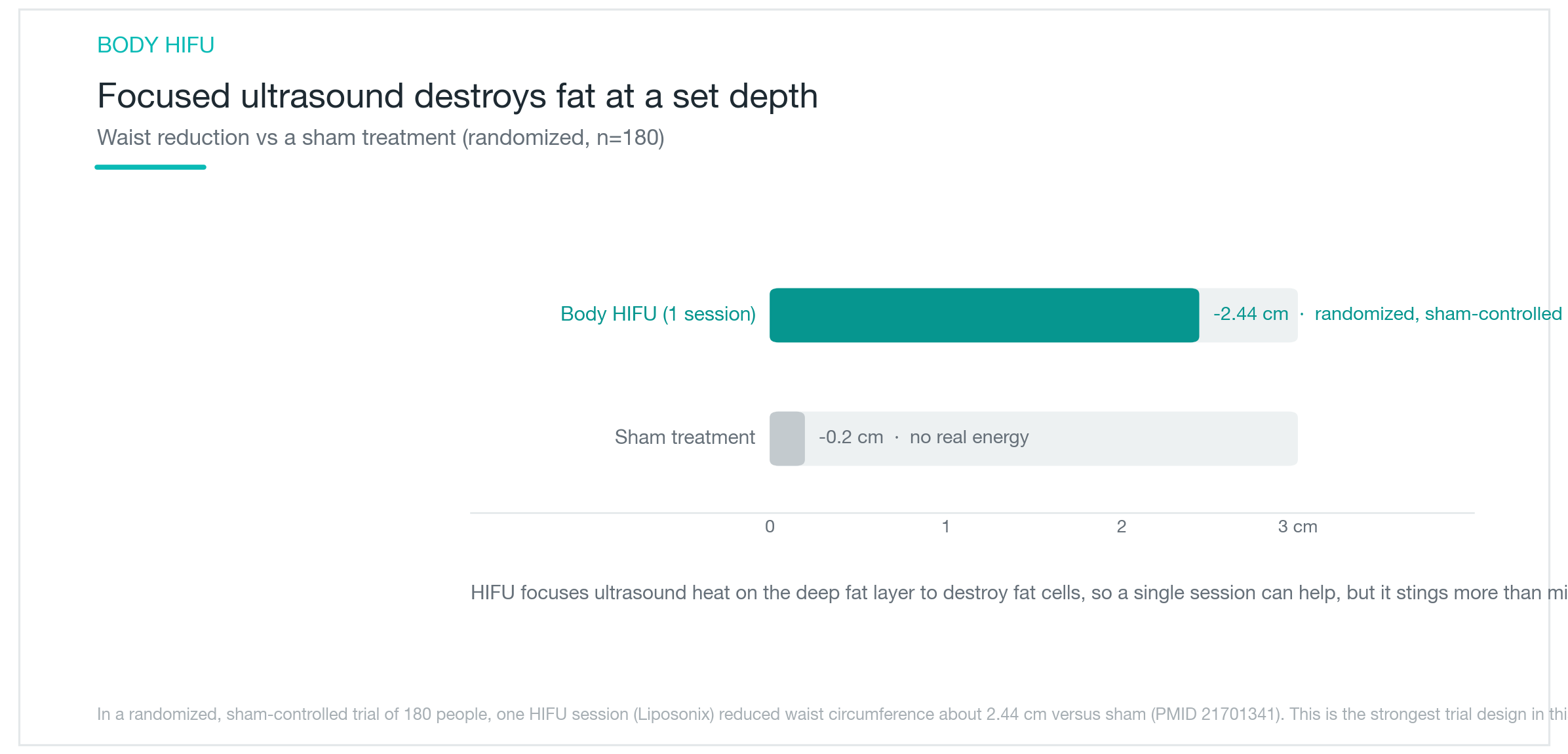
Body HIFU concentrates high-intensity focused ultrasound to a precise focal point within the subcutaneous fat layer, generating enough heat to destroy fat cells at that specific depth. The energy passes through the epidermis and dermis without affecting them, targeting only the deeper fat. Where Onda heats a broad area, HIFU delivers intense heat to a precise focal point.
When it comes to evidence, HIFU has a meaningful advantage: a randomized controlled trial comparing real treatment to sham treatment in 180 participants showed a waist circumference reduction of approximately 2.4 cm in the HIFU group. That kind of well-designed comparative study adds real credibility. Because the primary mechanism is fat destruction rather than skin tightening, HIFU is particularly suited to reducing localized fat deposits with a clear target.
The tradeoff comes down to how it feels during treatment. Concentrating heat to a single point tends to produce a sharper, more pronounced feeling compared to Onda. On the upside, because fat cells are destroyed (not just disrupted), fewer sessions are typically needed, often 1-2. Destroyed fat cells don't regenerate, so the results can be long-lasting as long as weight stays stable. Keep in mind that HIFU's greatest strength is circumference reduction in areas like the abdomen and flanks, rather than smoothing out the bumpy texture of cellulite specifically.
Selection criteria when RF is also compared
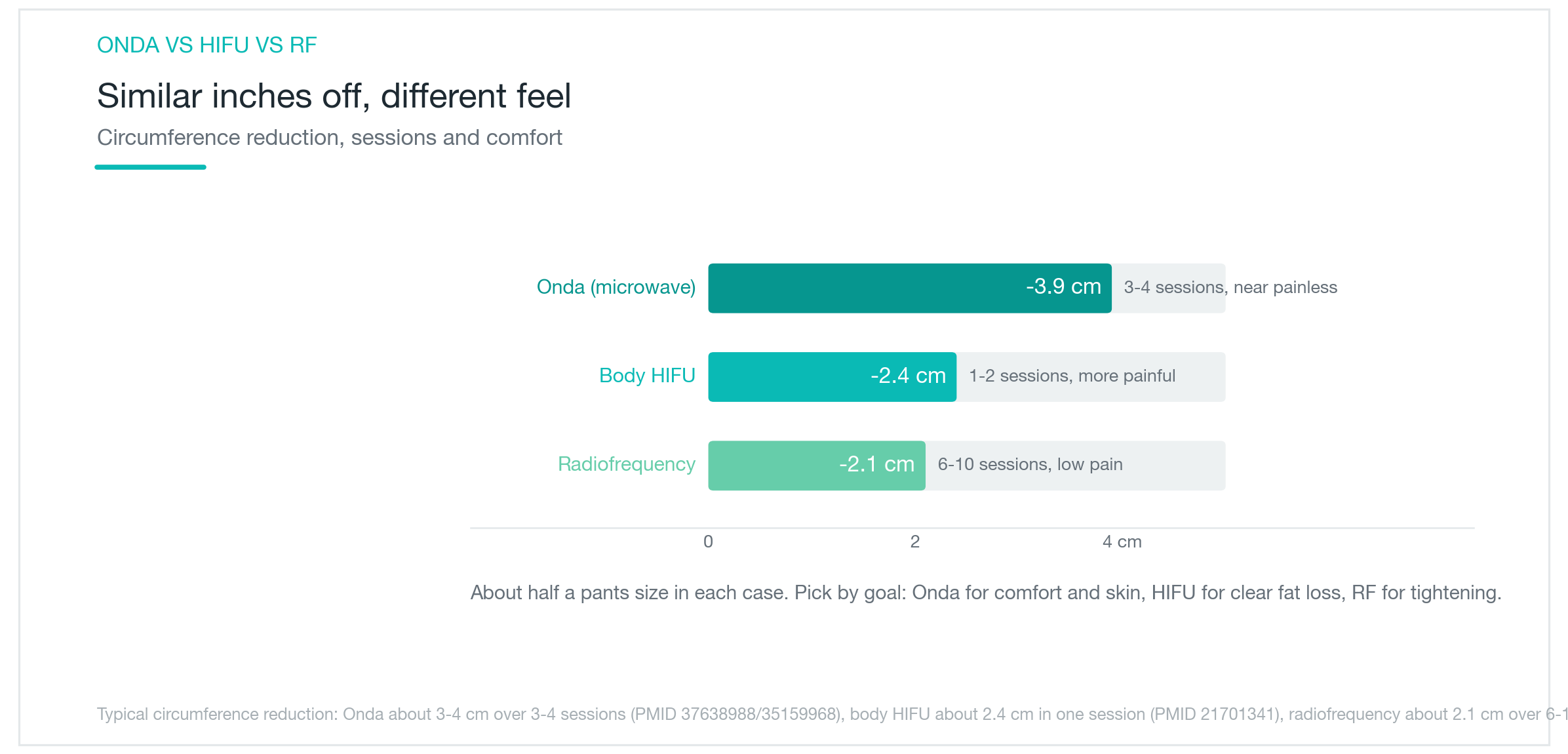
Each of the three devices has a different strength. Onda uses microwave energy to address both fat and skin elasticity simultaneously, making it well-rounded for cellulite with minimal discomfort. Body HIFU uses focused ultrasound to destroy fat with strong, lasting results in fewer sessions, though the sensation is more pronounced. RF (radiofrequency) is especially effective at skin tightening and is gentle, but generally requires more sessions, typically 6-10.
In terms of numbers, circumference reductions are broadly similar across devices. Onda studies report abdominal and hip reductions of roughly 3-4 cm, HIFU studies show approximately 2.4 cm at the waist, and RF studies report around 2 cm at the thigh. That's roughly half a clothing size, which is a meaningful but subtle shift rather than a dramatic transformation.
Choosing between them comes down to your priority. If you want to address both cellulite texture and skin firmness with minimal discomfort, Onda is a natural fit. If reducing a localized pocket of fat is the main goal, HIFU delivers that clearly. If skin laxity is a primary concern, RF has a particular advantage there. The two are sometimes combined for a given area, so talking it through with an experienced provider can help you land on the right approach for your specific needs.
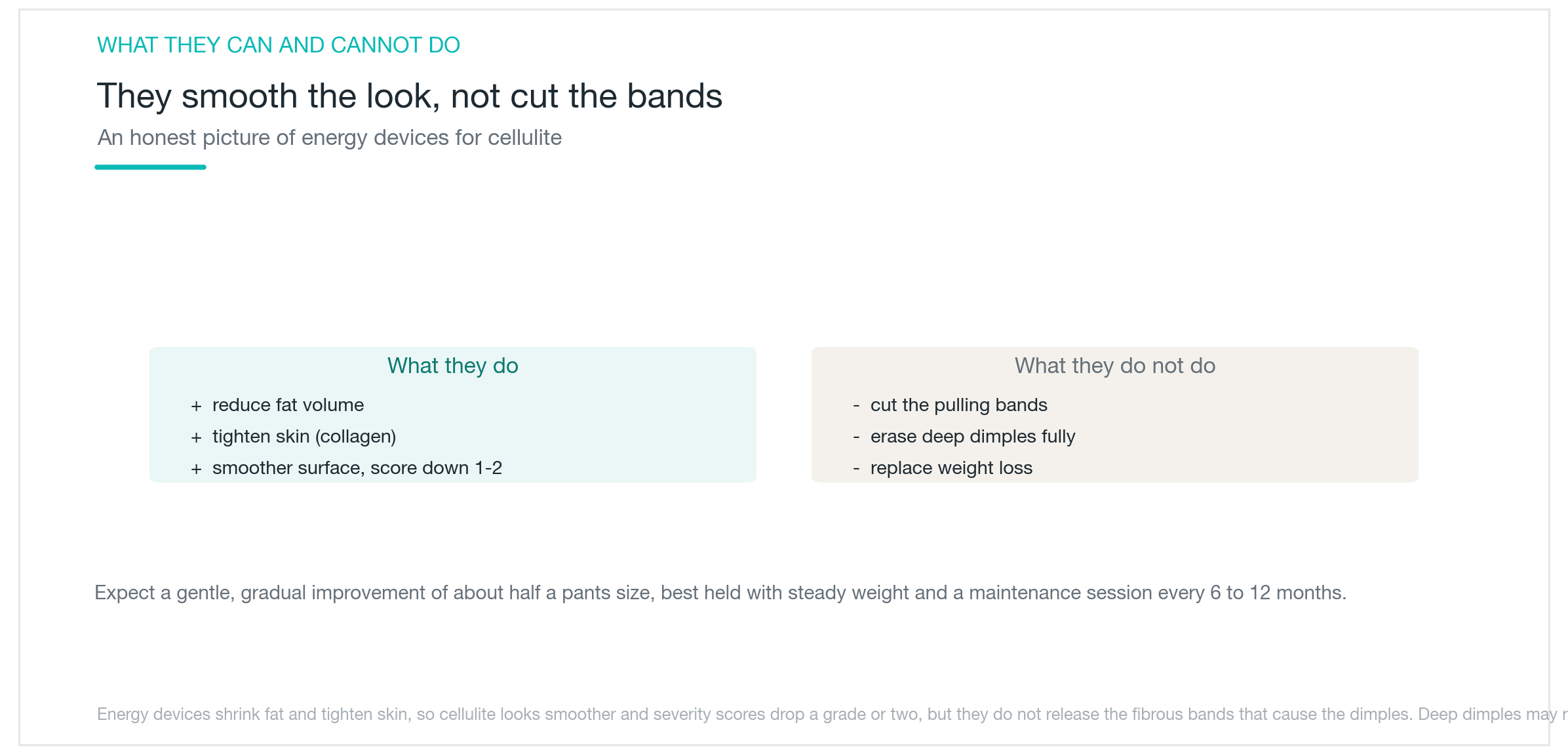
Effects and limits of cellulite treatment
It's worth being straightforward about this. Onda, HIFU, and RF reduce fat and tighten skin, which visibly smooths the surface. With less fat pressing upward and firmer skin above it, texture improves. What these treatments don't do is cut or release the fibrous bands that are the underlying structural cause of cellulite.
That's an important distinction when it comes to expectations. Most people see a one-to-two grade improvement on cellulite scoring scales: the dimpling becomes less visible and less pronounced, rather than disappearing entirely. For deeper, more tethered depressions, a procedure that directly addresses the bands may be a better match.
Side effects are generally mild: temporary redness, mild swelling, or bruising at the treatment site, resolving within a few days. Serious adverse effects are uncommon. On durability, results hold up best when body weight stays stable. A maintenance session every 6-12 months helps sustain the improvement, and lifestyle factors like diet and exercise support the outcome over time. These treatments work best as part of an ongoing approach rather than a one-time fix.

Who will be satisfied?
Energy-based treatments are a particularly good fit for people who aren't carrying a lot of excess weight but are bothered by cellulite, or by the contour of the abdomen or thighs. If you want to reduce a small amount of fat and improve skin firmness without surgery or significant recovery time, these are reasonable and effective options. For people sensitive to discomfort, cooling-based devices like Onda tend to be the easiest to tolerate.
That said, these treatments aren't a substitute for significant weight loss. Unlike liposuction, which removes substantial fat volume in one session, these devices produce modest circumference changes, typically a few centimeters. Realistically, the best approach is to use diet and exercise for what they can address, then turn to these treatments to refine the areas that don't respond well and to improve texture. That's where satisfaction tends to be highest.
Most importantly, it helps to keep perspective: cellulite is a normal feature of most women's bodies. There's no obligation to treat it. If you want to, these devices offer a genuine way to soften its appearance, and choosing the one that matches your goals, your comfort threshold, and your anatomy will make the experience worth it.
Was this helpful?
About this article
Written by a practising aesthetic physician and intended for general education — not a substitute for individual medical advice.
Read next
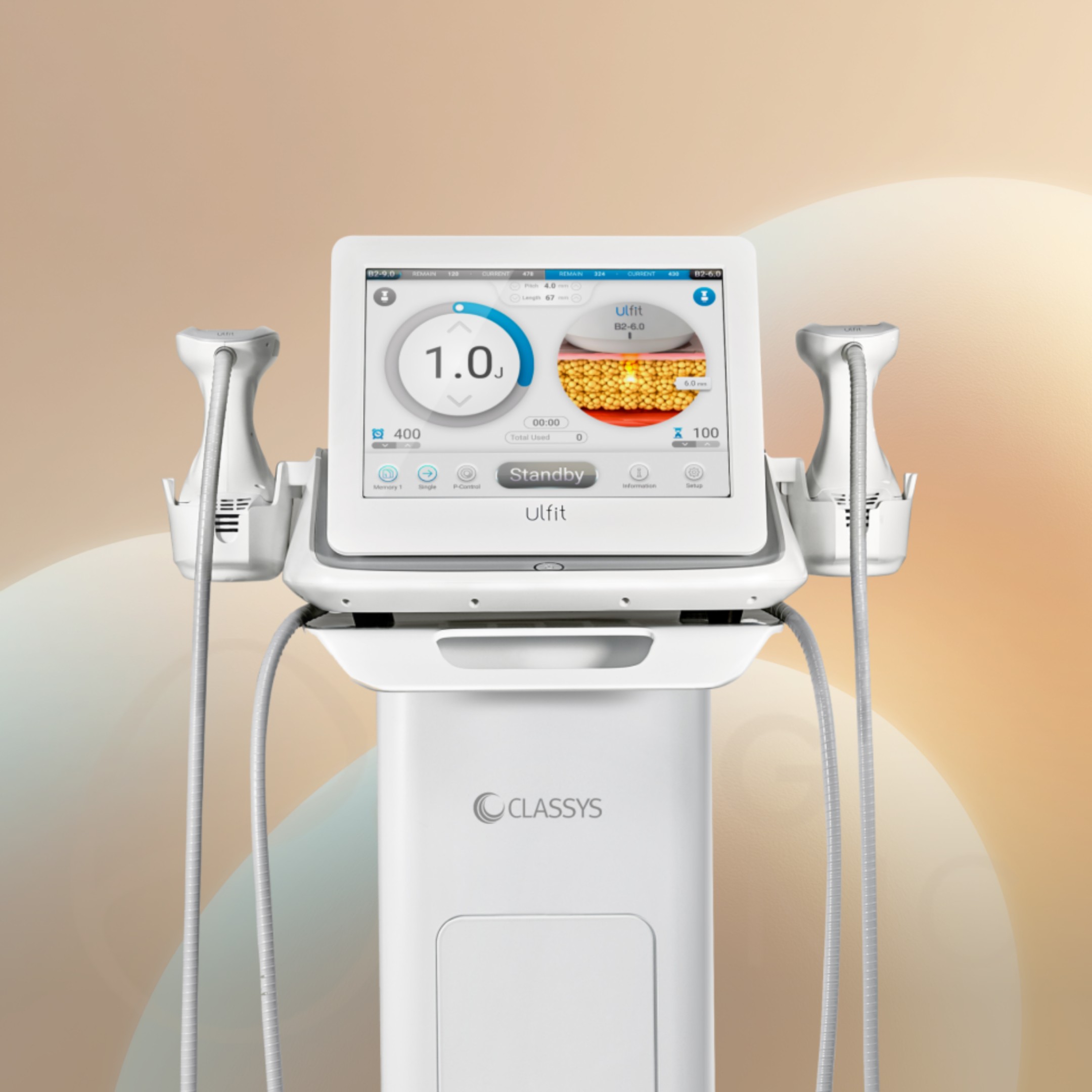
Ulfit Body HIFU Fat Reduction Effect: How Many Sessions Do You Need?
Ulfit Body HIFU is a non-surgical body contouring treatment that focuses ultrasound energy on the fat layer beneath the skin, gradually shrinking fat cells with heat. Here is a principle-first look at why the ultrasound heats only fat and nothing else, how that destroyed fat actually leaves your body, why the settings differ from facial HIFU, and roughly how many sessions and how much maintenance you can expect.
By Dr. Kim

Body Onda: Effects, Approach by Area, Number of Sessions and How Long It Lasts
Body Onda is a non-surgical body contouring treatment that uses microwave energy to selectively heat the fat layer beneath the skin, shrinking fat cells while tightening the skin above them. Here is why the heat targets fat rather than skin, why fat reduction and tightening happen together, how the approach differs for the abdomen, arms, and flanks, and how many sessions it takes to see lasting results.
By Dr. Kim

Fraxel for Acne Scars: Effects, Pigmentation, and Side Effects
How fractional lasers like Fraxel work on acne scars, why results differ so much by scar type, how real the PIH risk is on Asian skin, and what the research actually shows about how much improvement to expect: scars soften, they don't vanish.
By Dr. Kim