Burn Scar Laser Treatment: Can Red, Hard Scars Improve Too?
By Dr. Kim7 min read
A serious burn eventually heals, but the skin underneath often doesn't come back smooth. Instead, it can stay red and thickened, raised above the surrounding skin, for 6 months or more, sometimes past the 2-year mark. Why do burn scars hang on so much more stubbornly than other kinds of scars?
The answer lies in how the wound heals in the first place. These days, laser treatment has become a common way to soften that hardened texture back down. Let's walk through why these scars form the way they do, then how lasers actually reshape them.
Why do burn scars stay red and thick?
When skin is injured, the body produces collagen to patch the gap. Think of collagen as the scaffolding that holds skin up. With a shallow wound, the body puts up just enough scaffolding and stops there.
A burn is different. Because the damage runs deep and wide, the body treats it as an emergency and floods the area with collagen, fast and in bulk. The problem is that this collagen doesn't lay down in neat rows. It piles up more like a tangled ball of yarn. That thick, raised buildup is what's known as a hypertrophic scar (hypertrophic scar, a scar that rises noticeably above the surrounding skin).
The redness comes from a separate cause. While the wound is repairing itself, new blood vessels sprout rapidly in the area, the body's way of rushing oxygen and nutrients to injured tissue. Because so many of these vessels sit close to the skin's surface, the scar reads as red for a long time afterward.
Why do scars keep getting harder?
In an ordinary wound, once enough collagen has been laid down, an enzyme called MMP (matrix metalloproteinase, an enzyme that trims away excess collagen) steps in like a pair of scissors and clears the surplus. Picture two crews working as a pair, one putting up scaffolding, the other trimming off whatever isn't needed, keeping everything in balance.
But with damage as extensive as a burn, that trimming crew can't keep pace. Collagen keeps getting produced faster than it can be cleared, so the untrimmed excess just sits there. The result is a thick, hard scar that lingers.
Over time, this scar tissue keeps stiffening. Because the collagen bundles are tangled with no real direction, the skin loses the flexibility it used to have, and around joints, this can pull tight enough to cause a contracture (contracture, a state where the skin is drawn so taut that it restricts movement).
How does a fractional laser work on scars?
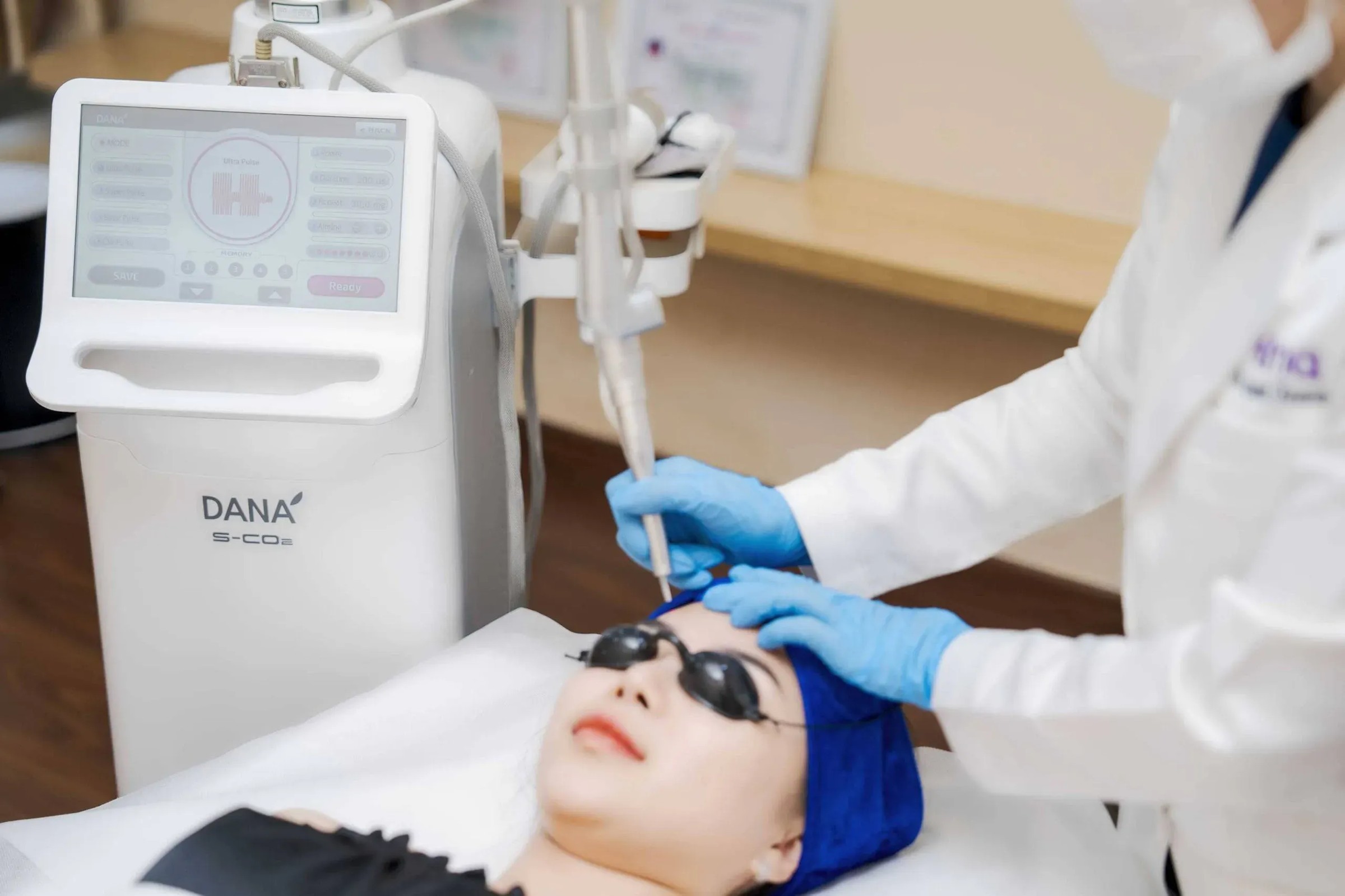
A fractional laser (fractional laser, a laser that splits its beam into a tight grid of tiny points) doesn't treat the whole surface at once. Instead, it creates a dense grid of microscopic openings across the scar. It's a bit like poking a clump of dough full of tiny holes so it can be worked and reshaped from the inside.
Wherever those micro-injuries happen, the body kicks off a fresh healing response. This time, the new collagen doesn't clump together in a rush the way it did during the original burn. It tends to line up in a more orderly direction. The old tangled collagen bundles get pulled into this reorganization too, and the bumpy scar surface gradually flattens out and softens.
Lasers used for this generally fall into two camps: ablative lasers (ablative, commonly CO2 or Er:YAG), which remove the very top layer of skin, and non-ablative lasers, which leave the surface intact and only heat the layers underneath. Ablative treatments deliver stronger results but need more downtime, while non-ablative treatments have shorter downtime but usually take 5 to 8 sessions. Which approach gets used, or whether both are combined, depends on how thick the scar is, where it sits, and how much downtime someone can afford.
Which laser reduces redness?
Smoothing texture and fading redness are two separate problems. Texture comes down to how the collagen is arranged, while redness comes from the blood vessels clustered underneath it. That's why a different laser, one aimed specifically at blood vessels, handles the redness.
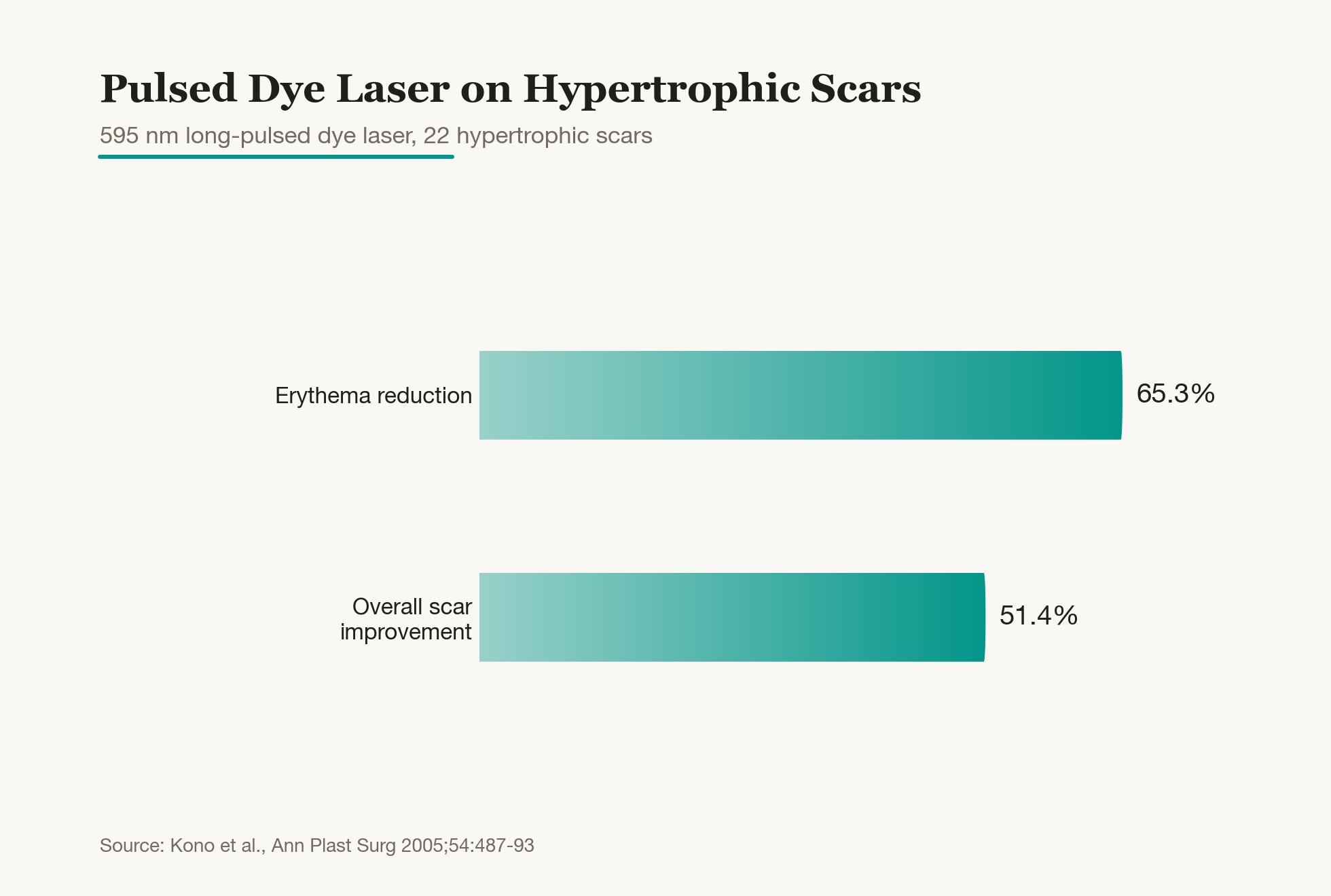
The main one used here is the pulsed dye laser (pulsed dye laser, a laser tuned to a wavelength readily absorbed by hemoglobin in blood vessels). It fires light at a wavelength that hemoglobin, the red pigment in blood, soaks up selectively. So as the light passes through the skin, it barely touches the surrounding tissue and instead heats up the hemoglobin inside the vessel, sealing that vessel shut.
This approach is called selective photothermolysis (selective photothermolysis, a principle where heat damage is targeted at one chosen structure and nothing else). It works less like a blowtorch and more like a sniper, hitting exactly what it's aimed at and leaving everything else untouched. Through this mechanism, the abnormal vessels clustered near the scar's surface shrink back, and the scar's color gradually moves closer to the surrounding skin tone.
When is the best time to start scar treatment?
For a long time, the standard advice was to wait until a scar had fully healed and its color and thickness had settled before starting laser treatment. Lately, though, early intervention has become increasingly common, starting laser sessions while the scar is still red and thickening, anywhere from right after the wound closes up to 2 to 6 months out.
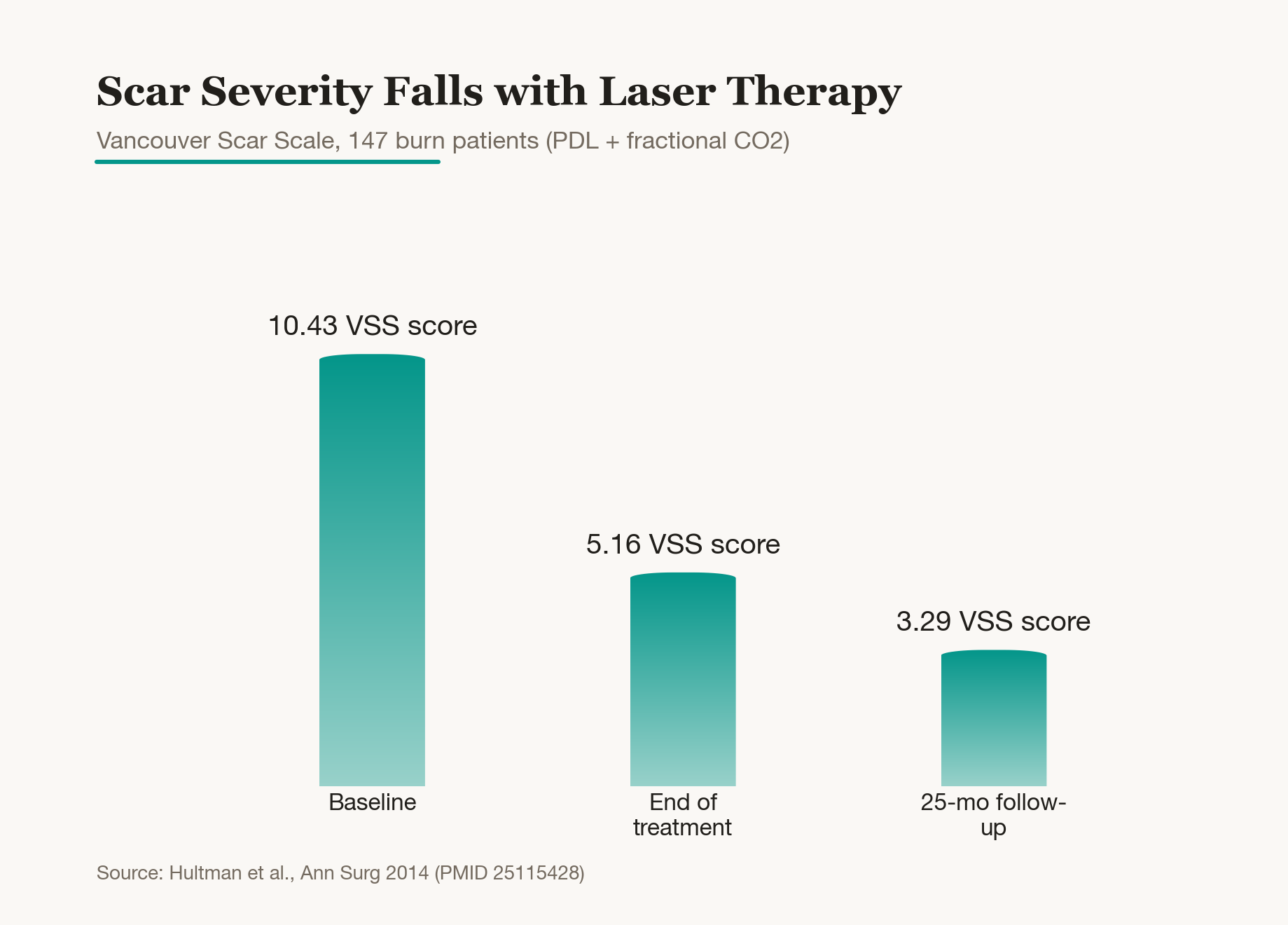
The reasoning is that stepping in while collagen is still actively being laid down makes it easier to guide how the scar settles, compared to trying to soften an already-hardened scar later on, and there's evidence backing that up. That said, treatment only starts once the skin surface has fully closed, since starting too early risks infection.
Number of sessions and interval
- Scar thickness and size: A thin, narrow scar can smooth out in relatively few sessions. A wide, thick one has built up far more collagen and typically needs to be worked through over 5 to 8 sessions.
- Spacing between sessions: Sessions are usually spaced 4 to 6 weeks apart. That's roughly how long newly stimulated collagen takes to reorganize, so treating too often actually cuts into the skin's window to recover.
- Total number of sessions: Most plans run 3 to 6 sessions or more as a baseline. A single laser session doesn't untangle all that collagen at once, the texture smooths out gradually, a little more with each round.
- Skin tone and burn location: Darker skin tones absorb more of the laser's heat through their pigment, which can leave behind unwanted discoloration, so wavelength and intensity need to be dialed in carefully. Areas with a lot of movement, like the hands or joints, are often treated earlier and more aggressively to head off a contracture before it sets in.
Since fractional and vascular lasers each solve a different problem, it's common to combine both, one handling texture and thickness, the other handling redness.
Recovery time and precautions after laser
Some swelling and redness can linger for 3 to 7 days after treatment, and if an ablative laser was used, expect a crust to form and shed over roughly 7 to 14 days of recovery. Sun protection matters a lot during this window, since freshly healing skin is especially reactive and prone to discoloration if it's exposed.
Burn scars also rarely disappear after a single session. Improvement tends to come gradually, over 3 to 6 sessions or more, as the scar fades and softens bit by bit. Building a treatment plan around the scar's condition, location, and skin type matters, and it's safest to work with a physician experienced in burn scar treatment who can pace the sessions accordingly.
References
Korean Dermatological Association, Ministry of Food and Drug Safety (MFDS), American Academy of Dermatology (AAD), and U.S. Food and Drug Administration (FDA).
Was this helpful?
About this article
Written by a practising aesthetic physician and intended for general education — not a substitute for individual medical advice.
Read next
Keloid Scar Causes and Treatment, Including Recurrence and Management
A keloid is a scar that keeps piling up collagen even after the wound has fully healed, growing larger than the injury that started it. Here's why the collagen never seems to know when to stop, how a keloid differs from an ordinary scar, how injections and laser treatments work to calm it down, and why it tends to come back so often.
By Dr. Lee
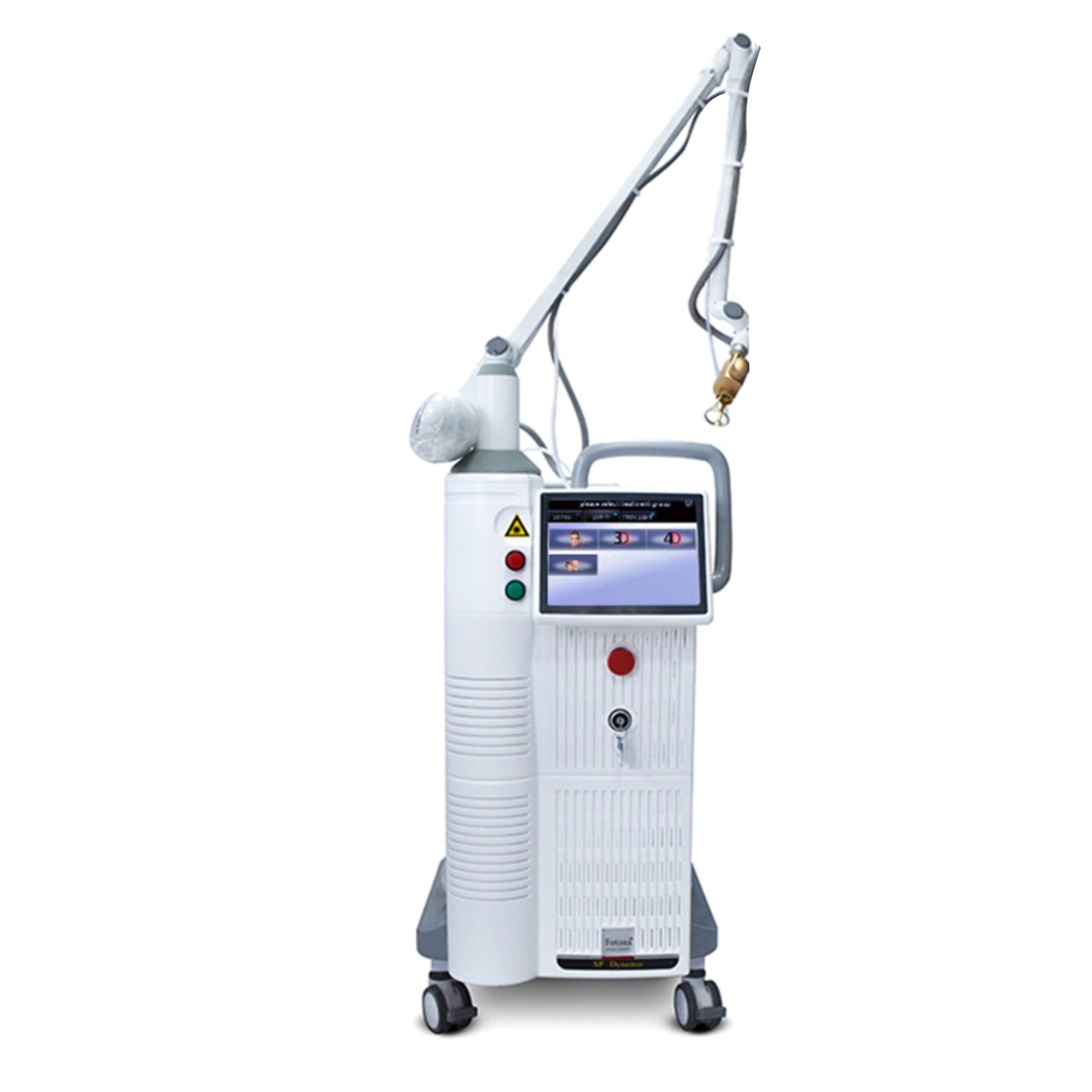
Fractional CO2 Laser for Scars: How Many Sessions Do You Need?
A fractional CO2 laser doesn't treat the whole face at once. It creates tiny pinpoint columns of injury across the skin. Here's why those microscopic wounds trigger new collagen that fills in scars and pores, how long healing takes, and how many sessions it usually takes.
By Dr. Kim
Belotero Soft Neck Line Filler: How Long It Lasts and How Many Sessions
When filler is used to fill in horizontal neck lines, here's why the treatment calls for a soft filler like Belotero Soft placed shallow and in small amounts, rather than the firm fillers used on the chin or cheeks, plus how long results last, how many sessions it takes, and what to know about the Tyndall effect and overall safety, based on real clinical research.
By Dr. Kim