Bunny Lines Botox: Effects, Duration and Side Effects
By Dr. Lee7 min read
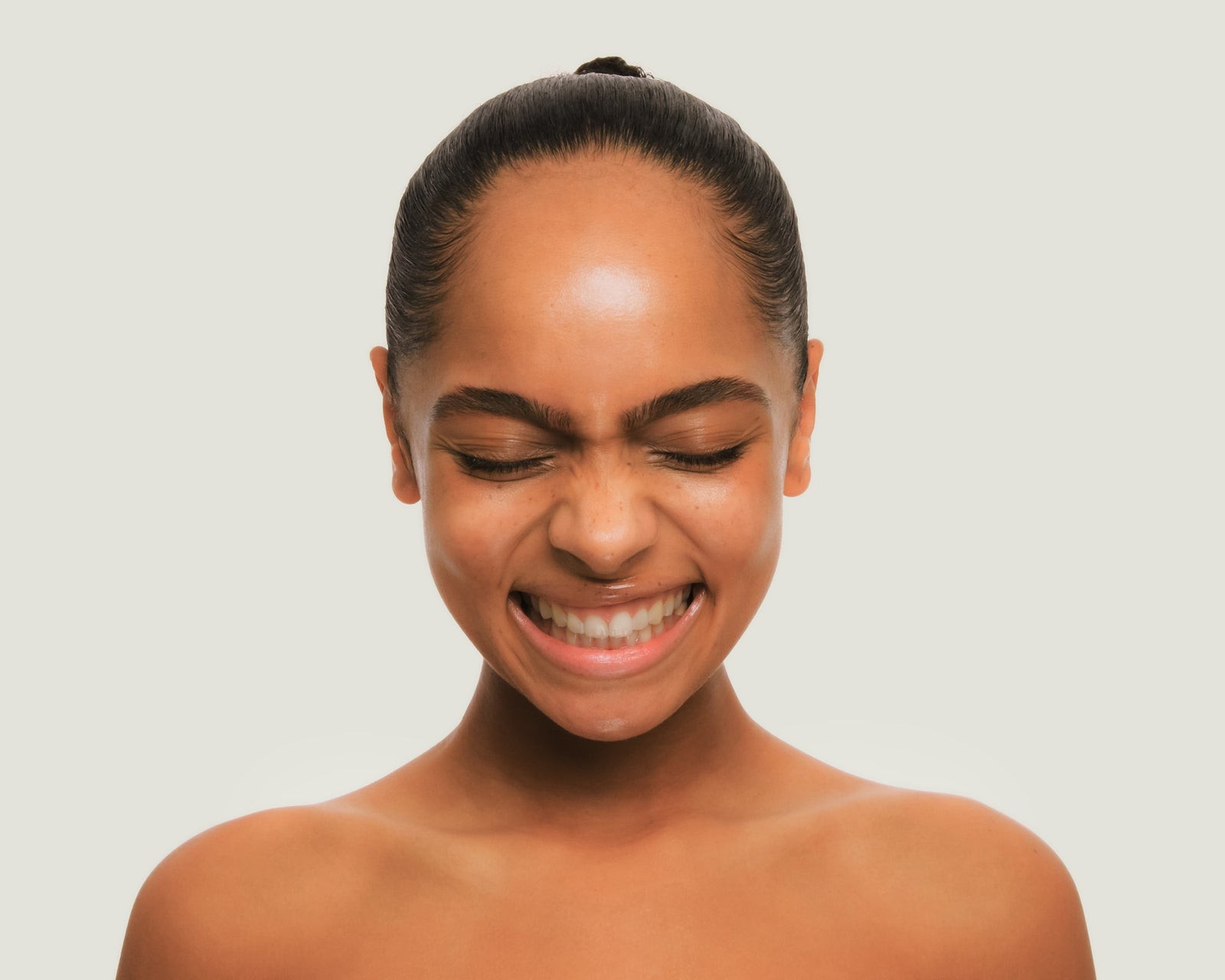
Look in the mirror, smile wide, or scrunch your nose, and you might notice horizontal creases forming across the bridge of your nose. They're called bunny lines because they resemble the wrinkles a rabbit gets when it twitches its nose. Compared to forehead lines or frown lines, most people don't think about them much, but they tend to stand out in photos or when you're laughing hard, which is exactly when they start to bother people.
Bunny lines are expression lines caused by a specific muscle folding the same way over and over. That's why Botox, which reduces how much that muscle moves, is the go-to way to manage them. The nose bridge is narrower than the forehead or the area around the eyes, though, and other muscles sit close by, so it helps to understand the mechanism and injection approach in a bit more detail.
Why do bunny lines appear only when you smile?
Bunny lines are barely visible at rest and only become obvious when you smile or scrunch your nose. That's because the muscle contracts in that instant, folding the skin above it.
Underneath the skin on either side of the nose bridge sits a muscle that presses the nose horizontally. It stays relaxed most of the time and only fires when you smile broadly or wrinkle your nose. When it contracts, the skin covering it gets pushed inward and folds into a crease.
When you're young, the skin is thick and elastic enough that the crease smooths right back out once your expression relaxes. As you get older and collagen and elasticity decline, the same amount of muscle contraction produces a deeper fold, and the mark tends to linger even after your face relaxes.
Where is the nose muscle that causes bunny lines?
The muscle responsible for bunny lines is the part of the nasalis that wraps horizontally across the nose bridge. It starts on either side of the nose and meets in the middle over the bridge, so when it contracts, it pulls from both sides toward the center.
Think of it like a belt. Cinch a belt around your waist and the fabric folds toward the middle, and something similar happens here: when the nasal bridge muscle tightens, the skin above it folds horizontally. That's why bunny lines almost always run as horizontal lines rather than any other shape.
Within the same nasalis muscle, there's a separate part that flares the nostrils. That portion widens the nostrils when you take a deep breath in, and it sits in a different location from the part that creates bunny lines. That's why bunny line treatment leaves the nostril-flaring portion alone and targets only the horizontally contracting section.
How does Botox reduce the wrinkles?
Botulinum toxin, the active ingredient in Botox, works by blocking the transmission of signals at the junction where a nerve meets a muscle. Normally, the nerve ending releases a chemical messenger that tells the muscle to move, and botulinum toxin temporarily blocks the very channel that messenger travels through.
Think of the nerve as the caller and the muscle as the person picking up the phone. Botox essentially cuts the line between them for a while. No matter how many times the caller dials, the message never gets through, so the muscle receives no order to contract and simply stops.
Once Botox is injected into the nasal bridge muscle, it can no longer tighten as forcefully as before. So even when you smile the same amount, the skin folds less, and bunny lines fade or disappear from view. Because the nostril-flaring portion is left untouched, breathing and nostril shape aren't affected.
Can nose bridge wrinkles increase after glabella Botox?
Some people notice new creases on their nose bridge after getting Botox in their frown lines or forehead. It's less that the underlying cause disappeared and more that it relocated.
When the muscle you normally use to furrow your brow loses its strength from Botox, your face recruits a different muscle to produce a similar expression. If the nasal bridge muscle takes over that job, it can contract more forcefully than usual, which can create new bunny lines or make existing ones look deeper.
That's why practitioners treating the glabella area often keep this compensation effect in mind and, when needed, examine the nasal bridge muscle too, treating it with a small dose alongside the frown lines. If one muscle is quietly weakened while a neighboring one is left untouched, the balance of force can simply shift sideways.
Bunny lines Botox dose and injection sites
For bunny line Botox, the practitioner first has the patient smile to identify exactly where the creases form, then places injections along both sides of that line. Because the muscle is symmetrical, treating only one side can leave the face looking uneven, so both sides are always assessed together.
Dosage tends to be a small amount per side, adjusted based on muscle strength and how deep the wrinkles are. Less is needed than in the forehead or glabella simply because the nasal bridge muscle itself is small.
That said, if the injection point drifts even slightly lower or more toward the center, the effect can spread to the muscle that lifts the upper lip. The two muscles run very close together near the side of the nose. That's why precise placement is considered especially important for bunny line Botox.
When does Botox start working, and how long does it last?
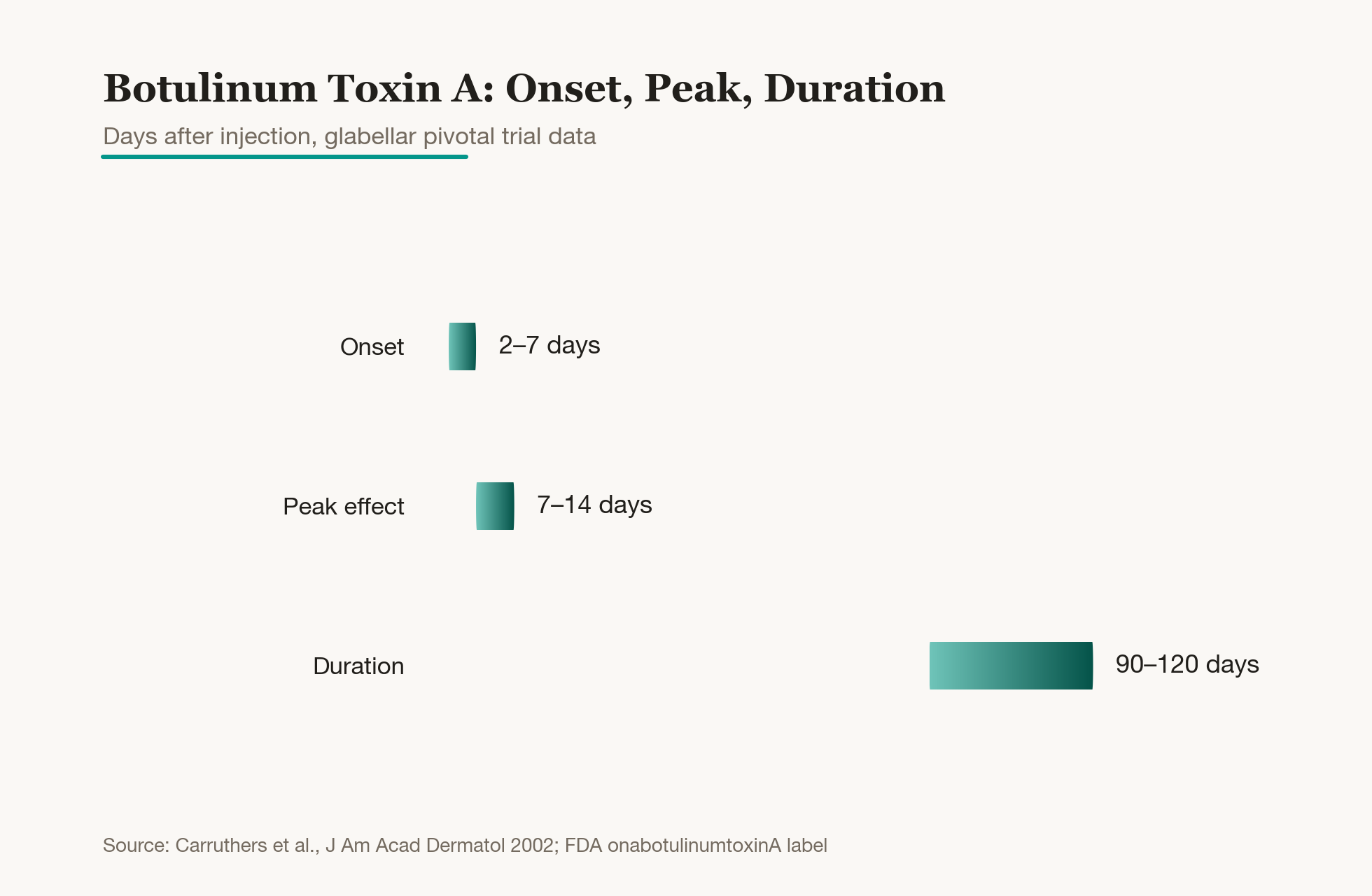
Botox doesn't change your expression the moment it's injected. It takes a few days for the channel between nerve and muscle to actually get blocked. Changes usually begin somewhere between day 3 and day 7, and the muscle reaches its weakest point around the two-week mark.
Results are generally reported to last around three to four months. After that, the blocked nerve endings gradually regrow, the channel reopens, and the muscle slowly regains its original strength.
How long it lasts varies from person to person, since muscle strength, smiling habits, and the dose used all play a role. People who smile especially hard tend to see the effect fade somewhat sooner than others.
What side effects can bunny lines Botox cause?
Botox is generally considered a safe procedure, but because the nasal bridge sits close to surrounding muscles, it's worth being aware of the following:
- Slight lip drooping or asymmetry when smiling: The muscle that lifts the upper lip runs very close to the nasal bridge muscle, so even a small shift in dose or placement can spread its effect in that direction.
- Bruising or swelling at the injection site: A temporary reaction from small blood vessels being disturbed by the needle, and it usually settles within a few days.
- Temporary headache: A reaction that can occur as muscle tension suddenly releases, and it typically doesn't last long.
- Rare left-right asymmetry: People whose muscle strength already differs slightly from one side to the other may respond more softly on one side even with the same dose, occasionally requiring a touch-up.
Most of these reactions resolve naturally over time, and if anything feels severe or lingers longer than expected, it's recommended to follow up with the clinic where you were treated.
Aftercare following treatment
Bunny line Botox itself doesn't require any real downtime, but a few habits help the results settle more smoothly.
- On the day of treatment, avoid rubbing or massaging the injection site firmly, since Botox that hasn't fully settled can spread toward nearby muscles.
- It's advised to skip intense exercise or saunas, anything that sends extra blood flow to the face, for about a day, since faster circulation can make swelling or bruising more noticeable.
- Sun protection is worth keeping up regardless of the treatment itself. A raised area like the nose bridge gets more UV exposure, which is part of why skin elasticity tends to decline there first.
- Working niacinamide or retinol into your regular skincare routine is known to support the skin's own elasticity, so many people pair it alongside their Botox treatment.
Reducing muscle movement with Botox while supporting the skin's own elasticity through consistent care is the approach generally recommended for keeping bunny lines under control long term.
References
Korean Dermatological Association, American Academy of Dermatology (AAD), and Ministry of Food and Drug Safety (MFDS).
Was this helpful?
About this article
Written by a practising aesthetic physician and intended for general education — not a substitute for individual medical advice.
Read next
Crow's Feet Botox: Effects, Duration and Dose
A clear look at how crow's feet Botox works. It eases the orbicularis oculi muscle that creases the outer eye corner when you smile, softening the lines it leaves behind. This guide covers the standard 24-unit dose split across both sides, where the injections go, when results show up, the roughly four-month duration, the limits for deep static wrinkles, and side effects, all backed by real clinical study numbers.
By Dr. Kim
Nostril Botox: When Does It Start Working and How Long Does It Last?
Nostril botox targets the small muscle that makes the sides of your nose flare out when you smile or take a deep breath. Rather than reshaping or narrowing the nose, it only dials down that muscle's pull, which is what sets it apart from other nose treatments. Here is a breakdown of which muscle is responsible and exactly how botox acts on it.
By Dr. Lee
Belotero Soft Neck Line Filler: How Long It Lasts and How Many Sessions
When filler is used to fill in horizontal neck lines, here's why the treatment calls for a soft filler like Belotero Soft placed shallow and in small amounts, rather than the firm fillers used on the chin or cheeks, plus how long results last, how many sessions it takes, and what to know about the Tyndall effect and overall safety, based on real clinical research.
By Dr. Kim