Bruising After Treatment: Color Changes, Duration and How to Clear It Faster
By Dr. Lee7 min read
If you've had filler, Botox, or a lifting treatment, you've probably noticed a bruise where the needle went in. The treatment itself went perfectly fine, but a bruise means covering up with makeup or a mask for a few days, which can be a little disappointing.
A bruise isn't a sign that something went wrong. It's a completely normal reaction that can happen even when the needle just barely grazes a tiny blood vessel under the skin. Once you understand how a bruise forms and how it fades, you can stop worrying and focus on the care that actually helps.
Why does bruising happen after treatment?
Just beneath the skin is a fine mesh of tiny blood vessels, too small to see. When a filler needle or a lifting thread passes through, or when a cannula (a blunt-tipped injection tube) moves through the tissue, it can nick one of these small vessels, and a little blood leaks out.
That blood doesn't stay inside the vessel. It spreads into the dermis, the layer of skin just under the surface, and pools there. Since it's no longer flowing through a vessel but sitting in the surrounding tissue, the body needs time to clear it out. The mark you see until that cleanup finishes is the bruise.
How easily a bruise forms depends on how shallow the vessels run in that area and how densely packed they are. The lips and under-eye area, for example, have unusually many and unusually shallow vessels, which is why they bruise more easily than other spots.
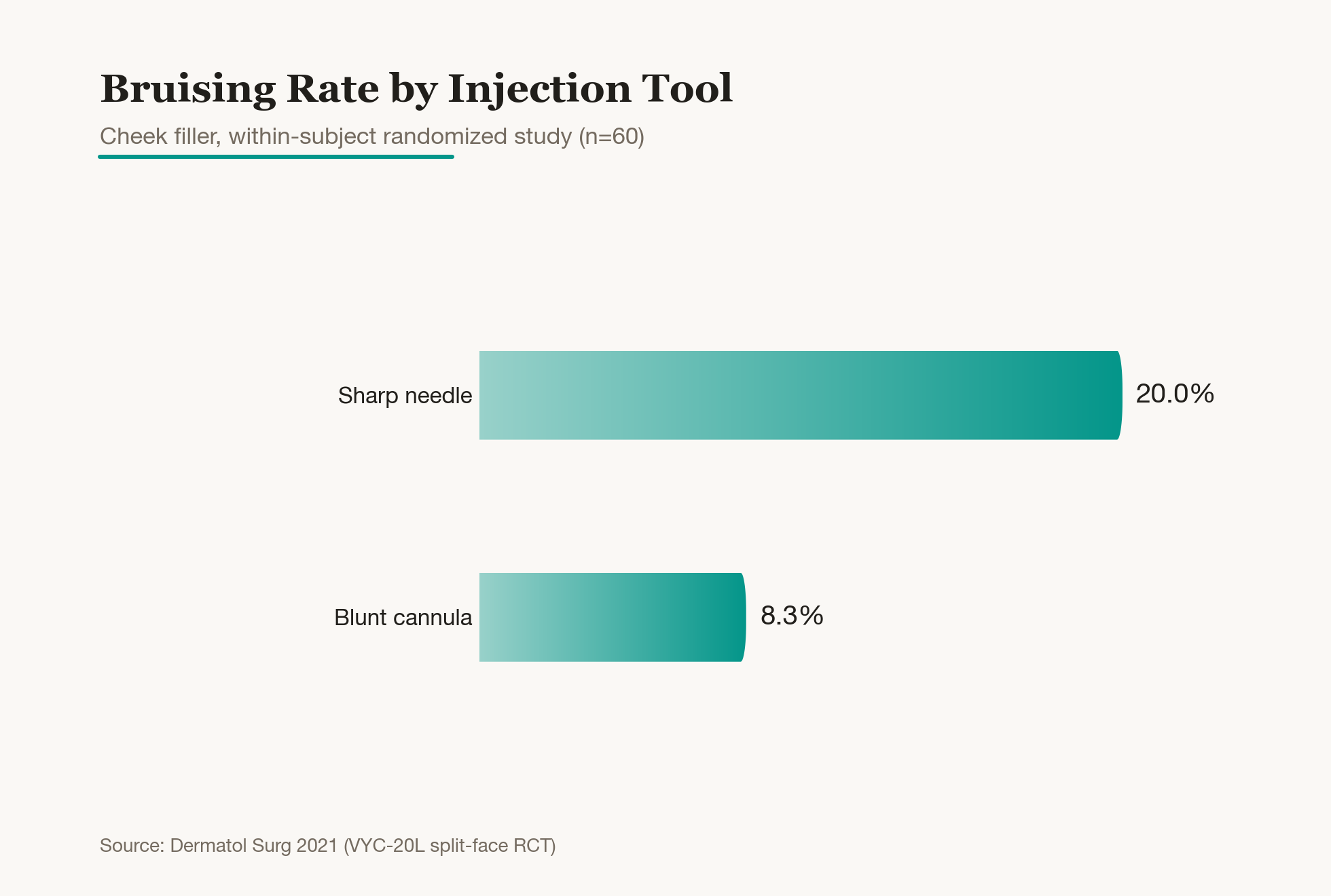
The tool used also matters. A blunt-tipped cannula tends to push vessels aside as it moves rather than piercing them, so it often causes less damage than a sharp needle. That's part of why cannulas are increasingly the tool of choice for areas prone to bruising. That said, using a cannula doesn't guarantee no bruising at all, it just lowers the odds.
Why does a bruise change from purple to yellow?
The color of a bruise is really a visual record of hemoglobin (the red pigment protein in red blood cells that carries oxygen) breaking down step by step. A fresh bruise looks deep reddish purple because that's simply the color of oxygen-carrying hemoglobin.
Within a few days, the body's cleanup cells start breaking that hemoglobin down bit by bit, and the color shifts through stages as they go.
- Day 1 to 3: Deep purple or blue. This is when the hemoglobin has lost its oxygen and looks darker.
- Day 5 to 7: Green. This comes from biliverdin, a green intermediate compound produced as hemoglobin breaks down.
- Day 7 to 10: Yellow. Biliverdin breaks down one step further into bilirubin, the same yellow pigment responsible for jaundice.
- Day 10 to 14: Fades to pale brown or yellow before disappearing entirely, as the last of the pigment is slowly absorbed by the body.
In other words, the color changes you see are simply the body working through and clearing out leaked blood in order. So each shift in color is actually a good sign, it means healing is progressing.
How long bruises last by area
Even with the same amount of vessel damage, how long a bruise takes to fade varies quite a bit by location. The face has excellent blood circulation, so bruises there usually fade within about 1 to 2 weeks.
The legs, on the other hand, have relatively slower circulation and have to work against gravity, so a bruise there can take 3 to 4 weeks to clear. Blood tends to pool downward, which slows the cleanup process. This is also why bruises from facial treatments tend to disappear noticeably faster than bruises elsewhere.
How to clear a bruise faster
The actual process of clearing a bruise is handled by your body. Still, a few habits can help speed things along.
- Cold compress right after treatment: Wrapping ice in a towel and applying it briefly narrows the blood vessels in the area, reducing how much blood leaks out. This helps keep the bruise from getting bigger.
- Warm compress starting a day or two later: Once a bruise has already set in, warmth helps by improving circulation. More blood flow means cleanup cells can clear the pooled blood faster.
- Avoid blood-thinning medications or supplements for a few days after treatment: Aspirin, omega-3, and ginkgo biloba extract can all slow down clotting and let a bruise spread further. It's safest to check with your provider ahead of time about adjusting these.
- Don't rub or massage the area: Pressing or rubbing a fresh bruise can cause the small amount of remaining bleeding to spread further. It's best to handle the area gently until it settles.
Does arnica cream really work?
Arnica (an ingredient extracted from a daisy-family plant, known for its anti-inflammatory properties) and vitamin K creams are commonly used for bruise care. But the actual research isn't as convincing as you might expect.
Several controlled studies comparing arnica application to no treatment found no clear difference. Vitamin K cream has shown similar results, performing about the same as a placebo in some studies. So applying these products won't hurt, but expecting a dramatic effect isn't realistic either.
That said, there's no real reason to avoid them. They can offer some peace of mind that you're doing something, and the moisturizing effect itself isn't bad for the skin. Just keep in mind that the difference compared to simply covering the bruise with makeup isn't especially large.
When to consider laser for bruises
If a bruise is too dark to cover with makeup, or you simply want it gone faster, laser treatment is worth considering. The pulsed dye laser (PDL, a laser that emits a wavelength targeting only pigment inside blood vessels) and the Nd:YAG laser are the two most commonly used.
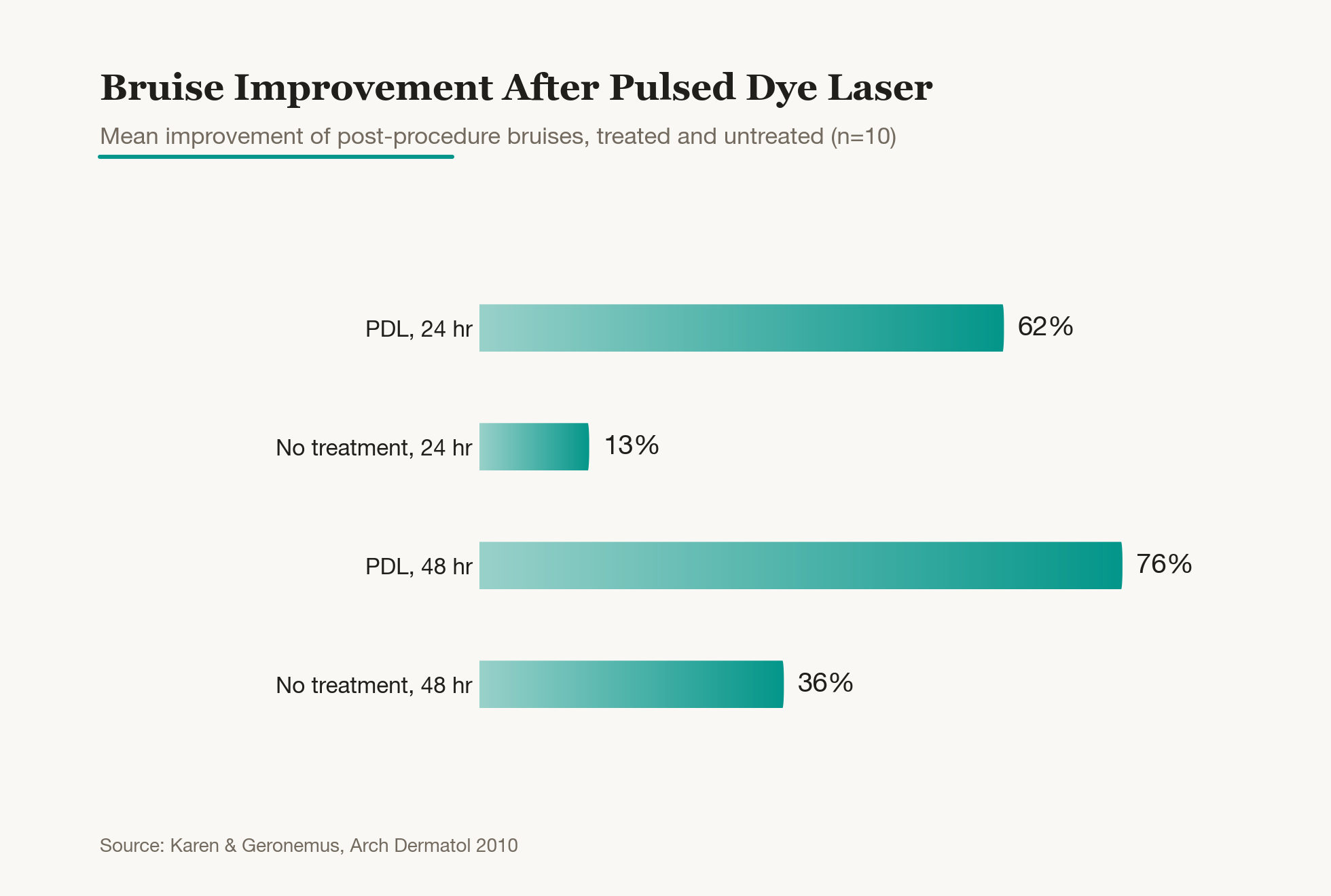
These lasers selectively target the hemoglobin and its breakdown products left in the bruised area. The heat energy stimulates just that pigment, speeding up its breakdown and absorption. Studies have consistently shown that these lasers clear bruises faster than natural healing alone.
That said, laser treatment is usually reserved for bruises that are especially severe or visible, like on the face. Most mild bruises clear up on their own with the care described above, given enough time, so laser is really only worth considering when it's truly needed.
Laser treatment doesn't make a bruise disappear on the spot. It works by speeding up the breakdown of remaining pigment, so the color still fades gradually over the following days. That's why it's mainly used to buy time when an important event or appointment is coming up in just a few days.
When to contact the clinic again
Most bruises fade and disappear within about 2 weeks. But in the following situations, it's safer to follow up with the clinic where you had the treatment.
- The bruised area keeps getting bigger and feels firm or swollen as time passes
- The pain doesn't ease over time, or actually gets worse
- The skin around the bruise turns pale white or becomes noticeably cold
These signs can point to something beyond a simple pooling of blood, possibly a circulation issue, so it's better to get it checked rather than manage it on your own.
References
Korean Dermatological Association, American Academy of Dermatology (AAD), and Ministry of Food and Drug Safety (MFDS).
Was this helpful?
About this article
Written by a practising aesthetic physician and intended for general education — not a substitute for individual medical advice.
Read next
Pigmentation After a Procedure: How Long Until It Fades After Laser?
Why skin sometimes darkens after laser treatments or peels, which procedures and skin types carry the most risk, why sunscreen is half the battle, which topicals are evidence-backed, and why rushing back to treatment is the most dangerous move, laid out without hype.
By Dr. Kim
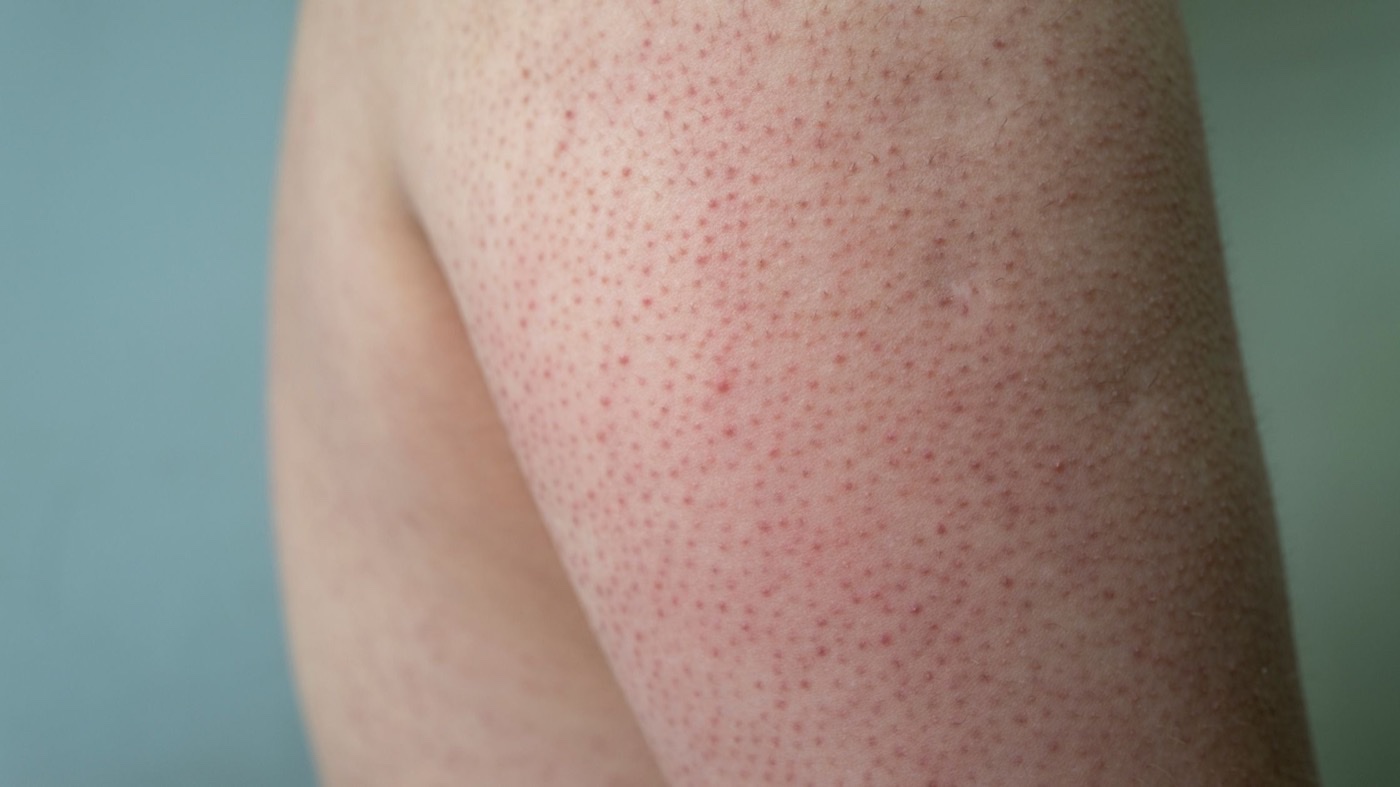
Keratosis Pilaris Causes, Keratolytics, and Laser Effects
Keratosis pilaris, the bumpy skin on the arms and thighs often called chicken skin, is extremely common. We'll cover why it happens, how to choose a keratolytic like urea, salicylic acid, or a retinoid, and how much lasers can actually help. It's not a condition that clears up in one treatment, it's one you manage over time, and understanding that changes how you approach it.
By Dr. Kim
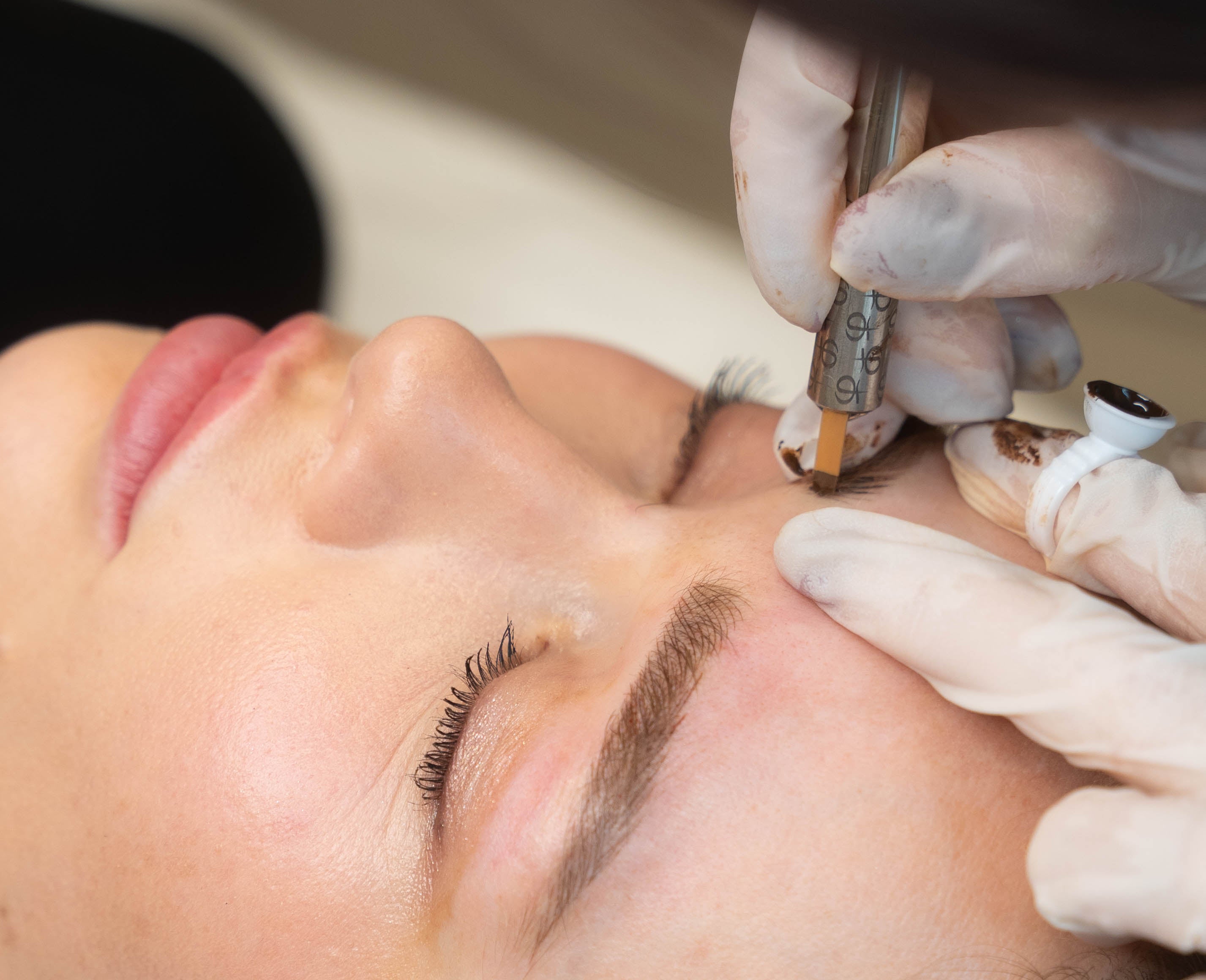
Semi-Permanent Eyebrow Duration and Fading: What Changes After the Scabs Fall
Eyebrow tattoo semi-permanent makeup looks dark right after the procedure, fades once the scabs come off, and then gradually lightens further over the following months. Here is a breakdown of why the color changes in stages and what determines how long it lasts.
By Dr. Lee