Semi-Permanent Eyebrow Duration and Fading: What Changes After the Scabs Fall
By Dr. Lee7 min read
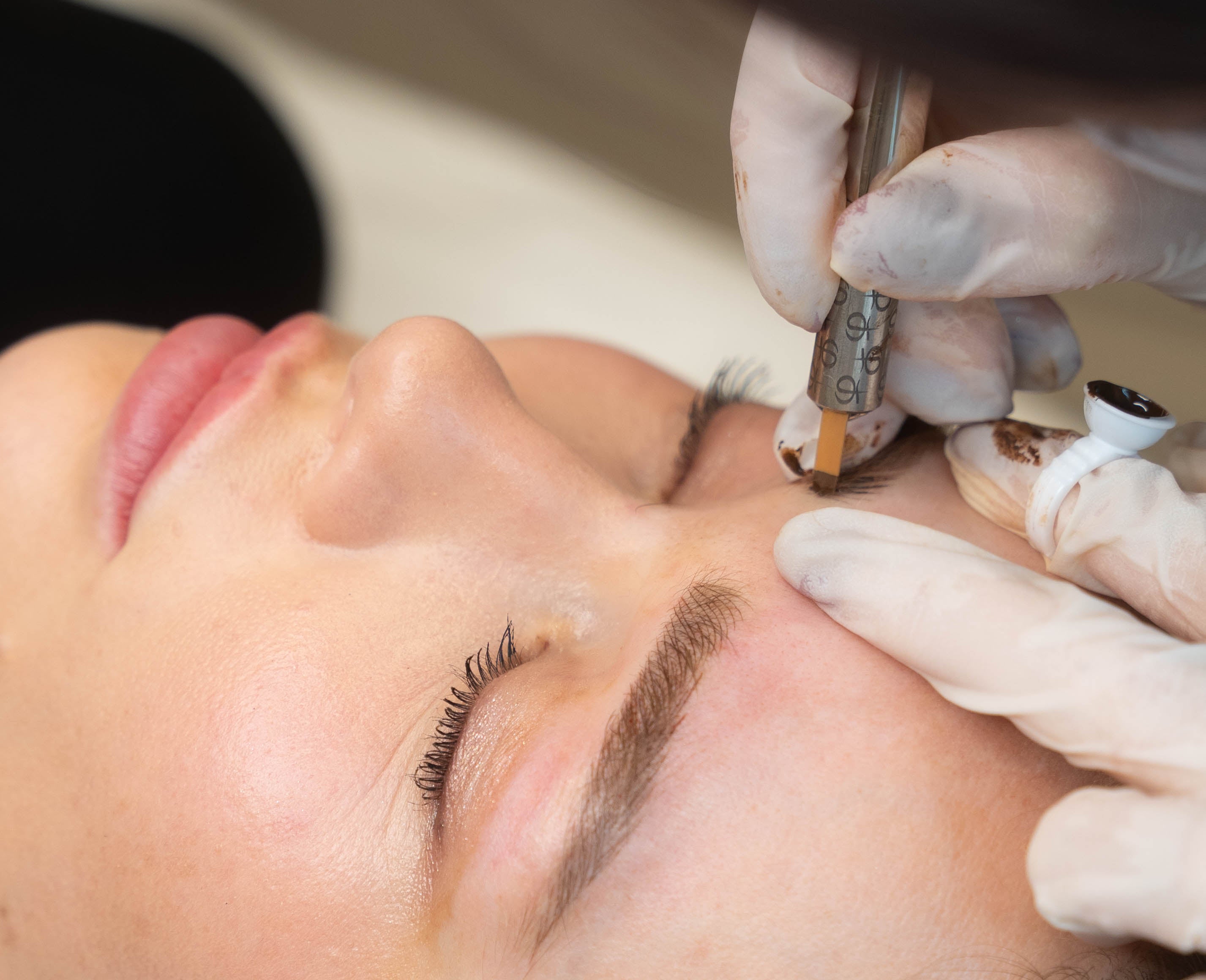
Eyebrow semi-permanent makeup is usually marketed as brows that stay put after a single session. But anyone who has actually had it done knows the color does not just change once. Right after the procedure, the brows look unusually dark and crisp. A few days later, scabs form and flake off, and the color fades noticeably. Then, over the following months to years, the color keeps softening little by little. Here is how that whole process actually works, one stage at a time.
How is semi-permanent makeup different from a regular tattoo?
Regular tattoos and eyebrow semi-permanent makeup both work by placing pigment in the skin, but the depth is different. A regular tattoo pushes pigment deep into the reticular dermis, the lower layer of the dermis. This layer is packed tightly with blood vessels and collagen, so once pigment settles there, it does not move around much. That is why tattoos stay on the body for life.
Eyebrow semi-permanent, on the other hand, only reaches the papillary dermis, the thin, shallow layer just below the epidermis. Think of it like a flower bed. A regular tattoo is a tree with roots planted deep in the soil, while semi-permanent makeup is more like a shallow root planted near the surface. Shallow roots get disturbed more easily as the soil around them shifts over time. That is why eyebrow semi-permanent fades within a few years while a tattoo stays exactly as it was placed.
Why are the brows so dark on treatment day?
Right after the procedure, the brows look much darker and more defined than the color that will eventually settle in. There are two reasons for this.
First, the needle or blade creates tiny wounds in the skin, which causes swelling and redness. This swelling makes the pigment look more intense than it actually is, similar to how wet paper makes a fresh brush stroke of paint look darker than it will once it dries.
Second, right after the session, the pigment sits evenly packed in the epidermis and upper dermis. The body has not had a chance to process or redistribute it yet, so the particles look densely clustered together. That is why brows often look darker and sharper than planned on the day of the procedure itself.
Does the color fade after the scabs fall?
About 3 to 7 days after the procedure, a thin scab forms over the treated area. The scab is the skin's natural way of protecting itself while it heals.
As the scab forms and eventually comes off, some pigment comes off with it, since the scab contains pigment particles that were still sitting near the surface of the epidermis. Once the scab peels away, the color often looks noticeably lighter than it did before. Many people are alarmed at how faint the brows look at this stage, but this is a completely normal part of healing.
It usually takes about 4 to 6 weeks for the scab to fully clear and for a new layer of skin to settle in. Only after this period does the true final color, the pigment that actually remains in the dermis, become visible.
Why does it keep fading over time?
Even after the scab has cleared and the color has settled once, eyebrow semi-permanent keeps fading gradually over months to years. This has to do with the body's immune response.
The body recognizes pigment particles as foreign material. Macrophages, immune cells that act like the body's cleanup crew, gather around the pigment particles and slowly engulf and break them down. Some of these macrophages carry pigment away through the lymphatic vessels as they move through the body. It is a bit like a vacuum cleaner slowly picking up dust scattered across a room, the pigment shrinks bit by bit over time.
At the same time, skin goes through turnover, the ongoing cycle where new epidermal cells form and old ones shed away. Some pigment particles get carried upward along with this turnover and eventually shed off with the outer skin. These two processes happen together, which is why the color fades so gradually, over months, that it is barely noticeable day to day.
Difference between microblading and machine application
Eyebrow semi-permanent falls into two main categories depending on the tool used.
Microblading uses a handheld tool lined with several fine needles that lightly scratches the skin to deposit pigment. It can create thin, hair-like strokes that mimic natural brow texture, giving a look drawn stroke by stroke. Since the technician controls the pressure and depth by hand, depth can vary slightly from person to person, and because the pigment sits relatively shallow, the color tends to fade a bit faster.
Machine techniques use a small motorized device that moves the needle up and down at a consistent speed. Because the depth and spacing are controlled mechanically, the pigment settles more evenly at a relatively stable depth. As a result, brows done with a machine tend to hold their color a bit longer than microblading. These days, a softer, gradient-style fill known as powder brow is also commonly done with a machine.
How long does semi-permanent eyebrow makeup last?
How long eyebrow semi-permanent lasts is not decided by a single factor. A few things typically play a role together.
- Skin type: Oily skin, where sebum production is higher, tends to push pigment out before it fully settles, so color tends to fade faster. Sebum creates a slippery layer between the pigment particles and the epidermis, making it harder for the pigment to anchor stably.
- Sun exposure: UV light is known to break down pigment particles. This is why color fades faster when sunscreen is not used consistently.
- Exfoliation habits: Frequently using exfoliating ingredients like AHA, BHA, or retinol on the brow area speeds up skin turnover, which also speeds up how quickly pigment gets pushed toward the surface and shed.
- Procedure depth and pigment type: Placing pigment at a slightly more stable depth, or using a pigment with larger particles that break down more slowly, tends to hold color longer.
Because of these variables, the same procedure can last anywhere from about 6 months to nearly 2 years depending on the person. Letting your technician know your skin type and skincare habits beforehand can help set realistic expectations for how long the results will last.
Color changes, side effects, and aftercare
In rare cases, instead of simply fading, eyebrow semi-permanent color shifts into a dull gray or bluish tone. This is thought to happen because the iron oxide particles (a mineral commonly used in semi-permanent pigments) react with oxygen over time, altering the color. When pigment is placed too shallowly, sitting too close to the skin's surface, the way light passes through it changes as well, which can make this kind of color shift more likely to appear.
Though rare, allergic reactions to the pigment or granulomas (small nodules that form when the body walls off a foreign substance) have also been reported. This is why a patch test with a small amount of pigment is recommended before the full procedure.
Aftercare also plays a role in both how long the color lasts and how safely the skin heals.
- Avoid forcibly picking at the scab. Doing so can pull away pigment that has not fully settled yet, along with the scab itself.
- During the healing period, roughly 4 to 12 weeks, it is best to avoid saunas or steam rooms where heavy sweating occurs, since sweat and heat can irritate the healing skin.
- Applying sunscreen consistently to the brow area can help slow down how quickly the pigment breaks down.
References
Korean Dermatological Association, American Academy of Dermatology (AAD), and Ministry of Food and Drug Safety (MFDS).
Was this helpful?
About this article
Written by a practising aesthetic physician and intended for general education — not a substitute for individual medical advice.
Read next

Lip Semi-Permanent Makeup: How Many Months Until the Color Fades?
Lip semi-permanent makeup places pigment in the shallow layers of the lip skin to add color. Here is why the color looks so intense right after the procedure but gradually fades over time, and why the results last longer for some people than others.
By Dr. Kim
Eyebrow Tattoo Laser Removal: Number of Sessions, Darkening Risk, and Precautions
Eyebrow permanent makeup fades when a laser shatters the pigment lodged in the skin so immune cells can carry it away. Here's how that process works, including the risk of iron oxide pigment turning darker instead of fading, and how color lightens session by session.
By Dr. Kim
HIFU Lifting Effects and How It Works, Including Sessions and Duration
Here's why HIFU lifting targets a deeper layer called the SMAS rather than the surface of your skin, starting with how focused ultrasound converges at a single point. We break down the two stages: the immediate tightness you feel right after treatment, and the collagen that builds gradually over 4 weeks to 6 months.
By Dr. Lee