Botox Side Effects: Droopy Eyelid, Resistance and Recovery Time
By Dr. Kim8 min read

Botox is one of the most popular cosmetic treatments in the world, but hearing someone say their eyelid drooped or their face looked completely frozen can make you hesitate. Is it actually that common? Does one bad outcome mean you're stuck with it? Will your body eventually stop responding to it altogether? Before you write it off, it's worth understanding exactly what's going on and why.
The most important thing to know about Botox side effects is that nearly all of them are temporary. Botulinum toxin works by temporarily relaxing muscles, and just like the cosmetic effect fades after a few months, most side effects fade right along with it. The typical complaints are bruising and headaches. Eyelid drooping or an odd-looking expression is uncommon. And true resistance, at cosmetic doses, is rare. Here's a clear breakdown of what's common, what's not, and what actually warrants concern.
Why do most Botox side effects pass?
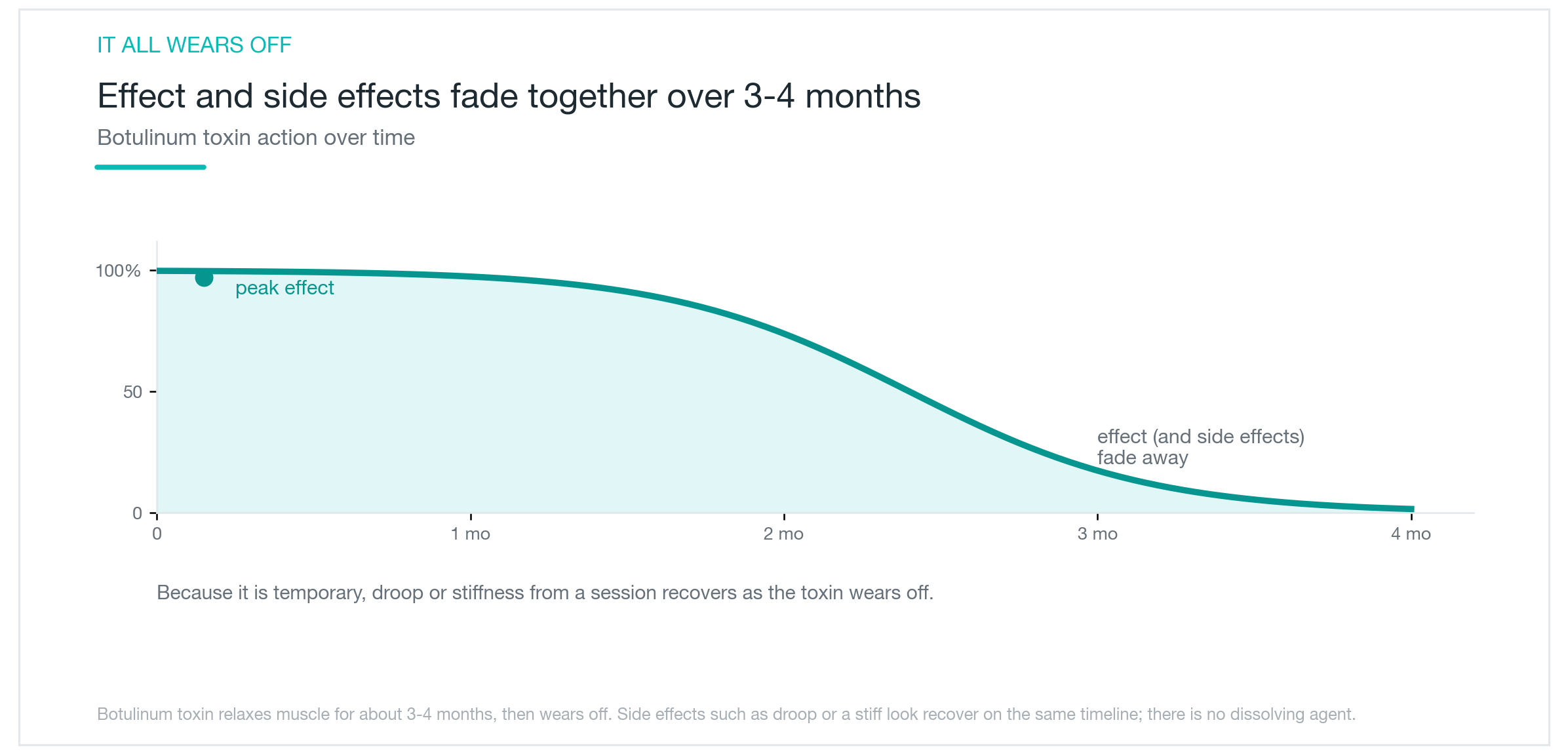
Botulinum toxin works by blocking the nerve signals that tell a muscle to contract. Over time, those nerve pathways regenerate, and the effect gradually wears off, usually within 3 to 4 months. Side effects follow the same logic. When the toxin spreads slightly beyond the intended area or affects a muscle more than anticipated, those effects resolve on their own as it clears from the tissue.
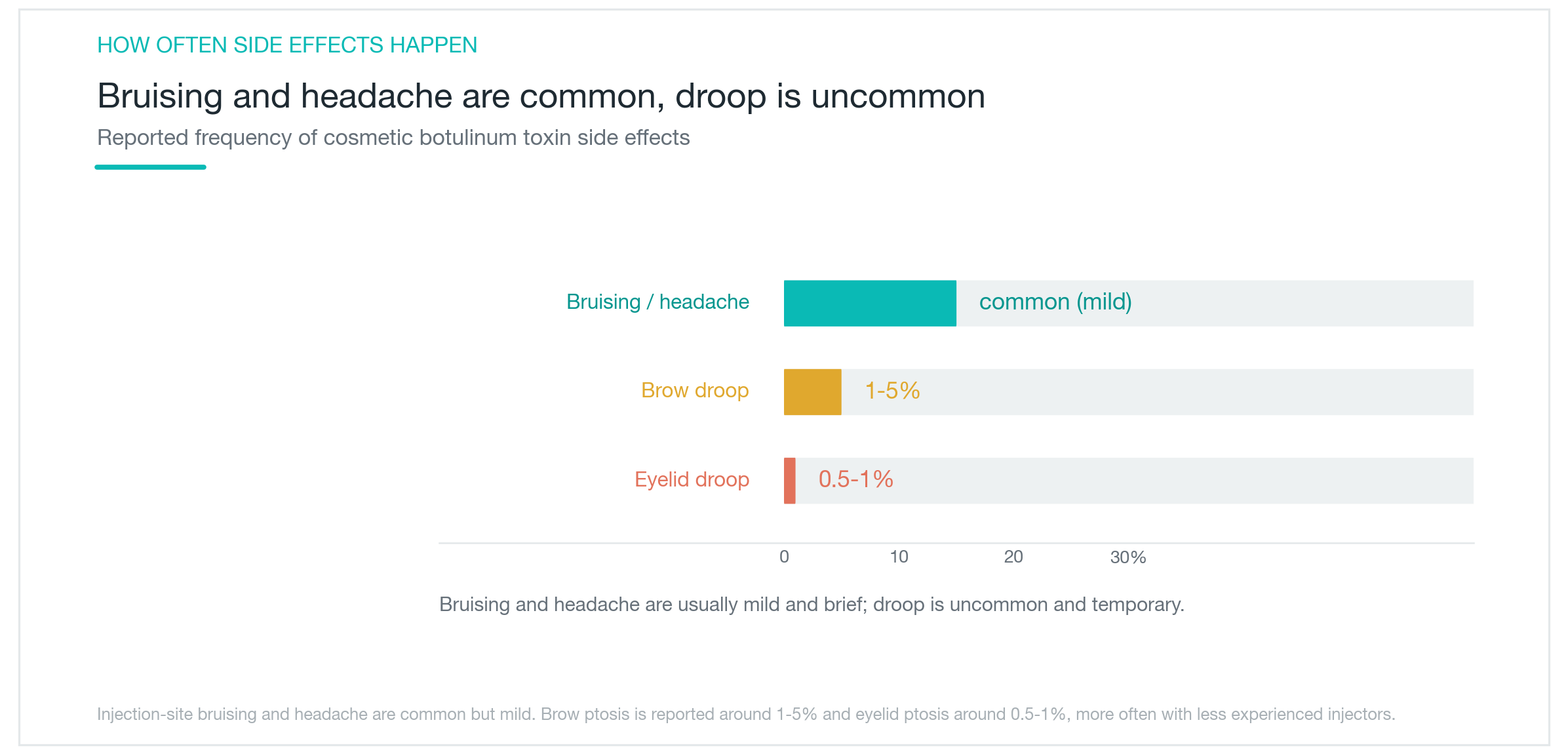
The most common side effects are needle-related: a bruise at the injection site, some localized swelling, and occasionally a dull headache or a heavy feeling that lingers for a few days. These are typically mild and clear on their own within a week. The needle is fine, the treated area is small, and for most people the discomfort is easily tolerated.
It helps to mentally sort Botox side effects into two buckets: ones you simply wait out, and ones that take longer but still resolve. Bruising and headaches are the first kind. Eyelid drooping and an uneven expression fall into the second (more unsettling to deal with, but they do come back around). Knowing that ahead of time makes a real difference if something doesn't go as planned. This is also why getting informed before your appointment matters more than most people think.
Why do eyelids and eyebrows droop?
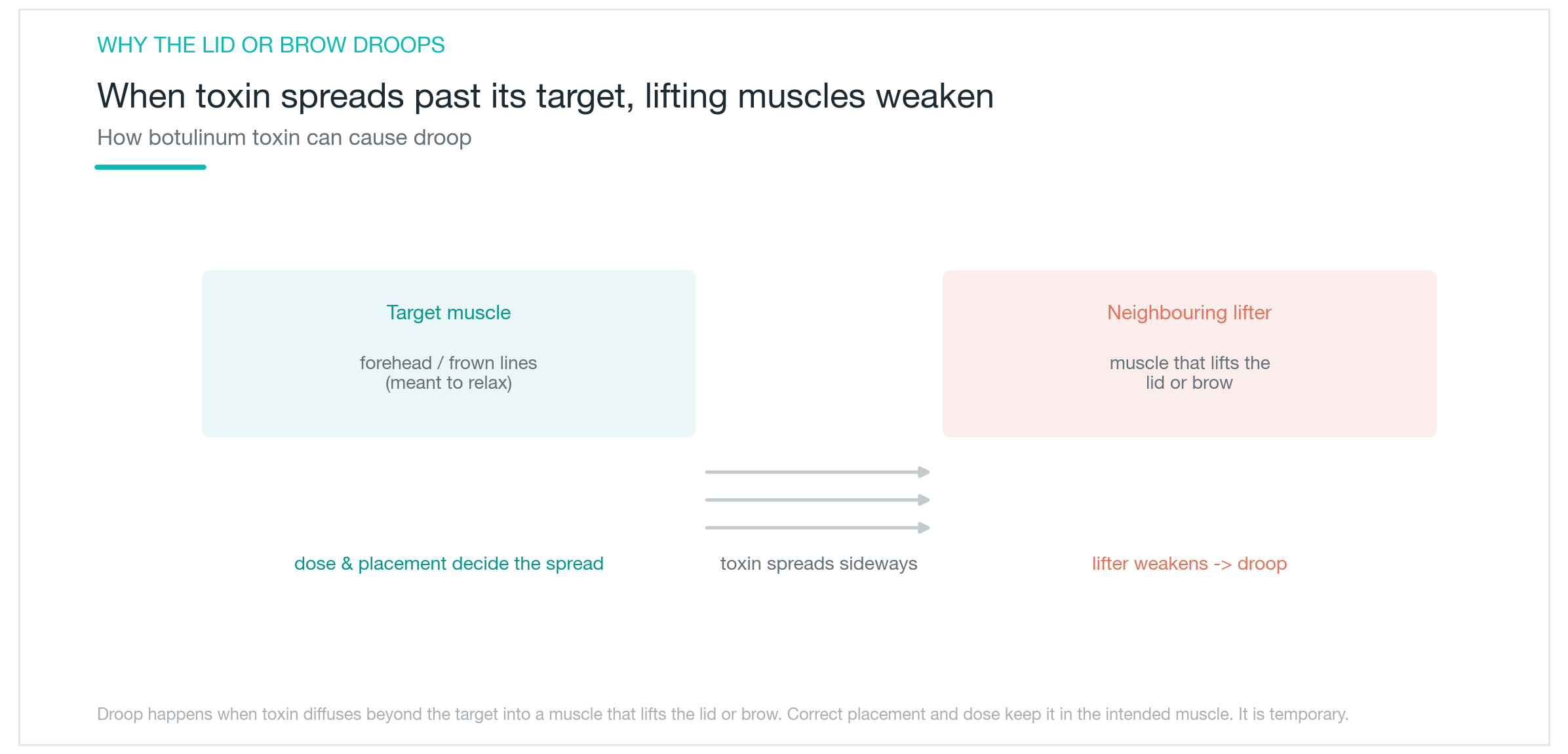
Ptosis (drooping of the eyelid or brow) is the side effect people worry about most. It happens when the botulinum toxin spreads slightly beyond the intended muscle. Injections placed in the forehead or between the brows can sometimes reach the levator palpebrae, the muscle that lifts the eyelid, or the frontalis muscles that support the brow. When those muscles weaken, the eyelid feels heavy or the brows start to sit lower than normal.
The rates are genuinely low. Brow ptosis is reported in roughly 1 to 5% of cases; eyelid ptosis in about 0.5 to 1%. It's more common with less experienced injectors, which really means that placement and dosing are the key variables. With accurate placement and the right dose, this kind of outcome is largely preventable.
The good news: ptosis is temporary. It resolves gradually as the toxin wears off, usually over several weeks to a couple of months. In the meantime, apraclonidine eye drops can help lift the eyelid slightly by stimulating Müller's muscle, not a complete fix, but enough to take the edge off. If drooping develops, let your injector know rather than managing it alone.
The temptation is to fix it fast with another treatment, but layering additional procedures on top of a side effect usually makes things worse rather than better. Time is the most reliable solution here, and things do return to normal.
When do expressions go stiff or uneven?
A completely still forehead, a "Spock brow" (one side arching dramatically higher than the other), or left-right asymmetry: these are the expression-related concerns that come up most. They're not side effects in the traditional medical sense; they're usually the result of dosing and placement decisions. Too much product in one area produces stiffness. Too little in a specific spot leaves that muscle active while everything around it is dampened, creating an odd imbalance.
Natural-looking results come down to the injector's judgment. The goal isn't to paralyze every muscle completely: it's to soften movement while preserving some expression. That means thinking carefully about symmetry, accounting for differences in muscle strength from one side to the other, and reading each person's face individually. The same dose, placed differently, can produce entirely different outcomes.
This also resolves with time. Stiffness and asymmetry fade as the botulinum toxin wears off, and the next appointment is an opportunity to adjust placement and dosing. If it's your first time, the standard approach is to start conservative and return at two weeks to fine-tune where needed. That's the safest way to avoid the frozen look: start with small doses, then build, rather than going too aggressive up front. Telling your injector exactly what kind of movement you want to keep goes a long way toward getting the result you're looking for.
Does frequent Botox stop working?
This is a real concern for long-term users. The mechanism exists: the immune system can recognize botulinum toxin as a foreign protein and produce neutralizing antibodies that bind to it before it reaches the nerve, reducing or eliminating the effect. That's theoretically possible. In cosmetic practice, it's rare.
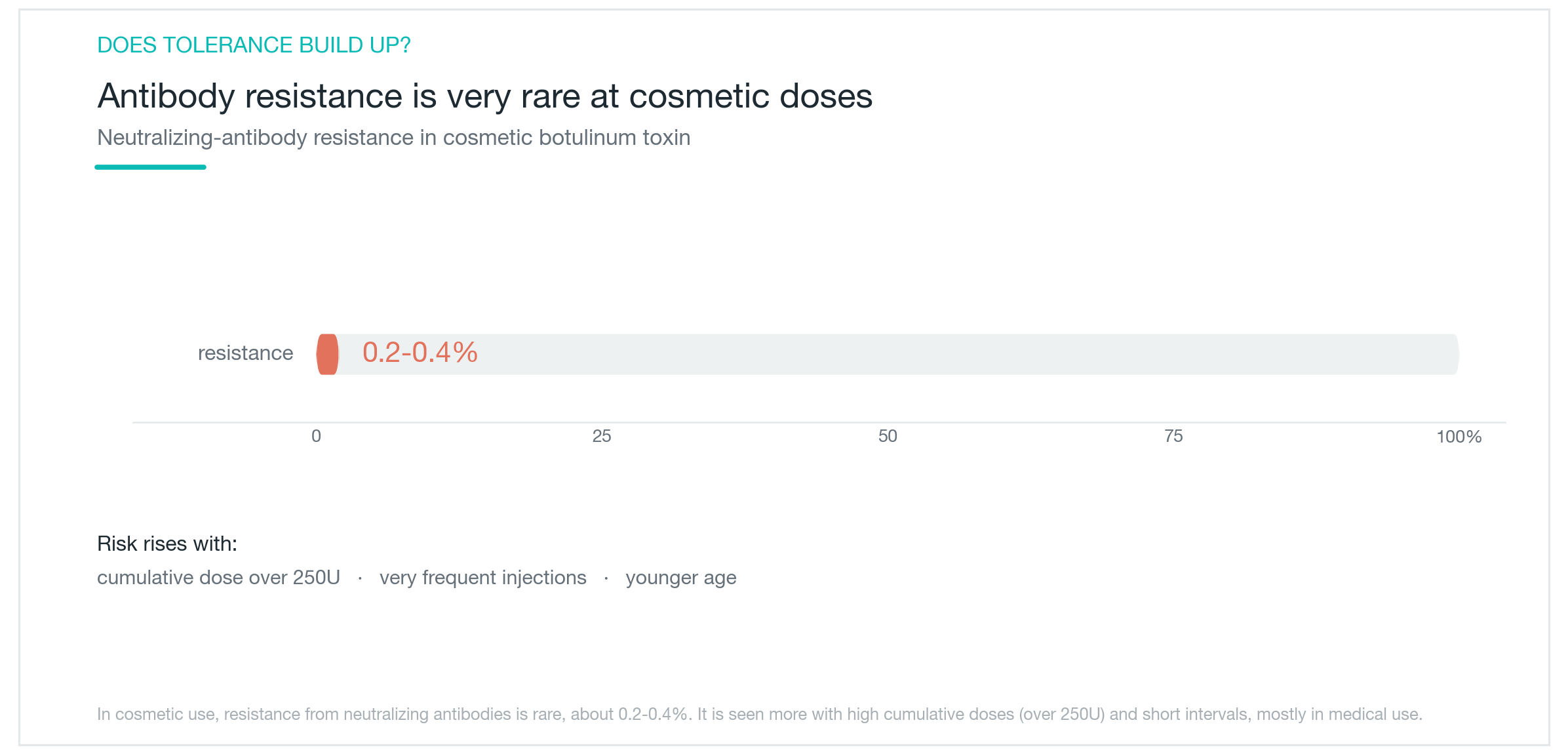
The numbers: neutralizing antibody resistance in aesthetic dosing is reported in approximately 0.2 to 0.4% of patients. The vast majority of people respond to Botox consistently over many years without any loss of effect. True resistance is primarily a problem in therapeutic settings: neurological conditions like cervical dystonia or spasticity, where doses are substantially higher and sessions are more frequent. At cosmetic doses, the risk is low.
There are practical ways to keep it lower. Higher doses and shorter intervals between appointments increase the likelihood of antibody formation. Sticking to a reasonable schedule (roughly every 3 to 4 months) and avoiding unnecessary dose escalation is the sensible approach. If the effect seems to be wearing off faster than it used to, it's worth discussing with your injector: waning results are more often a product quality or dosing issue than true immunological resistance.
Will side effects go away over time?
The reassuring thing about Botox side effects is that the reversal happens on its own. Unlike hyaluronic acid filler, there's no enzyme injection that makes the problem disappear overnight. But botulinum toxin does clear from the tissue, and when it does, the side effects clear with it. Most resolve within 3 to 4 months. Eyelid ptosis, one of the more frustrating complications, typically improves within a few weeks to a couple of months.
When something feels off, the instinct is to do something about it right away. That instinct can lead you in the wrong direction. Rushing to another provider for a quick fix often disrupts the balance further rather than restoring it. The right move is to notify your original injector, explore conservative measures to manage discomfort in the meantime, and let the timeline do its work.
Tools are available during the waiting period. Eye drops can help with ptosis. Small adjustments to the opposite side can sometimes address asymmetry. These are decisions to make with your injector, not on your own. The core point: Botox side effects are not permanent, and patience is consistently the most effective fix. Seeking a quick correction at a different clinic before things have settled is usually the wrong call.
What to check before treatment
The biggest variable is who's injecting. An injector who understands facial anatomy (how each muscle moves, what happens when you weaken one relative to its neighbors) will choose the right placement and the right dose. That directly reduces the risk of drooping and an unnatural expression. For first-time patients, starting conservative and checking results at the two-week mark is the standard, safest protocol. Prioritizing experience over price and convenience is genuinely the most reliable way to minimize risk.
There are things you can do on your end as well. For the first few hours after treatment, avoid lying down and don't rub or massage the treated area. The botulinum toxin needs time to settle into the target muscle; pressure during that window can encourage migration. Skipping intense exercise and saunas on the day of your appointment is also a reasonable precaution. These are simple steps that help keep the toxin where it was intended to go.
Botox side effects are mostly minor and temporary: bruising, occasional headaches, and in rare cases ptosis or an uneven expression that resolves on its own. Resistance at cosmetic doses is uncommon. None of this means the treatment is without risk, but it does mean that going in informed, choosing a skilled injector, and following basic aftercare guidelines puts the odds strongly in your favor. Most problems trace back to one decision: choosing based on price rather than expertise.
Was this helpful?
About this article
Written by a practising aesthetic physician and intended for general education — not a substitute for individual medical advice.
Read next

Parotid Botox and Masseter Botox: Differences and Effect Compared
Parotid gland Botox injects botulinum toxin into the parotid salivary gland to shrink its volume and slim the jawline. It targets a different tissue and location than masseter Botox, which works on muscle. Here is what the evidence says about dosing, how long it lasts, and side effects like dry mouth.
By Dr. Kim
CoreTox: Less Resistance? Effects and Side Effects
CoreTox purifies botulinum toxin type A down to its bare neurotoxin, the same concept behind Xeomin, but from a Korean manufacturer. Here's what the published data actually says about neutralizing antibody formation, resistance risk, and where CoreTox-specific evidence exists versus where it's borrowed from the broader protein-free class.
By Dr. Kim
Density RF Effects: How Many Sessions and How Long Do Results Last?
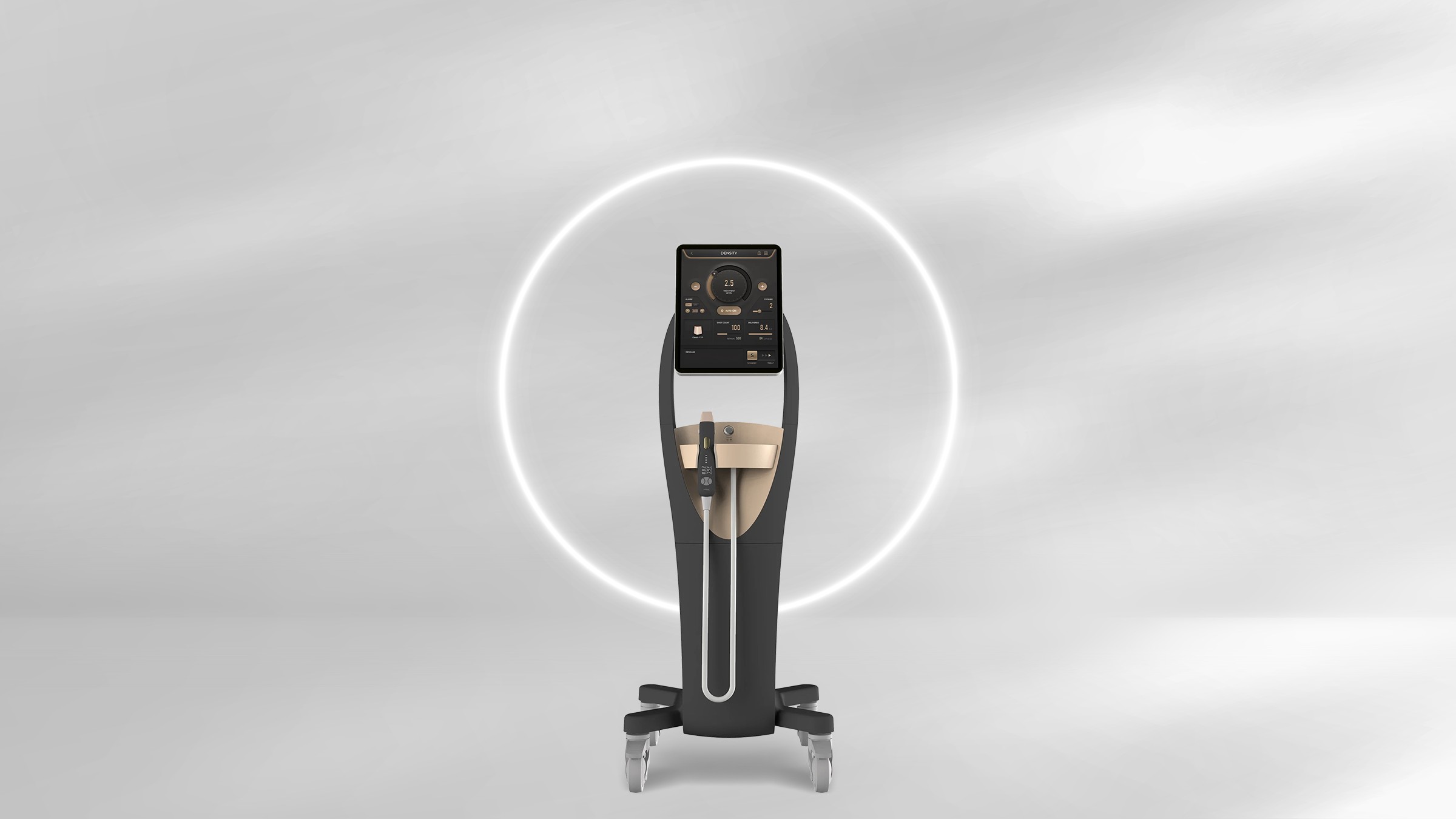
Density RF pairs two radiofrequency modes with very different personalities to chase two goals at once: the instant tightening you feel right after treatment, and the collagen renewal that builds slowly over the following 4 to 12 weeks. Here is why two modes are needed, the order in which heat actually works inside the skin, and why the treatment is spread across multiple sessions instead of done all at once.
By Dr. Kim