Botox Differences by Country of Origin: Spread and Antibody Formation Included
By Dr. Kim7 min read

In clinics, people usually just say "Botox," but Botox is technically one company's brand name, and the active ingredient itself is a single substance called botulinum toxin type A. Yet during consultations, terms like Korean-made, German, British, and American come up constantly, each with its own price tag. If it's the same substance, why does the country of origin seem to matter so much?
The answer has less to do with the raw material and more to do with how it's made. Botulinum toxin is a protein produced by the bacterium Clostridium botulinum, and the specific strain used to grow that bacterium, along with how the resulting toxin is purified, changes the purity and structure of the final product. So even though it's the same type A toxin, the fine details end up varying by country and by manufacturer.
How does Botox differ by country of origin?
The core ingredient is the same, but what surrounds it isn't. Looking at the toxin molecule on its own, every version works on the same basic principle: it blocks the signal between nerve and muscle. Before the nerve signal telling a muscle to contract can arrive, the toxin shuts down the channel that releases the chemical messenger, so the muscle simply can't overcontract.
But the toxin molecule rarely travels alone. It's often bundled with accessory molecules called complexing proteins, which act a bit like protective packaging. How much of that packaging gets left on, or whether it's stripped away entirely, is a choice each manufacturer and country makes differently. That single difference is reported to influence both how widely the product spreads and how likely it is to trigger an antibody response.
How does the US toxin keep its complex proteins?
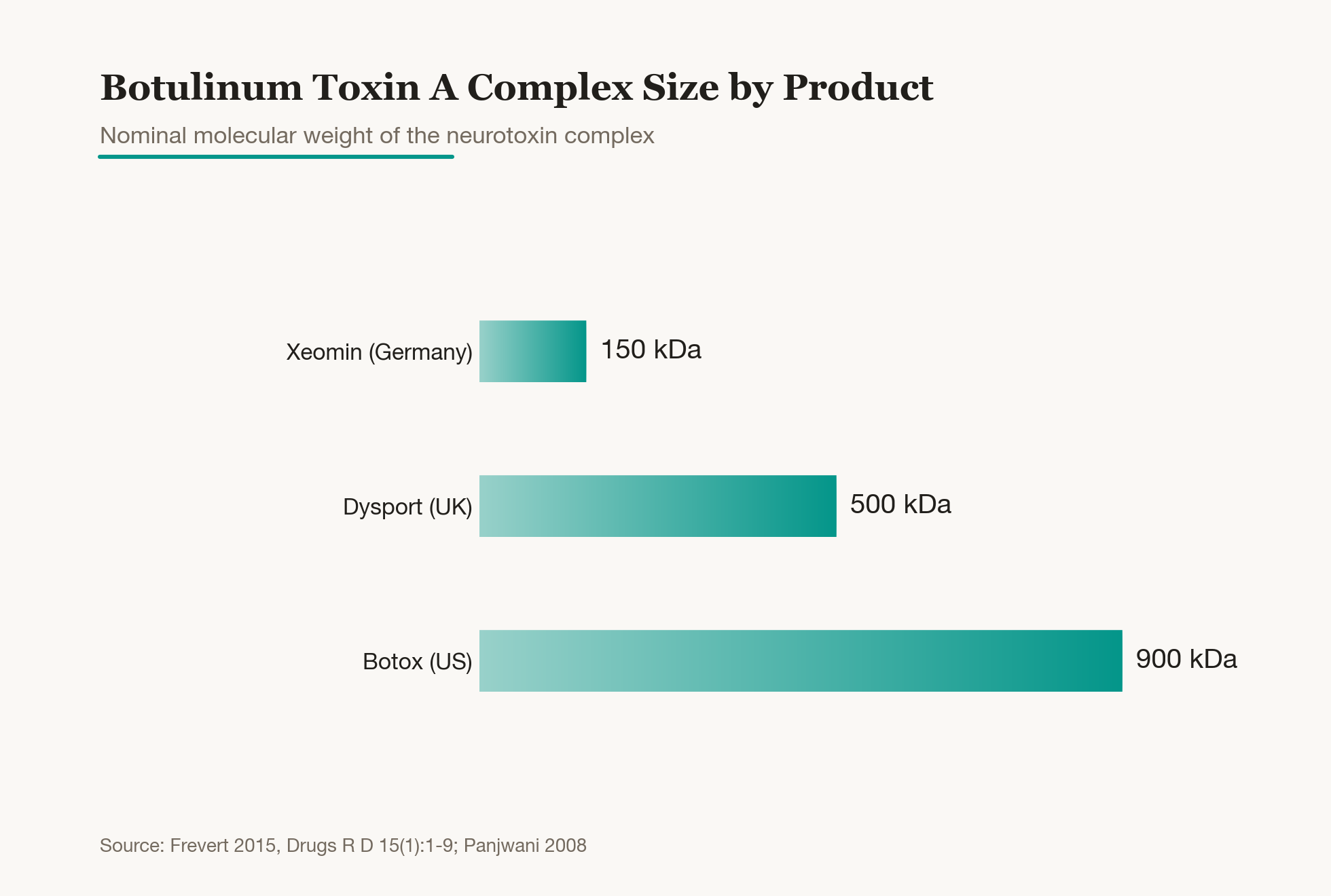
The original Botox made in the United States is grown from what's known as the whole complex strain, and during purification, a substantial amount of complexing protein is deliberately left intact. By weight, it's known to circulate as a large complex weighing in around 900 kilodaltons.
More complexing protein left on means a heavier, bulkier molecule overall. Heavier particles don't drift outward the way a drop of ink spreads lightly through water; they tend to stay put closer to the injection site for longer. That's part of why this formula has a reputation for predictability in procedures where precise, localized control matters. That said, keeping more complexing protein around also means keeping more material the body could potentially recognize as foreign.
The original product has also been produced with the same strain and process for a long time, which means manufacturers have accumulated years of production records showing the active toxin ratio stays consistent with the labeled unit, batch after batch. Newer products on the market simply haven't had as much time to build up that kind of track record.
Why does the German toxin strip out complex proteins?
Toxin made in Germany takes a different route: purification strips out nearly all the complexing protein, leaving behind essentially the pure toxin molecule on its own. That's how it earned the nickname "naked toxin."
The reasoning behind this approach is to lower the chance of triggering an immune response. The body tends to build antibodies against unfamiliar proteins it encounters, and there's long-standing concern that people who get repeated toxin treatments could accumulate enough antibodies over time that the treatment stops working as well. Minimizing the accessory protein means minimizing the material the body might flag as foreign in the first place, which is why this approach tends to be favored for long-term, repeated treatment plans. The tradeoff is that once you strip the product down this far, precisely matching the active toxin content to the labeled unit becomes a much more demanding purification challenge.
Why does the UK toxin spread wider?
Toxin made in the United Kingdom is known to sit in the middle, lighter than the American version and heavier than the German one, existing as a smaller complex somewhere in the range of 300 to 500 kilodaltons.
Smaller particles diffuse through tissue faster. It's the same idea as dissolving pigment in water: the finer the particles, the more widely they spread. That's why this formula tends to get credited for working well over broader areas at relatively lower doses, in places like the forehead or under the cheekbones where the muscles themselves are spread out. On the flip side, in tight, precise areas where you specifically want to avoid spillover, this same tendency to spread becomes something to plan around carefully.
For the practitioner, knowing this diffusion behavior ahead of time shapes how injection points and dosing are planned. With a product that spreads widely, injection points are typically spaced further apart, while a product that stays more contained calls for closer, more tightly spaced injections in the same area.
How do Korean toxins differ from company to company?
Korean manufacturers largely rely on their own proprietary strains, and purification methods vary somewhat from company to company. Some products retain a good amount of complexing protein, others strip it down as much as possible, so the lineup as a whole ends up scattered somewhere between the American and German styles rather than fitting neatly into one camp.
The lower price point often associated with Korean-made toxin usually isn't about the ingredient itself being cheaper. It has more to do with production scale and distribution structure. With multiple domestic manufacturers competing head to head, the per-unit supply cost has come down considerably. And since these products go through the same Ministry of Food and Drug Safety quality standards and approval process, the safety review itself follows the same framework as any imported product.
Here's a quick checklist worth going over before comparing products by country of origin:
- Complexing protein content: more tends to mean it stays localized longer, while less means a lighter molecule that spreads further and is generally considered to carry a lower risk of antibody formation.
- Molecule size: heavier complexes diffuse less, lighter ones diffuse more, and this principle ties directly into which treatment area suits which product.
- Regulatory approval: regardless of country of origin, having proper Ministry of Food and Drug Safety approval is the baseline requirement for safety.
- Match with treatment area: whether the target area calls for tight, localized precision or broad, gentle relaxation changes which diffusion profile makes sense.
Why does the injection area matter more than the origin?
The country name on the label matters less than the specific purification method and characteristics of that particular product. Two American products can come from different companies with different manufacturing processes, and the same goes for Korean products, where the strain and purification method can vary company to company even under the same "Korean-made" label.
So rather than asking which country a product comes from, it's more useful to ask your provider which toxin characteristics actually suit the area you're treating. A forehead that needs its fine lines softened broadly and a jawline that needs only the masseter muscle narrowed down call for very different spread profiles, and that distinction ends up mattering far more than the country of origin.
Dosing and treatment intervals are also shaped much more by an individual's muscle mass and skin condition than by which product is used. So it's hard to say any single country's toxin is simply "better." A more sensible approach is to understand what each type of toxin actually does and choose based on your own situation.
How long the effect lasts also depends much more on injection depth, dose, and how active the treated muscle is than on where the product was made. Areas that get used more tend to regrow the nerve-muscle connection faster, which means the effect fades a bit sooner there, and this pattern shows up regardless of which country's product is used. So when weighing country of origin, it's worth keeping those characteristic differences in mind, but consulting with a provider who has real hands-on experience and tailoring the choice to the specific area ends up being the bigger factor in how things actually turn out.
References
Korean Dermatological Association, American Academy of Dermatology (AAD), and Ministry of Food and Drug Safety (MFDS).
Was this helpful?
About this article
Written by a practising aesthetic physician and intended for general education — not a substitute for individual medical advice.
Read next
How Long Botox Lasts and Why It Varies: Dose and Antibodies Included
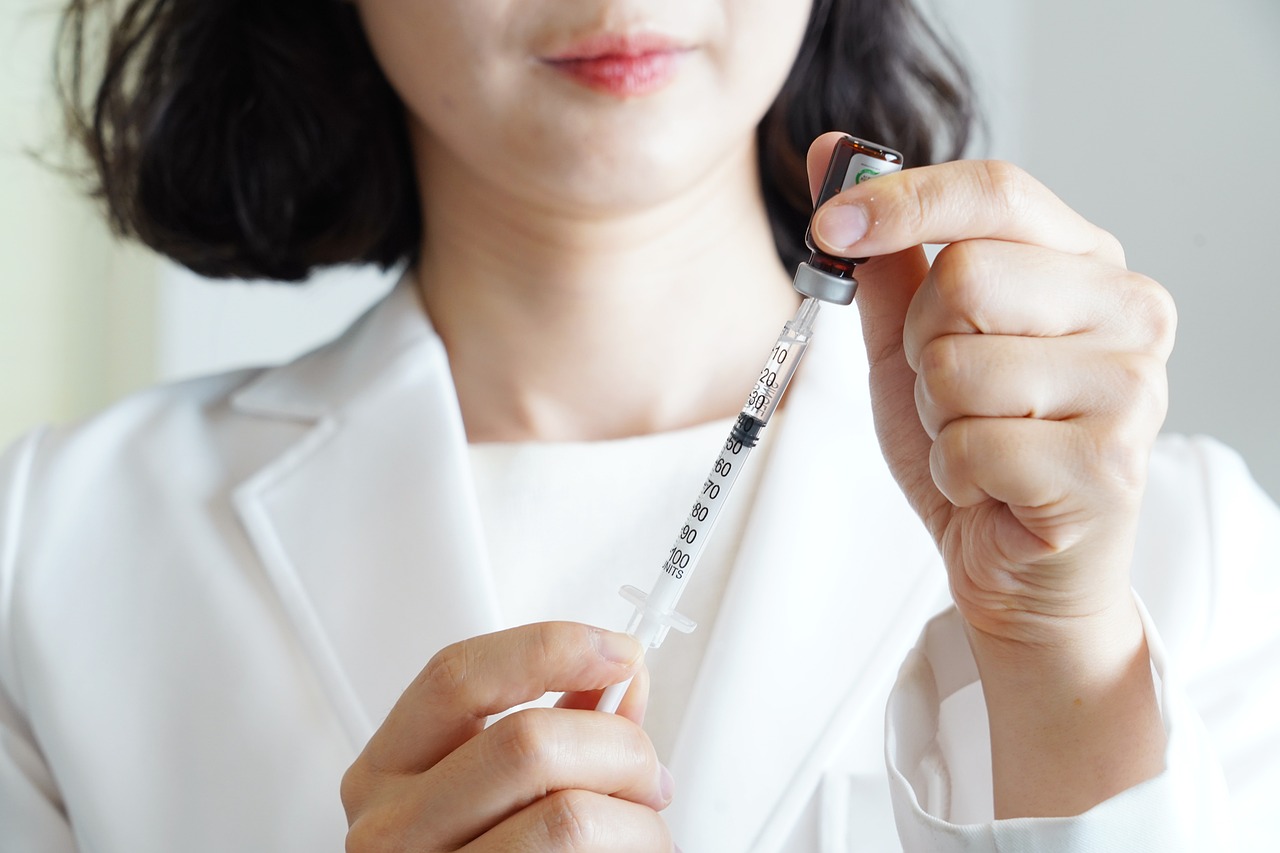
Botox works by blocking the signal pathway between nerves and muscles, temporarily stopping muscle movement. How long the effect lasts depends on the dose, the size of the muscle, and how quickly the nerve recovers, so results vary from person to person. Here is how repeat treatments, antibody formation, and aftercare all affect how long Botox lasts.
By Dr. Kim
CoreTox: Less Resistance? Effects and Side Effects
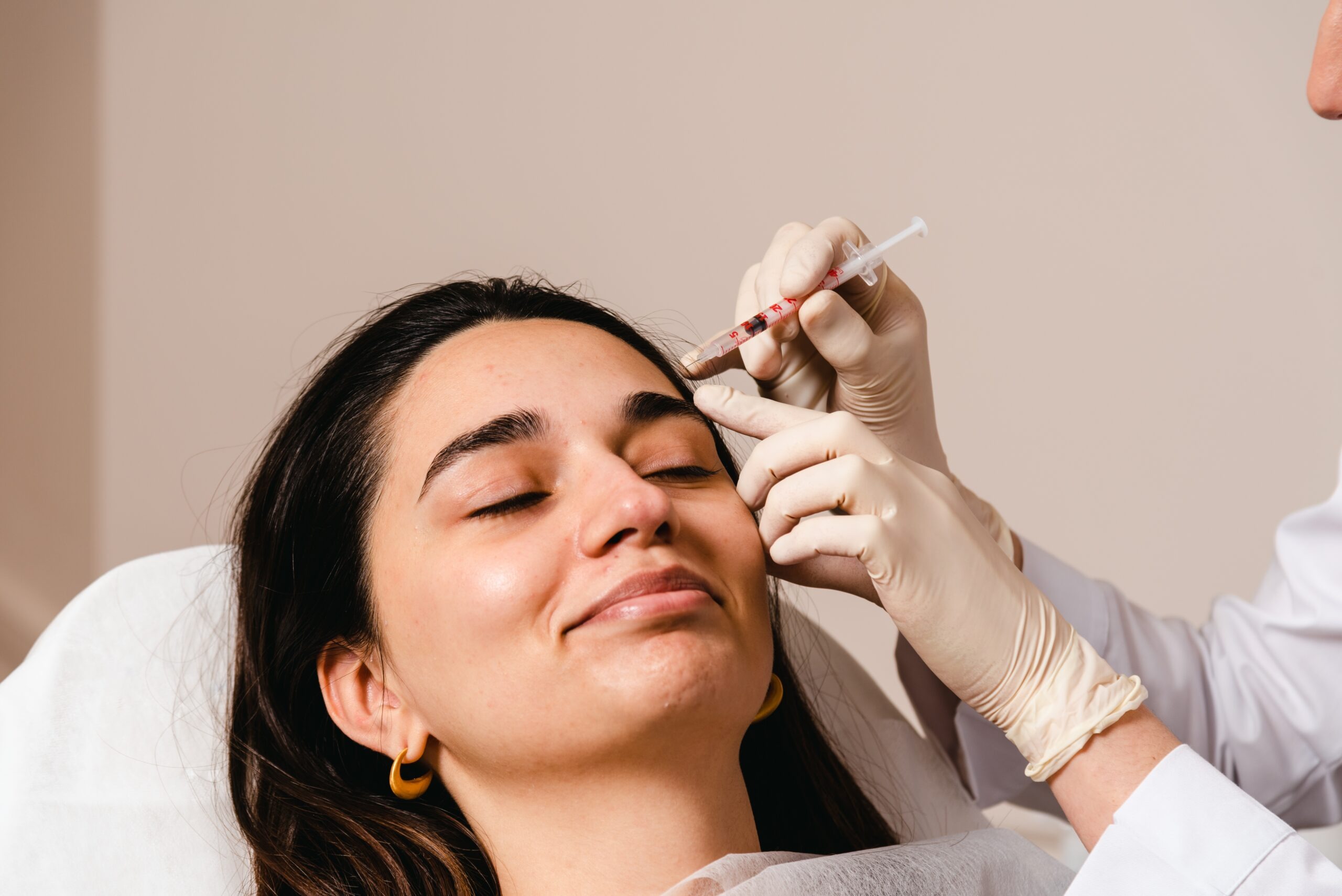
CoreTox purifies botulinum toxin type A down to its bare neurotoxin, the same concept behind Xeomin, but from a Korean manufacturer. Here's what the published data actually says about neutralizing antibody formation, resistance risk, and where CoreTox-specific evidence exists versus where it's borrowed from the broader protein-free class.
By Dr. Kim
Cafe-au-Lait Spots Returning After Laser: Causes, Number of Sessions and Expectations
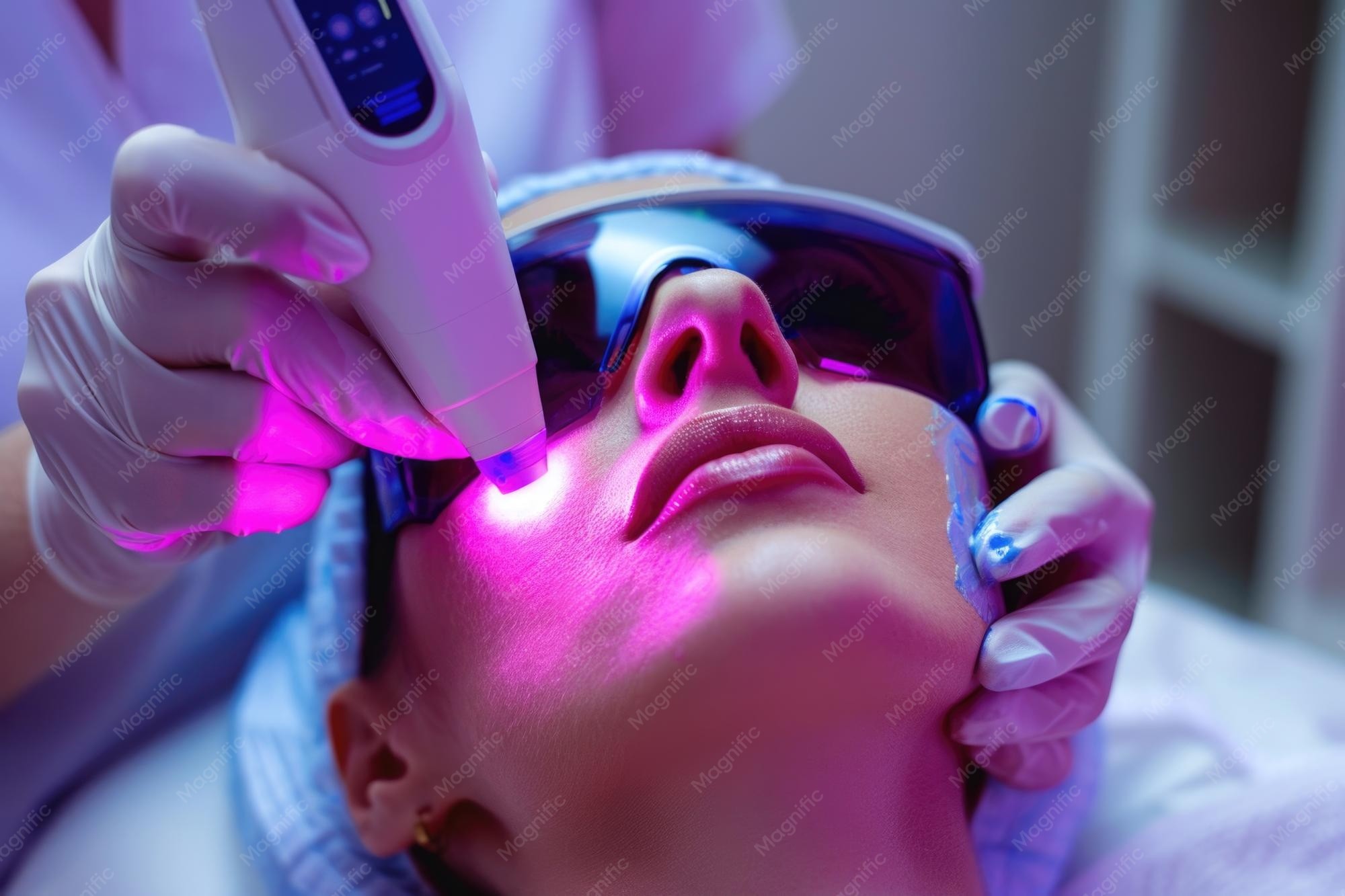
A café au lait spot forms because the pigment-making cells in that one patch of skin are locally overactive. Laser treatment breaks up the pigment that has already built up, but it doesn't switch off those cells, which is why the color so often returns. Here's the biology behind it, why results differ so much from person to person, and what a realistic treatment timeline actually looks like.
By Dr. Kim