Rejuran Side Effects: Bruising, Bumps, Duration and Warning Signs
By Dr. Lee7 min read

Noticing bruising or raised bumps on your face after a skin booster or Rejuran treatment is unsettling. Most of the time, it is a natural response to a procedure that involves dozens of needle insertions. The real issue is not knowing where normal ends and trouble begins.
Skin boosters work by injecting ingredients like hyaluronic acid or PDRN (polynucleotide fragments) into the shallow layers of the skin through repeated micro-injections. With that many needle passes, some bruising, swelling, and small marks are par for the course. Most settle within days to a week, though nodules or hypersensitivity reactions can occasionally develop. Here's what counts as normal, and when you actually need to call the clinic.
How common are skin booster side effects?
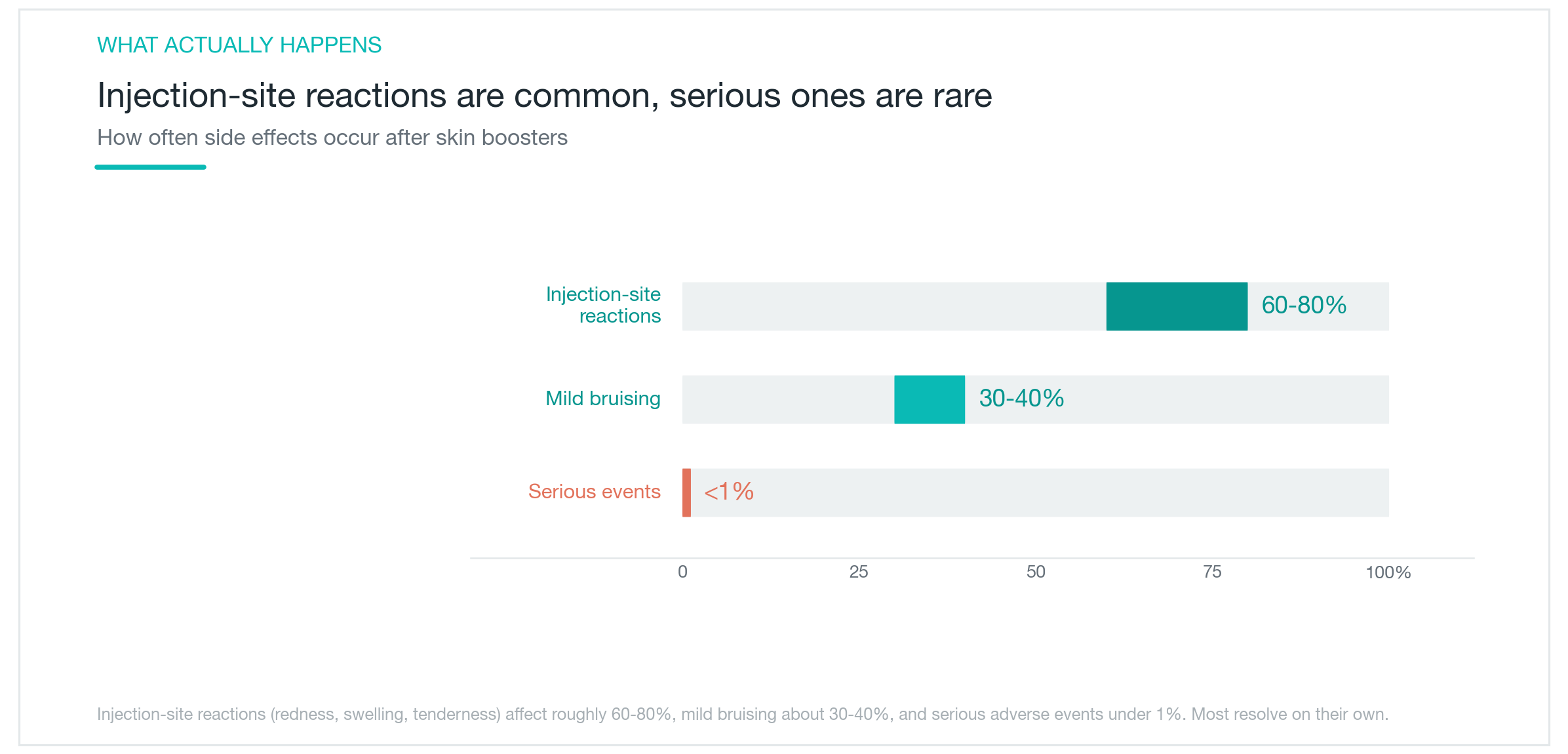
The side effects you get from skin boosters are mostly caused by the injections themselves. Redness, puffiness, tenderness, and bruising from dozens of needle passes across the face are predictable responses to that kind of physical stimulation. Research shows injection-site reactions appear in 60 to 80 percent of people who receive these treatments. The vast majority are mild and resolve without intervention.
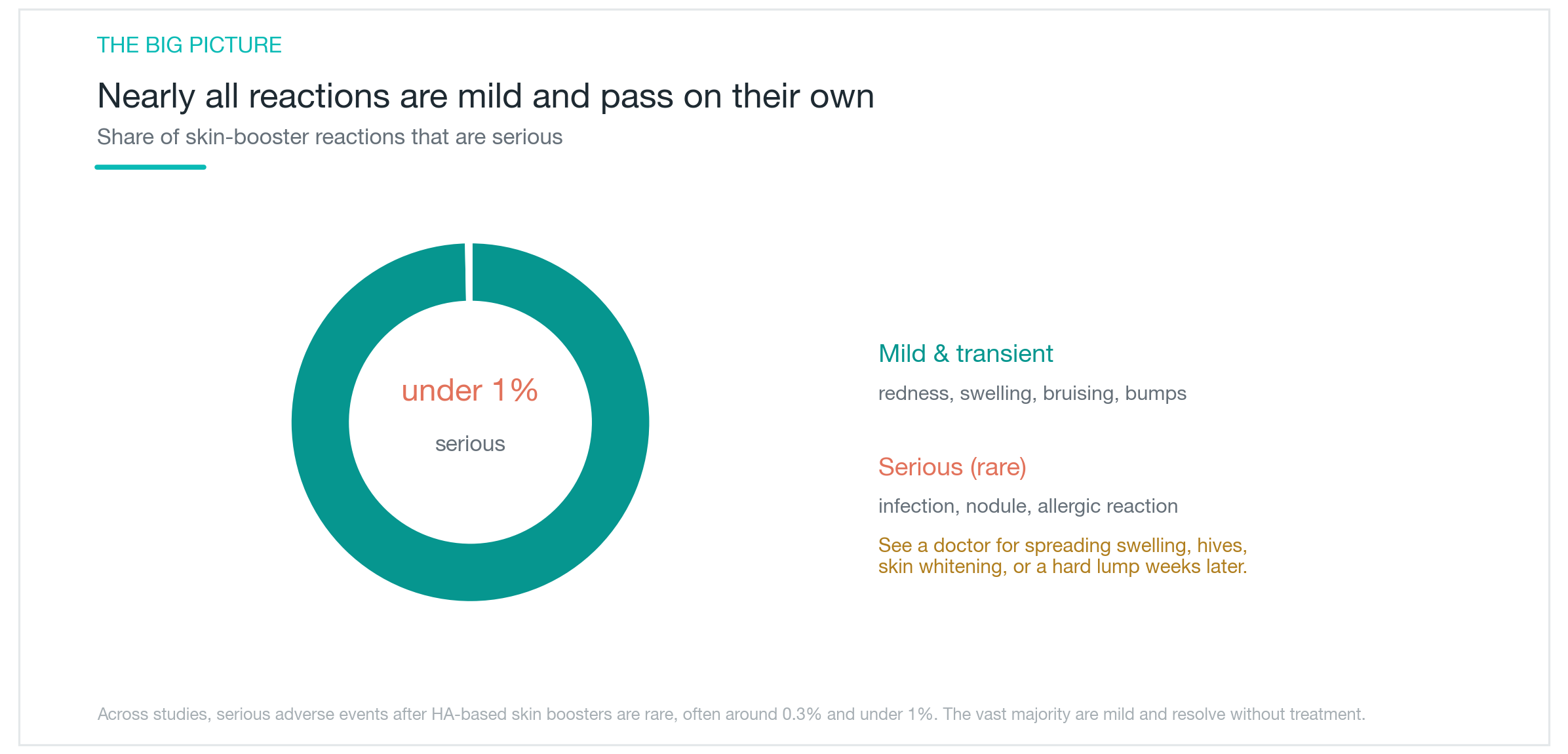
What matters is that these reactions are temporary. Redness and swelling usually settle within 1 to 2 days, with no special treatment needed. Serious adverse events are uncommon; across multiple studies, significant complications come in at under 1 percent. In other words, almost everything uncomfortable after a skin booster falls into the expected and harmless column.
So if your face looks red, puffy, or dotted with small marks right after the procedure, nothing went wrong. It is closer to an expected part of how the needles interact with skin and how the ingredients settle in. The way to tell normal from not normal is degree and duration. Mild symptoms improving within a few days are normal. Symptoms that worsen or drag on are worth watching. That single framework clears up most of the anxiety.
How many days until bruising and swelling fade?
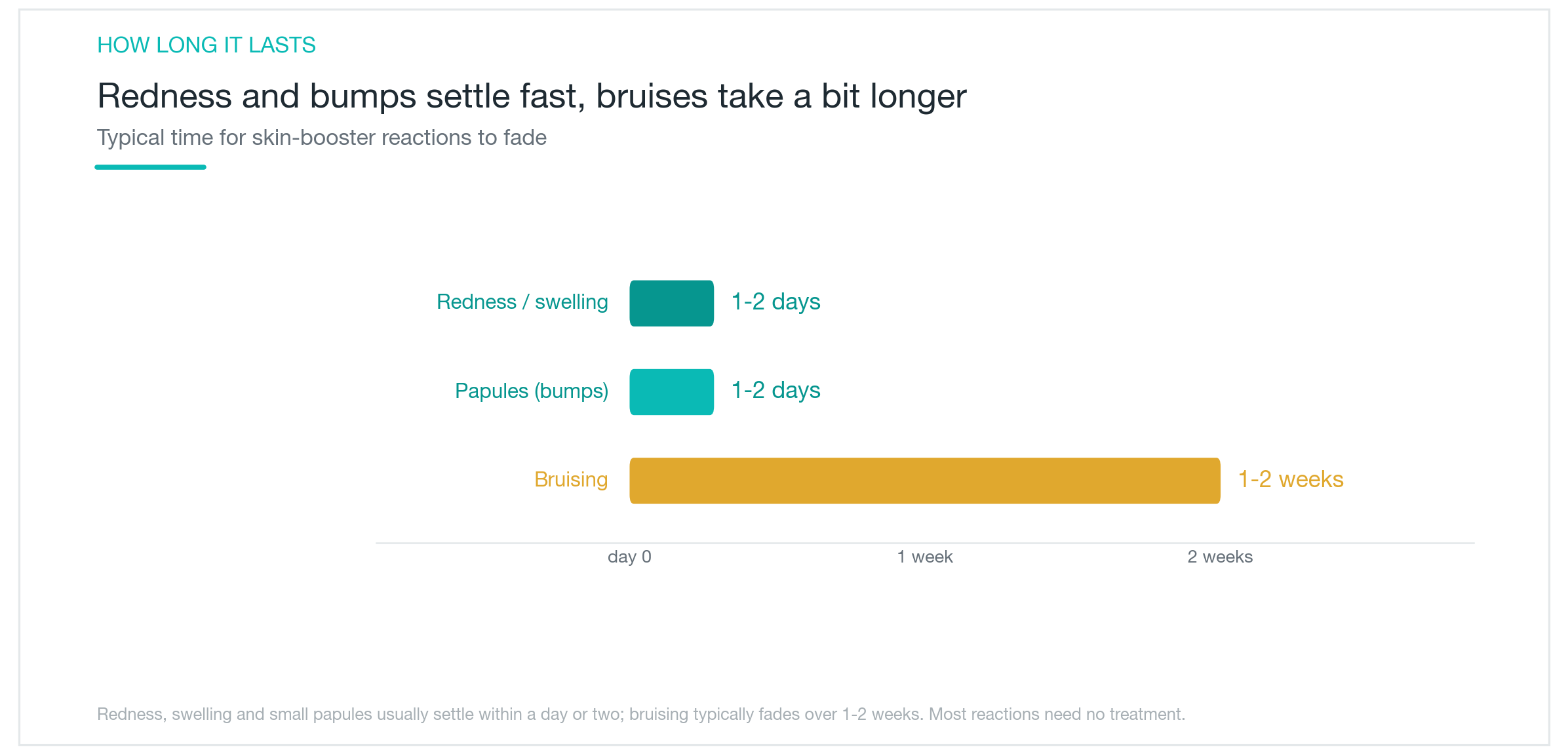
Bruising tops the list of common side effects. The face is dense with fine capillaries, and needle passes can nick them. Studies vary, but mild bruising shows up in roughly 30 to 40 percent of people after skin booster treatments. It is especially likely if you have thin skin or are taking blood-thinning medications or supplements.
The good news is that time does the work. Redness and swelling usually settle within 1 to 2 days; bruising takes a little longer, typically fading within 1 to 2 weeks. In the days right after treatment, avoiding heavy rubbing and prolonged heat exposure speeds recovery. If a bruise spreads, it will lighten gradually; there is no need to panic.
You can cut down on bruising beforehand. Stopping aspirin, omega-3s, and alcohol a few days before treatment, and applying ice right after, makes a real difference. If you have something important coming up, schedule the appointment at least a week ahead. Bruising is common but manageable with a little preparation and patience. If you bruise easily, mention it to your injector before you start.
Why do small millet-like bumps appear?
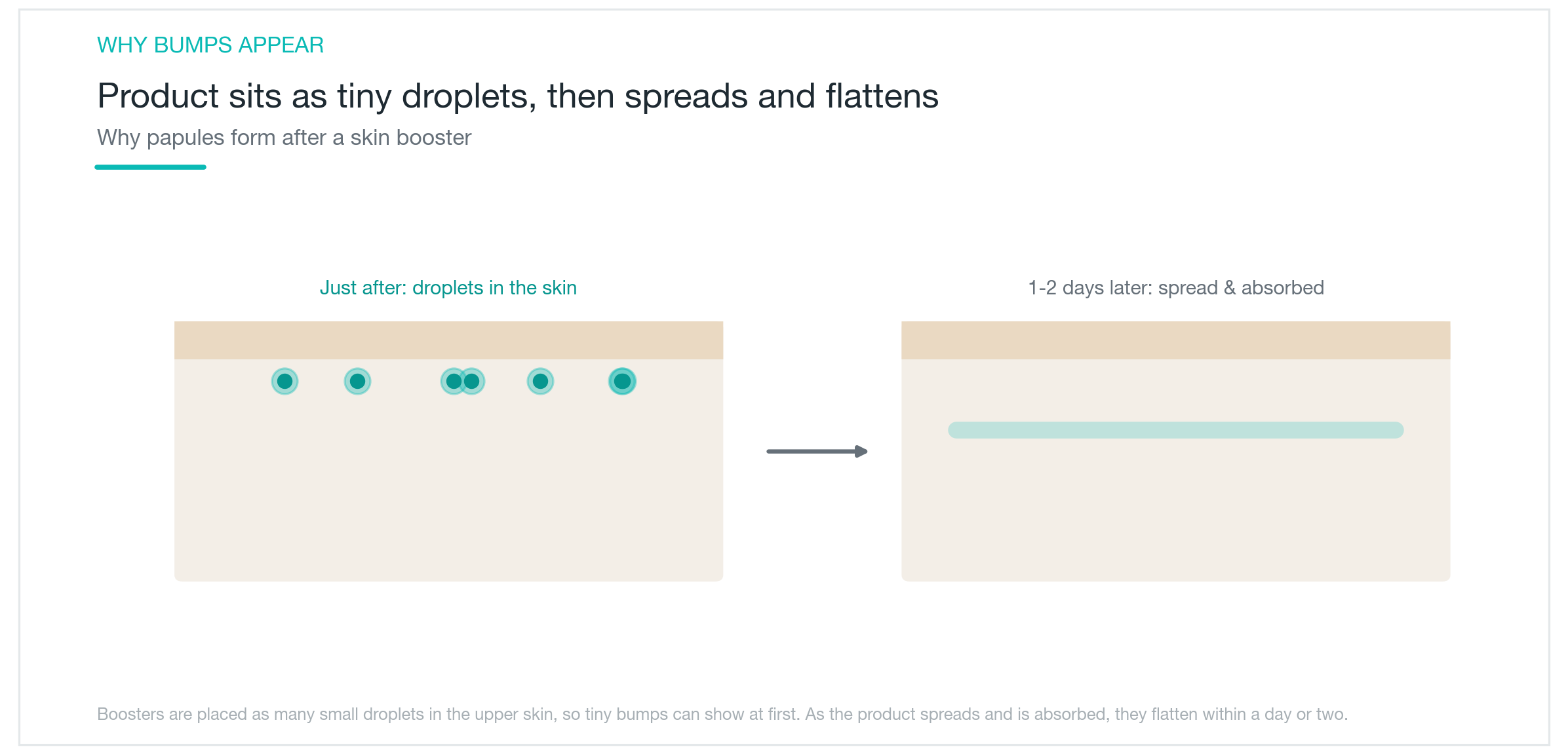
Small raised bumps scattered across the skin right after treatment are called papules. They show up especially with treatments like Rejuran that deposit product in tiny droplets in the superficial skin layers. This is not a sign that something went wrong: it means the injected material has not spread yet and is sitting where it was placed.
Papules typically flatten out within 1 to 2 days as the product disperses and is absorbed. Depending on the area and the volume injected, it can take a little longer, but pressing or squeezing them is not a good idea. They smooth out naturally, so if marks are still visible the day after treatment, give it a few days before worrying. Visibility varies by location on the face, but most papules disappear on their own.
The situation changes if, weeks later, a firm lump remains, keeps growing, or becomes increasingly inflamed. That is no longer a transient papule; it could be a nodule, and you would want a clinician to look at it. Short version: bumps right after treatment are normal; a hard lump that refuses to resolve and keeps hardening weeks later is not. If the papules concern you, give it a day or two before taking action.
It comes from salmon, so is allergy a concern?
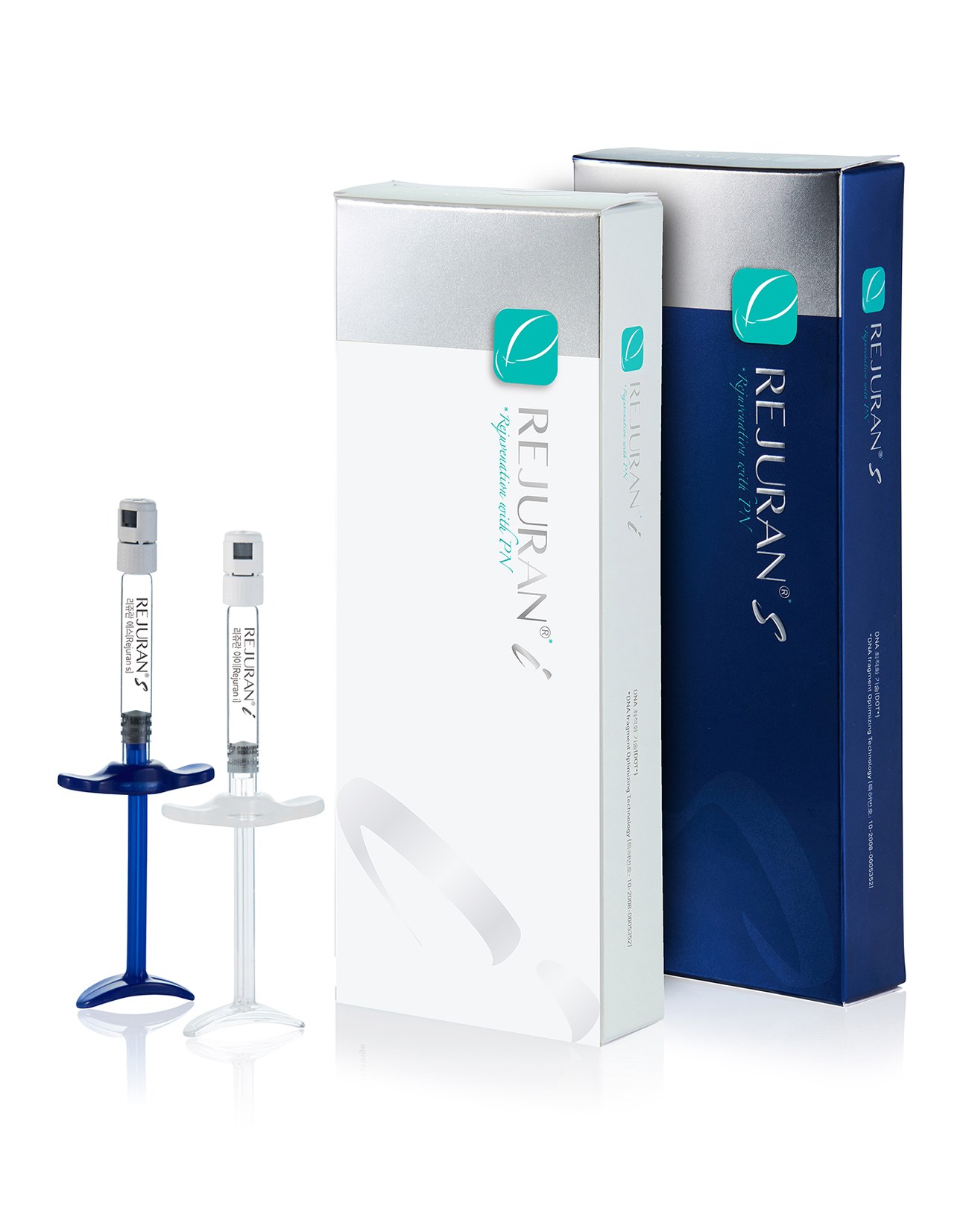
The active ingredient in Rejuran is PDRN (polynucleotide fragments extracted and purified from salmon DNA). The salmon origin raises a fair question for anyone with a fish allergy. The purification process, however, removes allergenic proteins, which is why actual allergic reactions are rare.
The safest approach is still to disclose any relevant history before the procedure. Severe fish allergies or prior reactions to injections are worth flagging; your injector can make an informed decision. Pregnancy, breastfeeding, or active infection or inflammation in the treatment area are also standard reasons to postpone. These intake checks lay the basic groundwork for reducing risk, and being upfront matters more than it might seem.
PDRN skin boosters carry a low allergy risk given how highly refined they are, but low is not zero. If your face swells broadly after treatment, or hives and itching spread, that could signal a hypersensitivity reaction; contact the clinic right away. Uncommon, but worth knowing. Getting treated at a facility that uses genuine products is one more way to lower the odds.
Warning signs that mean you should see a doctor
The two things that separate a normal reaction from a warning sign are degree and time. Mild symptoms improving within days are normal; symptoms that worsen or linger are a red flag. If redness, swelling, minor bruising, or small papules are fading somewhere between one day and a week, you are in safe territory.
On the other side, there are signs that mean contact your clinic. Skin blanching, severe pain, or patchy discoloration at the injection site can point to a vascular problem; that needs immediate attention. Persistent redness, warmth, and swelling after several days, or anything that looks like it could be pus, raises concern for infection. A firm nodule appearing weeks later needs clinical assessment. Widespread facial swelling with spreading hives is a hypersensitivity reaction. If you notice any of these, do not wait.
By the numbers, serious complications come in at under 1 percent. Most people experience mild reactions and recover within days, so excessive worry is not warranted, but knowing what the warning signs look like is. When something feels off, calling the clinic beats sitting with uncertainty.
Care before and after, and choosing a clinic
Preparation starts before the appointment. Stopping aspirin, omega-3s, and alcohol a few days ahead reduces bruising, and going in well-rested and healthy gives you a faster recovery. Any active breakouts, wounds, or inflammation in the treatment area should clear up before you schedule. These small steps eliminate a significant portion of avoidable side effects.
After treatment, the same mindset carries over. Skip heavy rubbing or thick makeup on treatment day, and for a few days, hold off on saunas, intense workouts, and anything else that raises heat and worsens swelling. Consistent sun protection and moisturizing speed recovery. If papules appear, leave them alone and let time handle it.
Where you get treated matters too. A clinic with solid hygiene practices and the capacity to manage complications is the baseline for avoiding infection and nodules. It is worth checking whether the clinic uses genuine products and whether the injector has real experience. Skin boosters are a safe category of treatment overall, but that safety comes from preparation and the person doing the procedure. If a clinic's prices seem unusually low, it is worth a second look at both product quality and sterility. Good prep and a skilled injector remain the most reliable ways to keep side effects to a minimum.
Was this helpful?
About this article
Written by a practising aesthetic physician and intended for general education — not a substitute for individual medical advice.
Read next
Cherry Angioma: Causes, Symptoms, Laser Treatment and When to See a Doctor
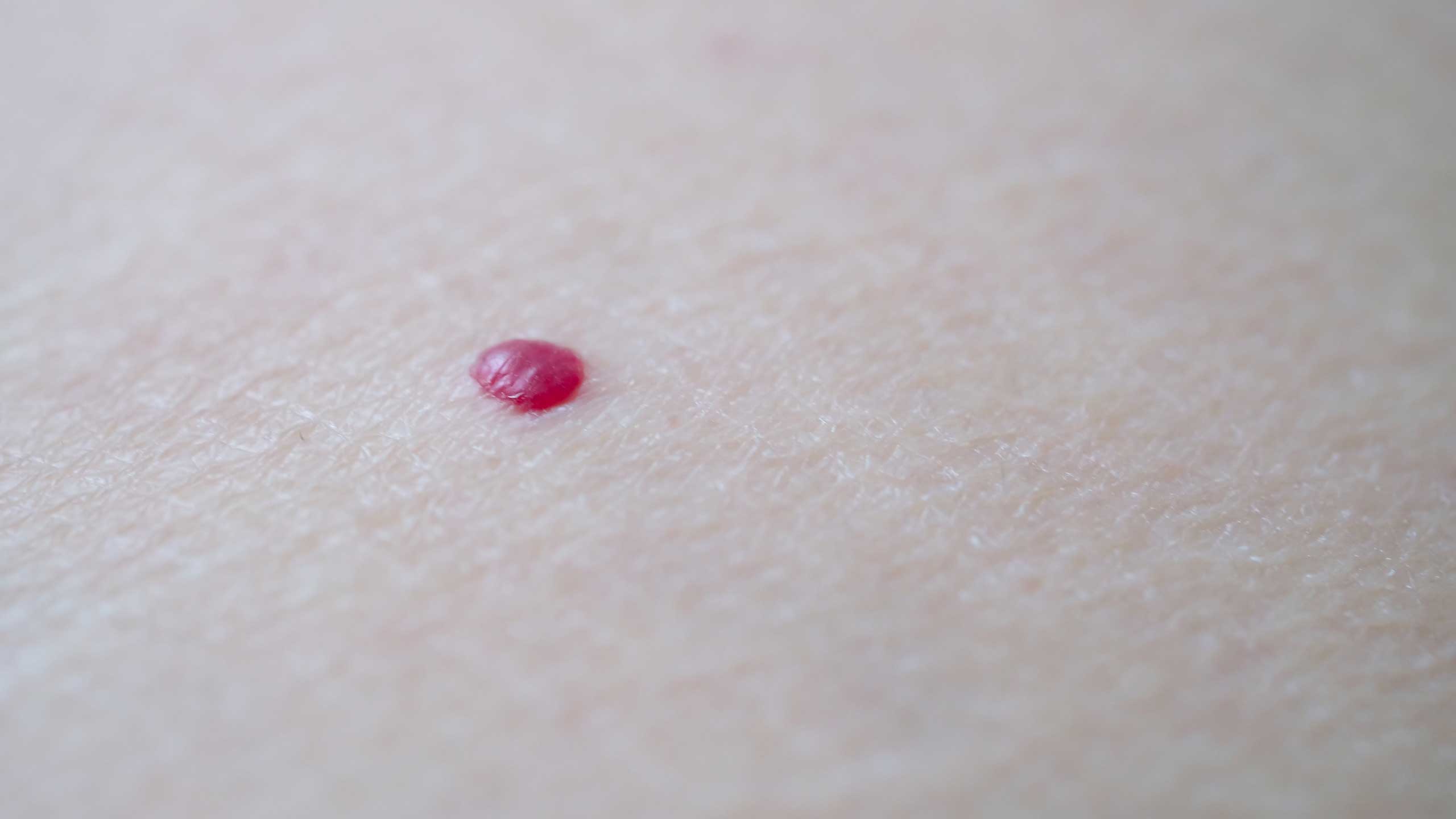
What are those bright red spots called cherry angiomas that show up on the chest or back? A clear, research-backed guide to why they increase with age, how to tell them apart from moles, warts, and purpura, whether pulsed dye, KTP, or long-pulsed Nd:YAG laser or electrocautery works best for removal, how to minimize scarring and dark marks, and when it's time to see a doctor.
By Dr. Kim

Tiny Facial Bumps: How to Tell Flat Warts, Milia and Skin Tags Apart, and How to Treat Them
The small bumps that show up on the face can look alike, but flat warts, milia, and skin tags have different causes and different treatments. Here is how to tell the three apart at a glance, the right CO2 and Er:YAG laser or electrocautery approach for each, how common they are, how they tend to recur, and real evidence on why removing them at home is risky.
By Dr. Lee
Gummy Smile Botox Effects, Duration, and Side Effects
A gummy smile happens when your gums show more than usual as you smile, and an overactive lip-lifting muscle is one of the most common causes. Botox works by slightly reducing the strength of that muscle so your lip doesn't rise as high when you laugh. Here's how to tell whether muscle is really the cause, plus how long the results tend to last.
By Dr. Lee