Back Acne: Causes, Treatment and Telling Fungal Folliculitis Apart
By Dr. Lee9 min read
Bumps on the back or shoulders are hard to check in a mirror, which makes them all the more frustrating. Plenty of people get their facial acne mostly under control with topicals, only to find that acne on the back just won't budge. The back and chest really do behave differently from the face, so the same medication can work in one place and barely touch the other. On top of that, what looks like acne on the back is sometimes actually a fungal infection instead, so figuring out the real cause is the first step. The good news is that back acne has plenty of options, from washes and topical creams to oral medication and in-office treatments. Once the cause is identified and the routine is kept up, back acne can clear without leaving scars.
Why is back acne harder to clear than facial acne?
Back acne is common. Roughly half of people with facial acne also have breakouts on the back or chest, and it tends to show up slightly more often in men. Yet even though it's the same condition, the back is a lot harder to manage than the face.
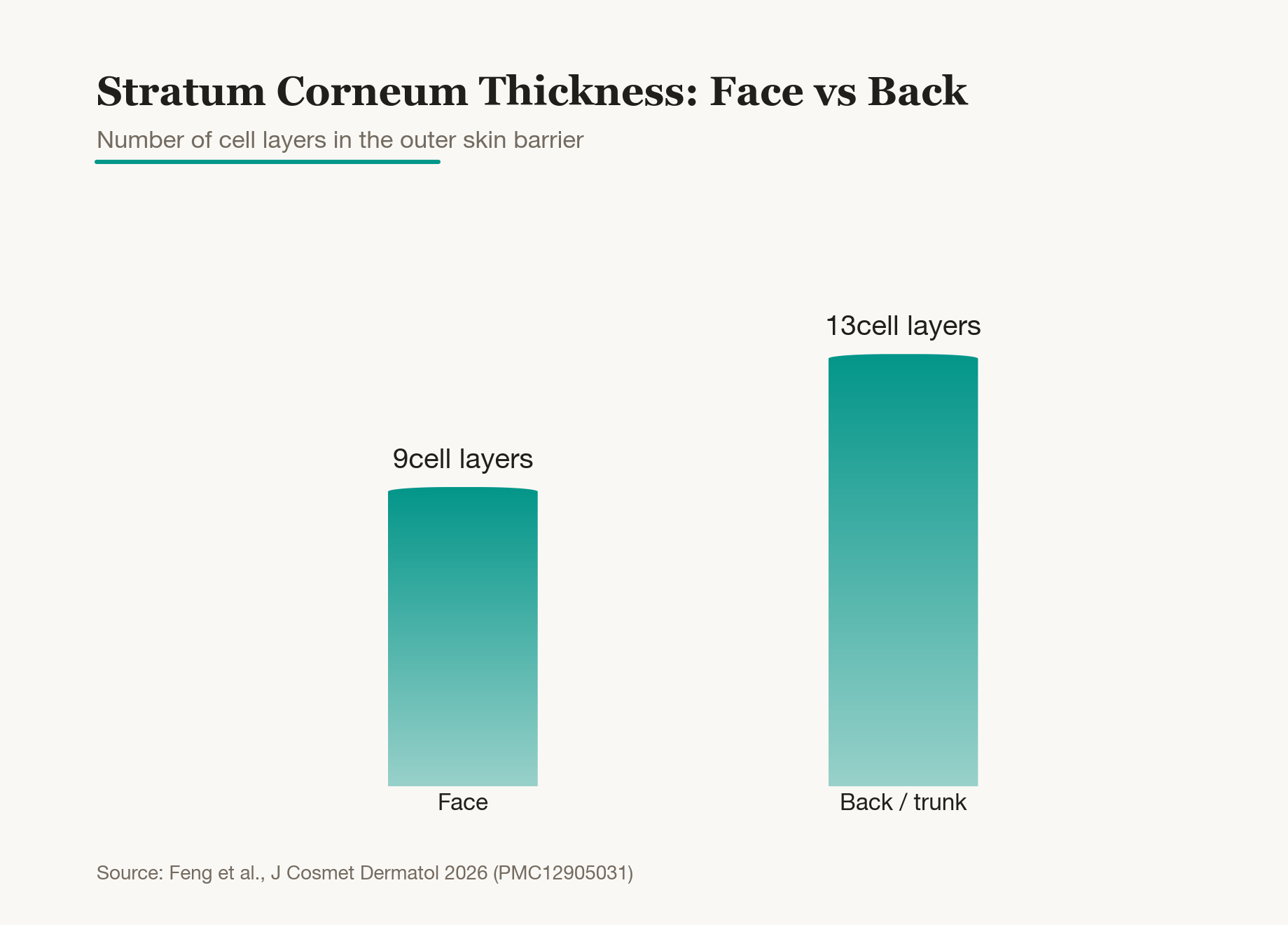
The biggest reason comes down to the skin itself. The outer layer of skin on the back, the stratum corneum, is thicker than on the face. As the chart above shows, the face has about 9 layers compared to roughly 13 on the back, so topical medication simply takes longer to reach the pores underneath. That means consistency matters even more here.
Lifestyle factors add to the problem. The back is constantly rubbed and pressed by clothing, which creates friction, and poor airflow lets sweat build up and pores clog more easily. That's also why breakouts tend to cluster right where a backpack strap or workout gear presses against the skin. And since it's hard to reach, applying medication evenly is its own challenge.
Lesions on the back also tend to run deeper and spread wider, which raises the risk of scarring compared to the face. About 1 in 10 people ends up with scarring, and raised, keloid-type scars are especially common here. The flip side is that starting the right treatment early, matched to the actual cause, is the best way to prevent that scarring in the first place.
If medicine doesn't help, could it be fungus?
| Feature | Acne | Fungal Folliculitis |
|---|---|---|
| Itching | Usually none | Itchy |
| Lesion size | Varies | Uniform |
| Blackheads | Present | Absent |
| Common sites | Face, back, chest | Back, shoulders, chest |
| Effective treatment | Acne medication | Antifungal |
If bumps on your back just won't respond to acne medication no matter how much you apply, they may not be acne at all. Malassezia folliculitis, a fungal infection, is one of the most common culprits. Malassezia is actually a common yeast that naturally lives on our skin. It thrives on sweat and oil, and when it overgrows inside the follicles, it produces those small, bumpy breakouts.
There are a few ways to tell it apart. As the table above shows, fungal folliculitis tends to appear as uniformly sized bumps that crop up in clusters, and above all, it's itchy. It also lacks the blocked comedones, or blackheads, typical of acne. It's known to flare up after heavy sweating, in humid weather, or following a long course of antibiotics.
The most important difference is which medication actually works. Antibiotics commonly used for acne have no effect on fungal infections. In fact, by reducing bacteria on the skin, antibiotics can sometimes clear the way for the fungus to grow even more. Malassezia folliculitis is treated with antifungals instead. Ketoconazole-based shampoos or creams are the go-to option, typically lathered on the back, left for a few minutes, then rinsed off. For cases that are widespread or slow to resolve, a short course of an oral antifungal like itraconazole may also be used.
So if your back breakouts are unusually itchy, fairly uniform in size, and not responding to typical acne treatment, it's worth checking whether a fungal infection is behind it. In the clinic, this is diagnosed fairly easily, either by scraping a bit of skin for a microscope exam or by using a Wood's lamp. Once the right cause is identified, recovery tends to be quick.
Cleansers and retinoids to use at home
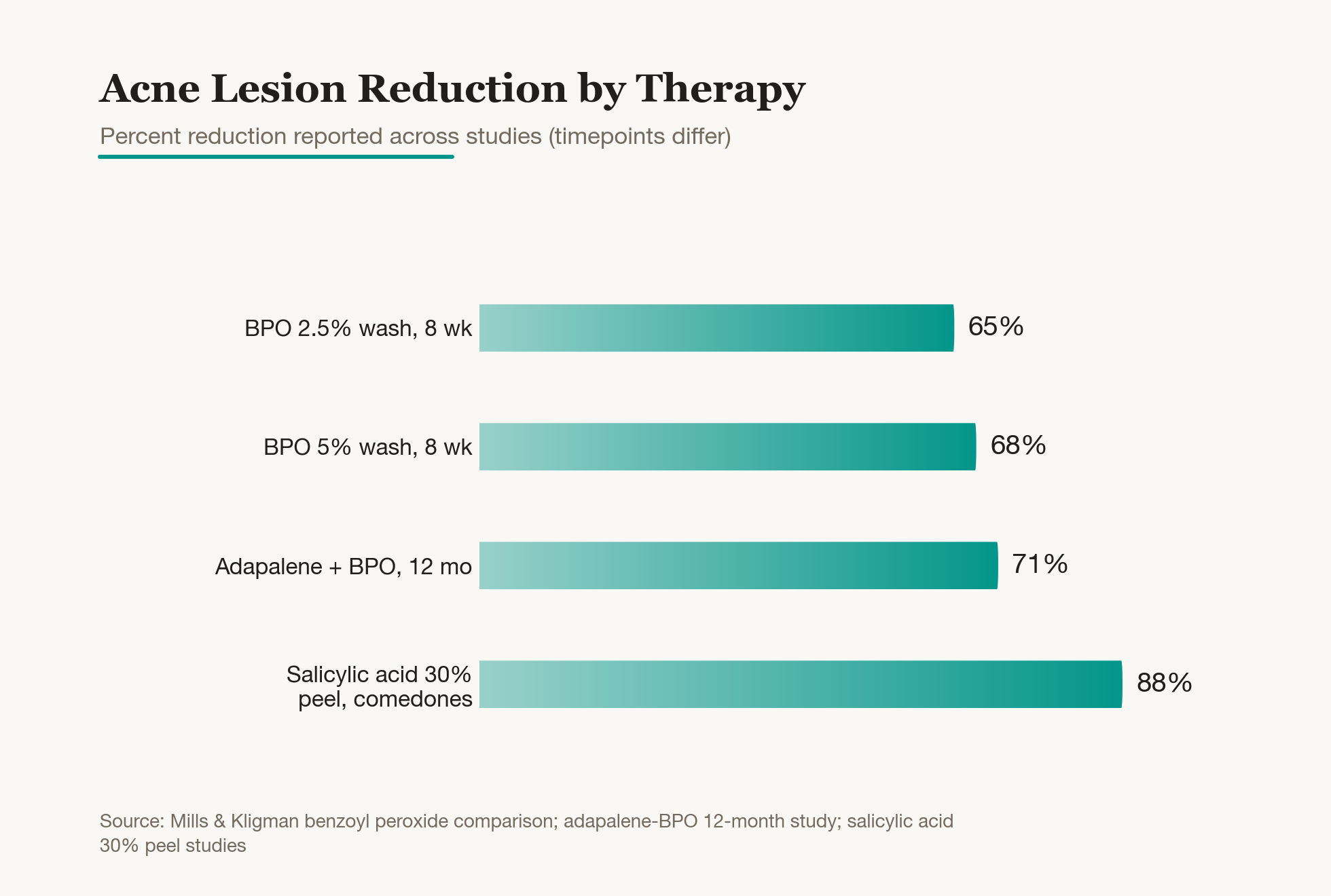
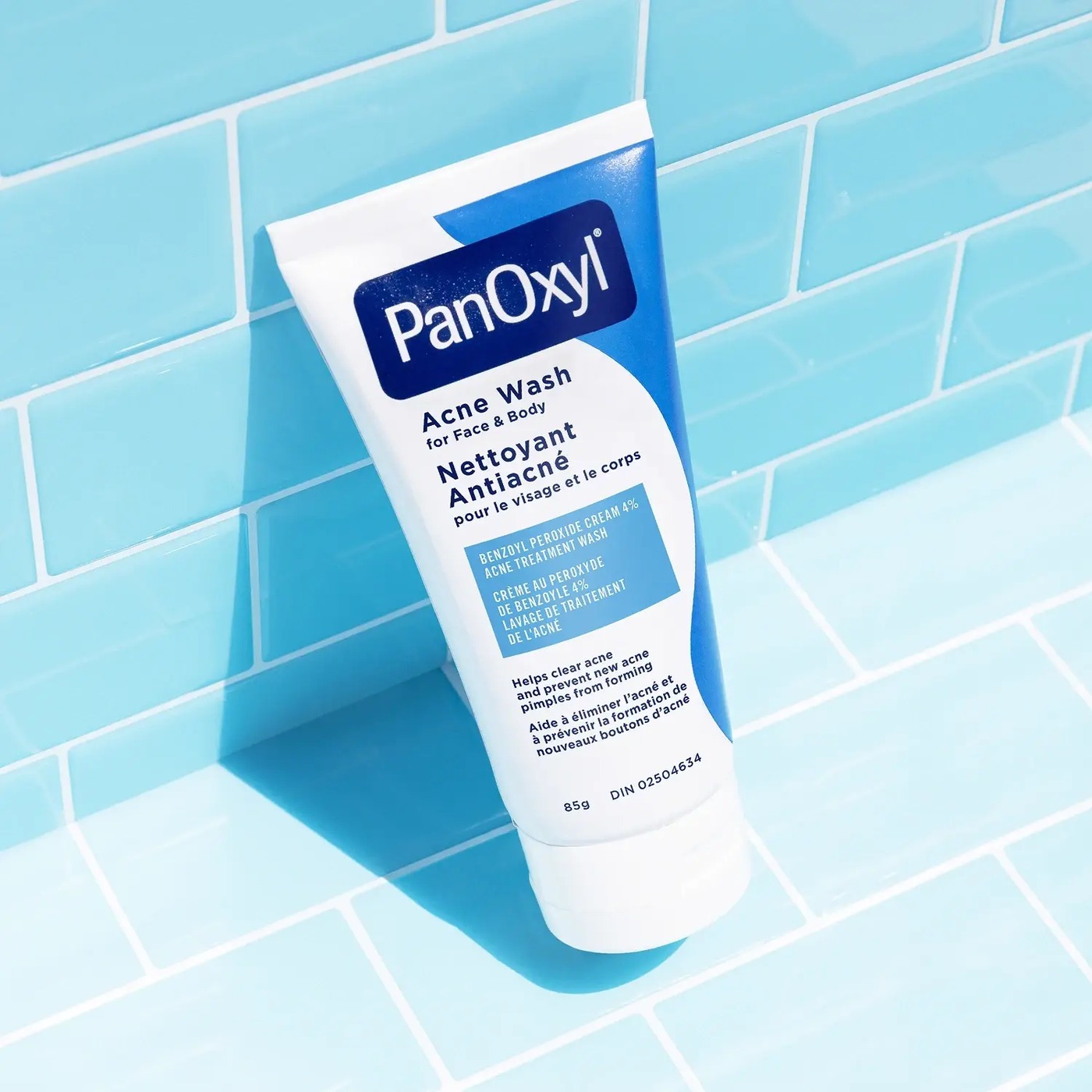
If it really is acne, the first step is topical treatment at home. A benzoyl peroxide wash is usually the top pick. It reduces the bacteria that drive acne, and in one study, bacterial counts dropped to below 10% of baseline after 8 weeks, with acne lesions falling by 65 to 68%, as shown in the chart above. A rinse-off wash is more practical than a leave-on cream for covering a large area like the back. For best results, let it lather for about a minute before rinsing.
Adding a topical retinoid like adapalene builds on that effect. Adapalene works by unclogging pores, addressing the root cause of acne rather than just the surface. In a year-long study combining it with benzoyl peroxide, overall acne lesions dropped by about 71%. Applying a thin layer of both at night is a commonly recommended combination.
If clogged pores and rough texture are a concern, salicylic acid is another good option. Because it's oil-soluble, unlike water-soluble exfoliants, it can penetrate deep into oil-clogged pores and clear them out. It comes in body wash or spray form, which makes it easy to use on the back.
Since the back is large and hard to reach, application technique matters too. After showering to wash off sweat and oil, using a long-handled applicator or a spray product designed for the back helps get even coverage.
Which oral medication is used for severe back acne?
For back acne with deep, firm nodules or cysts that topical treatment can't handle, oral isotretinoin becomes an option. Derived from vitamin A, it shrinks the oil glands at the root of acne and dramatically reduces sebum production. Unlike topical treatment, it works throughout the body, addressing acne on the back and chest along with the face.
Its effect tends to be strong. Multiple studies report high rates of near-complete clearing. That said, truncal acne on the back and chest tends to recur slightly more often than facial acne. Because of this, when truncal acne is severe, particularly in younger men, reaching a generous cumulative dose is generally recommended.
Dosing follows a standard protocol. Patients typically take 0.5 to 1mg per kg of body weight per day, with the goal of reaching a cumulative total of 120 to 150mg per kg by the end of treatment. Studies show that reaching this cumulative dose is linked to fewer relapses down the line. Continuing treatment for about two more months after the skin clears also helps prevent recurrence.
Being a powerful medication, it does come with a few things to monitor. Dry lips and skin are common side effects, and most importantly, it must never be taken during pregnancy. For that reason, treatment is managed under a doctor's supervision with regular blood tests and pregnancy prevention protocols in place.
Procedures you can get at a clinic
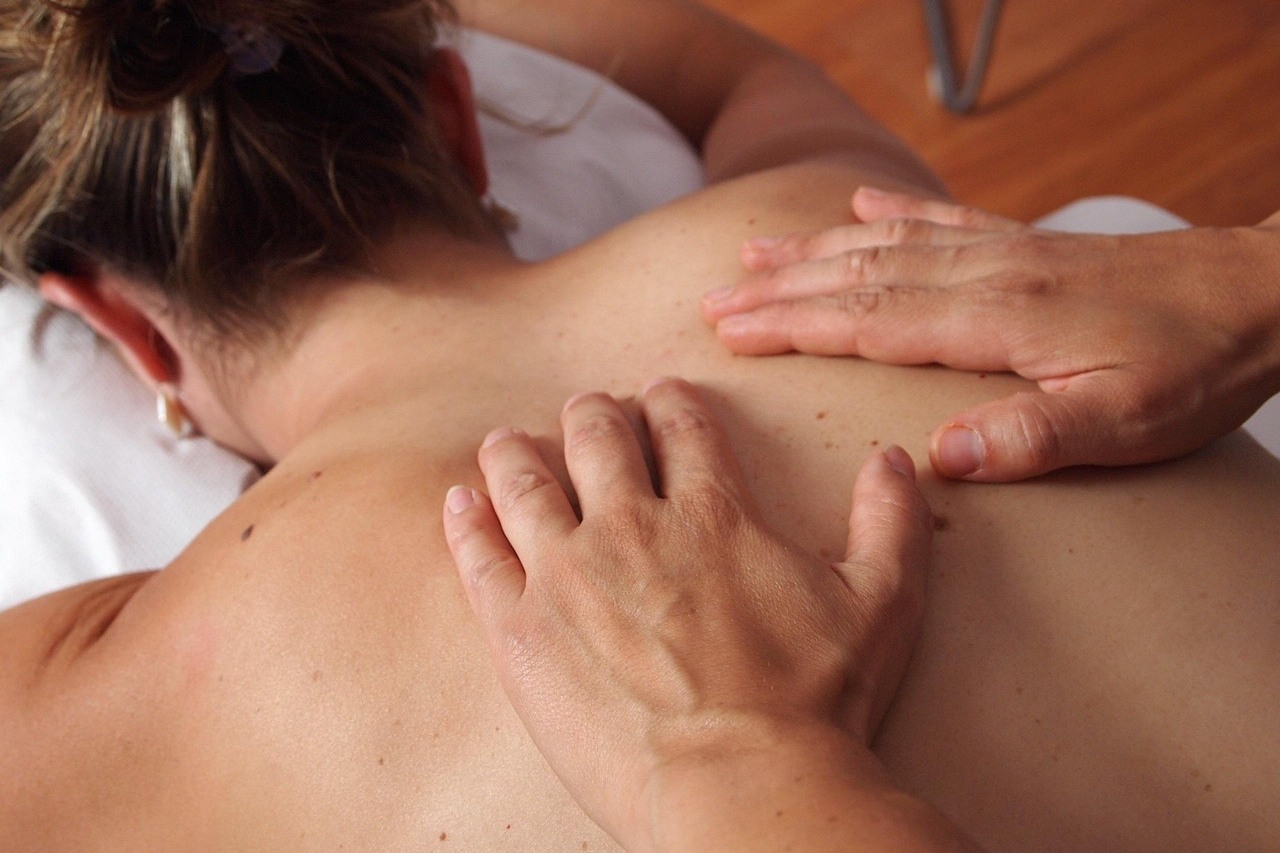
In-office treatments can reinforce a home care routine. Salicylic acid peels are one of the most common options. They dissolve clogged pores and surface buildup, and in a study using a 30% concentration repeated over time, clogged comedones dropped by around 88%. A combination peel adding mandelic acid has been reported to clear comedones by about 90%.
Peels offer one particularly welcome benefit for back acne: they also help clear away the dark spots and old, built-up skin cells left behind after breakouts heal. Because pigmentation tends to linger longer on the back than on the face, this can be a real help if those marks are a concern.
Laser and light-based treatments are another option. They work by targeting the oil glands and acne-causing bacteria to calm inflammation, and are sometimes combined with topical treatment or peels. That said, research specifically on back acne isn't as extensive as for the face, so these are often used alongside other treatments depending on how the skin responds.
Most people see improvement over a series of sessions rather than from a single treatment. If scars or pigmentation have already set in, an additional targeted treatment may be added. Since the right approach depends on the type and depth of the acne, it's best determined through a consultation.
Habits to prevent recurrence and treatment time
Back acne is a common concern that responds well once it's approached with the right cause in mind. If the bumps are uniform in size and especially itchy, it's worth checking for a fungal cause first. If it's regular acne, starting consistently with a benzoyl peroxide wash and a topical retinoid is a solid foundation. If deep nodules are present or scarring is a concern, oral medication and in-office treatment are worth discussing together.
Daily habits play a big role too. Try to shower soon after sweating, and avoid staying in damp workout clothes for long stretches. Loose, breathable cotton clothing helps cut down on friction and trapped sweat. Scrubbing the back hard while washing tends to cause more irritation, so a gentler touch works better.
Above all, patience matters. Because the skin on the back is thicker and harder for medication to reach, visible change usually takes about 8 to 12 weeks. The real payoff shows up when the routine is kept up past the two- or three-month mark.
With back acne, identifying the cause comes first, and consistency comes next. Starting early, before scarring sets in, tends to bring better results, so if it's dragging on, it's worth getting a professional opinion rather than managing it alone.
Was this helpful?
About this article
Written by a practising aesthetic physician and intended for general education — not a substitute for individual medical advice.
Read next
Cherry Angioma: Causes, Symptoms, Laser Treatment and When to See a Doctor
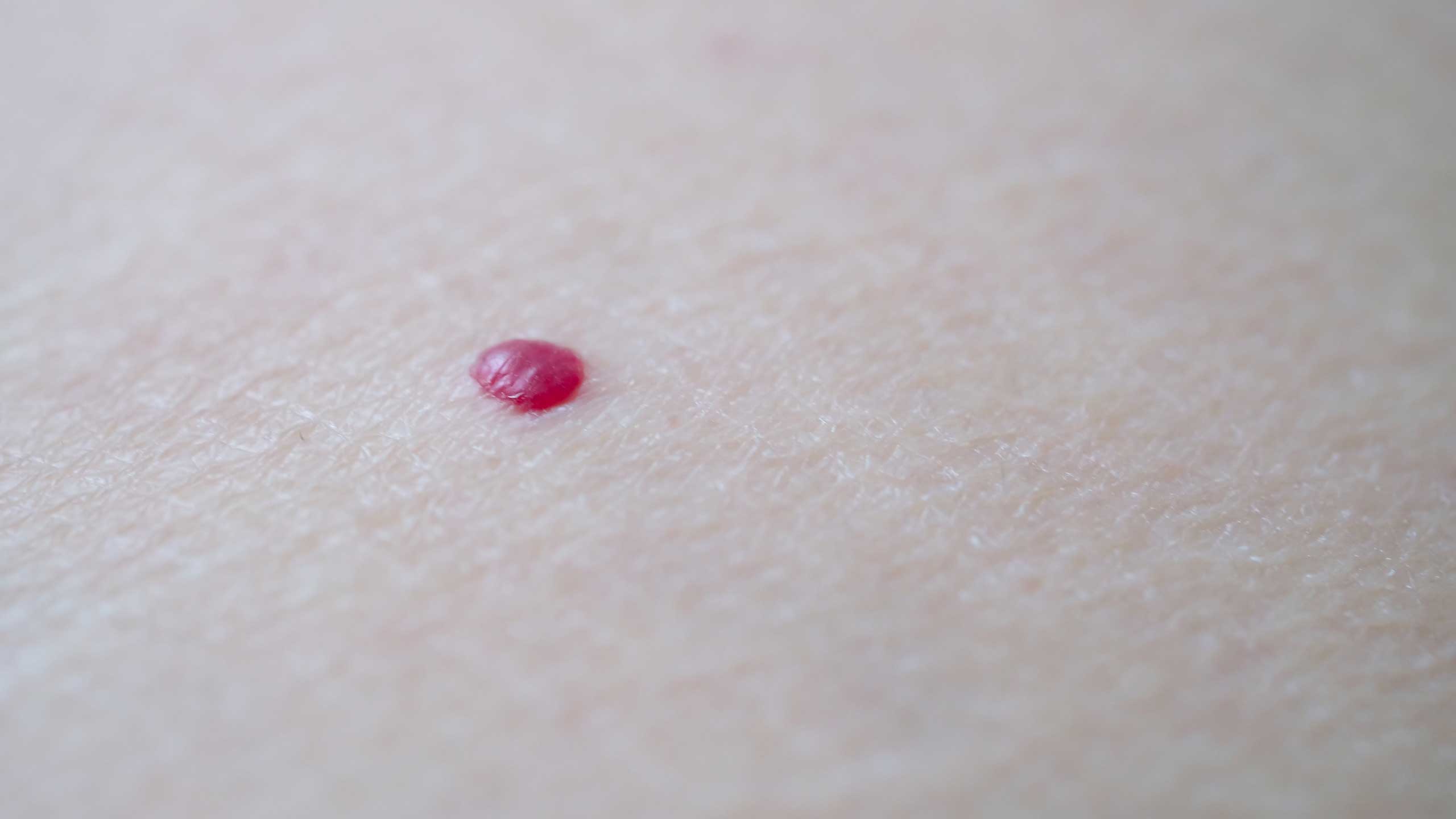
What are those bright red spots called cherry angiomas that show up on the chest or back? A clear, research-backed guide to why they increase with age, how to tell them apart from moles, warts, and purpura, whether pulsed dye, KTP, or long-pulsed Nd:YAG laser or electrocautery works best for removal, how to minimize scarring and dark marks, and when it's time to see a doctor.
By Dr. Kim
Men's Acne Causes: Why Is It Bigger and More Scarring?
Men's acne often lingers well past the teenage years and tends to spread across wide areas like the back and chest. Here is a look at what sets men's acne apart, from how testosterone stimulates the oil glands to shaving, muscle supplements, and delayed treatment.
By Dr. Kim
Seborrheic Dermatitis of the Scalp: Where to Start Treatment and How to Reduce Relapses
Scalp seborrheic dermatitis keeps coming back with flaking, redness, and itching within days of washing. Here is an easy, research backed rundown starting with Malassezia, the yeast behind it, then ranking treatments by evidence strength from antifungal shampoo and topical anti-inflammatories to oral medication and scalp scaling, plus maintenance therapy to prevent relapse and what the evidence actually says about regenerative treatments.
By Dr. Lee