Azelaic Acid: Effects, How to Use It and How Long Acne Marks Take to Fade
By Dr. Kim7 min read
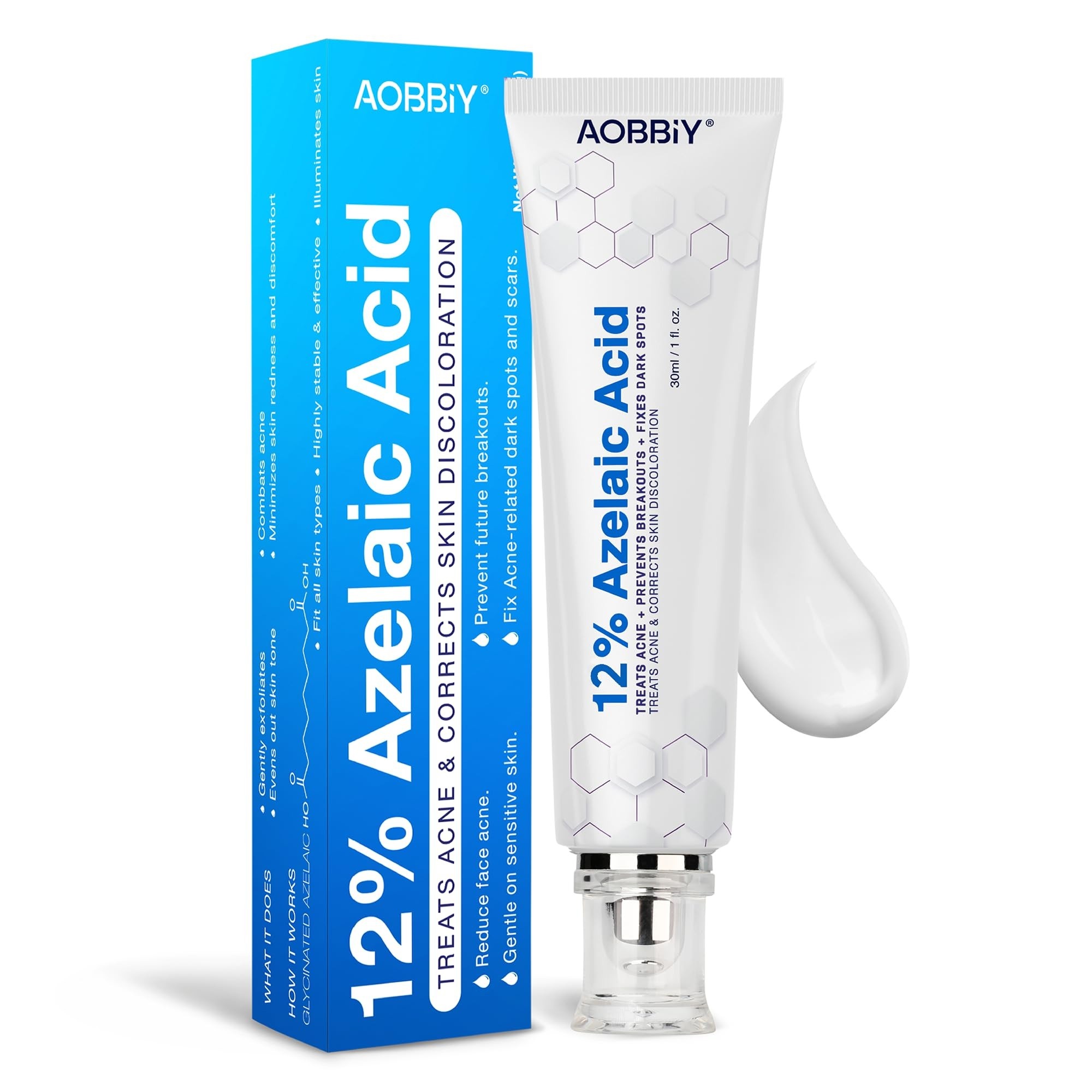
The red or brown mark left behind after a breakout often outlasts the breakout itself. Even once the inflammation settles, the resulting pigmentation can linger for months and keep bothering you. Azelaic acid is one of the few ingredients that goes after both problems at once, the active breakout and the mark it leaves behind.
This ingredient occurs naturally in grains and even in the bacteria that live on our own skin, and it was first approved as an acne treatment. During treatment, doctors noticed that redness and pigmentation improved right along with the breakouts, and azelaic acid later picked up a second approval for rosacea, the chronic condition that causes persistent facial redness and visible blood vessels. Today it is prescribed for both purposes. Here is how one ingredient manages to calm two very different skin problems at once.
An ingredient that went from grain to medicine
Azelaic acid is an organic acid that occurs naturally in wheat, barley, and rye, as well as in Malassezia, a yeast that normally lives on our skin. That means it is not some newly synthesized lab compound, but closer to a naturally occurring substance that has been purified and refined into a medication.
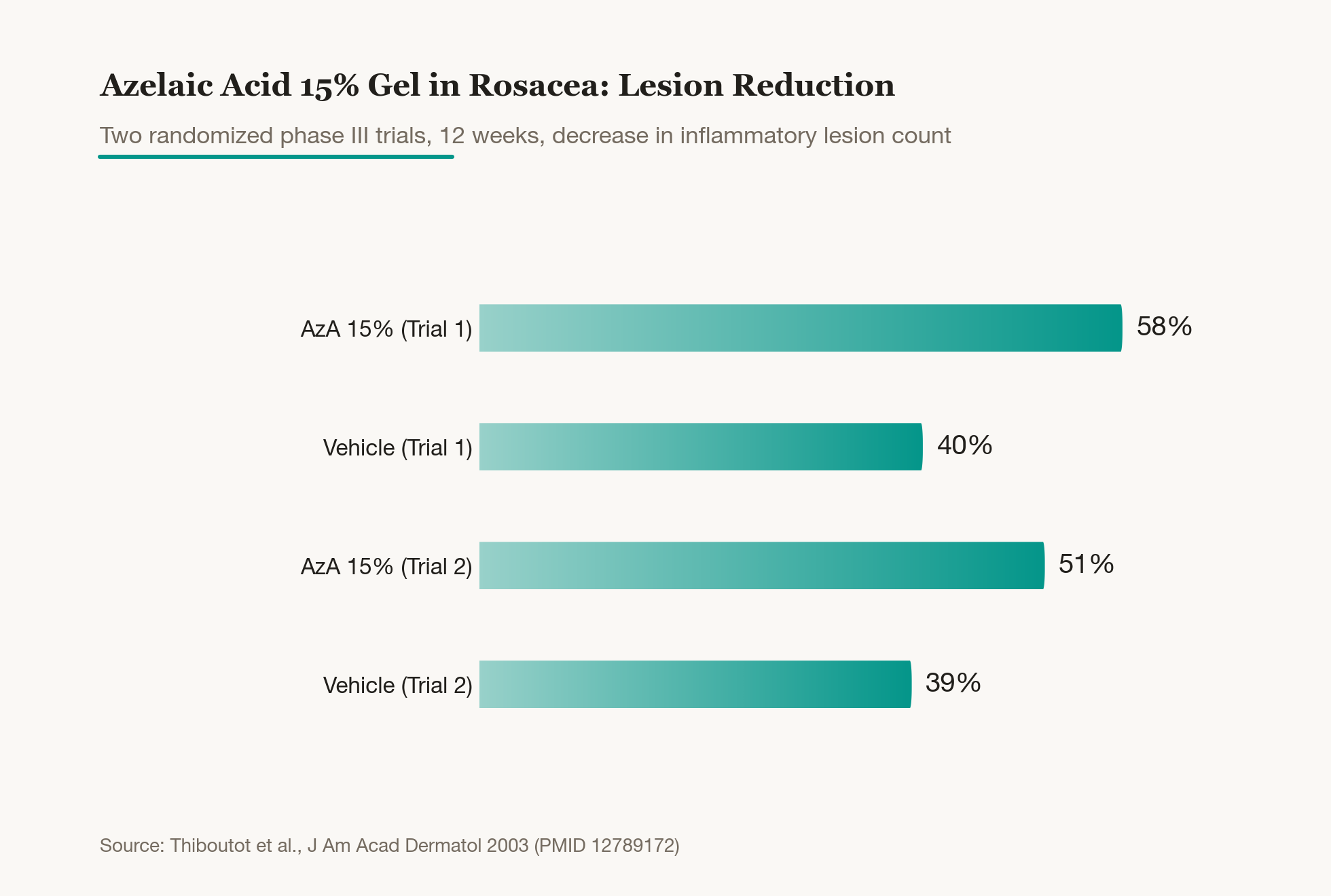
It was first approved as a 20% cream for acne. While treating acne patients, dermatologists noticed that redness and pigmentation improved alongside the breakouts, and a 15% gel formulation later received approval for rosacea as well. Today it shows up in acne creams, rosacea treatments, and pigmentation products alike.
The reason one ingredient covers so much ground is simple. Azelaic acid combines anti-inflammatory action, antibacterial action, and the ability to block the enzyme that produces pigment, all in a single molecule.
How does it help prevent acne?
Acne forms when dead skin cells clump together and clog a pore, and then C. acnes bacteria multiply inside that clogged environment and trigger inflammation. Azelaic acid interrupts both ends of that process.
First, it prevents the buildup that clogs pores in the first place. When the cells lining the pore wall are produced too quickly and do not shed properly, they pile up and narrow the opening. Azelaic acid normalizes the rate at which these cells are produced and shed, which means there is simply less opportunity for a clog to form.
At the same time, it suppresses the growth of C. acnes. This bacteria thrives in the oily environment inside a clogged pore, and azelaic acid disrupts the process the bacteria uses to generate energy, reducing its numbers. Fewer bacteria means less of the inflammation they were triggering.
How do acne marks fade?
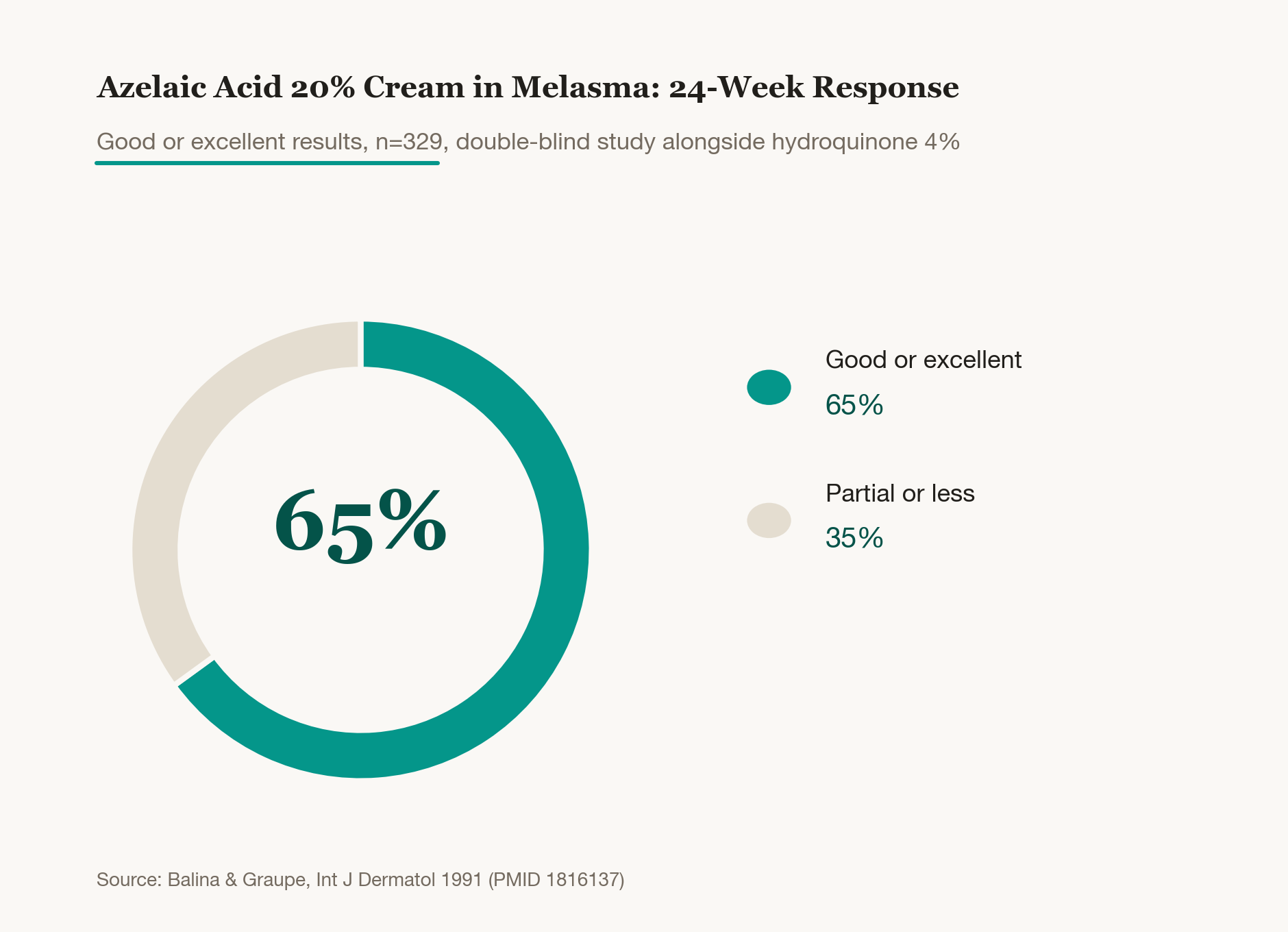
The brown mark that appears after a breakout heals shows up because inflammation makes melanocytes, the cells in the skin that produce pigment, overactive, so they pump out excess pigment. Azelaic acid slows down that pigment-making process itself.
Pigment can only be produced with the help of an enzyme called tyrosinase. Think of tyrosinase as a machine on a factory line that converts raw material into finished pigment. Azelaic acid essentially sits down in that machine's operating seat, so the real raw material never gets a chance to take its place. That slows the rate at which new pigment gets made.
Notably, this ingredient selectively suppresses melanocytes that are already overactive while leaving normally functioning ones alone. That is why it is described as gradually fading only the marks that have become unusually dark, without the side effect of lightening skin below its natural tone.
Why do marks shrink as inflammation calms?
Inflammation is both a driver of acne and a reason pigmentation gets darker. At an inflamed site, immune cells release free radicals, unstable oxygen particles that attack cells, and those free radicals go on to stimulate melanocytes into producing even more pigment.
Azelaic acid also helps clear out these free radicals. It works a bit like dousing a fire with water so the flames cannot spread to the areas nearby. Fewer free radicals means less inflammation overall, and that also breaks the chain reaction where inflammation triggers melanocytes into overproducing pigment.
That is why, when you apply azelaic acid, the red inflammation of active acne and the brown marks left behind afterward often do not improve separately. They tend to fade together, through the same underlying mechanism.
How do uses differ by concentration?
Azelaic acid is used a little differently depending on its concentration and formulation.
- 20% cream: The most common concentration prescribed for acne. Its higher strength gives it stronger control over dead skin buildup and bacteria, so it is typically used for inflammatory acne.
- 15% gel: Mainly used for rosacea and pigmentation management. Gel formulations absorb faster than creams, which makes them relatively gentler for reactive, easily flushed skin.
- 10% or lower serums: Lower-strength options available without a prescription. These cause less irritation but also work more slowly, so they are often used long-term for prevention and maintenance.
Higher concentrations work faster, but skin also needs more time to adjust to them. That is why first-time users are advised to start with a lower concentration and increase it based on how their skin responds. Because different concentrations of the same ingredient build up irritation at different rates, it is safer to transition between products in sequence rather than layering a new one on top of an old one during an overlap period.
What to know the first time you apply it
Azelaic acid is considered a relatively gentle ingredient, but how you use it still shapes the results.
- Start with a small amount: Early on, before skin has adjusted, some stinging or mild redness can occur. Starting small keeps any reaction mild enough to tolerate easily.
- Always pair it with sunscreen: Even a pigmentation-targeting ingredient cannot do its job if melanocytes keep getting reactivated by UV exposure. Skip sunscreen, and marks that took effort to fade can darken right back up.
- Space it out from other exfoliating actives: Combining it with retinol or AHAs, fruit-acid exfoliants, at the same time can stack irritation and destabilize the skin barrier. Using them at different times of day is the usual recommendation, especially early on.
- Stick with it consistently: Pigment does not appear overnight, it builds up gradually over weeks, so it also takes time to clear. Stopping partway through can let pigment production, which had been kept in check, ramp back up again.
Do results appear after a few weeks?
Azelaic acid is not an overnight fix, it works by accumulating gradually. Judging its effect after just a few days of use is too early.
Most reports note that redness from active acne starts improving first, typically around the 4-week mark, since inflammation is the part that begins settling earliest. Pigmentation that has already set in, on the other hand, responds more slowly. In one study where a 15% azelaic acid gel was used for 16 weeks, pigmentation showed noticeable fading over that period.
Based on that, dermatologists generally advise sticking with it consistently for at least 12 to 16 weeks before expecting to see a real change in pigmentation. Stopping earlier because it "doesn't seem to be working" often just means you stopped before the response had a chance to show up. Since new pigment keeps forming unless it is actively kept in check, it helps to keep using azelaic acid, even at a reduced frequency, after you see clear improvement, rather than stopping altogether, to prevent marks from darkening again.
References
Korean Dermatological Association, American Academy of Dermatology (AAD), and Ministry of Food and Drug Safety (MFDS).
Was this helpful?
About this article
Written by a practising aesthetic physician and intended for general education — not a substitute for individual medical advice.
Read next
Niacinamide Benefits: How It Brightens and Repairs the Barrier, and the Right Concentration
Niacinamide works by blocking the path melanin travels along, fading discoloration, while also helping skin produce more ceramide, the lipid that keeps the barrier intact and calms redness and sensitivity. Here is how both effects happen at once, and what concentration actually makes sense.
By Dr. Lee
Brown Acne Marks: How Long Do They Take to Fade?
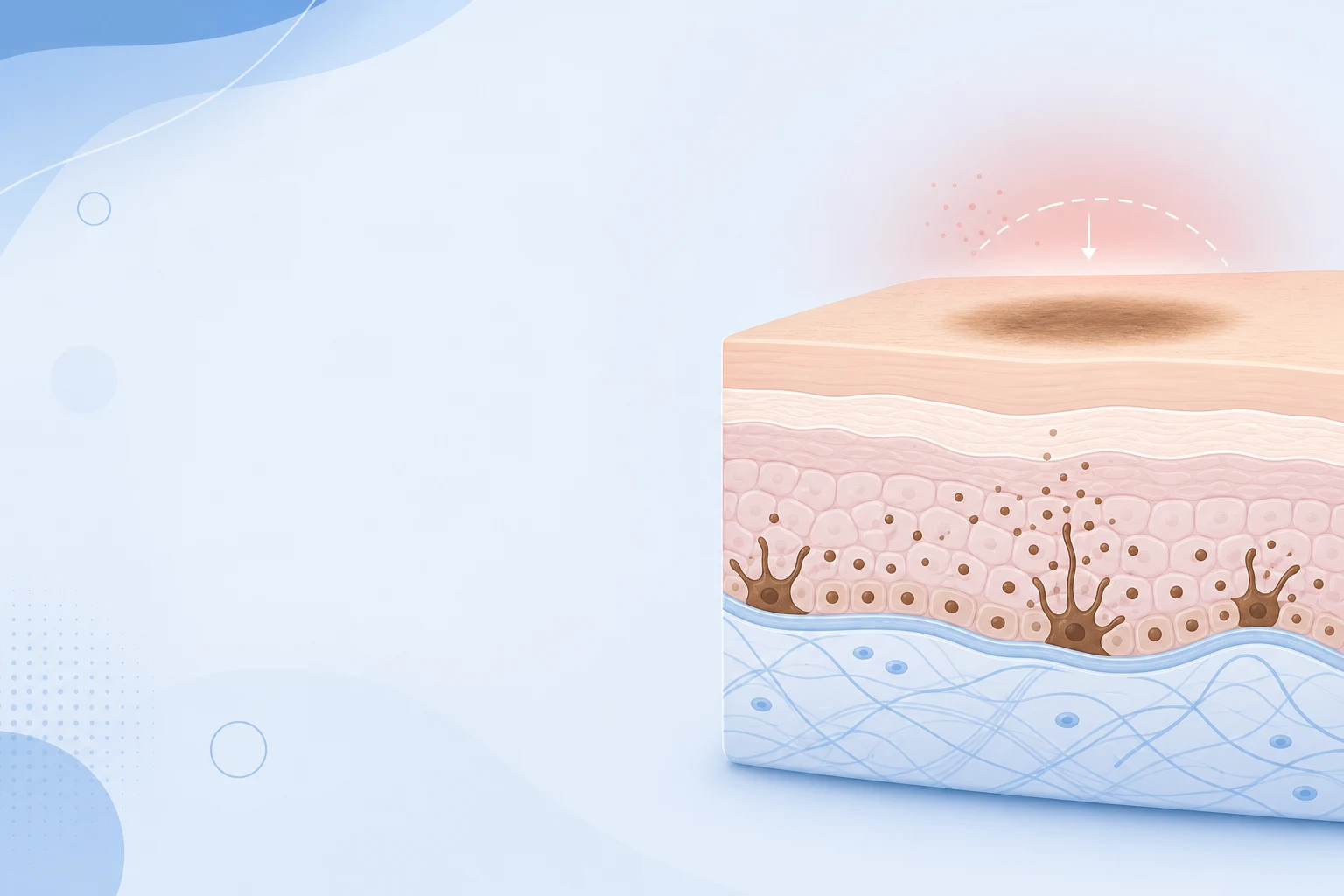
The brown mark left behind after a pimple clears isn't a scar. It's melanin that got overproduced during inflammation and settled into the skin. How long it takes to fade depends on whether that pigment stayed in the epidermis or sank into the dermis, and the right ingredients and sun protection can speed the process along.
By Dr. Lee
Red Acne Marks: Causes, How to Tell Them Apart, and Laser Treatment
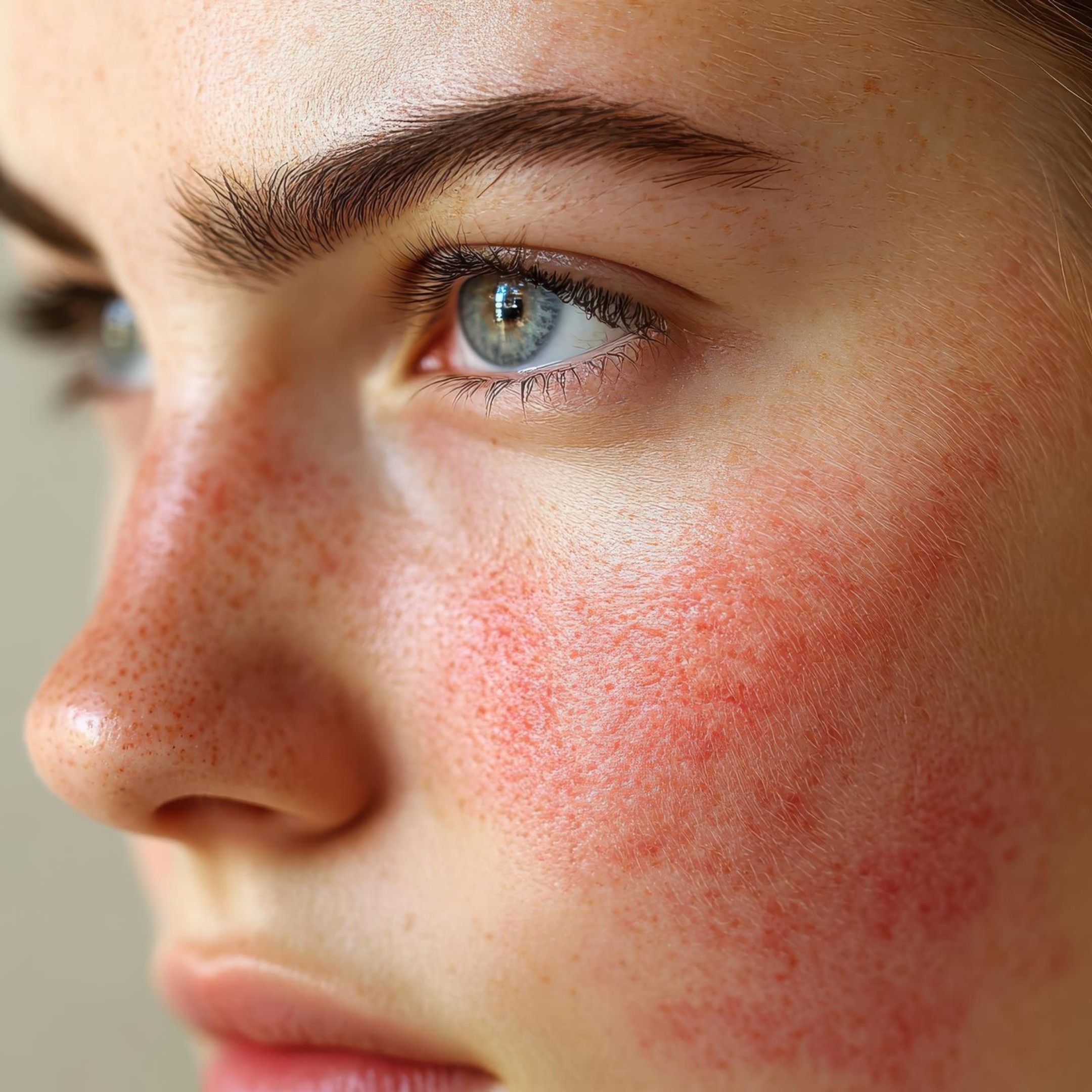
The red marks left behind after acne clears up often aren't pigment at all, but dilated blood vessels showing through the skin. Since the cause and the way they fade differ from pigmentation, they call for a different care approach. Here's how to tell the two apart and how each one recovers.
By Dr. Kim