Atiere Filler: Features, Crosslinking, Lidocaine and Aftercare
By Dr. Lee7 min read
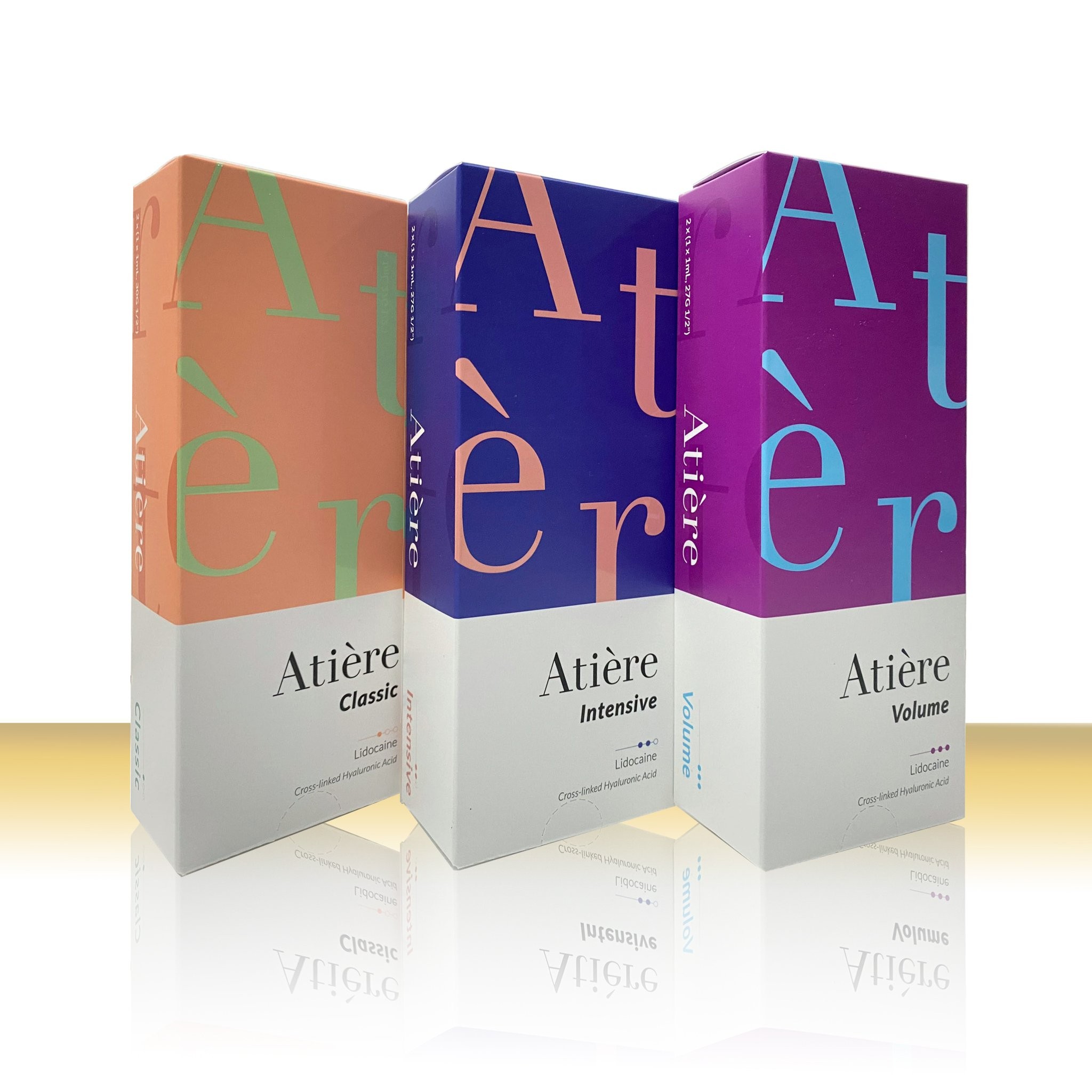
Atiere is a hyaluronic acid filler made by Medytox. Hyaluronic acid is already familiar to us since it naturally occurs in our skin and joints, but on its own it flows like thin water and breaks down in the body within days. To use it in a treatment, the chains need to be linked together into something as firm as a gel. That process is called crosslinking.
Even with the same hyaluronic acid, the outcome depends entirely on how the crosslinking is carried out. How the chains are linked, and how tightly they are bound, decides how firmly the filler holds its shape under the skin and how long it lasts. This crosslinking method is exactly what Atiere highlights as its strength. Still, the word crosslinking often sounds technical. Here is a plain, step by step explanation of what gets linked and how.
What kind of filler is Atiere?
Atiere is a hyaluronic acid filler developed with proprietary technology by the Korean pharmaceutical company Medytox. The raw hyaluronic acid itself is no different from what other fillers use. Since it holds moisture within the skin, injecting it both builds volume at the site and adds a boost of hydration.
Raw hyaluronic acid flows like water, though, so injecting it as is would let it spread and get absorbed almost immediately. That is why hyaluronic acid used in fillers always goes through processing. Much like weaving threads into a net, the hyaluronic acid chains are chemically bound together into a gel. This netlike structure is what allows the filler to hold its shape and last at the injection site. What sets Atiere apart from other products is the proprietary technique it applies to weaving this net.
What is crosslinking, and why is it needed?
Crosslinking might sound like an unfamiliar term, but the principle is similar to knitting. A single strand of thread stretches and unravels under any pull, but woven together into fabric, threads hold their shape even when pulled. Hyaluronic acid works the same way. Each chain on its own is thin and weak, but linked together, the chains form a structure as sturdy as a net.
The substance that acts as glue, linking chain to chain, is called a crosslinker, and BDDE is the one most commonly used in hyaluronic acid fillers. As BDDE binds the hyaluronic acid chains together, the once watery substance takes on a gel-like form. A structure woven this way resists being broken down by the enzymes in the body that normally clear hyaluronic acid, so it holds its place far longer than the uncrosslinked raw material. A tighter net is firmer, while a looser weave leans softer, and adjusting exactly how this net is woven is where the technical skill differs from one filler maker to another.
How is the HEART method different?
Atiere states that it applies its own proprietary technique, named HEART. The core of this technique is combining two physical properties, elasticity and viscosity, in an ideal ratio. The two words may sound similar, but they describe genuinely different qualities.
Elasticity refers to the force that pulls something back into its original shape after being pressed. It helps to think of a spring bouncing back after being pushed down. Viscosity, on the other hand, refers to how easily something flows, similar to the thick, sticky flow of honey or syrup. A filler with too much elasticity resists spreading under pressure, but it can feel stiff and unnatural to the touch, while a filler leaning too heavily on viscosity feels soft but spreads easily into surrounding tissue and loses its shape. Striking a balance between the two, rather than favoring one, matters a great deal, and Atiere explains that it put considerable effort into finding that balance point.
Why do elasticity and viscosity differ by area?
The ideal ratio of elasticity to viscosity differs by treatment area. Areas that need three-dimensional volume, such as the cheeks or chin, tend to benefit from higher elasticity, since it holds its shape better. These are areas exposed to a good deal of pressure.
By contrast, areas that keep moving with facial expressions, such as the lips or nasolabial folds, look unnatural if the filler is too firm. In these areas, a degree of viscosity that lets the filler settle softly into the tissue tends to give a more natural result. This is also why Atiere states that it designed a different elasticity to viscosity combination for each product in its lineup. Since different areas call for different physical properties, no single formulation can deliver a natural result everywhere.
How leftover crosslinker is washed out
BDDE is essential for linking hyaluronic acid chains together, but if it remains in the filler after the reaction is complete, it can cause problems. The body may recognize this leftover substance as a foreign material and respond with swelling or inflammation.
That is why the manufacturing process includes multiple stages of purification to wash out any BDDE left over after the crosslinking reaction. Atiere also states that it focused on minimizing this residual amount, and the more thorough the purification, the lower the likelihood of swelling or irritation after treatment. Crosslinking is an essential step that gives a filler its form, but how cleanly its traces are removed is also a key measure of safety.
Does lidocaine make it hurt less?
Atiere is premixed with lidocaine, a local anesthetic. During injection, patients can feel both the sting of the needle passing through the skin and the pressure of the gel-like filler pushing into the tissue.
With lidocaine already mixed into the filler, it dulls sensation at the site as soon as it is injected, so patients can expect noticeably less pain even without a separate numbing cream or anesthetic injection. For the practitioner, this also means moving straight into the procedure without an extra numbing step, which keeps the whole process running smoothly.
What standard is used to screen raw materials?
Atiere also points to a few standards it applies at the raw material stage. Which materials are used, and how they are screened, ties directly into the filler's overall safety.
- Fermentation without animal-derived media or enzymes: Excluding animal-derived substances when producing hyaluronic acid removes, at the source, the risk of allergies or infection that can come from animal-derived materials.
- Raw material listed with the US FDA Drug Master File: This means the raw material has passed a quality standard recognized internationally, giving an additional layer of verification for purity and safety at the raw material stage.
- Raw material certified by the European Directorate for the Quality of Medicines: This means the material meets the purity standards required by the European Pharmacopoeia, another point used to support the raw material's reliability.
These certifications do not directly demonstrate how well the finished product performs, but they matter as a way to confirm how thoroughly impurities were filtered out starting at the raw material stage.
What to watch for in the days after treatment
Even a filler with well done crosslinking and purification can produce different results depending on aftercare. The first few days after treatment are a relatively sensitive window, since the filler has not yet fully settled into the tissue.
During this period, it is best to avoid firmly massaging or pressing on the treated area, since this can push the filler out of position. Any initial swelling or bruising is generally described as settling naturally over time, though recovery speed varies from person to person. Sun exposure can also reduce the skin's own collagen and elasticity, so keeping up with sun protection, regardless of whether you have had a treatment, benefits overall skin care.
References
Korean Dermatological Association, American Academy of Dermatology (AAD), and Ministry of Food and Drug Safety (MFDS).
Was this helpful?
About this article
Written by a practising aesthetic physician and intended for general education — not a substitute for individual medical advice.
Read next
Under-Eye Hollow Filler: Effect and Side Effects, and the Tyndall Effect to Watch
The dark, sunken look under the eyes often comes less from pigment than from hollowing and the shadow it casts. Here's how the tear trough ligament and lost volume under the eye create that shadow, how a soft hyaluronic acid filler placed shallowly and sparingly smooths it out, why thin skin and the bluish Tyndall effect make this area tricky, and how long results actually last, all backed by real published numbers.
By Dr. Kim
Filler Aftercare: Managing Swelling and Bruising, and How Long It Lasts
After filler injections, your skin needs time for swelling and bruising to settle and for the product to find its place in the tissue. How you handle heat, pressure, and sun exposure during this window can affect both your results and how quickly you heal. Here is a stage-by-stage guide to the aftercare that actually matters.
By Dr. Kim
Lilied Sinmulgwang Effects and Duration, Including Aftercare
Lilied Sinmulgwang is a skin booster that injects purified hyaluronic acid straight into the dermis to hold onto water. Here is a principle-first look at how hyaluronic acid grips moisture and what actually happens beneath the skin after treatment.
By Dr. Lee