Atopic Dermatitis: Causes, How to Use Moisturizer, Ointments and Daily Care
By Dr. Kim7 min read
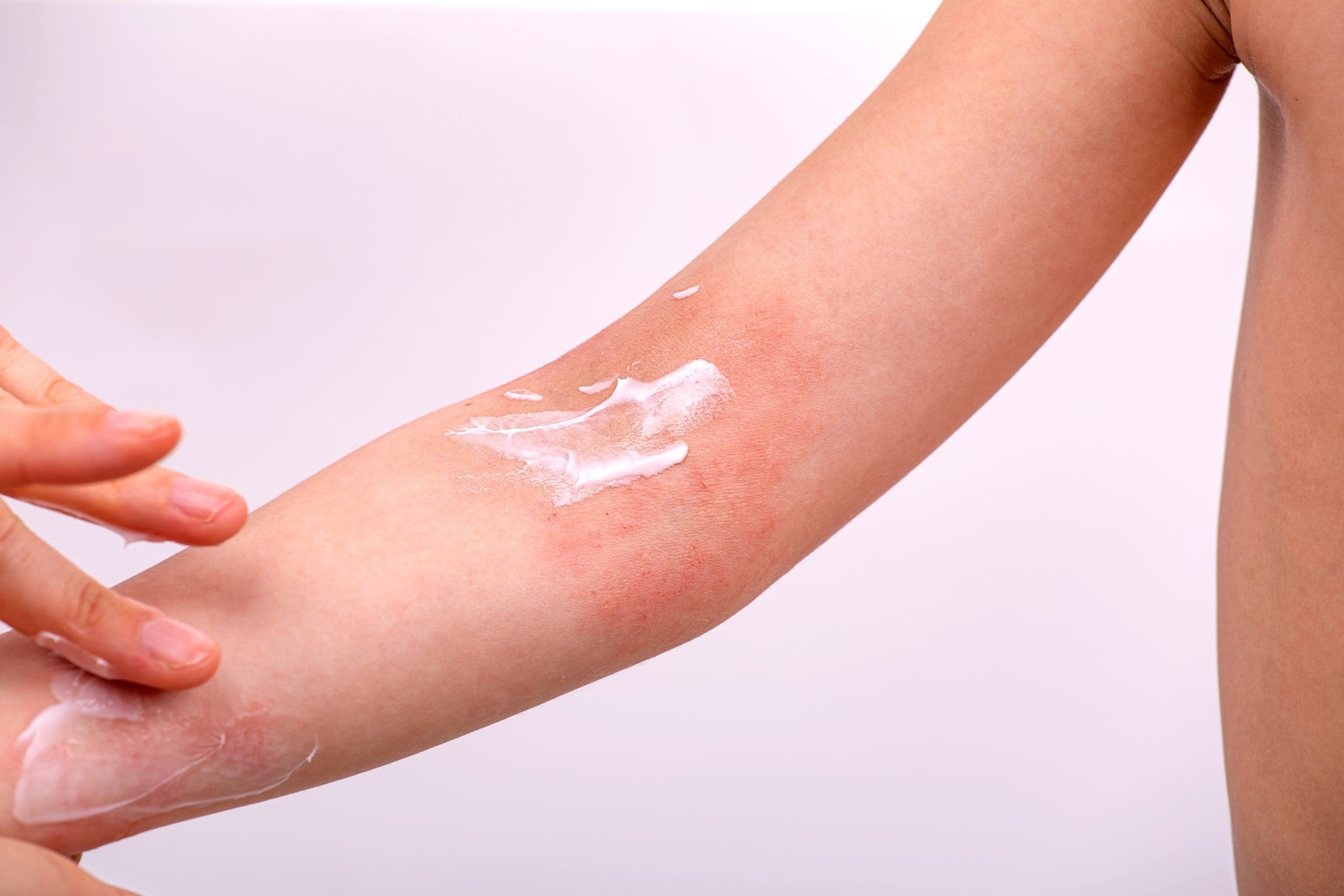
Atopic dermatitis has a frustrating pattern. The skin calms down after a course of steroid cream, and then a few days or weeks later, the same patch flares up red and itchy all over again. A lot of patients ask why that keeps happening.
The reason is simple. Atopic dermatitis is not caused by a single problem. A weakened skin barrier and an oversensitive immune system are both at play, and they keep triggering each other in a loop. Fixing the barrier alone, or calming the inflammation alone, is rarely enough to end it. Let's walk through the mechanism step by step.
Why does atopic dermatitis calm down and then flare again?
Skin with atopic dermatitis can look perfectly fine on the surface while it is quietly losing water underneath. The outermost layer, the stratum corneum, is supposed to be built like a brick wall, with skin cells as bricks and lipids as the mortar holding everything tightly together. In atopic skin, that structure is often loose from the start.
A loose structure causes two problems at once. Water escapes more easily from inside, and dust, bacteria, and allergens get in more easily from outside. It is similar to a house with a drafty door, heat leaks out and bugs get in. So even when symptoms settle down on the surface, if the barrier itself hasn't recovered, irritants find their way back in and inflammation returns.
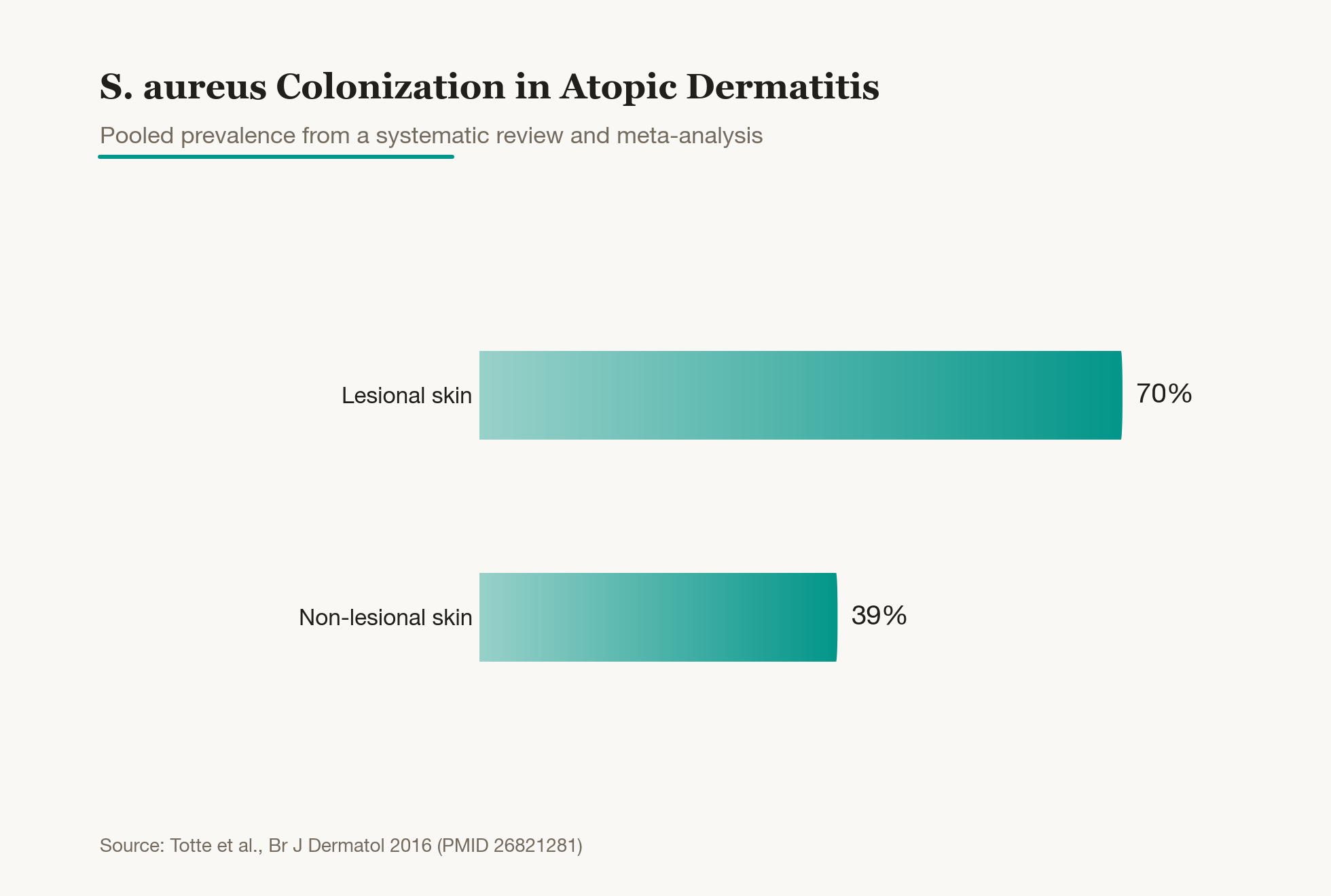
On top of that, healthy skin normally hosts a balanced community of resident bacteria, and that balance gets disrupted wherever the barrier is weak. In particular, a bacterium called Staphylococcus aureus tends to colonize far more than it should. This bacterium sticks to skin unusually well, and once it settles in, it releases substances that stir up even more inflammation, which is one more reason symptoms tend to linger.
A skin barrier weak from the start due to low filaggrin
At the center of this barrier weakness is a protein called filaggrin (a protein that bundles keratin fibers tightly inside skin cells and later breaks down into the skin's natural moisturizing factor). A large share of people with atopic dermatitis carry a mutation in the gene that makes filaggrin, so their barrier is loosely built from birth.
When filaggrin is in short supply, the stratum corneum also loses its ability to hold onto water. As filaggrin breaks down into smaller pieces, it forms natural moisturizing factor (NMF), which acts like a tiny sponge inside skin cells, soaking up and holding moisture. Less filaggrin means less of that sponge effect. That's why atopic skin loses water faster and dries out more easily than other skin, even at the same humidity level.
What happens when ceramides run short?
Ceramide (ceramide, a lipid that fills the spaces between skin cells so moisture can't leak through), the fatty substance that fills the gaps between cells in the stratum corneum, also tends to run low in atopic skin. It's not just that the mortar between the bricks is thin, the filler material itself is in short supply.
There's another layer to this problem. Multiple studies have found that IL-4, an inflammatory signaling protein, directly interferes with the process that produces ceramide. In other words, inflammation weakens the barrier further, and a weaker barrier lets in more irritants, which stirs up inflammation again. This is why atopic dermatitis tends not to resolve after a single flare, but to keep recurring in the same spots.
Why do itching and scratching feed each other?
When allergens like dust or dust mites slip through gaps in a weakened barrier, immune cells recognize them as a threat and respond. The main signaling molecules released in this response are IL-4 and IL-13. Both are signals the body normally uses to fight off parasites and other invaders, but in atopic dermatitis, this response fires too strongly and too often.
These same signals also stimulate the nerves that trigger itching. Scratching physically damages the stratum corneum, and irritants get in more easily through the damaged area, which ramps up the inflammatory signal again. This back and forth between itching, scratching, and inflammation is commonly called the itch-scratch cycle. Breaking the cycle at even one point is known to gradually calm the whole loop down.
This cycle tends to get worse at night. Body temperature rises at night, which increases blood flow to the skin, and the various daytime distractions that suppress itching fade away, making the itch feel relatively more intense. That's why scratching during sleep, often without even realizing it, keeps causing new damage overnight even when daytime care has been going well.
When and how much moisturizer to apply?
Moisturizer is the single most basic tool for managing atopic dermatitis. It works by replacing the lipids and water the skin is missing from the outside, temporarily patching the broken wall.
A few principles help it actually work.
- Apply within 3 minutes of washing: Skin needs to still be damp so the moisture gets sealed in underneath. Applying to dry skin slows absorption and reduces the effect.
- Choose products with ceramide and cholesterol: Ingredients that resemble the skin's own lipid composition are known to help rebuild the barrier more effectively.
- Apply at least twice a day, and use enough: A thin layer dries out fast and lets moisture escape again. A common guideline is to use about one fingertip unit per application.
- Prefer products low in fragrance and alcohol: Fragrance and alcohol can act as additional irritants on already sensitized skin.
Ointments and daily care
For inflammation that doesn't settle with moisturizer alone, topical steroids or topical calcineurin inhibitors (tacrolimus, pimecrolimus, non-steroidal ointments that suppress the immune response) are used together. They work by dialing down the inflammatory signal itself, which helps break the itch-scratch cycle.
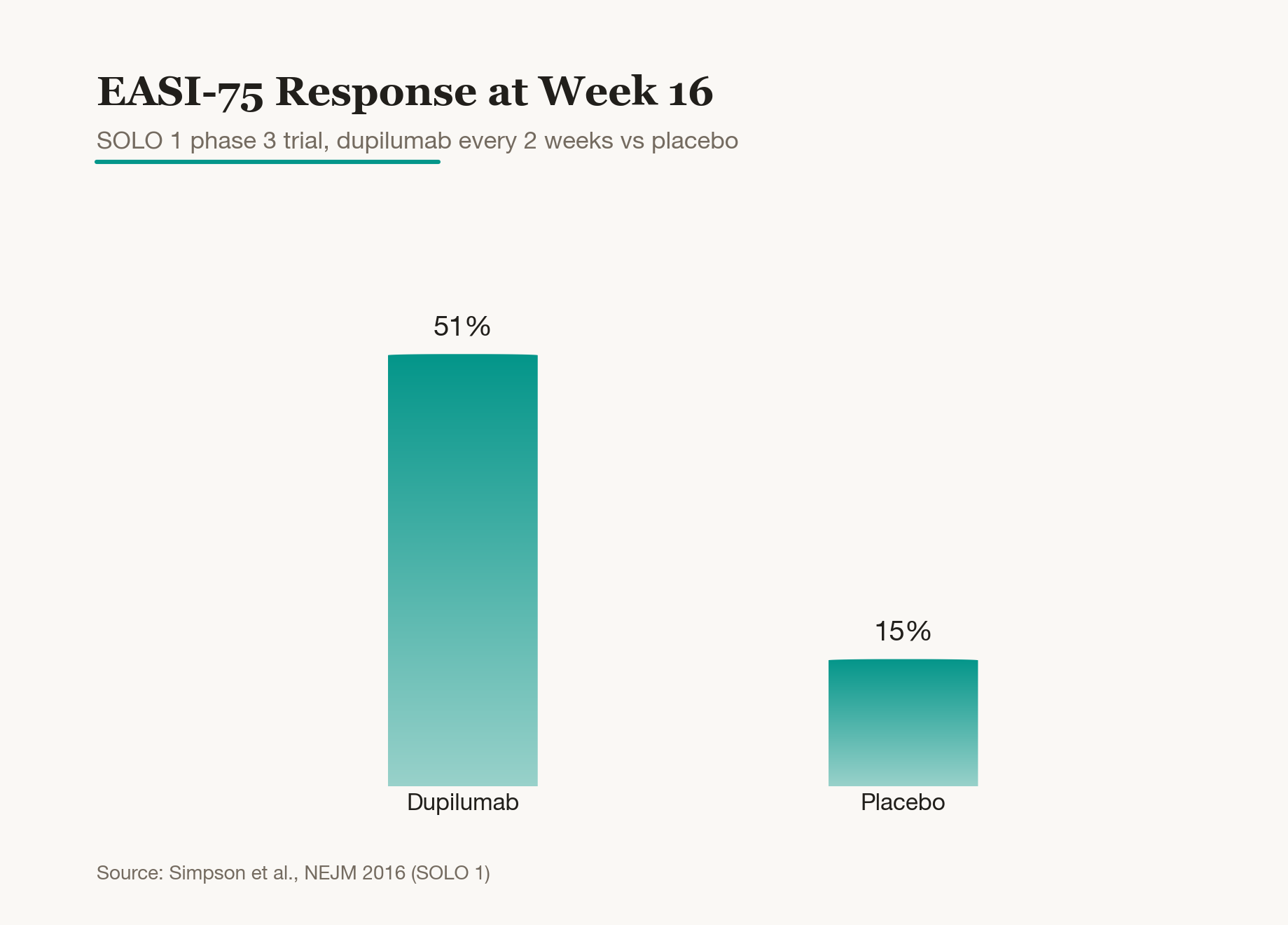
For widespread or severe cases, biologic agents that directly block IL-4 and IL-13 signaling (such as dupilumab) may be considered. By shutting down a single pathway where these two signals converge, they effectively raise the threshold for inflammation to start in the first place. Studies have also reported that ceramide levels in the barrier tend to recover after this kind of treatment.
Lifestyle habits matter too. Short showers with lukewarm water, washing off sweat and dust regularly, and avoiding excessively low indoor humidity are all recommended. All of these share the same goal: reducing the stress placed on the barrier.
Clothing fabric is another factor that gets overlooked easily. Wool and rough synthetic fibers can create tiny friction against the skin's surface, making itching more likely. That's why loose, soft cotton clothing is recommended to reduce irritation. Washing new clothes once before wearing them also helps remove leftover processing chemicals from the fabric.
Noticeable improvement usually takes about 4 to 12 weeks of consistent care. But since atopic dermatitis is a chronic condition where the goal is control rather than a full cure, continuing moisturizing and barrier care for 6 to 12 months or longer, even during symptom-free periods, is known to help reduce the chance of flares coming back.
References
Korean Dermatological Association, American Academy of Dermatology (AAD), and Ministry of Food and Drug Safety (MFDS).
Was this helpful?
About this article
Written by a practising aesthetic physician and intended for general education — not a substitute for individual medical advice.
Read next

AHA and BHA Differences: Choosing by Skin Type and Comparing Effects
AHA and BHA are both acids that clear away dead skin cells, but where they actually work depends on one simple thing, whether they dissolve in water or in oil. AHA breaks down the bonds holding surface buildup together, while BHA rides through oil to reach the sebum sitting deep inside your pores. Here is how each one works, and which fits which skin type.
By Dr. Kim
Stretch Mark Treatment: Does Starting While They're Red Work Better?
Stretch marks form when skin stretches too fast for the collagen pillars in the dermis to keep up, and they tear. Here is why red marks fade into white ones over time, and why treatment response changes depending on when you start.
By Dr. Kim

Cafe-au-Lait Spots Returning After Laser: Causes, Number of Sessions and Expectations
A café au lait spot forms because the pigment-making cells in that one patch of skin are locally overactive. Laser treatment breaks up the pigment that has already built up, but it doesn't switch off those cells, which is why the color so often returns. Here's the biology behind it, why results differ so much from person to person, and what a realistic treatment timeline actually looks like.
By Dr. Kim