Arbutin Whitening Effect: Why Do Results Take Weeks to Show?
By Dr. Kim6 min read
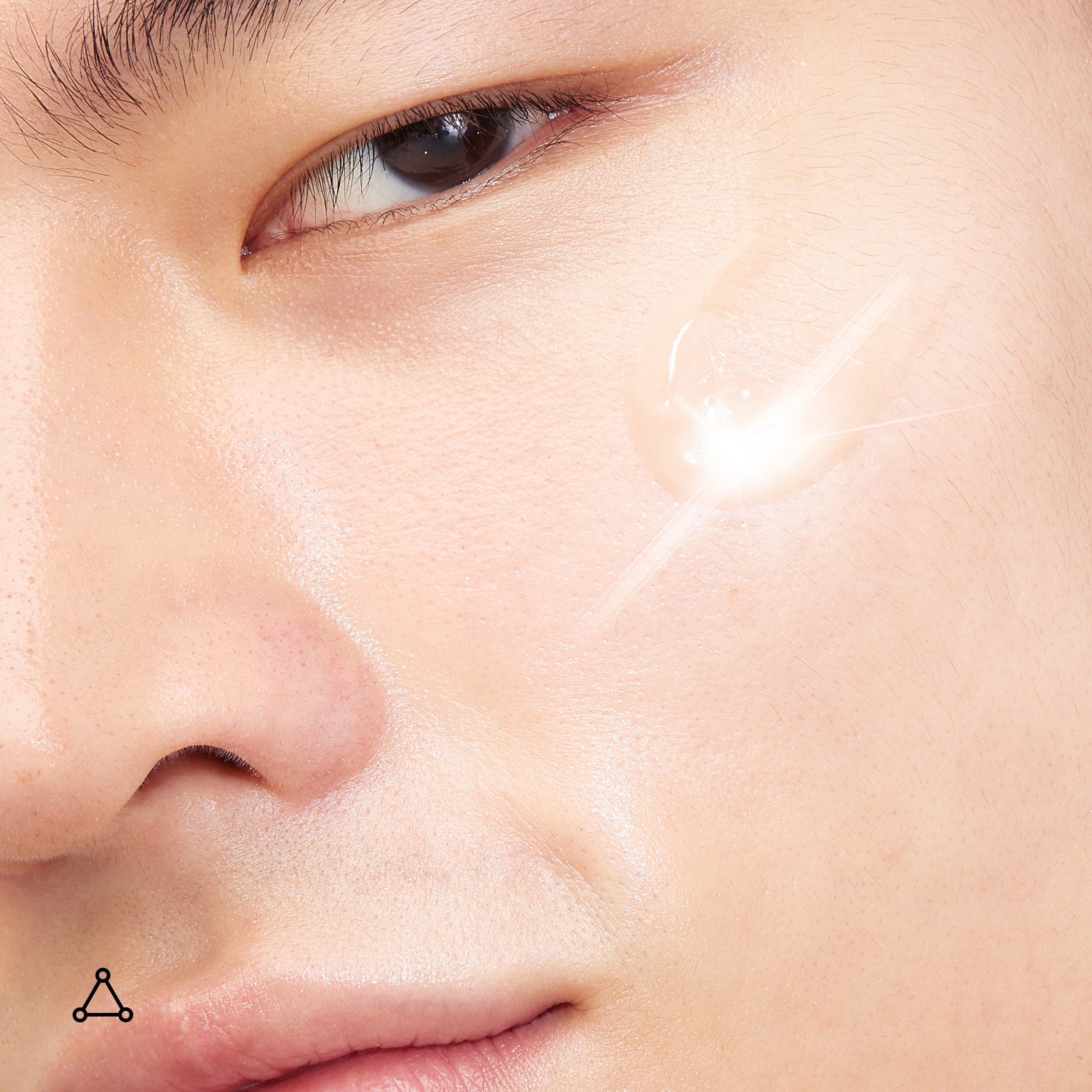
Arbutin shows up constantly on brightening product labels. The name comes from uva ursi, the bearberry plant whose leaves were the first place scientists found it.
Here's the thing though: arbutin itself isn't a particularly powerful pigment eraser. It works by slowly turning into something else once it's in the skin, and that something else is hydroquinone, one of the best known brightening ingredients out there. Let's walk through why arbutin is built to work this way.
How does pigment build up?
The pigment that determines skin tone is melanin. Think of it as a built-in shade umbrella that keeps UV rays from damaging the DNA deep in your skin cells.
Melanin is made by cells called melanocytes. Inside them sits an enzyme called tyrosinase, which grabs an amino acid called tyrosine and starts the chain reaction that turns it into melanin. When skin is hit with UV exposure or inflammation, tyrosinase kicks into higher gear, and pigment builds up in that spot.
Melasma, dark spots, and the marks left behind after acne almost always come down to tyrosinase working overtime in that particular area. That's why most brightening ingredients are essentially competing on one thing: how well they can quiet this enzyme down.
Why is glucose attached to arbutin?
Chemically, arbutin is hydroquinone with a single glucose molecule attached to it. This kind of structure is called a glycoside. It's easiest to picture it as hydroquinone wearing a sugar coat.
Hydroquinone on its own is a strong tyrosinase inhibitor with reliable brightening results. Used at full strength, though, it can irritate the skin, and long-term use at high concentrations has, in rare cases, been linked to a grayish-blue discoloration called ochronosis.
Arbutin takes that same hydroquinone and wraps it in glucose so it can't flood the skin all at once. An enzyme in the skin then slowly peels that coating away, letting hydroquinone leak out little by little. Instead of pouring it all in at once, the idea is to let it trickle through gradually.
How arbutin deliberately works slowly
Once arbutin reaches the skin, an enzyme called beta-glucosidase (β-glucosidase) starts breaking the bond that links the glucose to the hydroquinone. This is a completely different enzyme from tyrosinase, the one responsible for making pigment. As that bond breaks down, hydroquinone is released in very small amounts.
The amount of hydroquinone produced this way is far lower than what you'd get from a pure hydroquinone product. That's the trade off: less irritation, but also a slower pace of visible results. You're essentially exchanging speed for safety.
Arbutin also has a second, more subtle trick for holding tyrosinase back. Because its structure resembles tyrosine, the enzyme sometimes grabs onto arbutin by mistake instead of the real thing, wasting its effort. It's a bit like slipping a fake key into a lock so the real key can't get in.
How are alpha-arbutin and beta-arbutin different?
Most products on the shelf label their arbutin as either alpha or beta. The two are isomers, meaning the only real difference is which direction the glucose molecule attaches.
- Beta-arbutin: the form naturally found in plants like bearberry. Beta-glucosidase breaks this bond down relatively slowly.
- Alpha-arbutin: barely exists in nature, so it's mostly produced through enzymatic synthesis. It binds to tyrosinase more strongly than beta-arbutin, which is reported to make it more efficient at the same concentration.
- Deoxyarbutin: a fully synthetic cousin of arbutin. Without the glucose ring at all, it acts more aggressively, which also means it comes with its own separate stability questions.
So if a label lists alpha-arbutin, you can read that as a slightly more active version of the ingredient compared to beta-arbutin at the same concentration.
When do arbutin results appear?
Because arbutin works through this slow-release process, the results show up on their own timeline too. With consistent use, visible change is generally reported to take somewhere between 4 and 12 weeks.
There are two reasons it takes that long. First, arbutin needs time to convert into hydroquinone and for that hydroquinone to suppress tyrosinase. Second, the melanin that's already sitting near the skin's surface only fades once dead skin cells naturally shed away, and that turnover cycle itself runs about 4 weeks.
That's why judging an arbutin product within two weeks doesn't really tell you anything. Give it a full season, at least two to three months of consistent use, before deciding whether it's working. Stop midway and tyrosinase can ramp back up, letting the pigment gradually return.
What to use alongside arbutin
Arbutin itself is gentler than hydroquinone, but the ground rules for using any brightening ingredient don't really change.
- Sun protection is non negotiable. UV exposure reactivates tyrosinase, so applying arbutin without sunscreen basically means the pigment being made and the pigment being suppressed cancel each other out, and you won't see much of anything.
- It's commonly paired with other brightening ingredients like niacinamide and tranexamic acid. Since each one targets a different stage of melanin production, using them together can give you a complementary effect.
- Pairing it with retinol, which helps speed up skin turnover, can add to the rate at which existing melanin clears out, so you may notice change a bit faster.
- When trying it for the first time, start with a small amount and watch for a few days for any redness or stinging. Everyone's skin barrier is a little different, so reactions can vary from person to person.
Does pigment return if you stop using it?
Pigment that fades thanks to arbutin can gradually creep back once you stop using it completely. That's because tyrosinase itself isn't destroyed, it's just being held in check for a while.
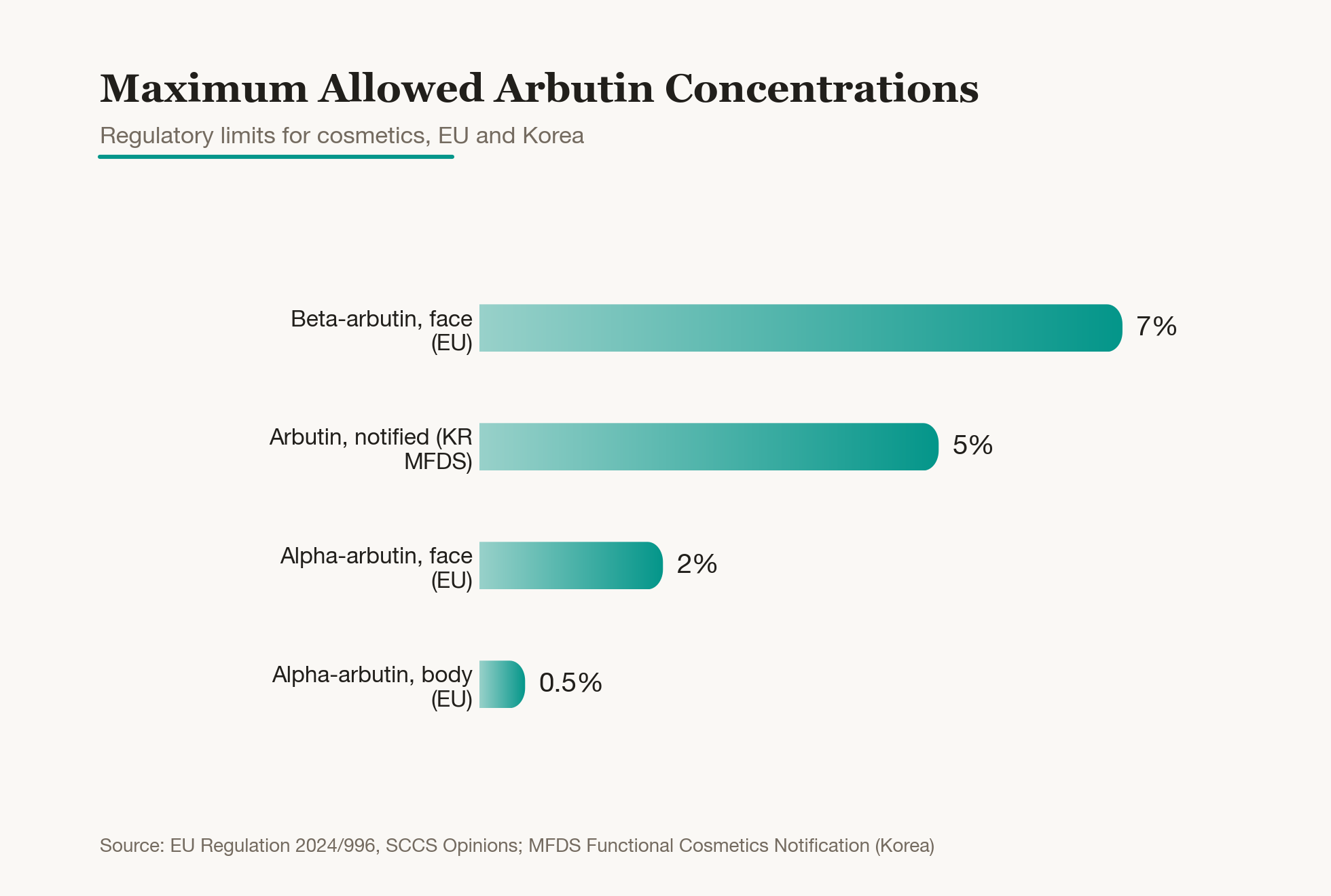
For that reason, a lot of people keep applying it for maintenance, alongside sunscreen, even after they've already seen visible improvement. If you're using a long-term, high-concentration product, it's worth getting checked periodically at a dermatology clinic. In Korea, the Ministry of Food and Drug Safety (MFDS) caps how much arbutin can be included in cosmetic formulas, so as long as you stick to products within that range, there isn't much to worry about.
In the end, arbutin isn't the ingredient that erases pigment in a flash. It's a brightening ingredient that deliberately slows itself down so it can be used safely over the long haul. Knowing that going in makes the wait a lot less frustrating.
References
Korean Dermatological Association, American Academy of Dermatology (AAD), and Ministry of Food and Drug Safety (MFDS).
Was this helpful?
About this article
Written by a practising aesthetic physician and intended for general education — not a substitute for individual medical advice.
Read next
Density RF Effects: How Many Sessions and How Long Do Results Last?
Density RF pairs two radiofrequency modes with very different personalities to chase two goals at once: the instant tightening you feel right after treatment, and the collagen renewal that builds slowly over the following 4 to 12 weeks. Here is why two modes are needed, the order in which heat actually works inside the skin, and why the treatment is spread across multiple sessions instead of done all at once.
By Dr. Kim
HILO WAVE Skin Booster: How It Works, When Results Appear, and Aftercare
HILO WAVE is a skin booster that fuses two hyaluronic acids of different molecular sizes into a single structure. The low and high molecular weight forms are said to act at different depths and speeds, stimulating collagen and elastin production together inside the skin. This article breaks down how that dual hyaluronic acid structure actually works, focusing on the underlying mechanism.
By Dr. Kim
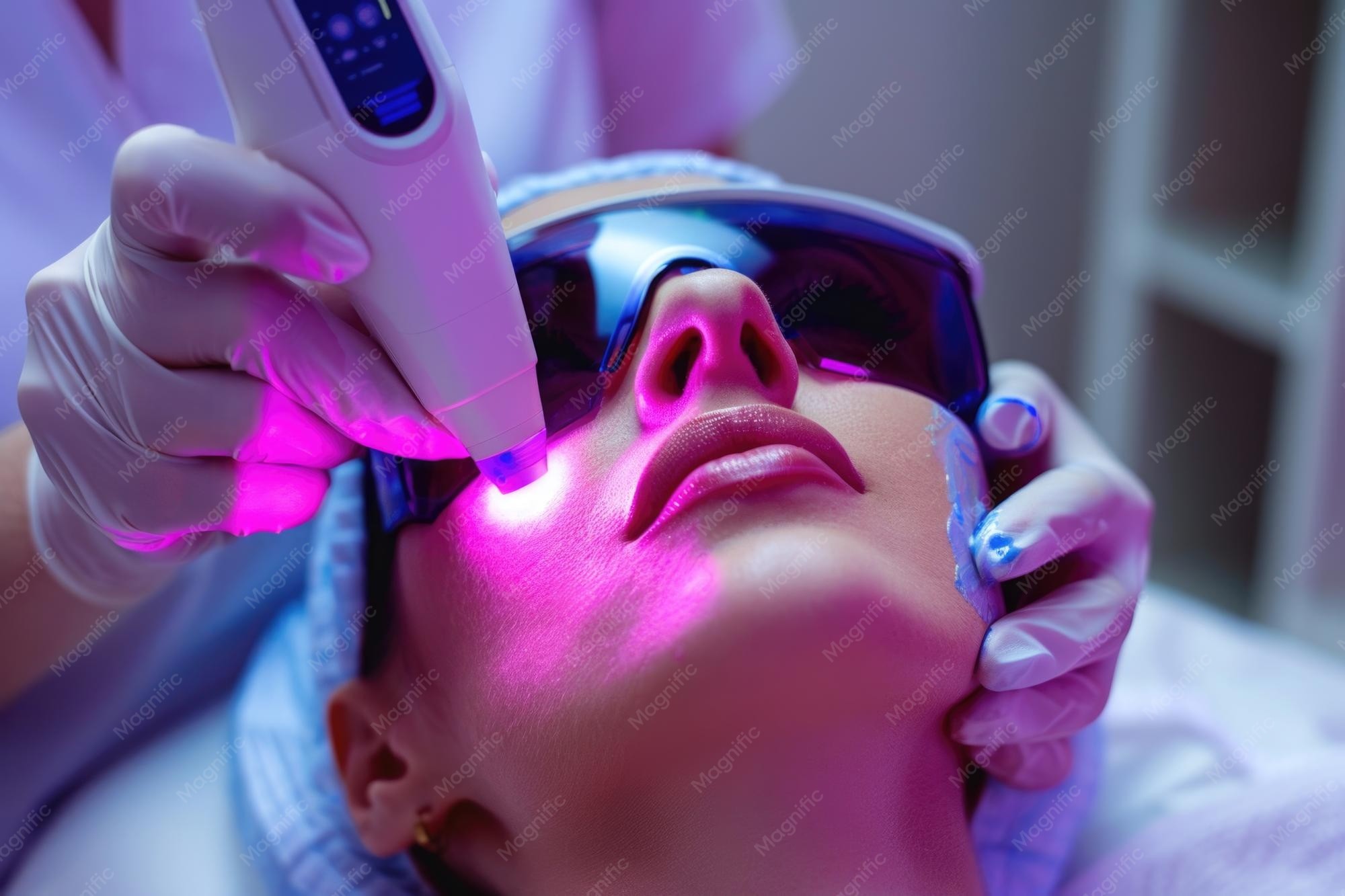
Cafe-au-Lait Spots Returning After Laser: Causes, Number of Sessions and Expectations
A café au lait spot forms because the pigment-making cells in that one patch of skin are locally overactive. Laser treatment breaks up the pigment that has already built up, but it doesn't switch off those cells, which is why the color so often returns. Here's the biology behind it, why results differ so much from person to person, and what a realistic treatment timeline actually looks like.
By Dr. Kim