Aquapeel Hydrafacial: Effects on Blackheads and the Limits for Pores
By Dr. Lee8 min read

More patients have been asking me about aquapeel and hydrafacial treatments lately. Blackheads along the nose that won't budge with cleansing alone, pores that stand out more by afternoon, and buildup that catches under makeup all make people want to try it at least once. The idea of swirling water washing away dead skin and sebum while flooding the same area with moisture and serum does sound appealing.
So here is what this treatment actually does, and where expectations should stop. From the mechanism to how much blackheads and buildup really clear, the real effect on pores, the clinical evidence collected so far, and downtime, this article lays it out plainly, based on research and clinical experience. Numbers are not inflated, and there is no claim that everything gets solved in one session. I hope this helps you choose what fits your skin and goals.
How does Aquapeel work?
Aquapeel and hydrafacial go by different names but belong to the same category of treatment. Both use hydradermabrasion, a method where a special tip sprays a swirling mix of water and a mild peeling solution while simultaneously vacuum suctioning it back, gliding across the skin as it works.
The process usually runs in three steps. First, a mildly acidic solution gently dissolves dead skin and sebum. Next, vortex suction pulls out the contents of the pores along with loosened dead skin. Then moisturizing ingredients like hyaluronic acid or antioxidant serums are pushed in through the same tip. Cleansing and hydration happen back to back in one pass.
Unlike traditional microdermabrasion, which physically sands the surface with dry crystals or a diamond tip, aquapeel uses water as its medium, so it causes less irritation and dryness. It is less an aggressive exfoliation and more a gentle treatment that washes away surface buildup and sebum while adding moisture back in. That makes it fairly approachable even for sensitive skin or first time patients. A full face session usually takes about 30 minutes, and since the only sensation is a light tugging as the tip passes over the skin, numbing cream is generally not needed.
| Step | What Happens |
|---|---|
| Step 1 | A mildly acidic solution dissolves dead skin and sebum |
| Step 2 | Vortex suction removes the contents of the pores |
| Step 3 | Moisturizing serum is infused through the same tip |
How many blackheads come out?
This is exactly where the suction method shines. Blackheads with open pore openings (open comedones), loosened surface buildup, and sebum sitting in the pores all clear out fairly well with vortex suction. That is why so many patients report smoother texture and better makeup application right after treatment.
But not every type of trouble clears the same way. Whiteheads with closed openings (closed comedones), milia sitting deep in the skin, and old, hardened blackheads do not fully come out with suction alone in a single session. Red, inflamed acne or cysts can actually be irritated by the treatment, so those areas are avoided during the session.
Debris that sits close to the surface with an open opening clears well, while anything deep and closed off shows only limited results. It is more realistic to think of this not as emptying out the pores completely in one go, but as a treatment you repeat periodically to keep buildup and sebum from accumulating.
| Clears Well With Suction | Does Not Clear Well |
|---|---|
| Open comedones (blackheads) | Closed comedones (whiteheads) |
| Loosened surface buildup | Milia deep in the skin |
| Soft sebum sitting in pores | Hardened, old plugs |
| Afternoon surface oil | Inflammatory acne and cysts |
Is the pore-shrinking effect permanent?
Pores are where expectations run highest, so let me be honest about this. Aquapeel cannot permanently shrink pore size itself, which is largely determined by genetics. What it does instead is remove the factors that made pores look larger, so they stand out less.
Part of why pores look enlarged is the shadow created by the sebum and dead skin packed inside them. Once suction empties that content, the shadow fades and pores appear noticeably smaller. Add moisture on top, and the surrounding skin plumps up, which makes the opening look tighter. That is why skin looks smooth and radiant in the mirror right after treatment.
An early study following 6 sessions of hydradermabrasion did report improvements in pore size, fine lines, and pigmentation. Tissue biopsies from the same study also showed thickening of the epidermis and upper dermis, along with an increase in collagen producing cells. That suggests repeated sessions may help with skin texture and elasticity over time.
That said, this effect holds up only as long as treatment continues. As sebum refills and dead skin builds up again, pores gradually return to how they were. Rather than expecting one session to close pores for good, it helps to think of this as ongoing maintenance that keeps skin in a good state, so expectations and results stay aligned.
What does the research show?
Let me lay out the evidence as it stands. The main study on hydradermabrasion was published in 2008. After 6 sessions spaced 7 to 10 days apart, combined with an antioxidant serum, tissue analysis showed thickening of the epidermis and upper dermis along with an increase in antioxidants and collagen producing cells. Fine lines, pores, and pigmentation also improved, and no side effects were reported.
What is interesting is that a comparison group who simply applied the same serum by hand showed no change. This suggests the delivery method itself, pushing ingredients in through vortex suction, plays a role in the effect.
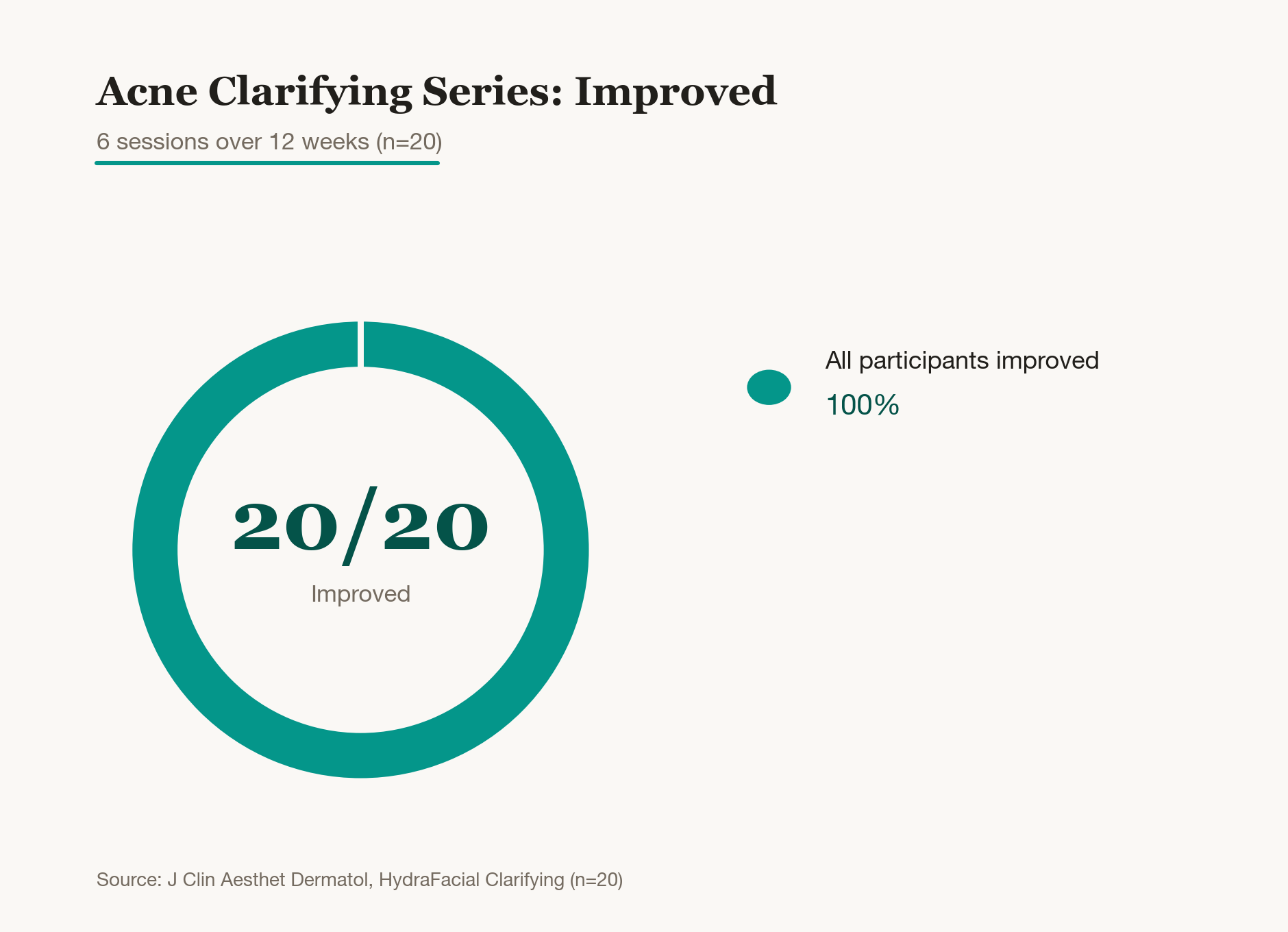
For acne, there is a trial of 20 patients who received 6 clearing sessions 2 weeks apart. Every participant saw a reduction in both comedonal lesions like blackheads and red inflammatory lesions. That said, blue LED was used alongside the treatment and the sample was only 20 people, so it is hard to credit the effect to aquapeel alone.
Large scale comparative studies with big samples and long term follow up are still lacking. What evidence exists so far is meaningful because it confirmed real changes at the tissue level, even in small samples, and the overall direction is positive.
| Study | Subjects | Result | Limitation |
|---|---|---|---|
| 2008 histology study | 6 session group | Increased epidermal, dermal thickness and collagen cells | Small sample |
| Acne clearing trial | 20 patients, 6 sessions | Reduced comedonal and inflammatory lesions | Combined with blue LED, small sample |
Can you return to daily life right after?
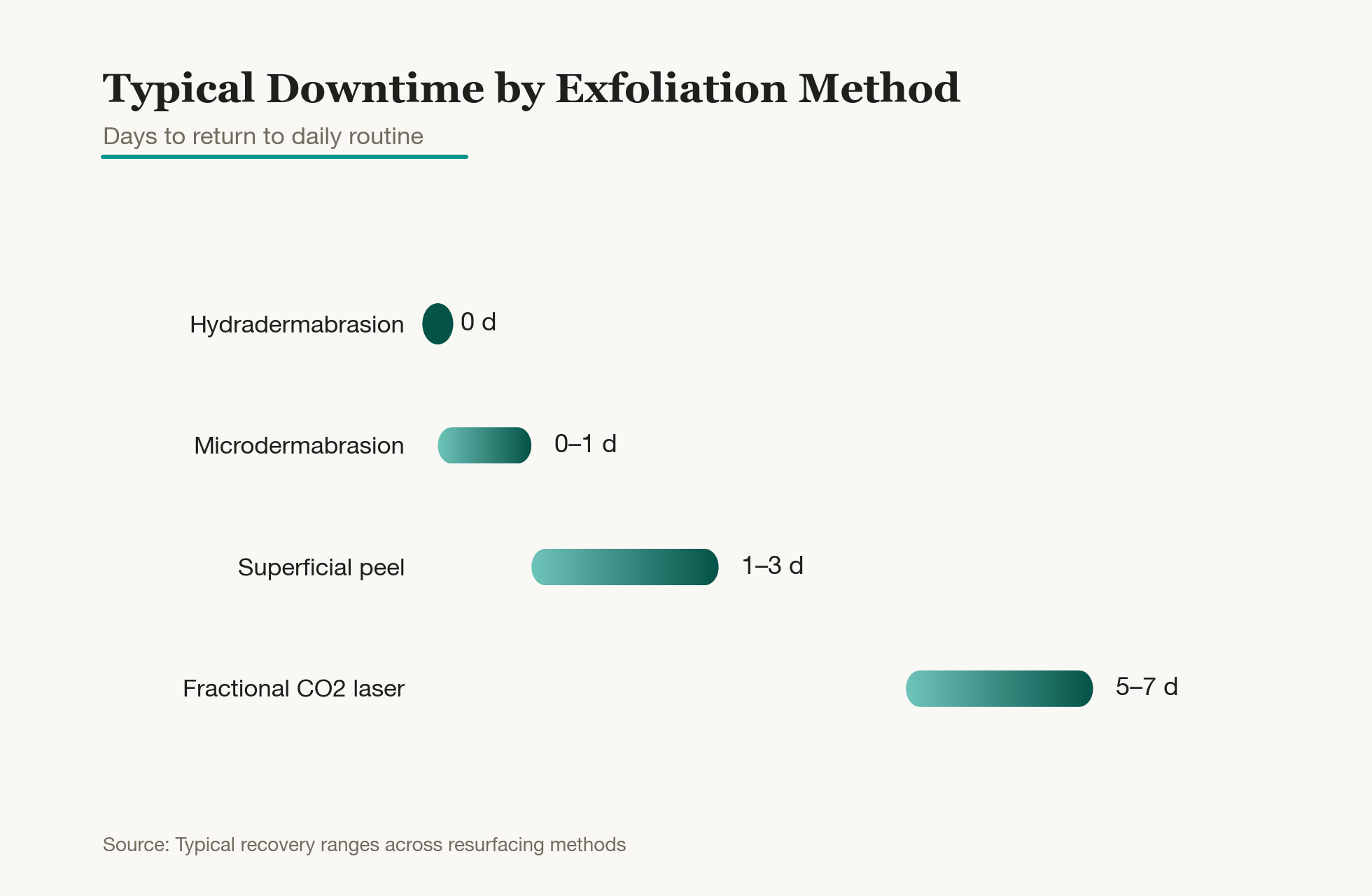
This is where the treatment's biggest advantage lies. Downtime is essentially nonexistent. Because it is a gentle process of washing with water and refilling moisture, you can put on makeup and return to your normal routine immediately after the session. That is why so many people book it the day of a wedding or an important event to smooth out their skin.
Pain is also on the low side. As the tip passes over the skin, you feel a light tugging and tickling sensation at most, and most people get through it fine without numbing cream. Some mild redness can show up right after, but it usually settles within a few hours.
There are a few precautions to keep in mind. If you have a lot of active inflammatory acne or sensitive skin from rosacea, the suction and peeling solution can be irritating, so the intensity is lowered or those areas are avoided. Using strong exfoliants or retinoids right before or after the session can make skin more sensitive, so it is best to leave a few days between them. It also helps to be diligent about sun protection on the day of treatment and the day after, since skin is a bit more sensitive than usual even with a gentle treatment like this. If you are worried about irritation, starting with a lower intensity, watching how your skin responds, and adjusting the intensity for the next session is the safer approach.
What results to expect and what the limits are
Ads often make it sound like pores vanish and skin transforms completely after one session. The reality is more modest than that. Aquapeel is a maintenance treatment that washes away buildup and blackheads and adds moisture back in, giving your skin a brighter, smoother look for that day. Immediate glow, softer texture, and better makeup application are all reasonable things to expect.
On the other hand, filling in deep acne scars, rooting out pigmentation deep in the dermis, or permanently shrinking pores is not what this treatment is for. If those are your goals, you need microneedle RF, laser, or pigment specific treatment instead. Aquapeel does not conflict with those treatments and actually pairs well with them, working nicely as texture and hydration maintenance between rounds of more targeted care.
If you want the results to last, it is better to get treatment about once a month rather than just once, and to keep up gentle exfoliation, moisturizing, and sun protection at home in between. Set your expectations this way, and aquapeel tends to be a pretty satisfying treatment. It earns its value not as a dramatic one time fix, but as a tool for keeping your skin consistently in good shape.
| Reasonable to Expect | Unrealistic to Expect |
|---|---|
| Immediate glow and smoother texture | Permanent pore reduction |
| Cleared blackheads and surface buildup | Improvement of deep acne scars |
| Hydration and better makeup application | Root treatment of deep dermal pigmentation |
Was this helpful?
About this article
Written by a practising aesthetic physician and intended for general education — not a substitute for individual medical advice.
Read next
Lara Peel Effects and Irritation, Including Treatment Interval and Suitable Skin
Lara Peel was developed for sensitive skin that finds stinging, peeling treatments too harsh. It combines LHA with an alkaline ingredient to gently smooth away dead skin cells. Using real research on LHA and other gentle peel ingredients, here is a look at how it works on texture and pores.
By Dr. Lee

AHA and BHA Differences: Choosing by Skin Type and Comparing Effects
AHA and BHA are both acids that clear away dead skin cells, but where they actually work depends on one simple thing, whether they dissolve in water or in oil. AHA breaks down the bonds holding surface buildup together, while BHA rides through oil to reach the sebum sitting deep inside your pores. Here is how each one works, and which fits which skin type.
By Dr. Kim

Effects After Lifting Treatment and Duration, Including Swelling and Aftercare
A look at downtime and recovery after non-surgical lifting treatments like HIFU, RF, and thread lifts, how long the effect lasts, and when retreatment makes sense, based on real study numbers. Also separates aftercare advice that's well supported by evidence, like SPF and not smoking, from advice that's closer to clinical folklore.
By Dr. Kim