Alopecia Areata: Causes, Symptoms, Recovery Time, Recurrence and Treatment
By Dr. Lee7 min read
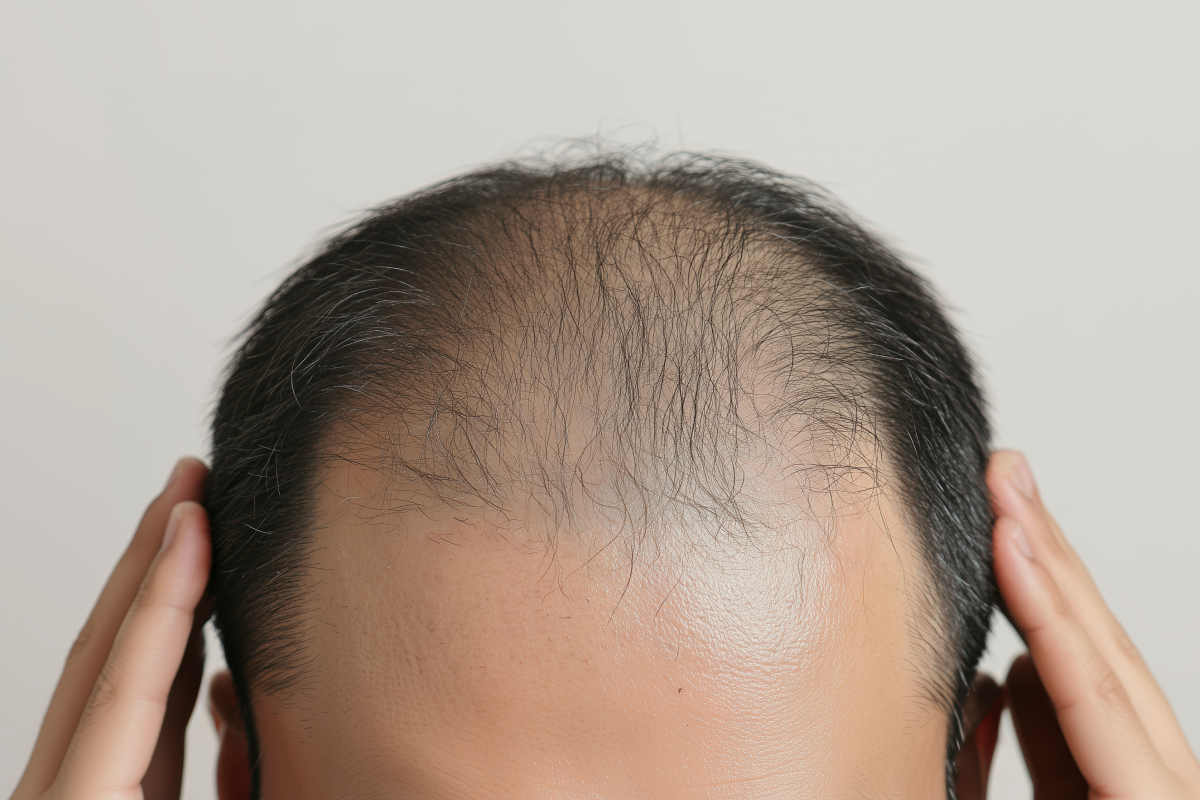
You're washing your hair one day and your fingers catch an unusually smooth patch of scalp. A quick check in the mirror confirms it: a coin-sized bald spot where there used to be hair. Sometimes it turns up while you're brushing, sometimes your hairstylist spots it first. That sudden, sharply outlined round patch is what dermatologists call alopecia areata.
Most people assume it's caused by extreme stress, but the real story is more complicated. Alopecia areata is closer to an autoimmune reaction, one where the immune cells meant to protect your body mistakenly attack your own hair follicles. Stress is just one of several triggers that can set that reaction off, not the sole cause. Let's break down why it happens and why it shows up as those distinctive round patches.
Why does alopecia areata make coin-shaped patches?
Hair grows in cycles, alternating between an active growth phase and a resting phase. Normally, each follicle is on its own independent timer, which is why the amount of hair you shed on any given day stays fairly small and unnoticeable.
With alopecia areata, a cluster of follicles in one area gets hit by the same immune attack at the same time and gets forced out of the growth phase all at once. Because the attack tends to start at a single point and spread outward evenly, the resulting bald spot usually ends up round or oval. Think of a stone dropped into water, the ripples spread out in a perfect circle.
Another telltale sign is that the exposed scalp looks smooth, with no flaking or inflammation marks. That's because the follicle structure itself isn't destroyed, only its growth signal gets blocked, so the follicle largely stays intact underneath.
How immune cells attack hair follicles
Hair follicles normally exist under a kind of protective shield the body's immune cells aren't supposed to touch. It's called immune privilege, and it works by having the follicle dial down the signals that flag it as foreign while also suppressing local inflammation. Think of it as a built-in safeguard against the immune system mistaking your own tissue for an intruder.
In alopecia areata, that shield breaks down. Once the follicle starts sending out distress signals, cytotoxic T cells, a type of immune cell, rush in and mistake the follicle for a foreign threat. Research suggests interferon-gamma (IFN-gamma) then amplifies the inflammation through a signaling pathway called JAK-STAT. It's a bit like a building's security system going silent, letting a stranger walk in while the alarm keeps blaring.
Because this pathway sits at the center of the disease process, it has become the main target for newer treatments now in development.
Is alopecia areata genetic?
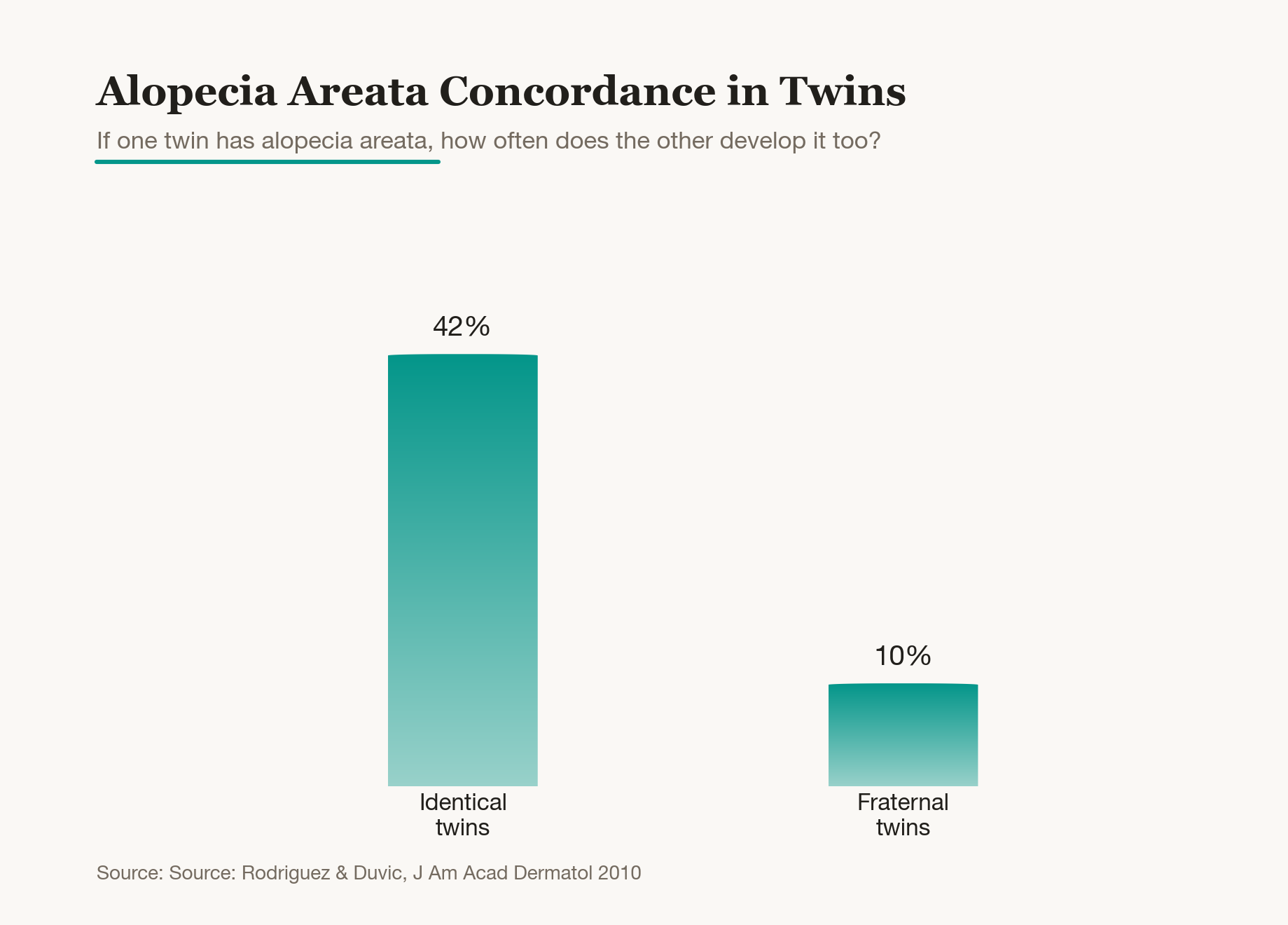
Alopecia areata rarely comes down to a single cause. More often, someone is born with a genetic tendency toward autoimmune reactions, and symptoms only appear once a specific trigger comes along. A few factors tend to come up again and again.
- Family history: having a parent or sibling with alopecia areata or another autoimmune condition (thyroid disease, vitiligo, and so on) is linked to a higher risk, since the way immune cells learn to tell self from non-self can itself be inherited.
- Severe stress or a major life event: intense psychological shock is thought to act as a trigger that throws the immune system off balance, since stress hormones can push inflammatory signaling in the wrong direction.
- After a viral infection or major surgery: when the body is busy fighting off another challenge, the resulting disruption to immune balance can open the door to this kind of reaction, since a heavily activated immune system is more prone to misfiring at the wrong target.
- Coexisting autoimmune conditions: alopecia areata is reported more often in people who already have thyroid disease, vitiligo, or atopic dermatitis, likely because their immune system is already primed to overreact.
In other words, alopecia areata tends to surface only when a genetic background meets the right trigger. Genetics load the gun, but something else usually pulls it.
How are stress and alopecia areata related?
Plenty of people still believe stress is the sole cause of alopecia areata, but that's not quite accurate. People without the underlying genetic predisposition often go through intense stress without ever developing alopecia areata. On the flip side, people who do carry that predisposition can see symptoms start with relatively mild stress.
That doesn't mean stress is irrelevant, though. It can act as one of several triggers that disturb immune balance. A more accurate way to think about it: in a body that's already prone to an autoimmune reaction, stress can simply move up the timing of when that reaction becomes visible.
So cutting stress won't necessarily prevent alopecia areata outright, but keeping your overall immune balance steady can still help.
Nail changes and how far hair loss spreads
Alopecia areata can also leave a mark on the nails. Some people develop nail pitting, tiny pinpoint dents on the nail surface. Since the cells that build nails and the cells that build hair follicles grow through similar processes, they're both vulnerable to the same immune attack.
How the condition progresses varies a lot from person to person. Most commonly, someone develops just one or two coin-sized patches that heal on their own over time. In other cases, though, patches multiply, and in rarer cases the hair loss spreads across the entire scalp (alopecia totalis) or even to all body hair, including eyebrows and lashes (alopecia universalis).
Broader spread is generally read as a sign that the immune reaction itself is running stronger. So if patches are growing quickly or spreading widely, it's worth seeing a dermatologist to check how far things have progressed.
Can it come back even if it clears on its own?
In many cases, alopecia areata resolves on its own without any treatment at all. New hair growth typically starts within 4 to 12 weeks, and it can take another 6 to 12 months before the area visibly fills back in. Once the immune attack settles down, the follicle picks up its growth signal again and returns to its normal cycle.
The real challenge is relapse. It's not unusual for alopecia areata to return, either in the same spot or somewhere new, even after a full recovery. The immune cells that once mistook the follicle for a threat seem to retain some kind of memory of that mistake, and the reaction can recur whenever a new trigger comes along. Put simply, the underlying genetic predisposition never really leaves the body.
How long it takes to relapse also varies widely, some people see it come back within months, while others go years without any issue.
How is alopecia areata treated?
Treatment for alopecia areata generally works by calming down the immune reaction. Localized steroid injections or topical steroids are the most common first step, directly suppressing the inflammation and easing the concentration of immune cells attacking the follicle.
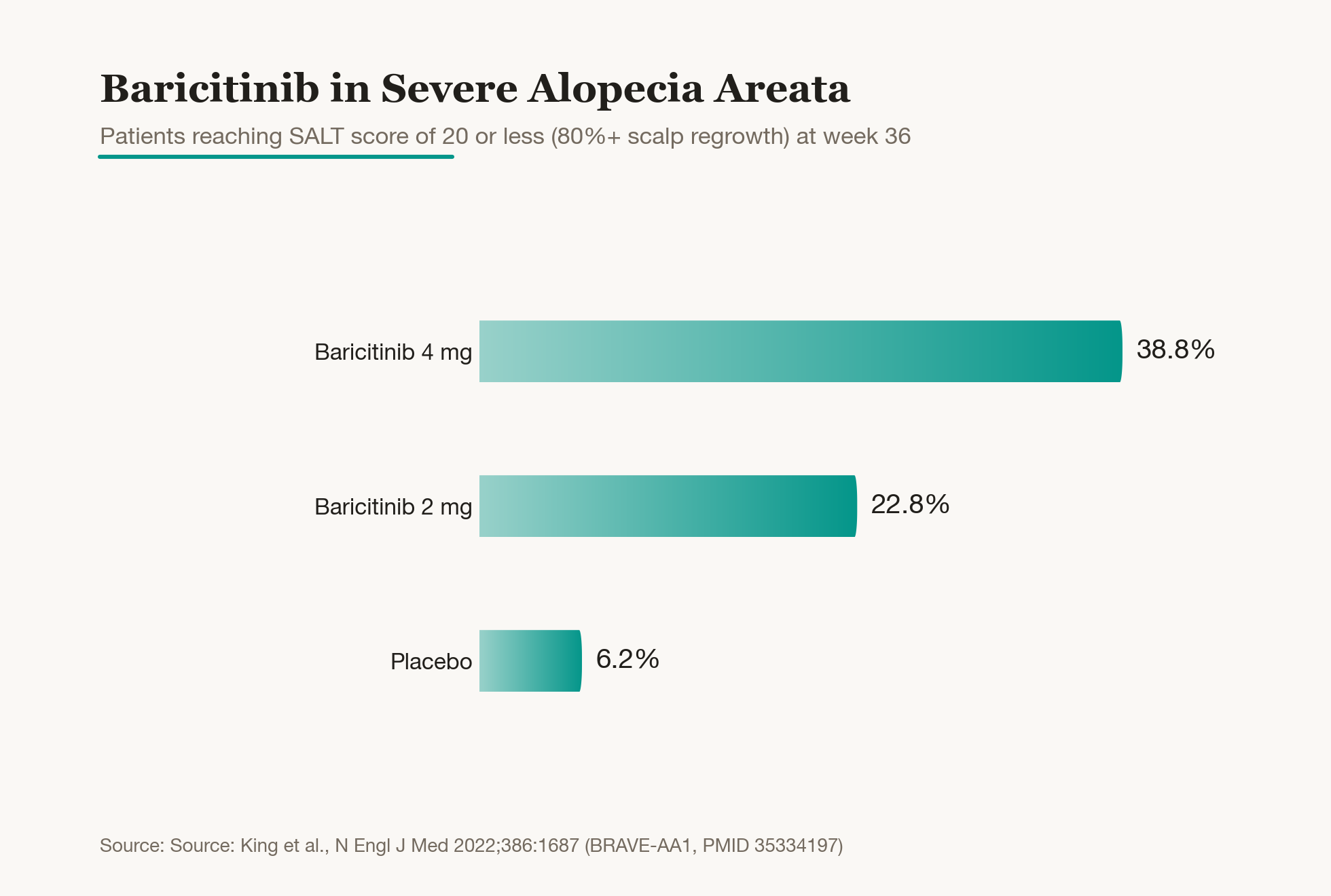
For more widespread or frequently relapsing cases, oral JAK inhibitors, which block the JAK-STAT pathway described earlier, are increasingly used as a treatment option. Baricitinib, for example, has been approved as a treatment for moderate to severe alopecia areata. These drugs work by blocking the signaling that drives immune cells to attack the follicle in the first place.
That said, how quickly and how fully any treatment works varies considerably from person to person. The right approach really depends on how widespread the hair loss is, how fast it's progressing, and whether relapse has happened before, all things worth discussing directly with a dermatologist.
References
Korean Dermatological Association, American Academy of Dermatology (AAD), and Ministry of Food and Drug Safety (MFDS). </content> </invoke>
Was this helpful?
About this article
Written by a practising aesthetic physician and intended for general education — not a substitute for individual medical advice.
Read next

Angular Cheilitis: Causes, Symptoms, Preventing Recurrence and Treatment
Angular cheilitis is a common condition where both corners of the mouth crack and stay raw. Saliva softens the skin there, and once friction and fungal or bacterial infection join in, it tends to linger. Here is why the cracking keeps coming back, and how to manage it.
By Dr. Lee
Keratosis Pilaris Causes, Keratolytics, and Laser Effects
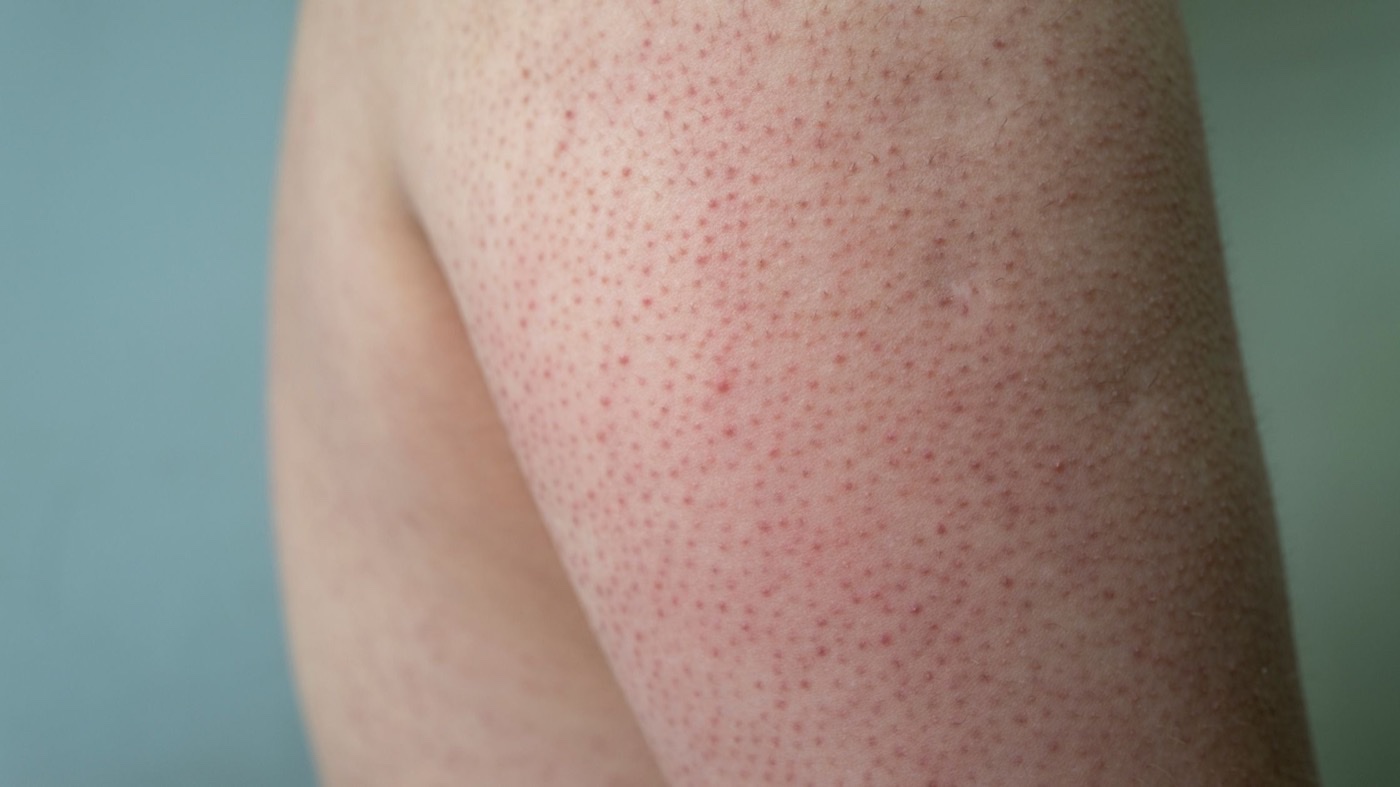
Keratosis pilaris, the bumpy skin on the arms and thighs often called chicken skin, is extremely common. We'll cover why it happens, how to choose a keratolytic like urea, salicylic acid, or a retinoid, and how much lasers can actually help. It's not a condition that clears up in one treatment, it's one you manage over time, and understanding that changes how you approach it.
By Dr. Kim
Cafe-au-Lait Spots Returning After Laser: Causes, Number of Sessions and Expectations
A café au lait spot forms because the pigment-making cells in that one patch of skin are locally overactive. Laser treatment breaks up the pigment that has already built up, but it doesn't switch off those cells, which is why the color so often returns. Here's the biology behind it, why results differ so much from person to person, and what a realistic treatment timeline actually looks like.
By Dr. Kim