Angular Cheilitis: Causes, Symptoms, Preventing Recurrence and Treatment
By Dr. Lee7 min read
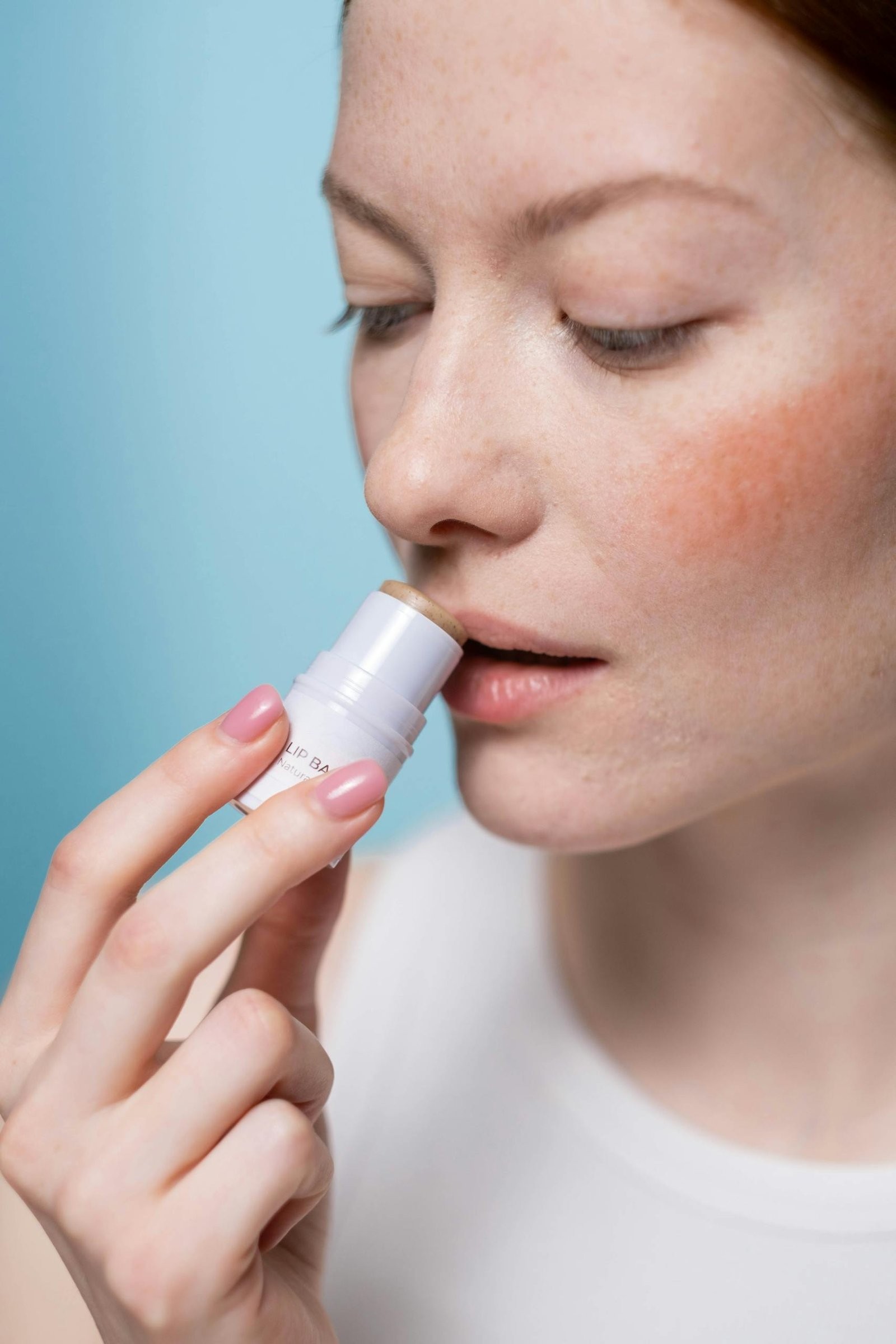
Angular cheilitis is what happens when both corners of your mouth split open and turn pale and raw, stinging every time you smile or open wide. Lip balm rarely fixes it. Even when it seems to heal, the same spot often cracks open again within days.
This is not the same as ordinary dry, chapped lips. The corners of the mouth sit in a small fold where the upper and lower lip meet, a spot where saliva pools easily and that keeps moving every time you talk or chew. Once fungus or bacteria settle into that fold, the crack has a hard time closing for good. Let's walk through why this particular spot cracks so easily, and why it lingers.
What are the symptoms of angular cheilitis?
Angular cheilitis appears right where the upper and lower lip meet at each corner of the mouth. It usually starts as mild redness and dryness, but over time the skin splits and a thin, white, weepy film forms along the crack.
Every time you open your mouth wide, laugh, or chew, the split reopens and stings. Unlike ordinary lip dryness, which spreads across the whole lip, angular cheilitis stays confined to that one folded corner. The problem is concentrated entirely in a single crease.
Some people notice it on just one side, others on both, but the location never changes. It is always that narrow crease where the lips meet and fold. The fact that it always shows up in the exact same spot is itself a clue to what is causing it.
Why are the mouth corners so vulnerable?
Most of the skin on your face lies flat, but the corners of your mouth are different. Because the upper and lower lip meet and fold there, that spot bends and unbends far more often than skin anywhere else on the face.
A folded spot carries two problems at once. First, it is a narrow crease where saliva collects easily. Second, that crease keeps opening and closing every time you speak or chew. It is a bit like the crease of a shirt sleeve wearing thin before the rest of the fabric. When the same spot keeps getting creased over and over, that is exactly where weakness sets in first.
How does saliva affect the skin?
Saliva contains an enzyme called amylase, which breaks down food. Inside the mouth, that is not a problem. But when it sits on the skin just outside the corner of the mouth for long stretches, it gradually softens the outer layer of skin, the stratum corneum.
Think of how fingertips turn pale and wrinkled after too long in water. In that softened state, skin peels and tears at the slightest friction. The corners of the mouth work the same way. The longer that skin stays damp with saliva, the softer the outer layer becomes, and softened skin splits easily with nothing more than the motion of talking or chewing.
Why do fungal and bacterial infections develop?
Once the skin splits, the problem does not stop there. A warm, damp crack is exactly the kind of environment that fungus, most often Candida, and bacteria, most often Staphylococcus, thrive in. Both already live in small amounts in the mouth and on the skin, but given a moist, cracked opening, they multiply quickly right at that spot.
Once infection sets in, irritation builds faster than the wound can heal, which is why moisturizer alone often is not enough. The same problem tends to show up in people whose mouth corners fold more deeply, such as older adults wearing dentures, and in anyone who wears a mask for long hours or tends to breathe through the mouth, since both keep the area chronically damp.

Why don't mouth corner cracks heal easily?
You may have had the experience of a cut on a knuckle reopening again and again. Every time you bend that knuckle, the scab splits back open. The corners of the mouth work the same way, reopening each time you talk, smile, or chew.
Healing requires time for new skin to close over the gap, but a spot that moves hundreds of times a day rarely gets that chance before the scab or new tissue splits open again. That is why this particular wound tends to heal far more slowly than a cut almost anywhere else on the body.
Why does it keep coming back?
Putting the pieces together, three things act on the same spot at once: softening from saliva, fungal or bacterial infection, and repeated friction. Any one of these alone would likely heal within a few days. Together, they keep reviving each other in a loop.
Once the crack becomes infected, inflammation makes the area more swollen and sensitive, and sensitive skin reopens more easily with even small movements. The reopened wound is then exposed to saliva and bacteria all over again. As long as that cycle continues, moisturizer alone will not break it, and the pattern of seeming to heal only to crack open again days later keeps repeating.
That is why removing just one cause rarely resolves angular cheilitis on its own. Cutting down time spent damp with saliva, reducing friction, and calming the infection, if any one of these three is left unaddressed, the other two keep the cycle going. All three need attention together to break the loop.
Habits that trigger recurrence
A handful of common habits tend to stretch this cycle out longer than it needs to last.
- Frequently licking the lips or corners of the mouth: this moistens the skin briefly, but as the saliva dries it pulls even more moisture out, leaving skin drier and weaker than before.
- Ill-fitting dentures or a recently shifted bite: a change in the space between the upper and lower jaw can make the corners of the mouth fold more deeply, creating a small pocket where saliva collects.
- Wearing a mask for long stretches: moisture from breath and saliva gets trapped around the mouth, keeping that area damp for hours at a time.
- A diet low in B vitamins or iron: these nutrients are building blocks the skin and mucous membranes use to repair themselves, and a shortage is thought to slow healing even for minor wounds.
- Sleeping with the mouth open and drooling: since you cannot wipe it away while asleep, saliva sits on the corners of the mouth for hours at a stretch.
How to manage it and when to see a doctor
Once you understand the cause, the path forward is straightforward. The priorities are cutting down saliva contact and friction, and seeing a doctor if infection seems likely.
- Making a conscious effort to stop licking the lips or mouth corners helps break the cycle where drying saliva pulls out even more moisture.
- Applying a thin layer of an occlusive ointment, such as petroleum jelly, several times a day helps reduce how much direct contact saliva has with the skin.
- If the crack turns white and weepy, or has not healed after 2 weeks or more, fungal or bacterial infection becomes more likely, and a dermatologist can prescribe an antifungal or antibiotic ointment.
- Salty, sour, or heavily spiced foods can irritate an open crack, so it is best to avoid them while healing.
- If dentures have loosened or your bite feels different lately, a dental visit alongside skin treatment can help cut down on repeat episodes.
Angular cheilitis usually clears up within days to a few weeks once the underlying causes are addressed, but if it keeps coming back or lingers, it is worth seeing a doctor, since infection may well be layered on top. Rather than getting discouraged when self-care does not work right away, it helps to remember that easing both saliva exposure and friction together simply takes a little time.

References
Korean Dermatological Association, American Academy of Dermatology (AAD), and Ministry of Food and Drug Safety (MFDS).
Was this helpful?
About this article
Written by a practising aesthetic physician and intended for general education — not a substitute for individual medical advice.
Read next
Alopecia Areata: Causes, Symptoms, Recovery Time, Recurrence and Treatment
Alopecia areata isn't just a stress condition. It's an autoimmune reaction where immune cells mistake hair follicles for foreign invaders and attack them. Here's how genetic predisposition and trigger factors combine to set off symptoms, plus what recovery actually looks like and why relapse is so common.
By Dr. Lee

Keloid Scar Causes and Treatment, Including Recurrence and Management
A keloid is a scar that keeps piling up collagen even after the wound has fully healed, growing larger than the injury that started it. Here's why the collagen never seems to know when to stop, how a keloid differs from an ordinary scar, how injections and laser treatments work to calm it down, and why it tends to come back so often.
By Dr. Lee

Flat Wart Causes and Symptoms: Why They Spread When Squeezed, and Treatment
Flat warts are a viral skin condition, so picking or scratching at them doesn't clear them up, it spreads them further. Here's why that happens, how to tell them apart from moles or acne, and the logic behind removal and preventing recurrence.
By Dr. Kim