AGNES RF: Effects, How the Insulated Needle Works, Pain and Side Effects
By Dr. Kim7 min read

If acne keeps coming back to the same spot, or puffiness under your eyes makes you look more tired than you feel, you've probably come across AGNES at some point. The claim is that a needle can target and eliminate exactly that one area. Whether it can really be that precise, and whether under-eye fat can actually shrink without surgery, are fair questions worth answering properly.
AGNES is a microneedle radiofrequency device developed by a Korean dermatologist. It delivers RF energy through a fine needle at a precise depth, treating only the intended tissue while leaving the surrounding area undisturbed. The defining feature is the insulating coating on the needle: only the tip generates heat, while the shaft is insulated, so the epidermis stays protected as the sebaceous glands or fat below get treated. That's what makes it well suited for acne at one specific spot or for the fat pocket under the eye. Here's how the mechanism works, what the evidence shows, and where the realistic limits are.
What kind of device is AGNES RF?
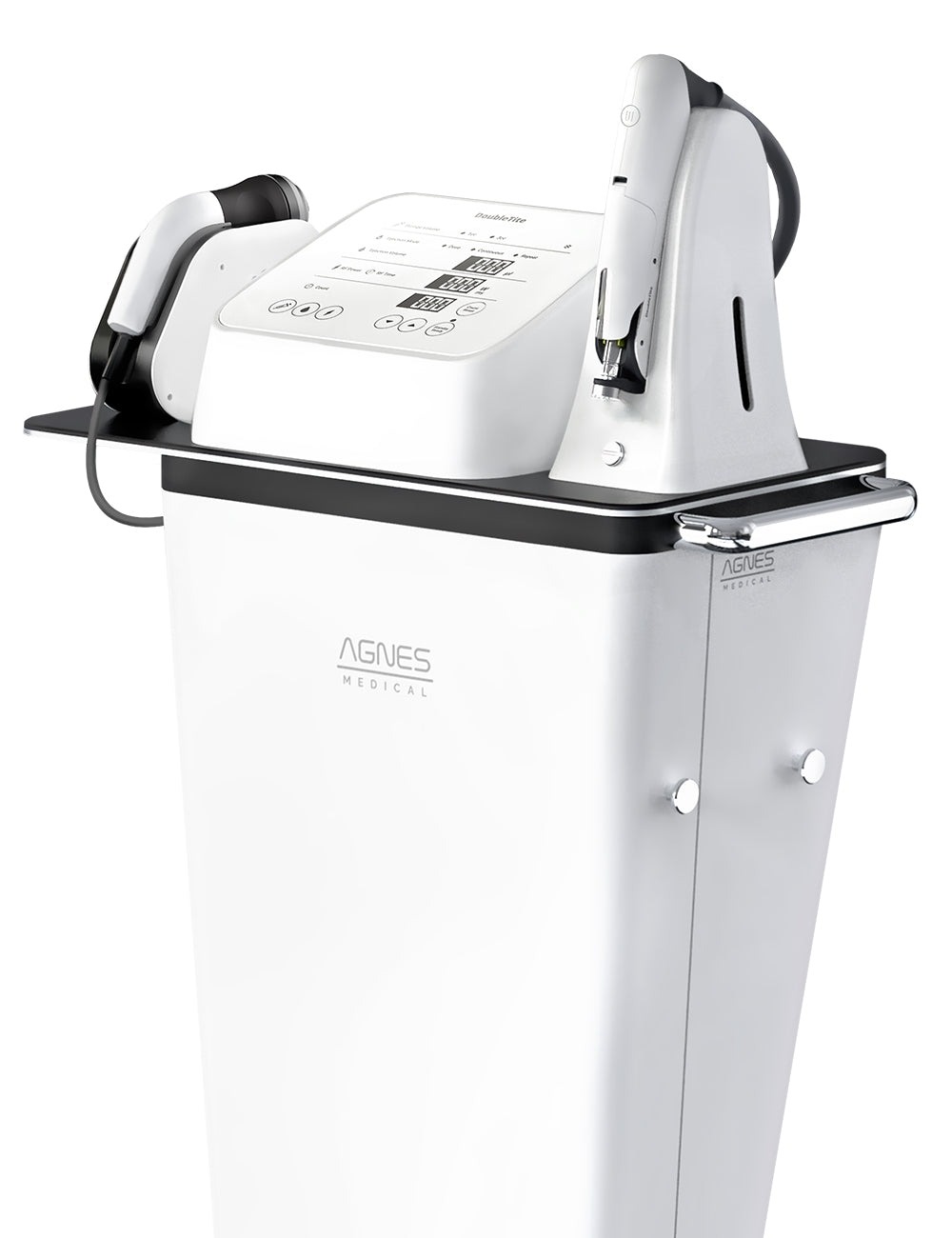
AGNES is a microneedle RF device. A needle finer than a strand of hair is inserted into the skin, and radiofrequency energy is delivered from the tip to generate heat at that precise point. The heat coagulates and destroys the target tissue. Because the needle reaches a specific depth, it acts on the intended layer rather than the surface.
What sets AGNES apart is the insulated needle design and the variety of needle options available. Different needles come in different lengths, gauges, and insulation profiles, selected based on the treatment area and goal. Unlike broad-action RF devices, AGNES is built for narrow, precise targets: one acne lesion, one pocket of under-eye fat.
AGNES was developed by a Korean dermatologist specifically to eliminate sebaceous glands, the root cause of acne, through years of refinement. It started as an acne treatment, but as the same principle proved useful for under-eye fat, fine lines, and scarring, the range of applications grew. It is a cleared medical device used in dermatology clinics in Korea and internationally. The range of needles, each with different specifications, lets a single device address conditions as different as acne and under-eye fat, adjusting to each area as needed.
How does the insulated needle work, and what are its advantages?
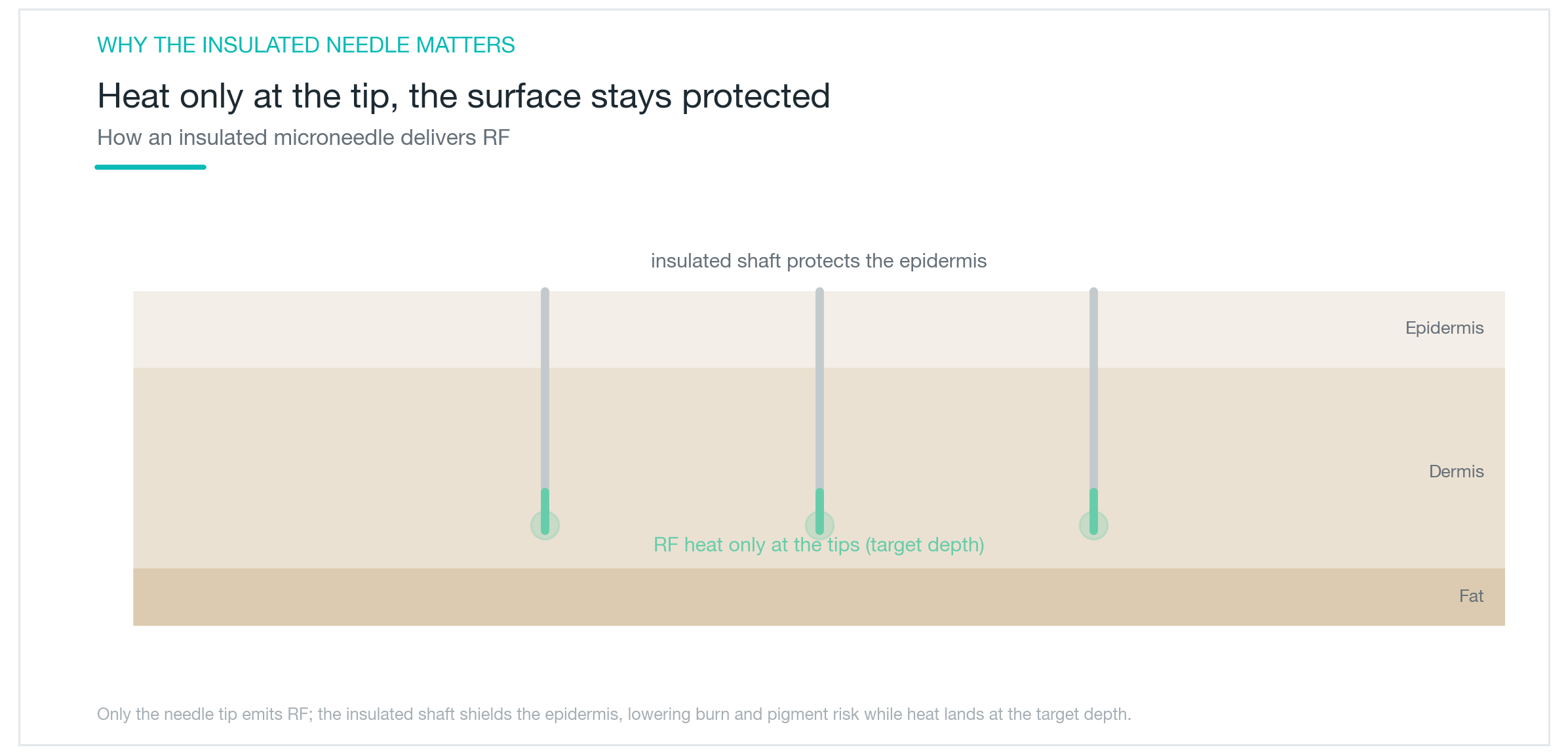
The importance of insulation comes down to safety and accuracy. When RF energy is emitted along the entire needle, the epidermis and surrounding tissue receive heat too, raising the risk of surface burns and post-inflammatory hyperpigmentation. With AGNES, only the needle tip generates heat and the rest of the needle is insulated, so the epidermis is left largely undisturbed while the target tissue below gets the focused energy.
This design creates two clear advantages. First, protecting the epidermis reduces the risk of hyperpigmentation and cuts downtime, which matters especially for skin tones more prone to discoloration. Second, concentrating energy at the target point means less overall stimulation is needed to treat the intended tissue precisely, without spreading heat to the surrounding area.
AGNES is not about applying broad, high-intensity heat. It is about delivering minimal heat to exactly the right depth with precision. Even among microneedle RF devices, outcomes vary depending on whether insulation is used and how the needle is designed. AGNES is built around insulation and needle variety for targeted, area-specific treatment. The depth, needle type, and energy level are ultimately the practitioner's call, so results depend significantly on who is performing the procedure.
Does it work on recurring acne?
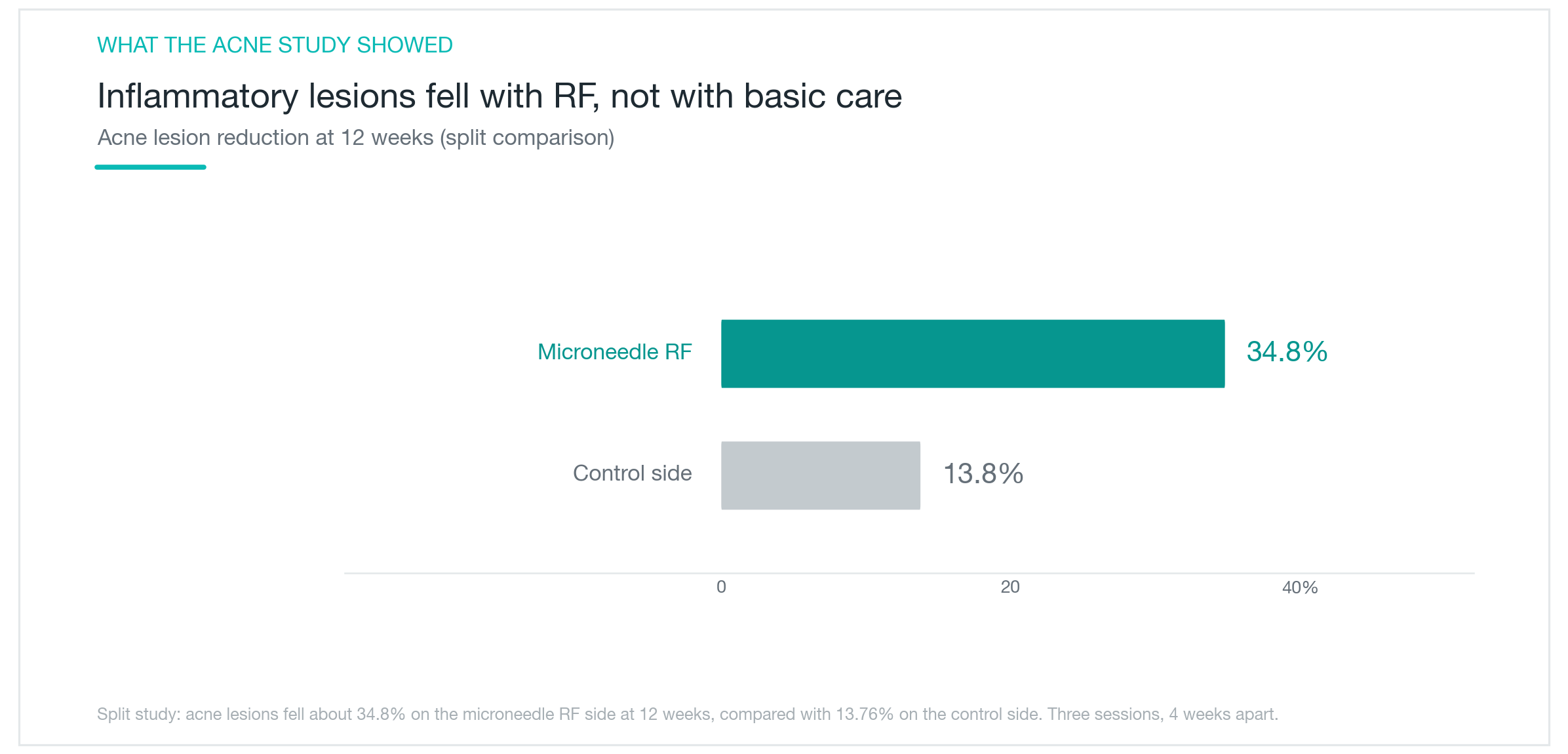
Acne originates in the sebaceous glands, which produce sebum. When sebaceous glands are overactive, sebum builds up in the follicle and inflammation recurs. AGNES places the needle at precisely the depth of the sebaceous gland and uses RF heat to selectively destroy it. Because it addresses the source rather than the symptom, it works particularly well for inflammatory acne that keeps returning to the same spot.
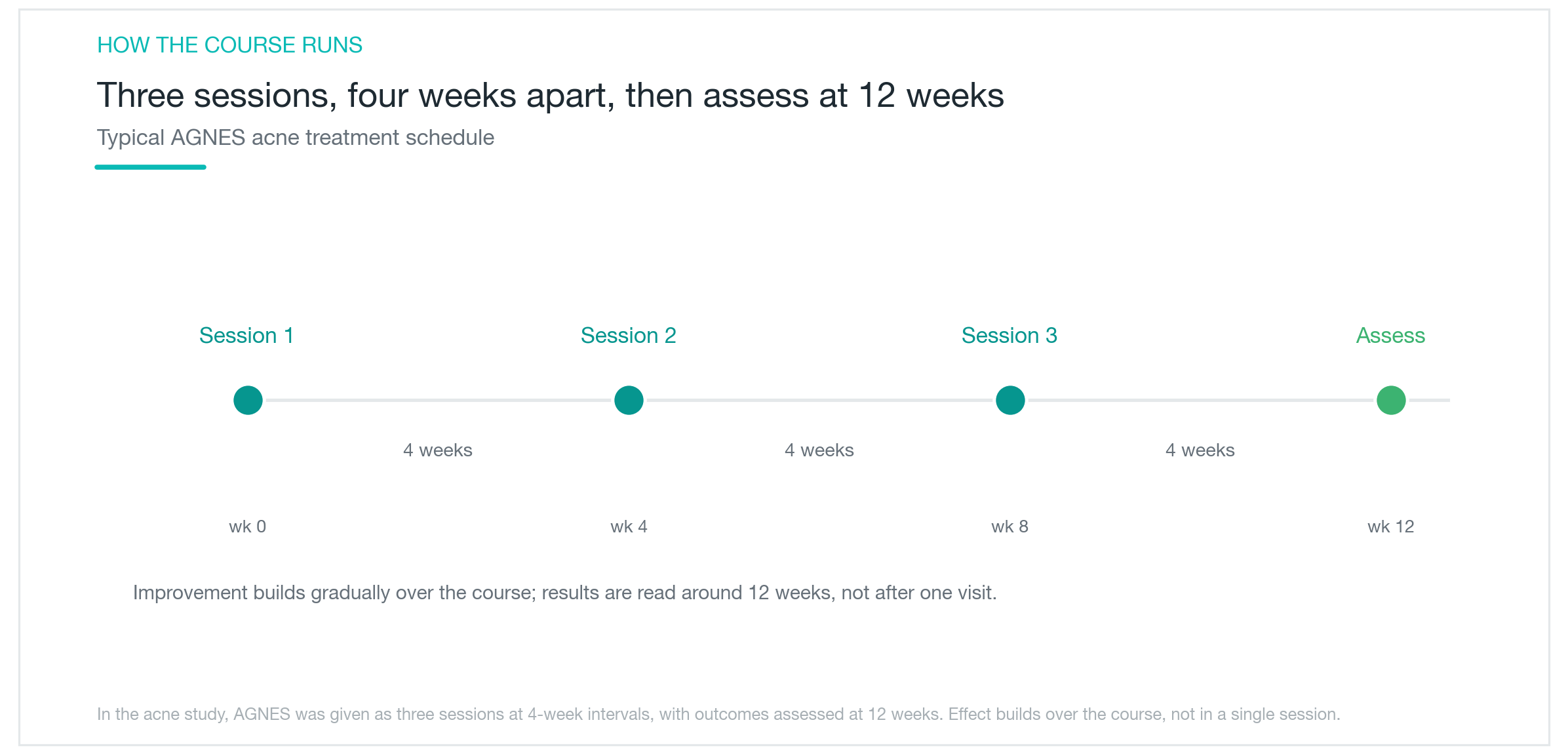
There is clinical evidence supporting this. In a comparative study of 63 acne patients, the group that received AGNES-type microneedle RF in three sessions at 4-week intervals showed a significant reduction in inflammatory acne lesions at the 12-week mark. The control group, which received standard microneedling and extraction only, showed no comparable reduction over the same period. Targeting the sebaceous gland directly outperformed general acne management in reducing inflammatory lesions.
That said, AGNES is not a universal solution for all acne. Its strength lies in nodular, deep-seated inflammatory acne that recurs in the same location, rather than widespread mild breakouts or closed comedones. Multiple sessions are needed since the goal is eliminating sebaceous glands, and consistent skincare and lifestyle habits matter alongside treatment. Rather than expecting all acne to clear in one session, it is more accurate to think of AGNES as a precision tool for reducing persistent problem areas.
Can it reduce under-eye fat too?
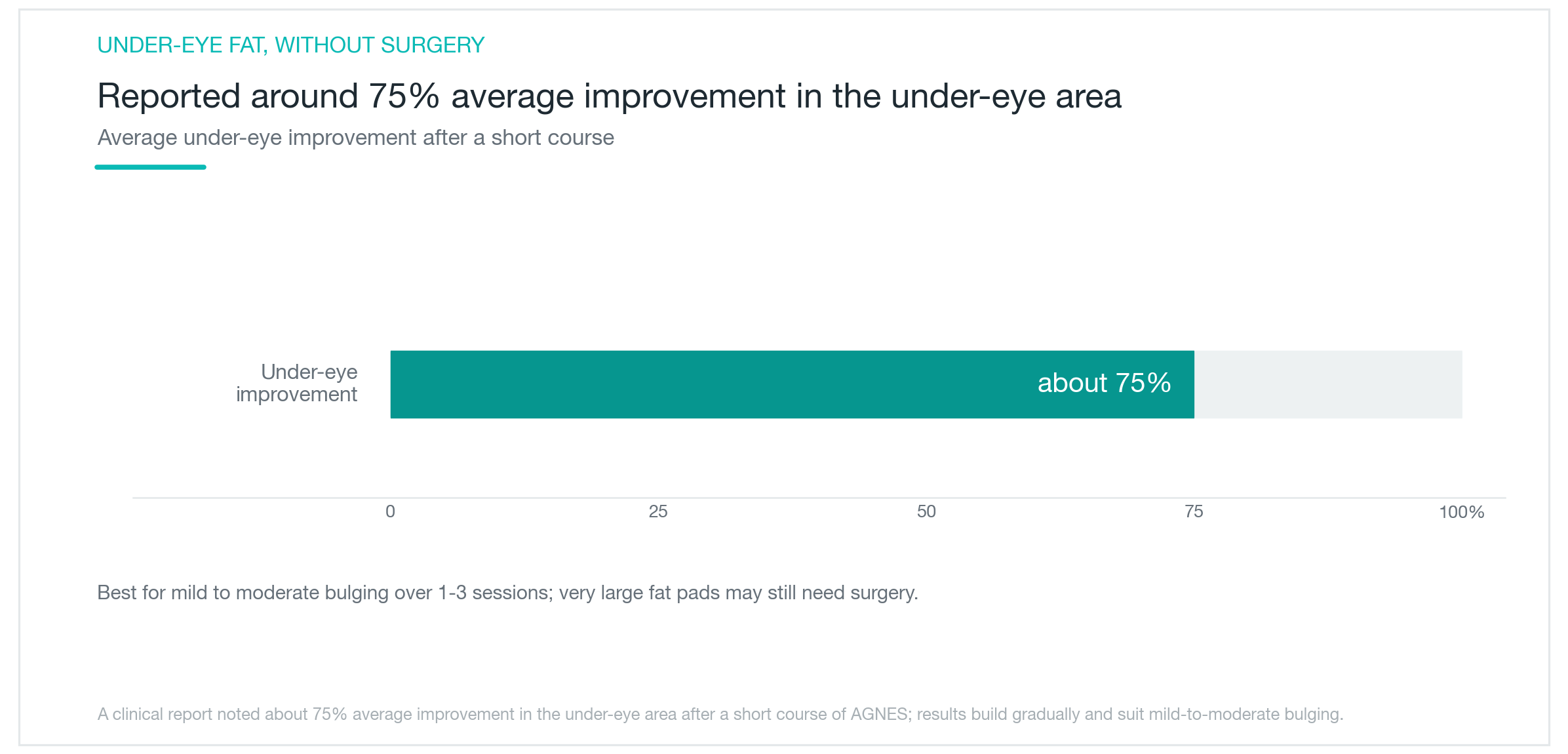
The same principle applies to under-eye fat. The insulated needle is inserted precisely into the sub-orbital fat layer, and RF heat reduces the fat volume. It offers a non-surgical option for addressing under-eye puffiness without a scalpel, which is a genuine draw for those who want to avoid an operation. Studies on AGNES for under-eye fat have reported improvement in the degree of protrusion.
Expectations need to be realistic, though. When there is a large amount of under-eye fat, surgical removal is more definitive. AGNES is a better fit for mild to moderate under-eye fat, or for those who prefer to avoid surgery. Results also tend to develop gradually over multiple sessions rather than all at once, so patience is part of the process. Evaluating how prominent the fat is and how elastic the skin is will help determine whether AGNES is the right approach or whether surgery would serve better.
The under-eye area has thin, sensitive skin that calls for especially precise technique. Even a small deviation in needle depth can cause bruising or swelling, so it is safer to work with a practitioner who has substantial experience with this specific area. For under-eye treatment with AGNES, the practitioner's skill level influences outcomes as much as the device itself does.
How much pain and swelling to expect
Inserting a needle and applying RF heat does involve some discomfort. Numbing cream is typically applied beforehand, and local anesthesia may be used for certain areas. Individual tolerance varies, but most people describe the experience as manageable with anesthesia. Sensitive areas like under the eyes tend to feel more intense.
Downtime varies by area and treatment intensity. Redness, swelling, needle marks, and bruising are common immediately after and may last a few days. Thinner areas like the under-eye can take longer to settle, so scheduling around important events is wise. Because the insulated needle protects the epidermis, broad surface damage and significant hyperpigmentation are relatively uncommon.
Typical side effects include temporary swelling, bruising, and redness, which usually resolve within a few days to a week. Hyperpigmentation or small depressions in the skin are uncommon but can occur if the energy level or depth is set incorrectly. Diligent sun protection and gentle aftercare help with recovery, and choosing a practitioner who dials in the right needle type and energy level for each area is the most reliable way to minimize risk.

What concerns is AGNES best for?
AGNES works well for well-defined targets: inflammatory acne that recurs in the same spot, under-eye puffiness from fat, and small areas of fine lines or scarring. Think of it as a precision instrument for specific problem spots rather than a device that improves a large area all at once. The insulated needle's reduced hyperpigmentation risk is an advantage for skin tones that are prone to post-treatment pigmentation. For goals that involve improving a broad surface area at once, other devices may be a better fit.
Keeping expectations realistic matters. Whether for acne or under-eye fat, multiple sessions are necessary and changes appear gradually. Severe under-eye fat or extensive acne may respond better to surgery or other treatments, so it's worth confirming whether AGNES is the right approach through a proper consultation before starting. Because results vary significantly depending on needle choice, depth, and energy level, finding a practitioner with experience treating your specific concern is essential. Precise technique, accurate assessment, and consistent follow-through across sessions are what deliver satisfying results with AGNES.
Was this helpful?
About this article
Written by a practising aesthetic physician and intended for general education — not a substitute for individual medical advice.
Read next

Density Lifting Effects: How Does It Compare With Thermage?
A plain look at what Density RF actually is, how its dual monopolar-bipolar mode differs from single-mode RF like Thermage, what the clinical evidence shows, how much it hurts, what downtime to expect, and who is and isn't a realistic candidate.
By Dr. Kim

Sylfirm X Pulse Wave: Effect on Melasma and Redness, and Downtime
A clear-eyed look at how Sylfirm X works as a microneedle RF device, how pulsed wave addresses melasma and facial redness, what the clinical evidence actually shows, what pain and downtime to expect, and who is most likely to benefit.
By Dr. Lee
NeoBeam Acne Laser: How Well It Works, How Long It Lasts, and Does It Help Scars?
A clear-eyed look at NeoBeam's 1450nm diode laser technology, how well it controls active breakouts and excess oil, why it's limited for acne scars, and what the class-level clinical data really shows.
By Dr. Kim