Aegyo-Sal Filler: Technique, Amount, Lumps and the Tyndall Effect
By Dr. Kim8 min read

Aegyo-sal is the puffy roll just under the lower eyelid that appears when smiling. It has long been popular because it makes the eyes look bigger and softer, and filler has become a well-established way for people who weren't born with this feature to recreate it.
These days, though, the trend has shifted a bit. Instead of filling it thick and obvious, more people now feel that a subtle, barely there amount looks more natural. As it's become known that overfilling can cause lumping, sagging, or a bluish Tyndall effect, the standard approach now is to start small and add gradually while watching how the smile looks. Understanding how this line forms and how much is the right amount makes it much easier to communicate during a consultation.
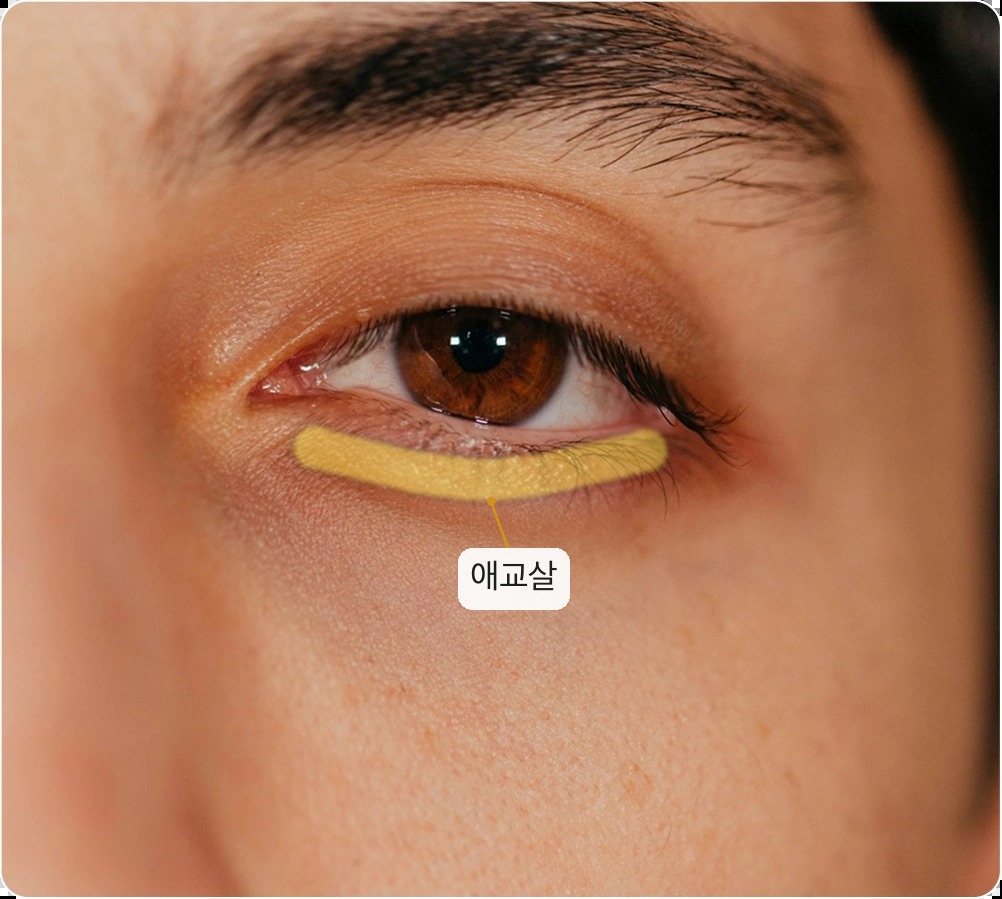
How does aegyo-sal form?
Aegyo-sal is the puffy line created by the orbicularis oculi, a small muscle that rings the eye. This donut-shaped muscle is what you use to open and close your eyes. It normally lies flat, but when you smile or squint, it contracts slightly and the lower edge of the eye puffs up. It's a bit like a rubber band wrapped around the eye, bulging briefly when the muscle tightens as you smile.
This is normally just a momentary muscle movement that shows up when you smile, but some people have thicker under-eye fat and skin, so a subtle puffy line stays visible even at rest. As more people came to see this line as making the eyes look bigger and younger, demand grew for filler to recreate it in those who don't have it naturally.
It's a different area from the tear trough (the dark circle groove) just below it. Aegyo-sal is about adding puffiness right along the lower eyelid edge, so knowing the difference between the two before your consultation helps you describe exactly the look you want.

Which layer is filler injected into, and how?
Aegyo-sal filler involves placing a small amount of hyaluronic acid just above the orbicularis oculi, in a very shallow layer close to the skin surface. Hyaluronic acid is a substance naturally found in the body, a gel that holds onto water to create volume. When this gel is laid down in a thin line along the lower eyelid edge, it creates a puffiness similar to the line the muscle makes naturally.
Aegyo-sal filler is injected into a shallow layer right beneath the skin. The shallower the layer, the more easily even a small mistake shows or creates bumps, so a fine needle is used to place very small amounts in multiple spots, almost like dotting them in. This approach is called the microdroplet technique, meaning the filler is placed in tiny amounts, one droplet at a time.
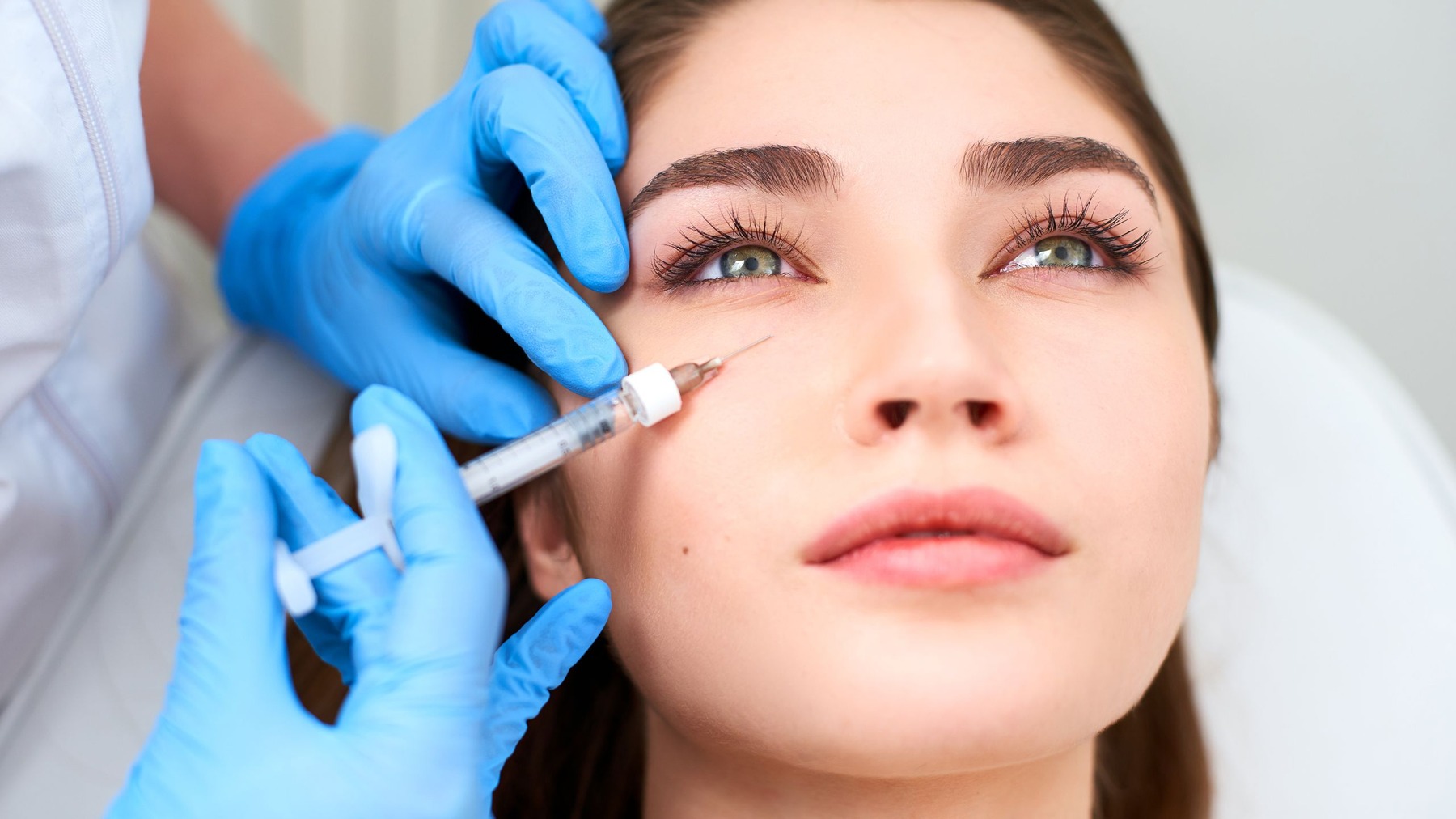
The treatment itself can take as little as 10 minutes, and any swelling usually settles within a few days. Since the under-eye area has some of the thinnest skin on the face, though, a much smaller amount produces a noticeable change compared to other areas.
How aegyo-sal filler trends have changed
Just a few years ago, the general belief was that a more defined, fuller aegyo-sal looked better, so filler was often injected in large amounts all at once to build up a thick puffy line. Recently, though, the trend has moved in the opposite direction. As people came to feel that a line that's too thick and artificially raised can actually look aged or swollen, a preference for a subtle, barely visible line has taken hold.
In today's consultations, rather than filling everything in from the start, practitioners often place a very small amount, check how it looks with a smile, and add more only as needed. Starting on the conservative side and observing over time, rather than filling it all in at once, tends to lead to a safer and more natural result than overfilling and having to dissolve it later.
This shift is even more pronounced in thin, sensitive areas like the under-eye. And as the data below shows, starting with a small amount genuinely helps reduce the risk of side effects.
| Category | Old Style | Current Style |
|---|---|---|
| Line thickness | Thick, well-defined | Subtle, thin |
| Injection amount | Large amount at once | Small, gradual amounts |
| Goal | Noticeable volume | Natural look |
| Perception | Makes eyes look bigger | Overfilling looks swollen |
Why is a small amount safer?
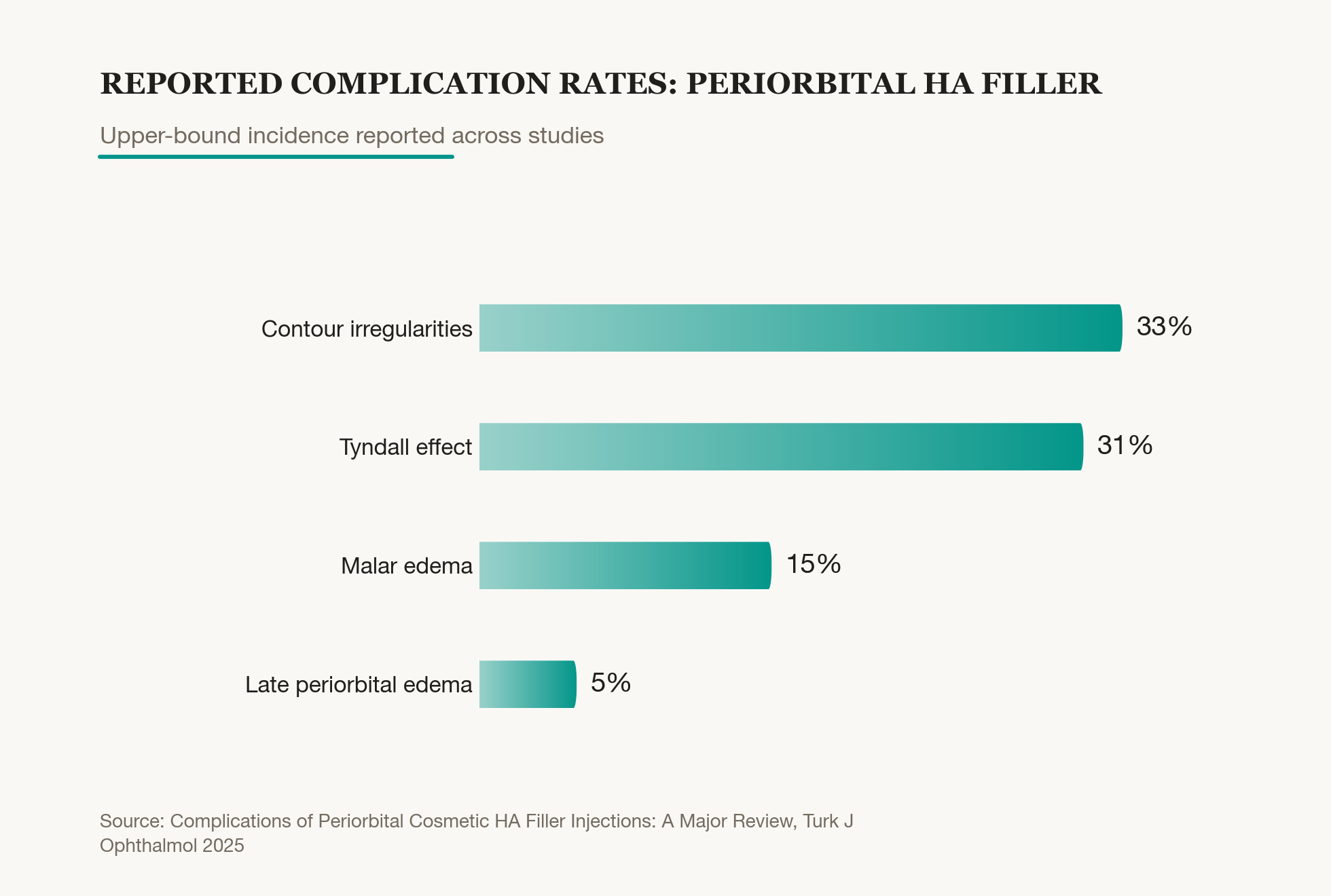
There's a real reason behind the preference for small amounts. Because the under-eye area has some of the thinnest skin on the face, injecting too much filler or placing it too shallow can lead to lumping, an uneven surface that develops over time. The gel can clump together and feel like small bumps under the skin, or the line can look unnaturally prominent when smiling. This has been reported fairly often in studies that followed filler around the eyes over the long term, which is why starting with a smaller amount is the safer choice.
The Tyndall effect, where light scatters and the area looks faintly blue, is also common under the eyes. It happens when filler placed under thin skin scatters light, giving the area a subtle bluish tint, the same principle behind why the sky looks blue. The more shallow and thick the filler is placed, the more visible this bluish tint becomes, which is why it's important to place only a very small, precise amount in the shallow layer.
Other reported side effects include malar edema, swelling that extends toward the under-eye and cheekbone area, affecting up to 15% of cases, and delayed swelling that shows up well after the treatment, affecting up to 5% within 12 months. The chart above summarizes these four side effects based on the highest figures reported. The wide range in numbers reflects differences in injector skill, amount used, and follow-up period across studies, but cases that stuck to small amounts and a shallow layer consistently landed closer to the lower end.

What side effects come from overfilling?
There are four main issues that can show up when too much filler is used.
The first is lumping. When a large amount is injected into a thin layer all at once, the filler can't spread evenly and instead clumps into small nodules that feel bumpy to the touch. The second is an obviously artificial look. If the line is too thick and angular so that the puffiness stays visible even when not smiling, it no longer reads as natural muscle movement and instead looks like something was clearly injected.
The third is lower eyelid sagging. Because the skin and supporting tissue under the eye are thin, the added weight of the filler can cause the eyelid edge to droop slightly or make the eyes look tired. The fourth is the Tyndall effect mentioned earlier, where the thinner the skin, the more visible the bluish tint from the filler becomes.
Fortunately, most of these changes can be reversed. A small injection of an enzyme called hyaluronidase dissolves the hyaluronic acid that was placed, returning the area to its natural state. That said, repeatedly dissolving and refilling can add up to skin irritation over time, so sticking to the right amount from the start is the easier path in the long run.
What to check for a natural line
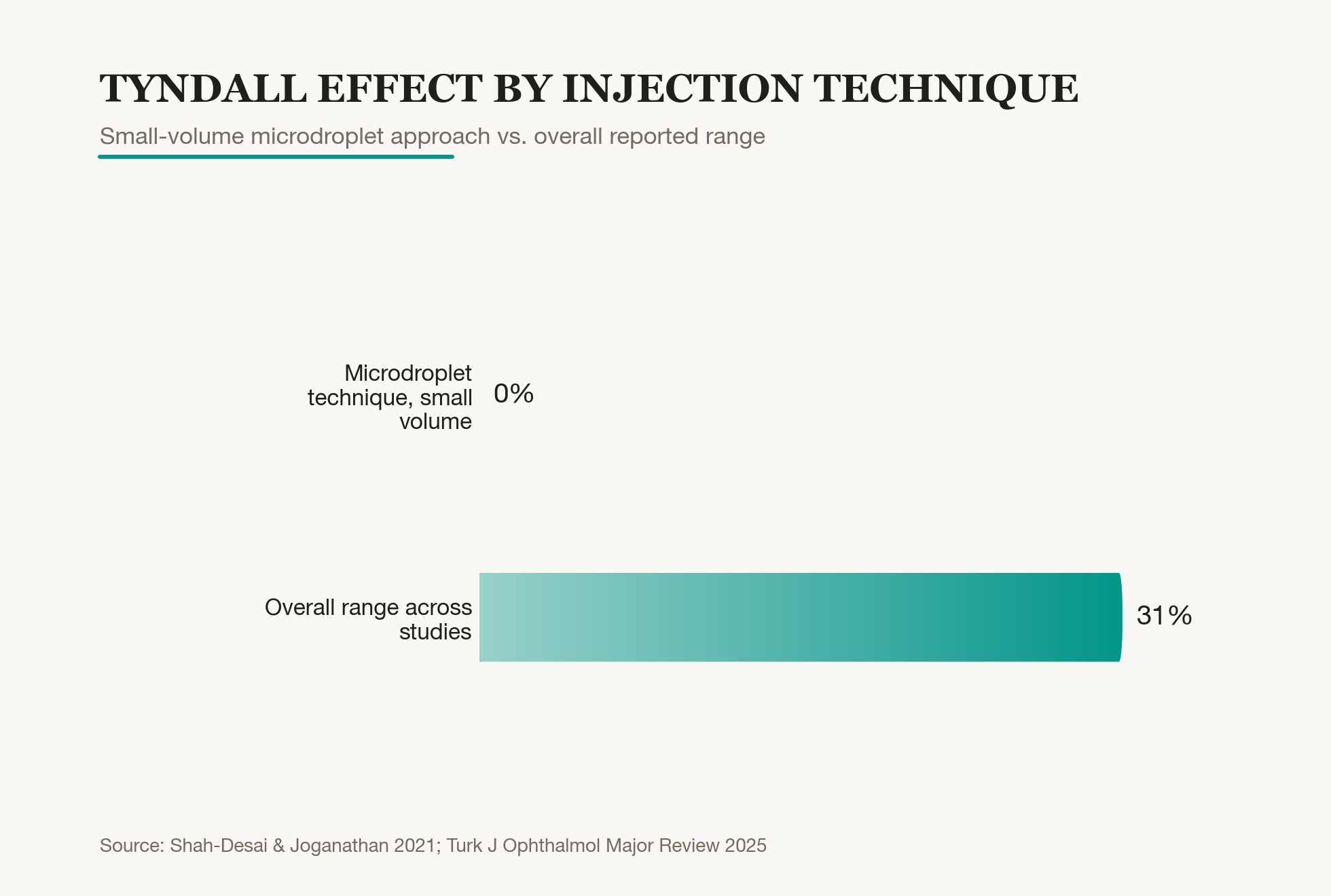
In studies that used the microdroplet technique (precise, small amounts placed in the shallow layer), not a single case of Tyndall effect was reported. That's a striking difference from the up to 31% figure noted earlier. In the end, how precisely and how little is injected is what determines the outcome.
If you want a natural-looking aegyo-sal, there are a few things worth checking. During your first consultation, look at reference photos together to agree on the line thickness you want, and it's safer to start with a small amount, wait about two weeks, and add more only if needed, rather than filling everything in at once. It also helps to confirm ahead of time that the clinic can dissolve the filler with hyaluronidase right away if any issue comes up.
You should avoid this treatment if you're pregnant, have inflammation around the eyes, or have had a hypersensitivity reaction to hyaluronic acid before. If you've had previous under-eye treatments that may have changed the tissue, let your provider know about that history as well. Aegyo-sal filler isn't about injecting a lot; it's a precise, small-volume treatment, and keeping that in mind is what lets you maintain a subtle, natural-looking line for a long time without lumping or swelling. A good rule of thumb is that it should only show up a little when you smile.
Was this helpful?
About this article
Written by a practising aesthetic physician and intended for general education — not a substitute for individual medical advice.
Read next

Lip Filler Effects and Duration, Including Lumps and Side Effects
A close look at lip filler results, how long they last, and side effects like lumping and asymmetry, plus which filler formula suits a part of the face that moves as much as the lips. We cover the science behind restoring the Cupid's bow and lip corners, the trend toward smaller volumes, and vascular complication safety with hyaluronidase, all backed by real study numbers.
By Dr. Lee
Under-Eye Hollow Filler: Effect and Side Effects, and the Tyndall Effect to Watch
The dark, sunken look under the eyes often comes less from pigment than from hollowing and the shadow it casts. Here's how the tear trough ligament and lost volume under the eye create that shadow, how a soft hyaluronic acid filler placed shallowly and sparingly smooths it out, why thin skin and the bluish Tyndall effect make this area tricky, and how long results actually last, all backed by real published numbers.
By Dr. Kim

Refractory Melasma Treatment: How Is Stacking Lasers and Medication Done?
A look at stacking treatment for melasma that toning alone can't clear, combining several devices and medications in one plan. We cover why melasma keeps coming back, why treating blood vessels matters alongside pigment, and why too much stimulation can backfire.
By Dr. Kim