Under-Eye Fat Repositioning Surgery: Method, Differences From Filler and Recovery
By Dr. Kim7 min read
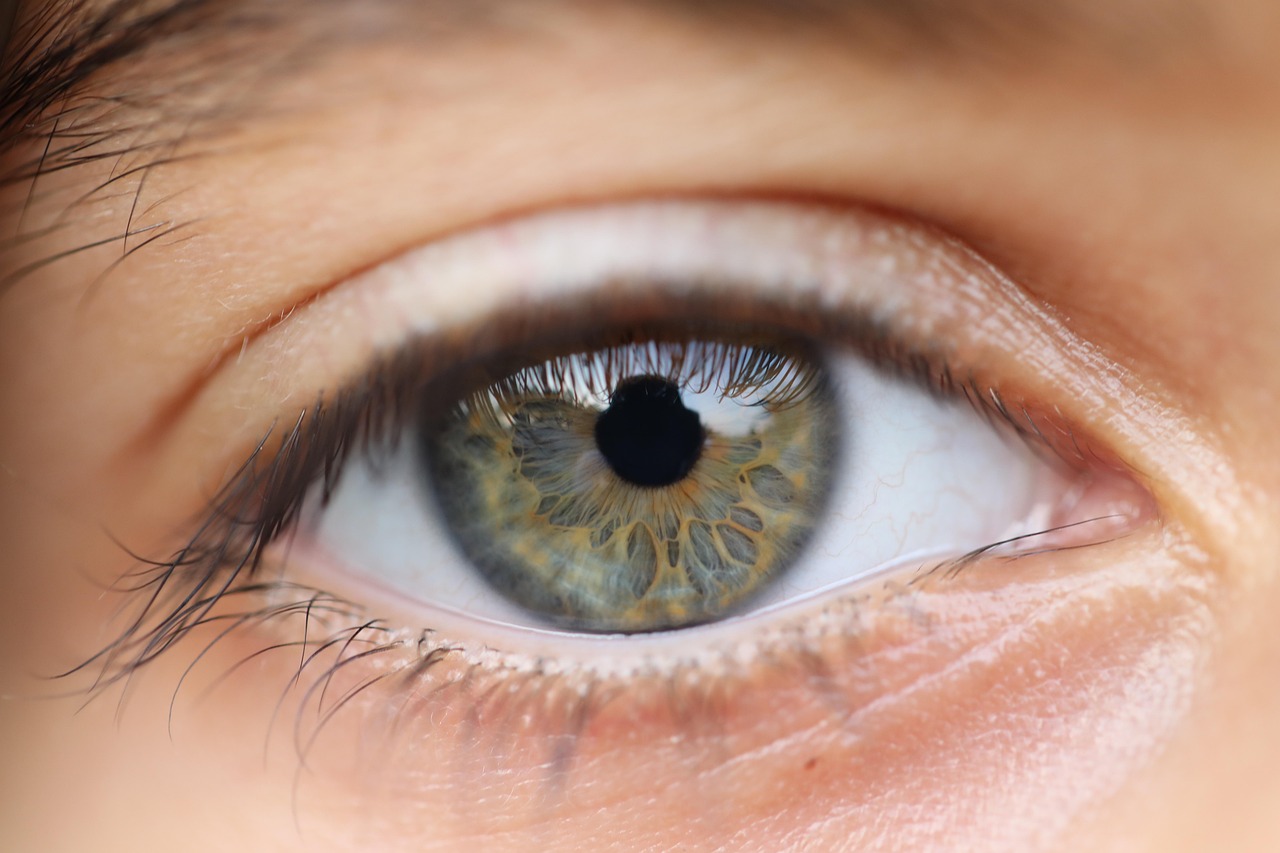
Sometimes the under-eye area looks puffy right where it bulges out, and hollow just below that. At first glance these seem like two opposite problems, but they're really one and the same issue. The fat under the eye has pushed forward, and the spot that actually needs volume never gets filled.
Under-eye fat repositioning is built around that idea. Instead of simply cutting the bulging fat away, the surgery moves it into the hollow just under the bony rim of the eye socket. Here's why surgeons move the fat rather than remove it, and how that relocated fat settles into its new home.
Why Does the Under-Eye Look Puffy but Hollow?
There's fat around the eyeball to begin with. It acts like a cushion, and a thin membrane called the orbital septum holds it in place from the front. As we age, this membrane loosens, and the fat pushes forward, creating that visible bulge under the eye.
The problem is that the spot where the fat pushes out isn't the same spot that casts the shadow, the hollow right under the bony rim. That area is naturally thin to begin with, since ligaments anchor the skin tightly to the bone there. As the fat piles up further forward, the space right below it looks even more sunken by comparison, and that shadow reads as a dark circle. In the end, the bulge and the hollow are really one phenomenon, both caused by fat shifting to one side.
Which of the two stands out more varies from person to person. If the orbital septum has weakened more, the bulge tends to show first. If the ligaments are holding the skin down more firmly, the hollow shows first. Same underlying cause, different appearance depending on the person.
Why Move the Fat Instead of Cutting It?
Surgeons used to simply cut away the bulging fat. That produced a smooth look right away, but it created problems down the line. As we continue to age, under-eye fat naturally keeps thinning out, and once it's already been removed, there's nothing left to fill the hollow that follows.
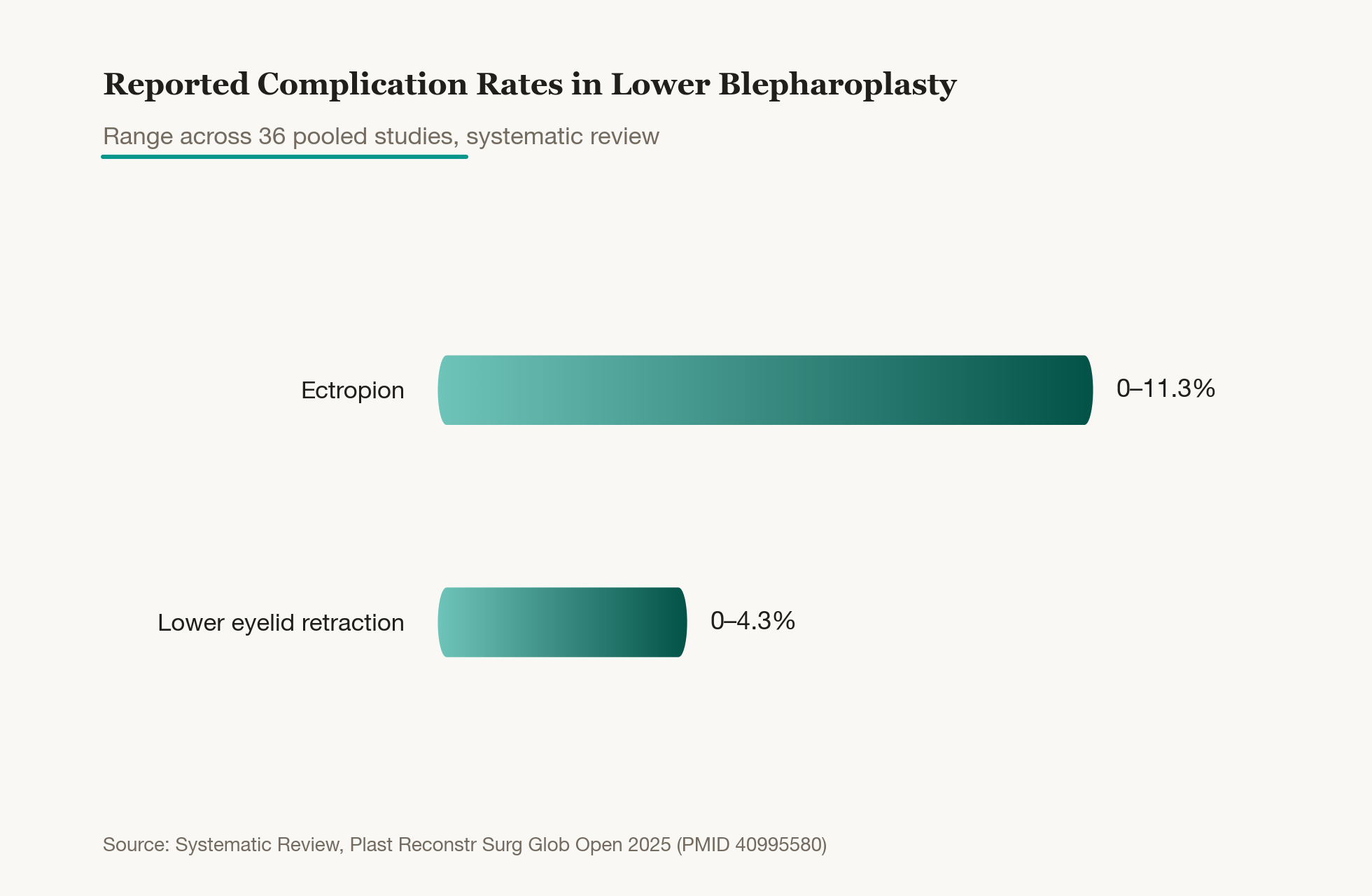
A few years later, the under-eye area can end up even more sunken, and in more severe cases, the lower eyelid can be pulled downward as a complication. Fat repositioning takes a different approach. Rather than discarding the fat, it moves the fat into the hollow, correcting the bulge and filling the hollow at the same time. Since it's simply using tissue the body already has, there's no need for any added filling material.
What Are the Steps of the Surgery?
Most cases go through a transconjunctival approach, meaning the surgeon enters from the inside of the lower eyelid, through the conjunctiva. Because the entry point is the mucosal lining inside the lower lid, there's no visible incision line on the outside. Since the skin isn't cut from the outside, scarring is much less of a concern.
Once inside, the surgeon opens the membrane surrounding the fat, and the fat that has pushed forward comes into view. Rather than detaching it completely at the root, the fat is carefully stretched while still attached to its blood supply, then moved into the hollow space below the bony rim. Once it's positioned, sutures hold it in place, and that completes the surgery. Keeping the root attached is directly connected to how the fat survives afterward, which the next section explains.
How Are Filler and Fat Repositioning Different?
Filler injections are another way to fill out the under-eye area. Filler is a substance made outside the body and injected in with a syringe. The body treats it as a foreign material rather than its own tissue, and enzymes gradually break it down and absorb it over time. That's why filler usually needs to be refreshed every 6 to 12 months.
Fat repositioning works through an entirely different process. What gets moved is living fat tissue that belongs to the body, and once the blood supply reconnects and the tissue settles in, it becomes a permanent part of that area. Since the body doesn't recognize it as foreign material to clear away, it doesn't follow filler's cycle of being absorbed and disappearing on a set schedule.
That's also why the two methods suit different situations. If overall facial aging has caused several areas to hollow out at once, filling multiple spots with filler in a single session is the simpler option. But when the under-eye bulge and hollow are showing up together, there's already surplus fat sitting right there to work with, which makes repositioning closer to addressing the actual root of the problem.
How Does the Moved Fat Survive?
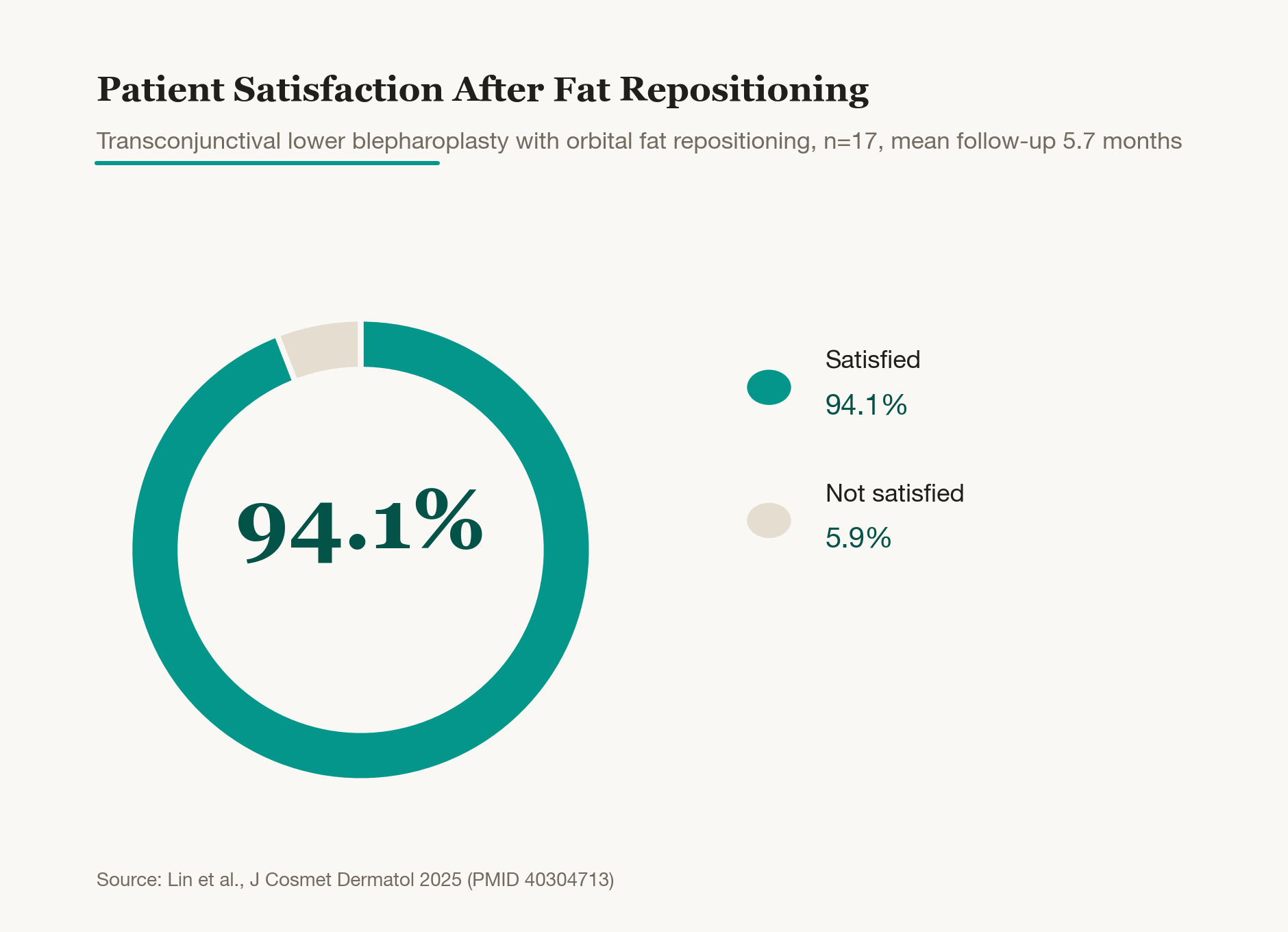
Keeping the blood-supplied root attached during the move is directly tied to survival rates. Because nutrients and oxygen can flow through that root immediately after the fat is repositioned, it tends to survive at a higher rate than fat that's been fully detached and grafted elsewhere.
It's similar to how a pruned tree wilts quickly if you dig it up and replant it roots and all, but does much better if you keep part of the root attached to soil during the move. Over time, new capillaries are known to grow into the area around the relocated fat, anchoring it more securely in its new spot.
This is why how carefully the fat is handled during surgery matters so much for the outcome. If the blood vessels attached to the root get compressed or twisted during the procedure, the fat's ability to settle into its new location can weaken, which is exactly why every step of moving the fat has to be done with care.
When Do Swelling and Bruising Go Down?
Swelling and bruising both show up right after surgery. This is a natural response to the tissue being lifted, moved, and sutured, so the under-eye area often looks puffier during this window than the eventual result will be. Initial swelling and bruising are generally known to visibly settle within 1 to 2 weeks.
Beyond that, more time is needed for the tissue to fully settle in and for the final contour to stabilize. Since new blood vessels continue growing into the relocated fat and the sutured area keeps healing, it typically takes about 4 to 12 weeks to get close to the final result. That's why it's best not to judge the outcome based on how things look in the first few days after surgery.
There can also be a stretch during recovery when the under-eye area feels a bit uneven to the touch, or looks slightly asymmetric from side to side. This happens naturally while swelling and tissue are still mixed together before the relocated fat has fully settled into its new spot, and it's expected to smooth out gradually as the swelling goes down and the tissue stabilizes over time.
Care to Follow During Recovery
The core of aftercare is helping the relocated fat settle securely into its new position.
- Cold compress early on, warm compress a few days later: Cold compresses in the early days narrow the blood vessels and help limit swelling and bruising, while warm compresses a few days in support circulation and help any remaining bruising clear faster.
- Avoid rubbing or pressing on the eyes: Fat that hasn't fully settled yet, along with the sutured area, can shift out of place under physical pressure.
- Sleep with your head slightly elevated: Lying flat lets blood pool toward the face, which can prolong swelling, so propping the head up a bit with a pillow is generally recommended to help swelling clear faster.
- Keep up with sun protection: Healing tissue can be more sensitive to UV exposure, so it's recommended to stay consistent with sunscreen to prevent any pigmentation from settling in.
How quickly swelling and bruising resolve varies from person to person, so it's best not to rush the recovery timeline.
References
Korean Dermatological Association, American Academy of Dermatology (AAD), and Ministry of Food and Drug Safety (MFDS).
Was this helpful?
About this article
Written by a practising aesthetic physician and intended for general education — not a substitute for individual medical advice.
Read next
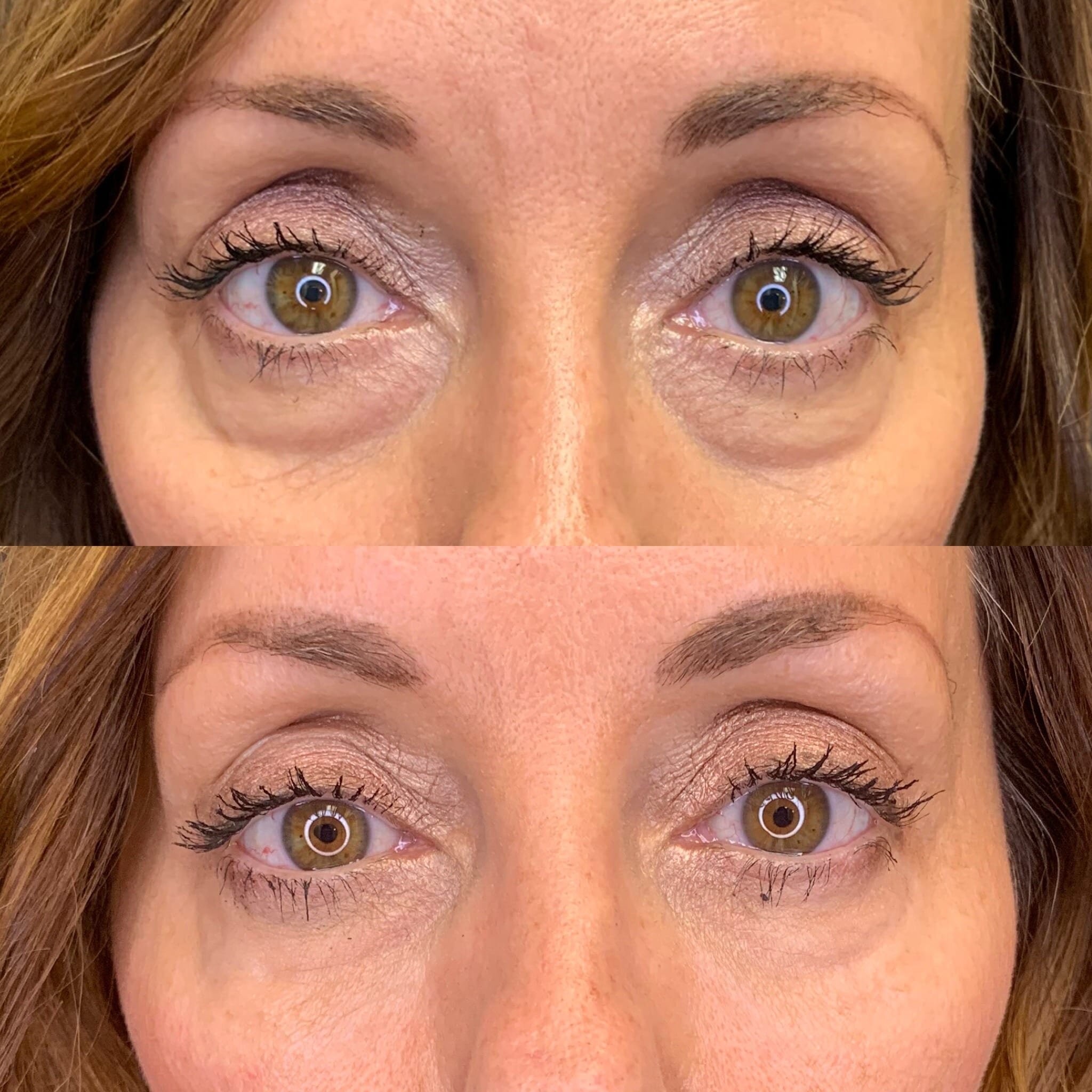
Tear Trough Filler Duration and Side Effects, Including Vessel Risks
The hollow that forms just under the under-eye fat pad, the tear trough, improves when filler physically fills that empty space. But skin and blood vessels are thin in this area, so there are separate precautions around cannula technique and the Tyndall effect. Here is how the filling works, how long results last, and what recovery looks like.
By Dr. Kim
Under-Eye Hollow Filler: Effect and Side Effects, and the Tyndall Effect to Watch
The dark, sunken look under the eyes often comes less from pigment than from hollowing and the shadow it casts. Here's how the tear trough ligament and lost volume under the eye create that shadow, how a soft hyaluronic acid filler placed shallowly and sparingly smooths it out, why thin skin and the bluish Tyndall effect make this area tricky, and how long results actually last, all backed by real published numbers.
By Dr. Kim

Milia Under the Eyes: Causes and Removal, and Why Squeezing Doesn't Work
Milia are the small white bumps that show up around the eyes and just won't budge no matter how you squeeze them. Here's an easy breakdown of how milia actually form, how they differ from acne, and why doctors remove them with a needle or laser instead.
By Dr. Lee