Temple Filler Effect and Duration, Including Vessel Precautions
By Dr. Kim7 min read

The temple sits between the tail of your eyebrow and your ear, the soft hollow where you can feel a pulse if you press on it. It's not an area you think about much day to day, but it's also one of the first places to lose volume as you age. The tricky part is that when this area hollows out, it doesn't just make that one spot look darker.
When the temple caves in, it throws off the balance of the entire side profile. The cheekbones look more prominent, and the eye area ends up looking more sunken than it actually is. That's why many people now fill the temples before they even touch the forehead or under-eye area. Let's look at how filler works here, and why it needs to be approached more carefully than other areas.
Why Do Temples Sink With Age?
Just beneath the skin of the temple sits a thin layer of fat. It drapes smoothly over the muscle and bone beneath it, creating a soft curve. As you get older, though, the fat cells themselves shrink, and the layer loses volume. It's similar to what happens to an old cushion when the stuffing slowly settles and the fullness fades.
Fat isn't the only thing that shrinks. The bone beneath the temple is slowly resorbed over time as well, so the surface sits slightly lower than before. And the skin covering it all thins out too, as collagen production slows down. Because fat, bone, and skin are all thinning at once, the hollowing becomes more noticeable than it would in an area where only one layer is at stake. With three layers shrinking together, the change tends to show up faster than in areas like the forehead or cheeks, where usually just the fat layer is the issue.
How Do Hollow Temples Affect Your Appearance?
When the temple hollows, it casts a shadow. Light naturally brightens what protrudes and darkens what recedes, so a sunken temple reads as a dark patch. Because this shadow sits right next to the eye, it creates the illusion that the eyes are more sunken and tired looking than they really are.
A hollow temple also makes the cheekbone right next to it look more prominent by comparison. When two areas sit side by side, we naturally judge them against each other, so when one caves in, the other appears to stand out more. It's not unusual for someone to come in worried about their cheekbones looking too wide, when the real issue turns out to be volume loss in the temple.
How Does Temple Filler Fill the Area?
Temple filler is almost always made from hyaluronic acid (HA). HA already exists naturally in our skin, and it has a strong ability to draw in and hold water. Much like a sponge swelling as it soaks up water, HA pulls in surrounding moisture to build volume. That's part of why the result often ends up looking a bit fuller and more natural than the injected amount alone would suggest.
The HA used in these fillers is cross-linked, meaning the chains are woven together into a mesh-like structure. This cross-linking is what keeps the filler from dispersing once it's injected, letting it hold its shape and support volume. For a deep area like the temple, sitting between bone and fascia, a firmer, more tightly cross-linked formula is typically used, since it needs to hold its form against the constant movement of the chewing muscles.
The injection layer matters too. Temple filler is usually placed just above the periosteum, the layer right on the surface of the bone, beneath the fascia. This deep layer sits relatively far from major nerves and blood vessels, making it comparatively safer, and filler placed on the bone lifts the muscle, fat, and skin above it all together. Placing it in a shallower layer actually raises the risk of vascular injury, which brings us to the next point.
Why Do You Need to Be Careful Around Vessels?
The temple is one of the few places on the face where a blood vessel runs close to the surface of the skin, which is exactly why you can feel a pulse there when you press on it. This vessel branches off and connects to vessels around the eye, so if filler is accidentally injected into it, it can travel through the bloodstream and affect areas farther away than expected. If a vessel becomes blocked, the tissue it normally supplies with blood can be damaged from the lack of flow.
For that reason, temple filler is usually injected slowly, with aspiration used beforehand to check whether the needle has entered a vessel, and many practitioners use a blunt tipped cannula instead of a sharp needle. Because a cannula doesn't have a sharp point, it tends to push vessel walls aside rather than puncture them, which is thought to lower the risk of directly entering a vessel compared to a sharp needle.
If any vascular symptoms are suspected, acting quickly matters. One of the biggest advantages of HA filler is that it can be dissolved with an enzyme called hyaluronidase. Injecting this enzyme into the affected area breaks down the filler and relieves the pressure on the vessel. That's why it's important to have this treatment done somewhere this reversal option is ready to go if it's ever needed.
How Does Your Look Change With Temple Filler?
Once the filler settles, the hollow shadow at the temple softens. Since this shadow plays such a big role in how the area reads, even a modest reduction can make the whole face look more rested. As the skin beside the eye gets lifted and supported, the drooping look at the outer corner of the eye softens as well.
From the side, the curve running from the forehead through the temple to the cheekbone tends to look smoother. A hollow temple makes this curve look like it breaks off in the middle, and filling it back in lets the line flow naturally again. The cheekbones that looked especially prominent before often look calmer too, since the contrast effect fades.
How Long Does Temple Filler Last?
How long temple filler lasts isn't determined by any single factor. The following elements are known to work together:
- Degree of cross-linking: A filler with a tighter, more densely cross-linked mesh tends to resist breakdown by the body's enzymes for longer. A looser mesh structure tends to break down faster.
- Injection layer and amount: A deep layer close to the bone sees less movement, so filler tends to stay put more reliably. A shallow layer, on the other hand, takes on the full motion of the facial muscles, so it can spread or get absorbed a bit faster.
- How much you use your chewing muscles: The muscle used for chewing runs just beneath the temple. If you clench your jaw often or eat a lot of hard foods, that muscle contracts frequently, which can put more physical stress on the filler.
- Individual metabolic rate: The activity of the enzyme that breaks down HA in the body varies from person to person. People with a faster metabolism tend to see volume fade a bit more quickly, even with the same formula.
Aftercare for the First Few Days
The first few days after the filler settles can make a real difference depending on how you care for the area.
- It's best to avoid pressing hard on or massaging the treated area. Since the filler hasn't fully settled in yet, pressure can shift its position.
- Avoid places with a lot of heat, like saunas or steam rooms, for a few days. Heat causes blood vessels to dilate, which can worsen swelling and increase the chance the filler spreads to nearby areas.
- If you wear glasses, the temple arms pressing on the same spot repeatedly can leave marks, so switching to looser frames or contacts for the first few days is worth considering. Repeated pressure on the same spot can affect the shape of the filler.
- Some swelling or bruising early on is a normal reaction and usually settles down over time. That said, recovery speed varies from person to person.
References
Korean Dermatological Association, American Academy of Dermatology (AAD), and Ministry of Food and Drug Safety (MFDS).
Was this helpful?
About this article
Written by a practising aesthetic physician and intended for general education — not a substitute for individual medical advice.
Read next
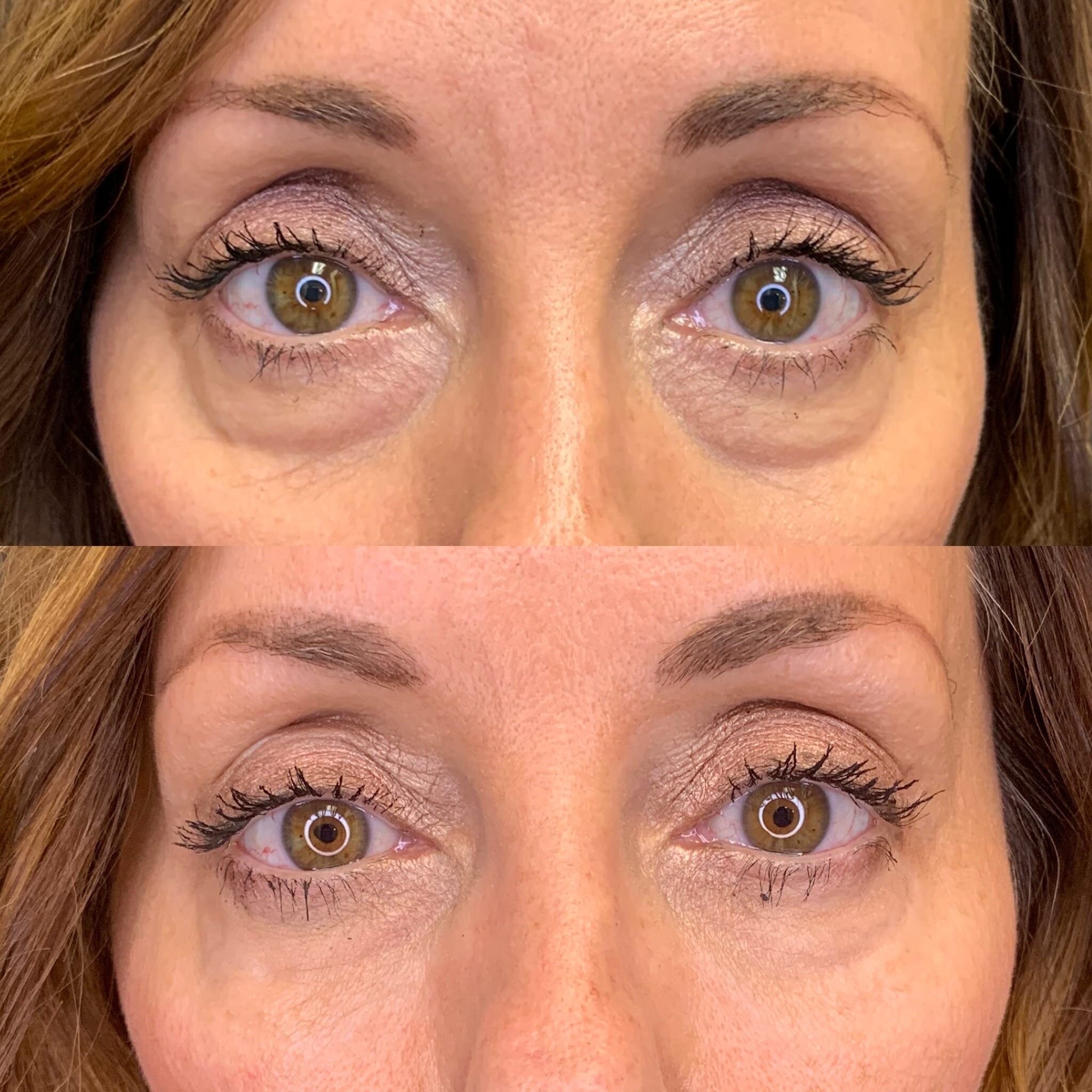
Tear Trough Filler Duration and Side Effects, Including Vessel Risks
The hollow that forms just under the under-eye fat pad, the tear trough, improves when filler physically fills that empty space. But skin and blood vessels are thin in this area, so there are separate precautions around cannula technique and the Tyndall effect. Here is how the filling works, how long results last, and what recovery looks like.
By Dr. Kim

Collarbone Filler: How Long Do Swelling and Results Last?
Clavicle filler is not a facial treatment. It fills the hollow areas around the bone to bring out a defined collarbone line. Here is why the filler goes deep instead of shallow, which collarbone shapes respond well, and what determines recovery and how long results last.
By Dr. Lee

Skinaura Booster: Effect, Duration and Aftercare
Skinaura Booster combines a hydrating ingredient with a cell-stimulating one to smooth out skin texture. Here is why texture roughens in the first place, which ingredients reverse it and how, plus what determines how long results last and how to care for your skin afterward.
By Dr. Kim