Under-Eye Syringoma and Milia Differences: Why Is Syringoma Hard to Remove?
By Dr. Lee8 min read
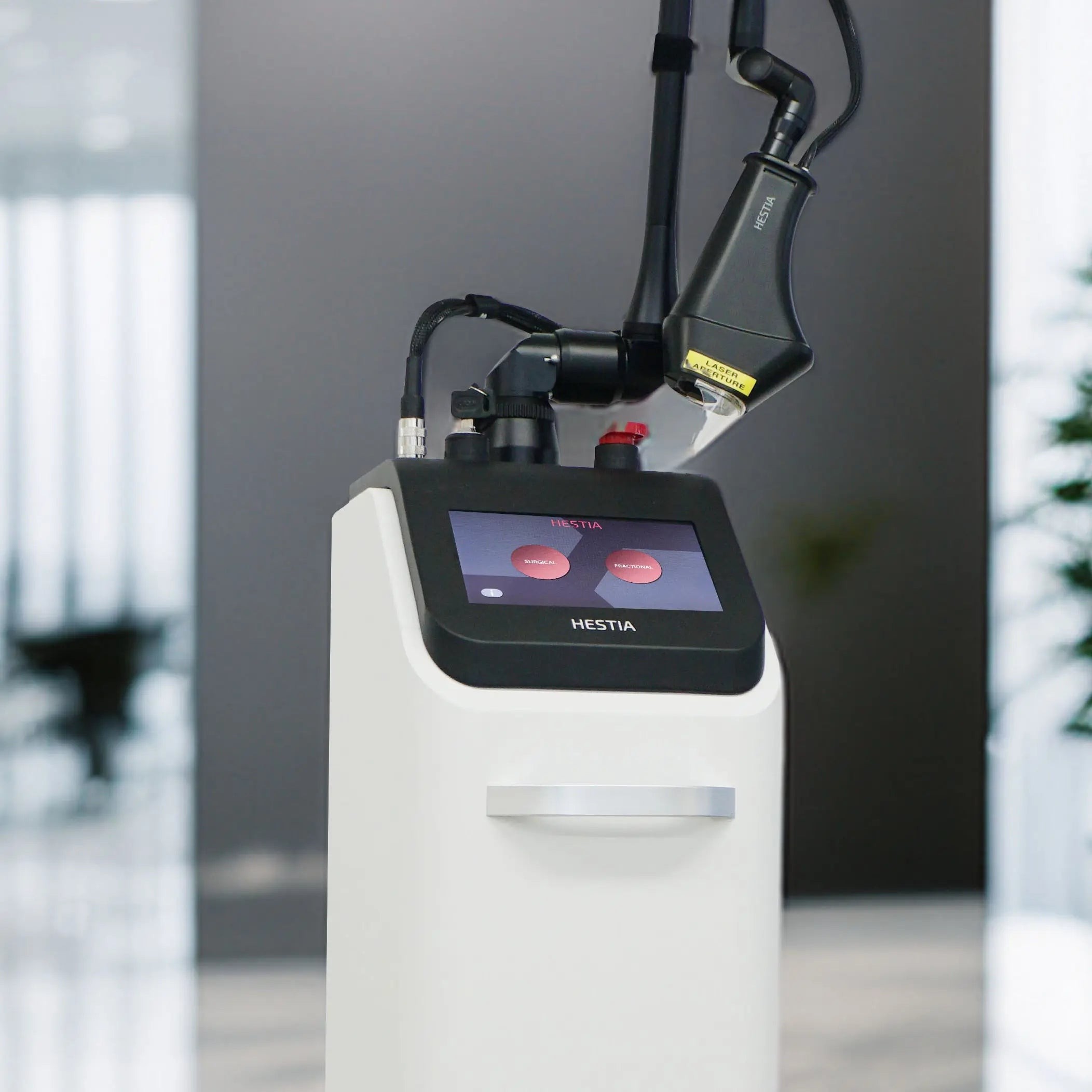
Look closely under your eyes and you might notice a row of small, grain-like bumps. They're not hard to the touch, usually skin-colored or light brown, and squeezing does nothing, they just stay put or slowly multiply. A lot of people assume these are milia and try to pop them, but many of these tiny bumps aren't milia at all. They're a completely different type of benign growth called syringoma.
Mixing the two up sends you down the wrong path entirely. Milia are just small pockets of trapped keratin, so popping them or nicking them with a needle clears them out easily. Syringoma is different: it's actual sweat gland tissue that has proliferated, so none of that works. Keep squeezing anyway and all you get is a mark left behind. So let's walk through why syringoma forms in the sweat glands in the first place, and why its depth makes it so stubborn to treat.
How Does Syringoma Form?
Syringoma is a benign growth that forms when cells in the ducts of the eccrine glands (the ordinary sweat glands spread across the entire body) multiply abnormally. The thin tubes that carry sweat toward the pores branch out like tiny tree limbs, forming small clusters beneath the skin. Under a microscope, these ducts show a distinctive shape, tapering narrow on one end like a tadpole, and that signature look is actually what lets pathologists tell syringoma apart from other growths fairly easily just by examining the tissue.
It's benign and unrelated to cancer, so it poses no health risk. But once it takes hold, it doesn't disappear on its own, and the number of bumps tends to creep up gradually. The exact cause isn't fully understood, though hormonal shifts after puberty and genetic predisposition are believed to play a role. It shows up more often in women, and a family history isn't unusual either. That's why so many people notice a sudden increase during puberty or pregnancy, times when hormones swing dramatically. It's not a coincidence: hormonal changes appear to actively stimulate the proliferation of sweat gland cells.
Why Does It Appear So Often Under the Eyes?
Syringoma can technically appear anywhere on the body, but it clusters heavily under the eyes, especially on the lower eyelid. That's because this area has a high density of sweat glands and skin that's noticeably thinner than elsewhere.
Thin skin means even small changes underneath show through on the surface. On thicker skin, like the torso or limbs, a syringoma of the same size might barely be noticeable. But on the thin skin under the eyes, each little cluster stands out as a visible bump. Think of it like laying gravel under a sheet of thin tissue paper: every bump shows through. That's exactly the role the under-eye skin plays here, which is why so many people specifically seek help for syringoma in this spot.
In rare cases, several bumps can erupt together in areas that sweat heavily, like the chest, abdomen, or underarms, a pattern known as eruptive syringoma. This form is relatively uncommon, though, and most cases stay confined to the under-eye area.
How to Tell It From Milia
Both show up under the eyes as tiny, grain-like bumps in white or skin tones, so they're easy to confuse on sight. But underneath, they're entirely different types of tissue. Knowing these differences helps with telling them apart.
- Milia are pockets of keratin. When a hair follicle or sweat duct gets blocked, keratin builds up into a small cyst. A gentle needle prick releases a small white kernel, and it's usually gone for good.
- Syringoma is living sweat gland tissue. There's no kernel to squeeze out, and pressing on it produces nothing. Since it's proliferated tissue rather than a trapped substance, squeezing can never clear it.
- The pattern of distribution differs too. Milia tend to appear one at a time, scattered individually, while syringoma often shows up as multiple bumps in a symmetrical row on both sides. If a similar pattern spreads across both under-eye areas, syringoma is the more likely culprit.
- Color and texture are also slightly different. Milia sit close to the surface, so the white kernel often shows through. Syringoma sits deeper, so it appears as a subtler skin-toned or light brown bump and tends to feel a bit softer to the touch.
Occasionally, a flat, yellowish patch shows up alongside these bumps, which could be xanthelasma, a buildup of cholesterol deposits. Telling all three apart together is really the starting point for an accurate diagnosis.
Why Is Syringoma Removal Tricky?
The biggest reason syringoma removal is difficult comes down to location. Milia sit near the epidermis, the skin's outermost layer, so treating them only requires a shallow touch. Syringoma, on the other hand, roots down into the mid-dermis (the thick layer beneath the epidermis, where blood vessels and nerves run), right where the sweat ducts sit.
On top of that, the actual tissue often extends further than what's visible on the surface. Beneath a single visible bump, duct tissue can spread out thinly to the sides. If only the surface portion gets removed, the hidden remainder can regrow. It helps to think of it like an iceberg: what's visible above the surface is smaller than what's submerged below. Even if the visible upper part of the duct is cleared, if the secretory tissue below (the part that actually produces sweat) is left intact, it has the room it needs to send a new duct back up over time.
Go too deep or too wide to be thorough, though, and the risk of scarring or pigmentation rises sharply on skin as thin and sensitive as the under-eye area. Too shallow and it comes back, too deep and it scars: striking that balance is really the core challenge of treating syringoma.
Pros and Cons of Each Removal Method
Several methods are used depending on the size, number, and depth of the lesions, and each comes with its own clear tradeoffs.
- CO2 laser: Vaporizes tissue layer by layer, letting the depth be adjusted as needed, which makes it a common choice when there are many bumps clustered together. Because heat can spread to surrounding tissue, though, pigmentation needs to be managed afterward.
- Er:YAG laser: Uses a wavelength that spreads less heat to surrounding tissue than CO2, which some reports suggest allows for relatively precise treatment on thin under-eye skin. As a result, it's often done in 2 to 4 sessions spaced 4 to 6 weeks apart.
- Electrodesiccation (using electrical current to cauterize tissue): Used to target individual small lesions one at a time, often chosen when there are only a few bumps to treat.
- Surgical excision: Directly cuts out the tissue when a lesion is large or deep. It's thorough, but scar management becomes even more important afterward.
Whatever method is used, the usual approach isn't to clear every lesion in one aggressive session. Given how thin under-eye skin is, treatment is typically spread across 2 to 4 sessions, spaced 4 to 8 weeks apart, with a cautious touch. Trying to treat too many bumps at once concentrates heat stress in a small area, which can leave swelling and redness lingering longer than necessary.
What Happens If You Squeeze Syringoma?
Even though nothing comes out when you squeeze a syringoma, people often can't resist touching it. The problem is that repeated pressing and picking doesn't clear the bump at all, it just leaves microscopic damage on the surrounding skin.
Under-eye skin is already thin, so even minor irritation turns red easily and leaves pigmentation behind. When melanocytes become overactive during the healing process, a brownish mark can spread around the lesion. In other words, the bump you were trying to get rid of stays exactly where it was, and now there's an extra mark surrounding it. So if squeezing produces nothing, the better move is usually to leave it alone entirely.
Why Does It Come Back After Removal?
Plenty of people notice a similar bump popping up in a new spot sometime after having syringoma removed, and it feels like a recurrence. Two things are usually going on here.
One is what was mentioned earlier: leftover tissue beneath the surface regrowing. The other is that the underlying predisposition to developing syringoma in the first place never went away, so new lesions form in sweat gland areas that weren't treated at all. Syringoma isn't a localized scar or wound, it's tied to how sweat glands across the entire body respond, so clearing one area thoroughly doesn't prevent a new bump from forming nearby or on the other eye.
That's why treatment tends to be approached less as a one-time permanent fix and more as an ongoing process, with the mindset of clearing out new bumps roughly every 1 to 2 years as they show up.
Does It Really Have to Be Removed?
Since syringoma is benign, leaving it alone poses no health risk. That said, the number of bumps tends to grow over time, so if the appearance bothers you, getting a consultation early can make managing it easier before the lesions get more extensive. On the other hand, if it doesn't bother you much, there's no need to force removal.
What matters most, in the end, is not assuming every under-eye bump is milia and reaching for a needle or trying to squeeze it. If nothing comes out when you squeeze, syringoma is worth considering. The safest approach is getting an accurate diagnosis at a dermatology clinic and discussing a method suited to the depth and extent of your specific lesions.
References
Korean Dermatological Association, Ministry of Food and Drug Safety (MFDS), American Academy of Dermatology (AAD), and U.S. Food and Drug Administration (FDA).
Was this helpful?
About this article
Written by a practising aesthetic physician and intended for general education — not a substitute for individual medical advice.
Read next

Milia Under the Eyes: Causes and Removal, and Why Squeezing Doesn't Work
Milia are the small white bumps that show up around the eyes and just won't budge no matter how you squeeze them. Here's an easy breakdown of how milia actually form, how they differ from acne, and why doctors remove them with a needle or laser instead.
By Dr. Lee
Epidermal Cyst Causes and Symptoms: Why It Refills After Squeezing
If a lump under your skin keeps refilling no matter how many times you squeeze it like a pimple, it may be an epidermal cyst. Here's an easy breakdown of how these cysts form, how they differ from acne, and why the cyst wall itself has to come out to keep it from coming back.
By Dr. Lee
Small Bumps Around the Eyes: Milia, Syringoma and Skin Tags, Causes and Removal
Small bumps that keep showing up around the eyes often come from three completely different causes: milia, syringoma, and skin tags. Here is how to tell them apart by color, texture, and location, and why picking or squeezing them is a bad idea.
By Dr. Lee