Small Bumps Around the Eyes: Milia, Syringoma and Skin Tags, Causes and Removal
By Dr. Lee8 min read
When tiny bumps keep popping up under the eyes or along the eyelids, it is tempting to assume they are all the same thing. In reality, the bumps that commonly appear in this area often turn out to be three distinct conditions. Milia, syringoma, and skin tags form in different tissue and for different reasons, yet they can look confusingly similar to the naked eye. That is exactly why so many people try to diagnose and pop them at home, only to end up with a scar. Here is a breakdown of how these three differ, and why the eye area is such a hotspot for all of them.
Are all small bumps around the eyes the same?
The skin around the eyelids is some of the thinnest on the body. The outer layer is delicate, and oil glands, sweat glands, and connective tissue are all packed tightly underneath, so even small changes tend to stand out. That is part of why conditions with completely different origins can end up looking like the same cluster of bumps.
Milia are tiny sacs that form when keratin, the tough protein that makes up the skin's surface, gets trapped underneath it. Syringoma is a benign growth caused by an overgrowth of the sweat duct itself. Skin tags form when fibrous tissue on the skin's surface stretches out from repeated friction. None of the three has anything to do with cancer, but they form in different layers and from entirely different building blocks.
There is also a reason all three tend to cluster around the eyes specifically. Eyelids move constantly, blinking thousands of times a day, and the area has a denser concentration of oil and sweat glands than most other parts of the face. That combination raises the odds of clogged pores, irritated sweat ducts, and friction from skin folding against itself, all at once.
Why do milia form?
Milia form when keratin, the hard protein that makes up the surface layer of skin, gets stuck underneath instead of shedding off normally. Keratin is supposed to flake away on its own, but when the opening of a pore or sweat duct gets blocked at a microscopic level, it has nowhere to go.
Trapped keratin keeps building up under the skin, growing firmer over time. That is why milia feel hard and do not budge much under pressure, and why they show up white or pale yellow. They are common on newborns' faces too, where they are simply a temporary result of oil glands that have not fully matured yet.
In adults, milia often develop after the skin has been through some kind of damage and repair, such as a burn, a blister, or an aggressive peel, which can block the channel keratin normally uses to exit. The eye area is especially prone to this because the skin there is thin enough that even minor irritation can clog that channel.
What are the features of syringoma, which appears symmetrically?
Syringoma is a benign growth that forms when cells in the eccrine duct, the tube that carries sweat to the skin's surface, multiply more than they should. It has no connection to cancer, and it tends to grow extremely slowly.
The exact cause is not fully understood, but a genetic pattern is well documented. Many people with syringoma have family members with similar bumps, and some reports note it appears more often in East Asian populations. It is also seen more frequently in women, particularly after puberty.
Syringoma typically shows up as multiple bumps appearing at once, symmetrically, on the lower eyelids. The color tends to be apricot or light brown, and while the bumps gradually multiply over time, individual ones rarely grow suddenly larger. Because the growth is in the duct tissue itself, there is nothing inside to squeeze out, which is one of the clearest ways it differs from milia.
Where do skin tags tend to form, and why?
Skin tags, medically known as acrochordons, are soft, flexible growths that form when collagen and blood vessels near the skin's surface stretch out. They have nothing to do with keratin or sweat glands, and they grow especially well in areas where skin folds or rubs against itself.
When skin is repeatedly rubbed, the fibrous tissue in that spot gets irritated and gradually stretches. Much like fabric fraying at the same point where it keeps rubbing against something, skin responds to accumulated friction by growing tissue locally. That is also why skin tags show up more often around the eyes of people who rub their eyes frequently or wear glasses that press on the same spot.
Reports also suggest skin tags become more common with age, and in people who have gained weight or have insulin resistance, for reasons similar to why they are common in folds like the neck or underarms. Because they are soft and dangle slightly, skin tags are easy to distinguish by touch from the firmer texture of milia or syringoma.
How can you tell them apart by touch?
Because these three conditions form in different locations with different textures, a careful touch can usually tell them apart.
- Milia: white or pale yellow, firm bumps that do not give under pressure, usually scattered individually under the eyes or on the eyelids
- Syringoma: apricot or light brown, multiple bumps clustered symmetrically on the lower eyelids, with a smooth surface
- Skin tags: skin-toned or brown, soft and floppy, sometimes attached by a thin stalk that lets them wiggle, most common at the edge of the eyelid or in folded areas around the eyes
Looking at color, texture, and how the bumps are clustered together usually makes the distinction clear. That said, it is not unusual for someone to have all three at once, so a dermatology visit is a more reliable way to confirm what you are dealing with than eyeballing it alone.
Is it okay to squeeze or pick them?
Squeezing or picking at any of these three can make things worse, and the reasons differ depending on what you are dealing with.
Forcing milia out ruptures the trapped keratin, damaging the surrounding skin, and the healing process can actually trigger a new milium to form nearby. Syringoma has no contents to extract since the growth is the duct tissue itself, so pressing on it only irritates and reddens the skin for nothing.
Pulling on a skin tag tears the blood vessel running through its thin stalk, causing bleeding, and as the wound heals it can leave behind dark spots or a scar. Skin around the eyes is thin and sensitive, so even small injuries there tend to heal slowly and leave marks that stick around longer than they would elsewhere.
How are they diagnosed and removed at a clinic?
Dermatologists typically start with a magnifying tool or a skin surface imaging device to check the color, depth, and surface pattern of the bumps and tell the three apart. A biopsy may be used to confirm the diagnosis if needed.
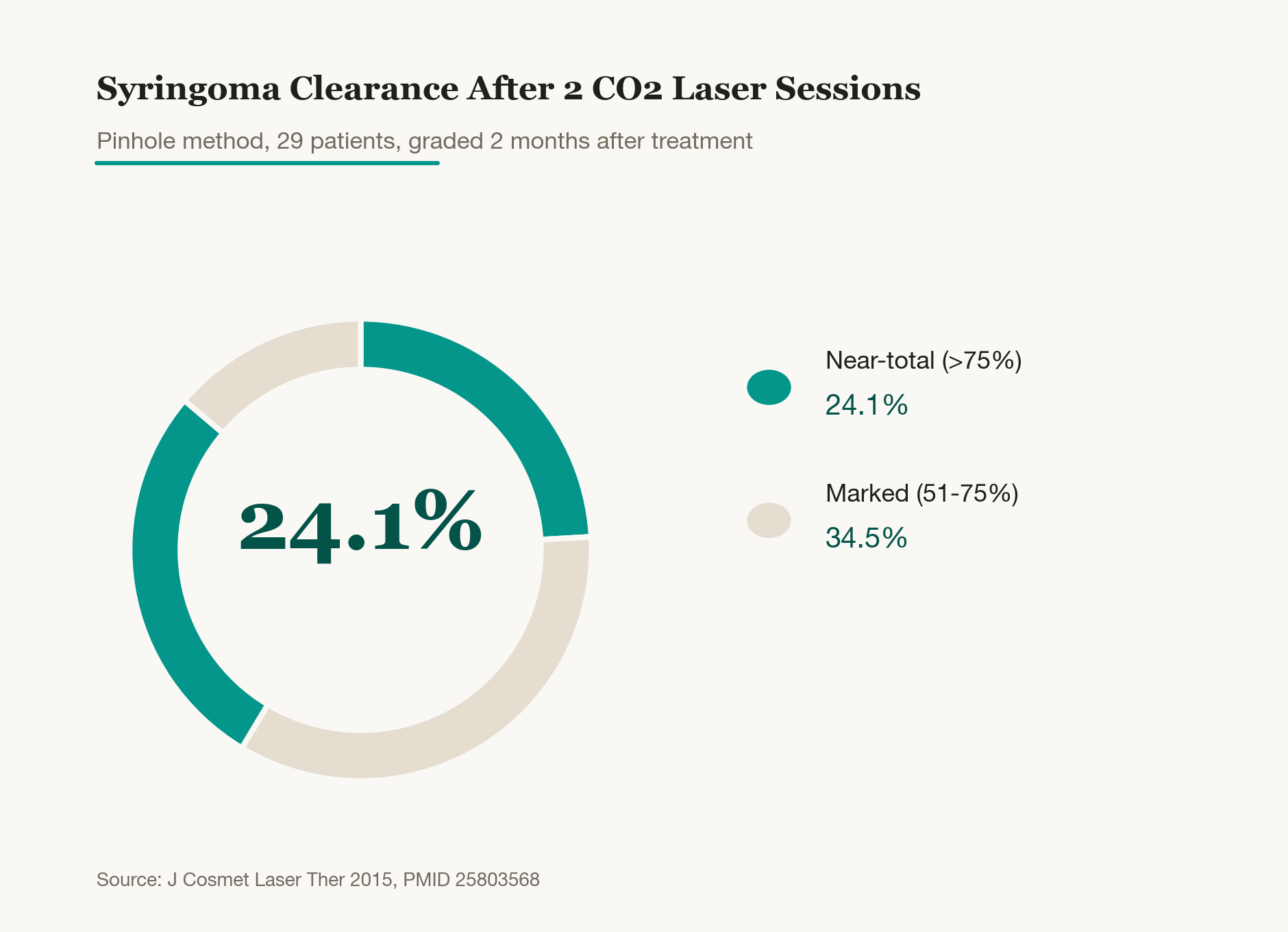
Milia can usually be cleared with a simple procedure: a sterile needle gently opens the surface and the trapped keratin is pushed out. Syringoma requires removing the duct tissue itself, so carbon dioxide laser, erbium YAG laser, or electrocautery are the usual methods, often used to burn off or clear the growths. Because syringoma tends to recur, treatment is often spread across multiple sessions. Skin tags are typically removed in a single visit by snipping or cauterizing the thin stalk.
Habits that slow recurrence
None of the three can be completely prevented, but there are habits that can slow how often they show up.
Rubbing your eyes hard or letting glasses press on the same spot repeatedly creates the exact friction that skin tags thrive on, so handling the eye area gently makes a real difference. Heavy creams or oils applied liberally around the eyes can clog the channel keratin needs to exit through, so people who are prone to milia tend to do better with lighter formulas. Syringoma is largely driven by genetics, so lifestyle habits alone will not stop it from forming, though daily sun protection still supports overall skin health.
If a new bump grows quickly or changes shape suddenly, it may not be one of these three common conditions, and it is worth having a dermatologist take a look.
It is not unusual for a bump to return in the same spot even after treatment. Milia can recur if the keratin exit channel gets blocked again, and because syringoma comes from a genetic tendency toward duct overgrowth, new bumps can appear elsewhere over time. Skin tags can also regrow in the same area if the friction that caused them in the first place continues. For all three, a single treatment is often less realistic than an ongoing approach of monitoring the area and addressing new bumps as they show up.
References
Korean Dermatological Association, American Academy of Dermatology (AAD), and Ministry of Food and Drug Safety (MFDS).
Was this helpful?
About this article
Written by a practising aesthetic physician and intended for general education — not a substitute for individual medical advice.
Read next

Tiny Facial Bumps: How to Tell Flat Warts, Milia and Skin Tags Apart, and How to Treat Them
The small bumps that show up on the face can look alike, but flat warts, milia, and skin tags have different causes and different treatments. Here is how to tell the three apart at a glance, the right CO2 and Er:YAG laser or electrocautery approach for each, how common they are, how they tend to recur, and real evidence on why removing them at home is risky.
By Dr. Lee

Flat Wart Causes and Spreading, CO2 Laser Treatment, and Recurrence
Flat warts show up as small, flat bumps on the face or back of the hands. Here is why HPV causes them, why scratching makes them spread and become contagious, how to tell them apart from milia and skin tags, how the CO2 laser removes them along with scarring and pigmentation risks, and how to manage recurrence, explained simply with real study data.
By Dr. Lee

Milia Under the Eyes: Causes and Removal, and Why Squeezing Doesn't Work
Milia are the small white bumps that show up around the eyes and just won't budge no matter how you squeeze them. Here's an easy breakdown of how milia actually form, how they differ from acne, and why doctors remove them with a needle or laser instead.
By Dr. Lee