Bumps After Shaving: Causes, and Pseudofolliculitis Versus Bacterial Folliculitis
By Dr. Kim8 min read
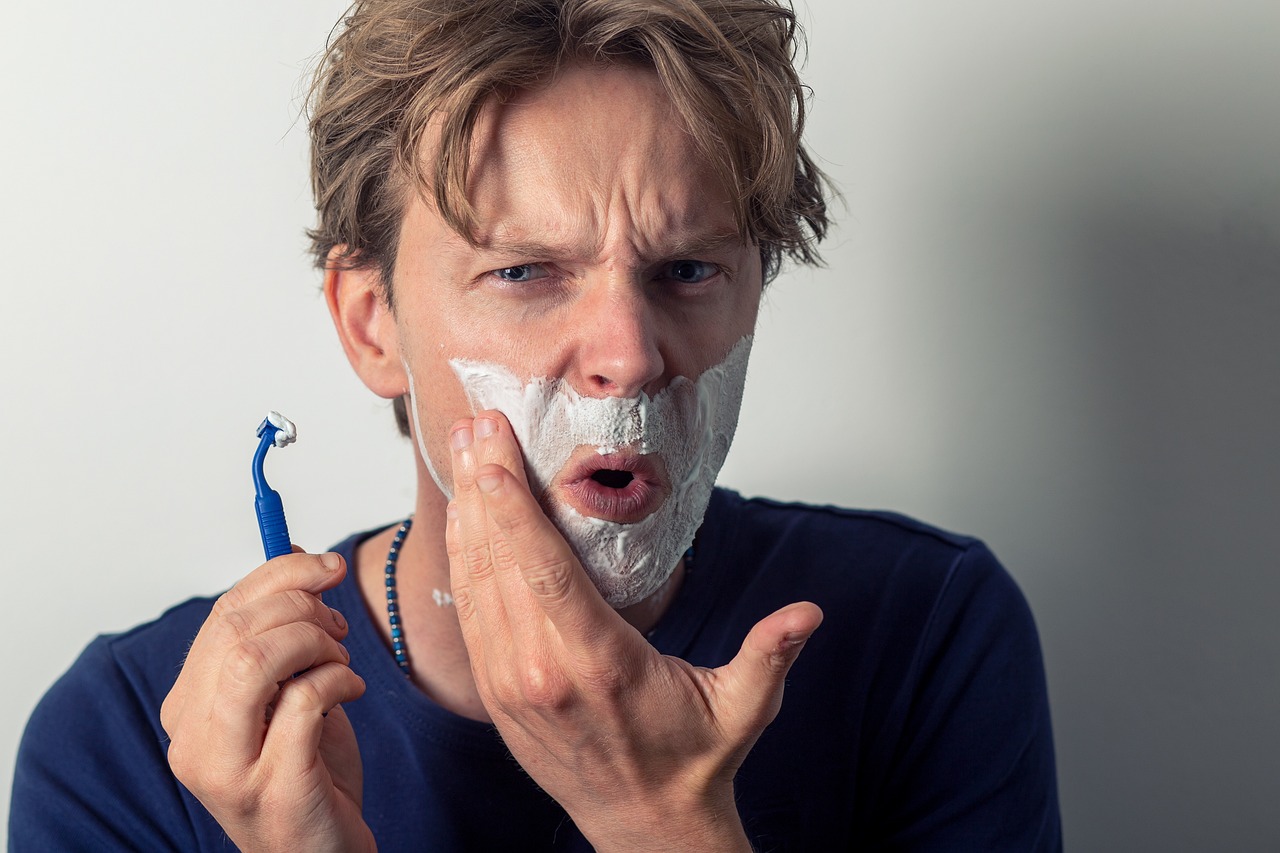
You shave, and within a day or two, little bumps show up along the jaw and neck. Give it a few more days and those spots turn into dark or reddish marks that stick around far longer than they should. In more severe cases, the itching and stinging make shaving itself feel like a chore you dread.
This kind of irritation rarely comes from a single cause. The blade physically scrapes the skin's surface, curved hairs grow back into the skin through a structural quirk of their own, and bacteria can slip into the openings that both of those create. Several different processes often happen at once, which is exactly why the problem keeps repeating. Let's break down why, one mechanism at a time.
How the Razor Irritates Skin
The outermost layer of skin has a thin protective barrier called the stratum corneum. Skin cells stack up like bricks, and lipids, essentially the skin's own fatty substances, fill the gaps between them. That combination keeps moisture from escaping and keeps irritants and bacteria from getting in.
A razor doesn't just cut hair. It scrapes across the surface of that thin barrier at the same time. Even without a visible nick, the barrier picks up microscopic damage with every pass. And as the blade drags across the skin, friction and pressure strip away some of the lipids between skin cells too, leaving the skin momentarily defenseless.
Once the barrier thins out, irritants and bacteria find it easier to get through, and the skin responds with inflammation to try to repair itself. The red bumps that show up after shaving are simply that repair response made visible, and the stinging comes from nerve endings that have become more sensitive once the barrier is compromised.
Why Do Curly Beards Get More Bumps?
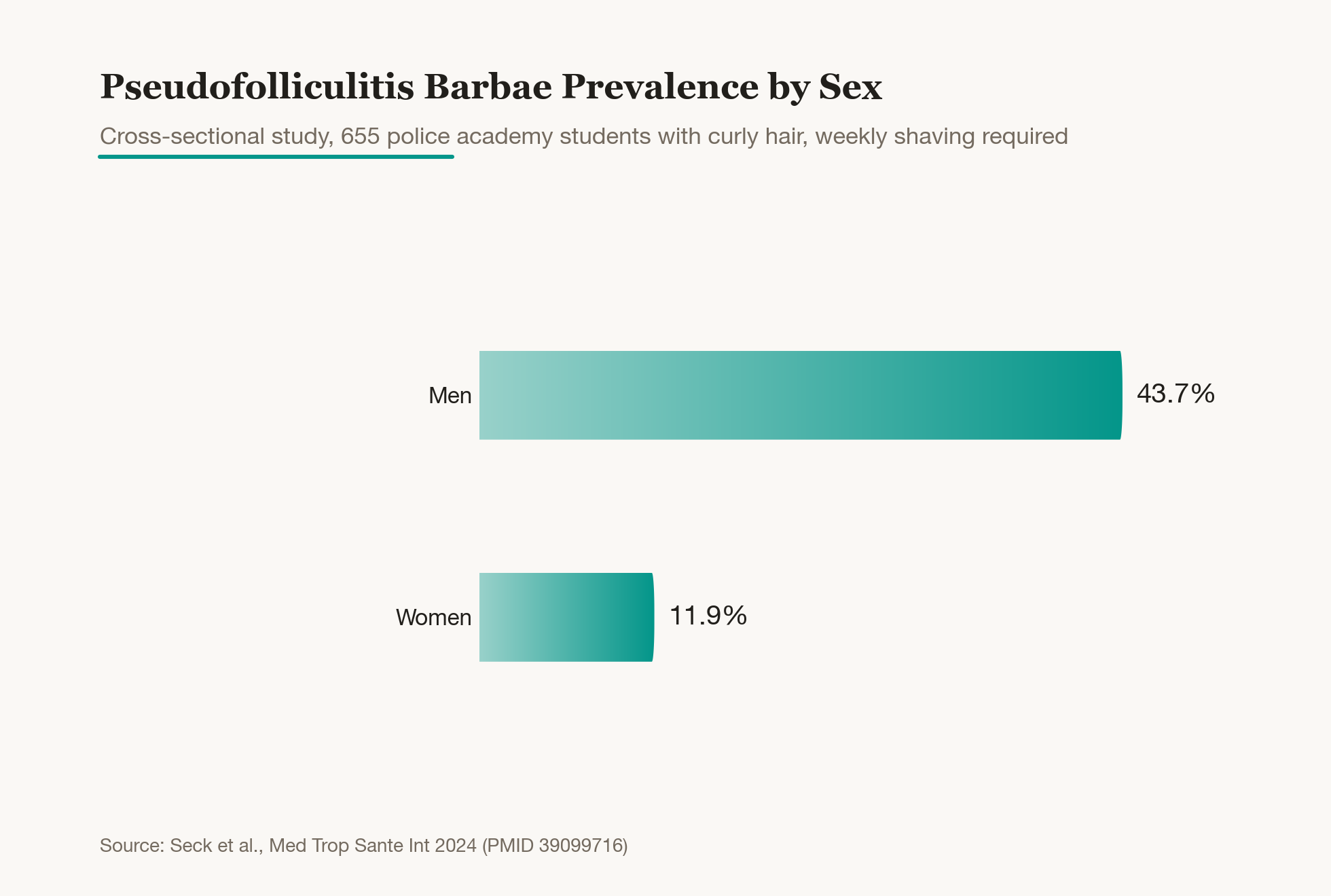
People with curly facial hair deal with shaving irritation far more often than those with straight hair, and there's a clear reason for it. Curly hair grows in a curved path from inside the follicle itself, the channel the hair grows through, so by the time it exits the skin, it tends to lie down almost parallel to the surface rather than standing up straight.
When a razor cuts that kind of hair, the tip is sliced at an angle instead of straight across, leaving a sharp, spear-like point. As that pointed tip grows back out, it can curve like a fishhook and burrow straight into the skin next to it. Sometimes the hair exits the follicle and then re-enters the skin nearby, and sometimes it never fully exits at all, simply changing direction inside the follicle and piercing the follicle wall from within.
The body treats that regrown hair as a foreign object and mounts a defensive reaction around it. The firm bumps and pus that result are what's known as pseudofolliculitis, or the classic razor bump. The key feature is that it can happen entirely without bacteria being involved.
Pseudofolliculitis and Bacterial Folliculitis: What's the Difference?
Not every post-shave bump forms through the same mechanism. Broadly, there are two distinct paths.
One is the pseudofolliculitis described above. It's a foreign-body reaction to a hair that has grown back into the skin, so it doesn't require bacteria at all, and it tends to recur in people with curly facial hair.
The other is genuine bacterial folliculitis. This happens when resident skin bacteria, such as Staphylococcus, get into a follicle through microscopic nicks or invisible scrapes created during shaving. Dull blades, razors reused too many times, or tools that aren't kept clean all raise the odds of bacteria getting a foothold.
The two can look similar on the surface, but the underlying cause is different. Pseudofolliculitis is a structural issue tied to hair growth direction, while bacterial folliculitis is a hygiene and wound-care issue. That's why the fix depends on the type: if curly hair keeps causing recurring bumps, changing your shaving technique should come first, and if there's pus or warmth at the site, managing the infection takes priority.
Why Do Marks Remain After the Bumps?
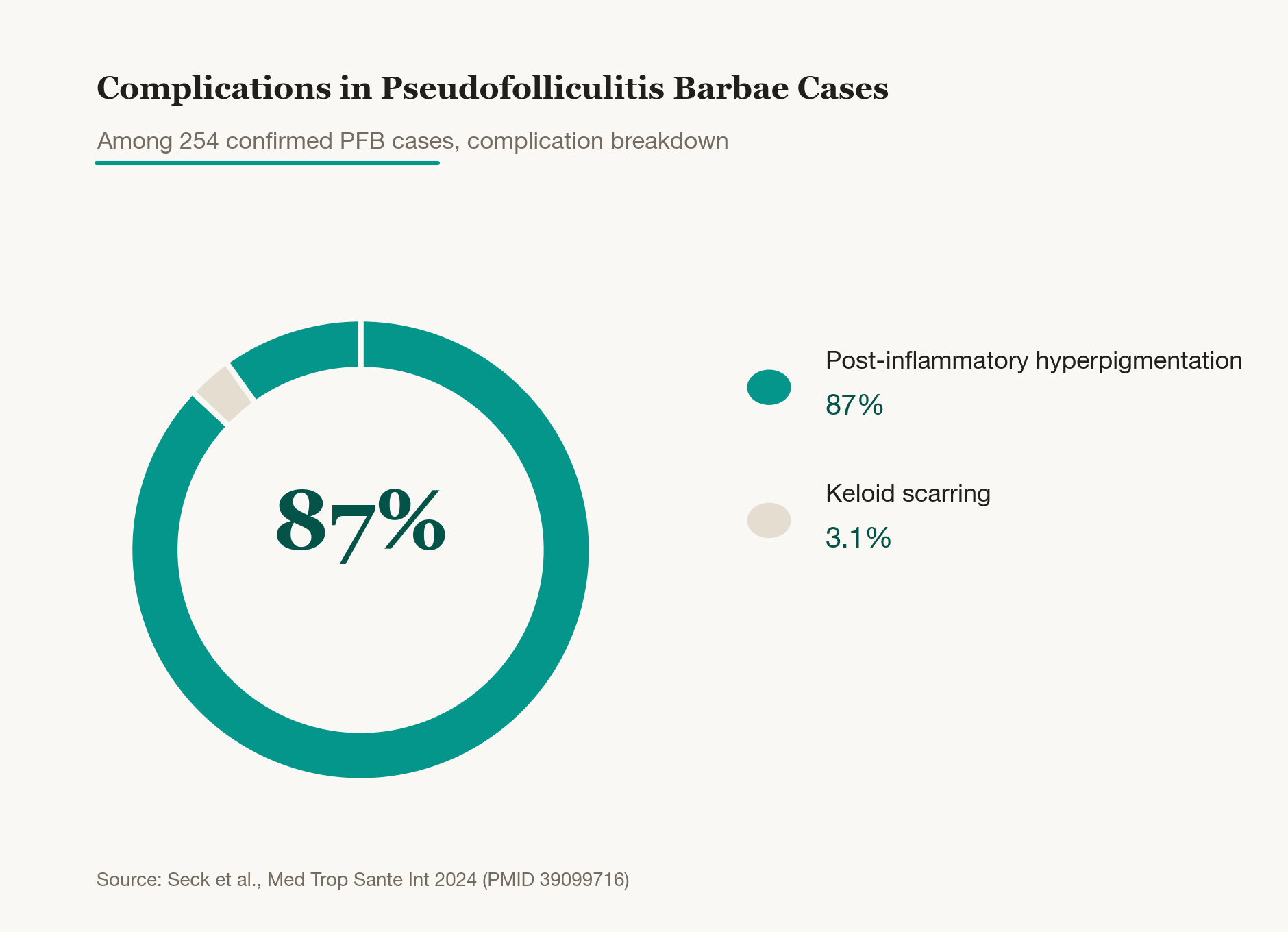
Even after the bumps themselves calm down, brown or red marks can linger at the same spots for a long time. That's a separate reaction called post-inflammatory hyperpigmentation.
When skin becomes inflamed, melanocytes, the cells that produce skin pigment, pick up on that signal and go into overdrive, churning out more melanin than usual. That extra pigment settles into the area where the inflammation was, which is what shows up as a brown mark. This tends to be more pronounced in people with deeper skin tones and in cases where the inflammation lasted longer.
Marks that stay red rather than brown are usually not pigment at all. They're often just tiny blood vessels that widened during inflammation showing through the skin, and those generally fade faster than true pigmentation does.
Picking at or rubbing an irritated spot pushes the inflammation deeper, which can make the resulting pigmentation darker and slower to fade. And getting regular sun exposure while a mark is still fading can restimulate melanin production and stall the recovery, which is why sun protection is generally recommended during this period.
How Shaving Technique Changes Breakouts
Even on the same skin, how much irritation you end up with depends heavily on technique. A few factors work together here.
- Shaving against the grain: Cutting against the direction hair grows leaves a shorter, sharper tip that's more likely to curl back into the skin. Shaving with the grain leaves a comparatively gentler cut.
- Using a dulled blade: A dull blade doesn't cut cleanly in one pass, so you end up dragging it over the same spot repeatedly, stripping away more of the stratum corneum and increasing irritation.
- Shaving on dry skin: If the skin and hair haven't had time to soften with water first, friction between the blade and skin increases and the barrier gets damaged more easily.
- Pressing too hard: Excess pressure cuts not just the hair but pushes deeper into the skin above it, creating more microscopic nicks.
Each of these on its own might seem minor, but repeated every day, they add up and push the skin toward more frequent breakouts.
What Should You Do Before and After Shaving?
The core idea is to treat shaving as an inherently irritating process for the skin and adjust your habits to soften that irritation wherever you can.
- Soften skin with warm water before shaving: Shaving after a warm shower or with warm water softens both the stratum corneum and the hair itself, so the blade drags less as it passes.
- Replace your blade often: Swapping it out before it dulls means you're not going over the same area multiple times, which cuts down on friction.
- Calm skin with alcohol-free products afterward: Alcohol dries out an already compromised barrier and can make irritation worse, so finishing with a mild, soothing product tends to help more.
- Don't shave curly-hair-prone areas too close: Shaving right down to the root leaves the cut tip sitting close to the skin's surface, which raises the odds of it curling back in. Leaving a slight bit of length is generally recommended as a way to prevent pseudofolliculitis.
None of these habits produce a dramatic overnight change. Instead, they work by trimming down the daily irritation bit by bit, which lowers how often breakouts happen over time.
How Long Does It Take for Bumps to Settle?
How quickly the irritation settles depends on which type it is.
Simple irritation, the redness and stinging, usually eases within a few days to one or two weeks if you skip shaving that area for a while and focus on moisturizing and calming the skin. That's roughly how long it takes for the barrier to rebuild itself and for the inflammatory signal to quiet down.
The firm bumps caused by pseudofolliculitis tend to resolve more gradually, over several weeks, once shaving in that area stops. That timeline reflects how long it takes for the ingrown hair to grow out and for the foreign-body reaction around it to naturally wind down.
Post-inflammatory pigmentation, on the other hand, lingers much longer. If the inflammation was brief and mild, it can fade within a few weeks, but if it was repeated or went deep, it's reported to take several months for the pigment to fully clear. Even after the signal telling melanocytes to keep producing pigment shuts off, the melanin that's already deposited has to gradually work its way out as the outer skin layer turns over and renews itself.
So rather than going straight back to your old shaving routine the moment the bumps calm down, it helps to keep easing up on irritation for as long as the marks are still fading.
References
Korean Dermatological Association, American Academy of Dermatology (AAD), and Ministry of Food and Drug Safety (MFDS).
Was this helpful?
About this article
Written by a practising aesthetic physician and intended for general education — not a substitute for individual medical advice.
Read next
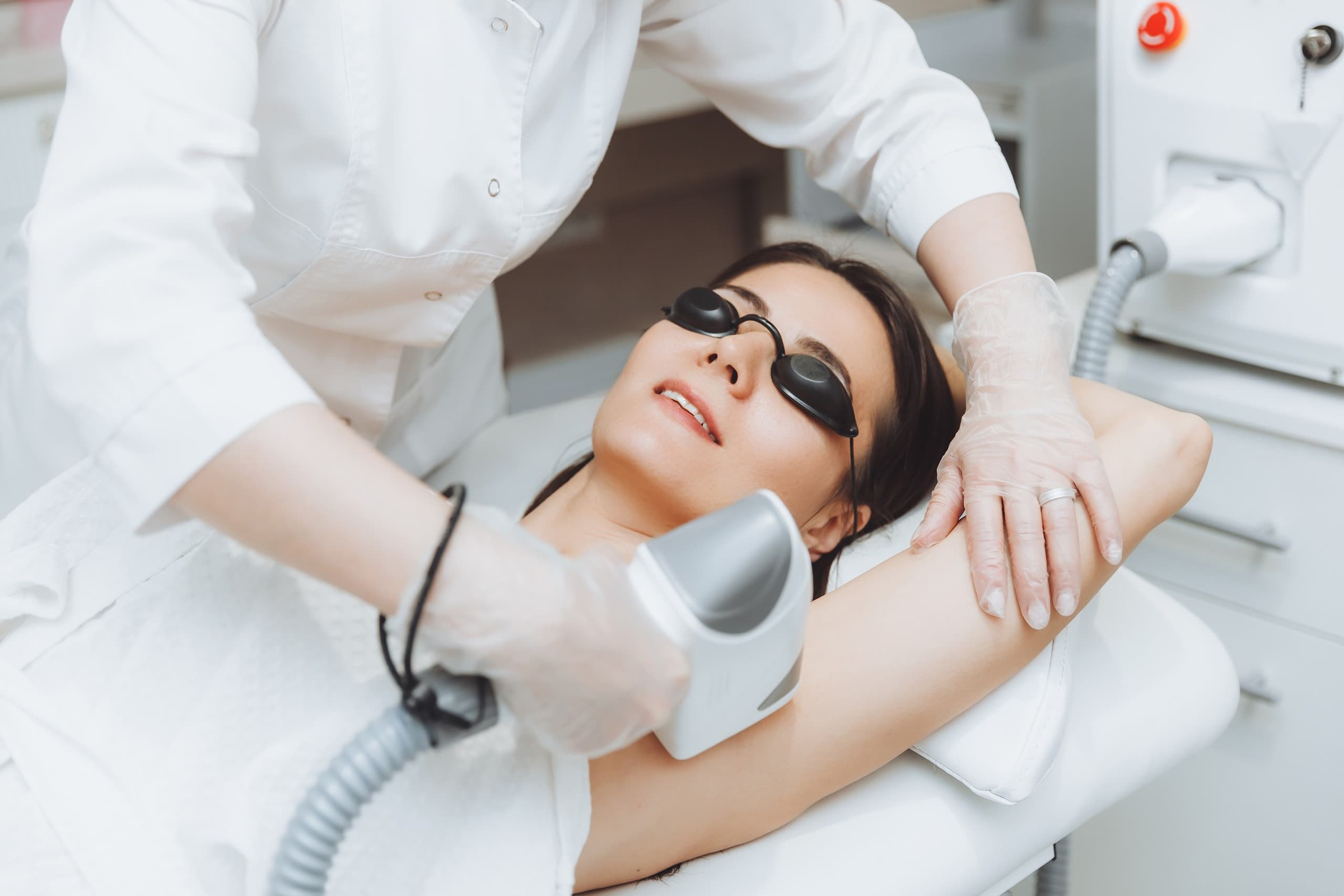
Folliculitis and Laser Hair Removal: Causes of Razor Bumps and How to Manage Them
A look at why shaving triggers recurring folliculitis and ingrown hairs, and how laser hair removal reduces follicle count and thickness to calm the cycle. We cover how the laser actually targets the follicle and what to expect session by session.
By Dr. Lee
Contact Dermatitis: Causes and Why You Suddenly React to a Cosmetic You've Used for Years
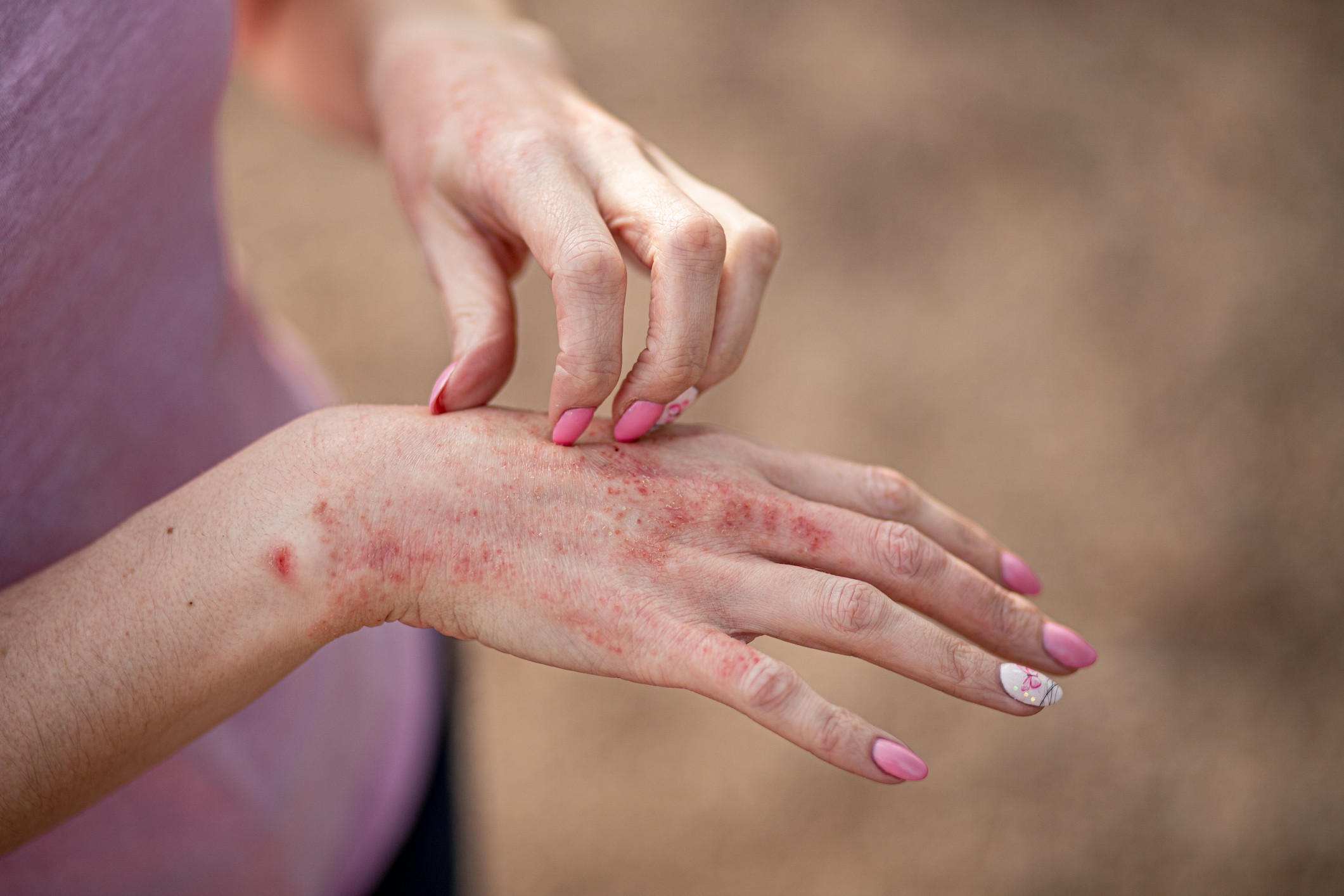
Contact dermatitis isn't one condition. Sometimes skin is directly damaged by an irritating substance, and sometimes the immune system mistakes a substance for a threat. Here's why these two types form differently, how long each lasts, and what commonly triggers them.
By Dr. Kim
Enlarged Pores Versus Scar Pores: How to Tell Them Apart and Care Compared
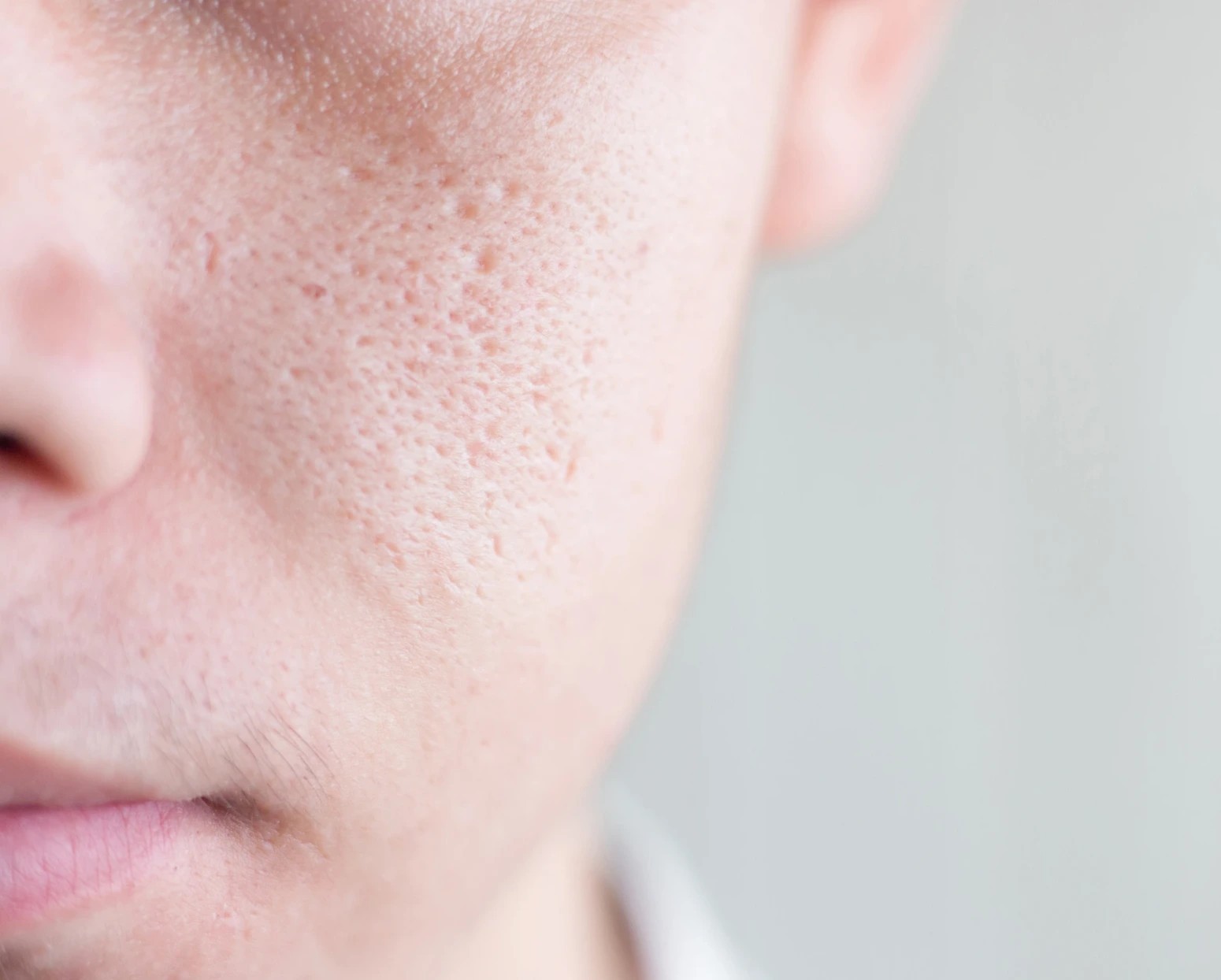
Enlarged pores and acne scar pores can look like the same small dark dots from a distance, but what's happening underneath the skin is completely different. Here's why each one forms, how to tell them apart, and how the treatment approach differs.
By Dr. Lee