Contact Dermatitis: Causes and Why You Suddenly React to a Cosmetic You've Used for Years
By Dr. Kim8 min read
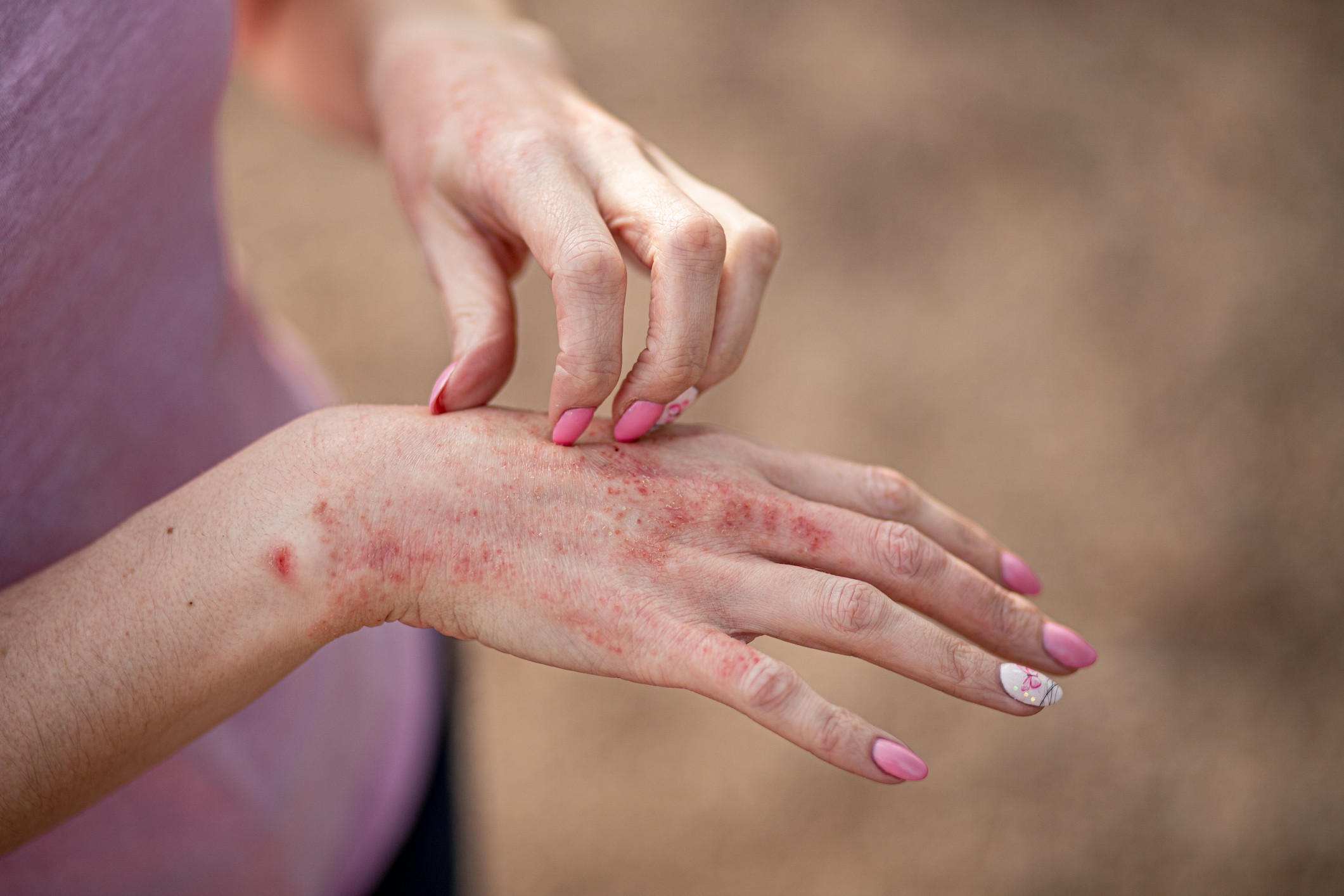
When skin suddenly turns red, swollen, and itchy, most people think of hives or an allergy first. But if the symptoms only show up exactly where something touched the skin, contact dermatitis is the more likely cause. True to its name, it's inflammation that develops right where the skin made contact with something.
Contact dermatitis actually splits into two distinct types. One is irritant contact dermatitis, and the other is allergic contact dermatitis. On the surface they look similar, red and itchy, but what's happening underneath is completely different. In one, the skin barrier is physically damaged. In the other, immune cells mistake a substance for an enemy. Understanding this difference explains why some people react the very first time they use a product, while others suddenly develop a reaction to a cosmetic they'd used for years without any issue.
How do irritant and allergic types differ?
What separates the two types is whether the immune system is involved at all. Irritant contact dermatitis is a reaction that happens when a chemical physically damages the skin barrier. It has nothing to do with immune memory, and symptoms appear in proportion to how much and how long the skin was exposed.
Allergic contact dermatitis works differently. The body mistakes a specific substance for a threat, and symptoms only appear after immune cells have "remembered" that substance. That's why the same product can cause zero problems for one person and a reaction within days for another. Irritant contact dermatitis is known to be far more common overall, while the allergic type is comparatively rarer, but once it forms, the memory stays for life, and that's the key difference.
How does irritant contact dermatitis develop?
Irritant contact dermatitis happens when the skin barrier is directly damaged by a chemical. Soap, detergent, alcohol, and acidic cosmetics all strip away the lipids (the oily component) on the skin's surface, and repeated exposure wears the barrier down. Think of the skin barrier like bricks and mortar. If the skin cells are the bricks, the lipids filling the gaps between them are the mortar.
When a strongly cleansing ingredient keeps dissolving that mortar, moisture escapes and outside irritants penetrate straight through. Because this reaction has nothing to do with immune memory, even a detergent you're using for the very first time in your life can leave your hands cracked and chapped. The more exposure in terms of amount and duration, and the weaker the barrier to begin with, the more easily symptoms appear. Hands that crack often from frequent dishwashing are a classic example.
Why does allergic contact dermatitis develop?
Allergic contact dermatitis tells a completely different story. Here, symptoms arise because the immune system mistakes a specific substance for a threat. Small molecules like nickel or fragrance can't trigger an immune response on their own. But once they bind to proteins inside the skin, the body recognizes this as an unfamiliar structure it's never seen before, and from that point on, immune cells start remembering this substance.
Langerhans cells in the skin (sentinel cells that carry immune information to the lymph nodes) capture this unfamiliar structure and transport it to a lymph node, where they alert T cells. This process is called sensitization, and it typically takes ten to fifteen days. Once sensitization is complete, the body remembers that substance for a long time afterward. The next time skin touches the same substance, inflammation flares up much faster and stronger, usually within one to three days. This is exactly why someone can be exposed with no reaction at all, only to suddenly develop symptoms years later.
Common causes of contact dermatitis
The substances that cause contact dermatitis are closer to daily life than most people realize. The usual suspects include:
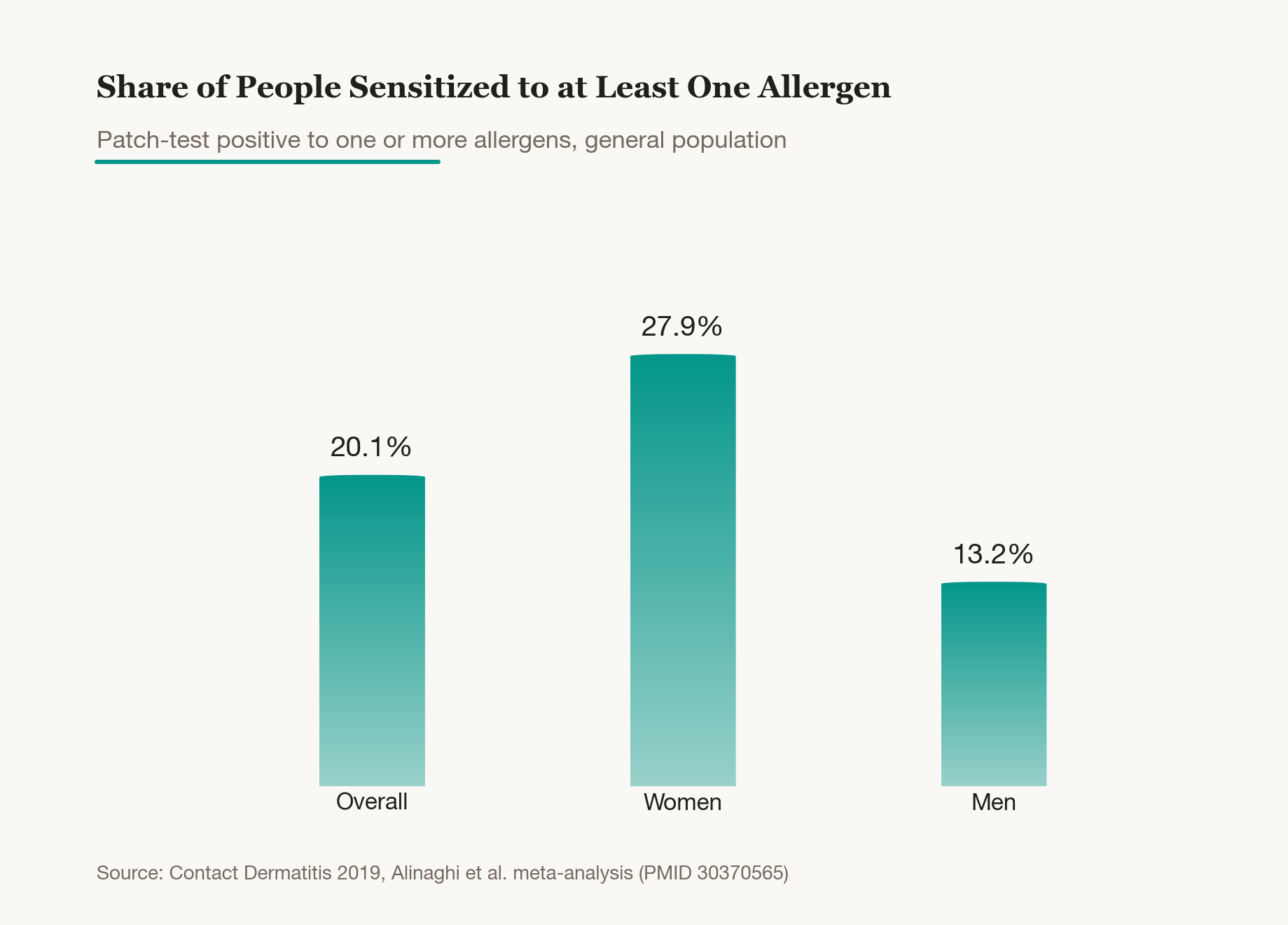
- Nickel: Found in earrings, watch backs, and belt buckle metal. Sweat dissolves a small amount of nickel ions, which then bind to skin proteins and trigger a reaction.
- Fragrance: Widely used in cosmetics and detergents. Many fragrance molecules are small and volatile, making them quick to bind with skin proteins.
- Preservatives (such as methylisothiazolinone): Added to keep products from spoiling. The same antimicrobial strength that kills microbes also makes these ingredients highly reactive with skin proteins.
- Hair dye ingredients (paraphenylenediamine, PPD): Reactive intermediate compounds form during the oxidation process, making PPD especially prone to causing sensitization.
- Rubber products (such as latex gloves): The reaction is often caused not by the rubber itself but by additives introduced during manufacturing.
What all of these have in common is a small molecular size that lets them bind easily with skin proteins.
Why do you suddenly react to a product you've used for a long time?
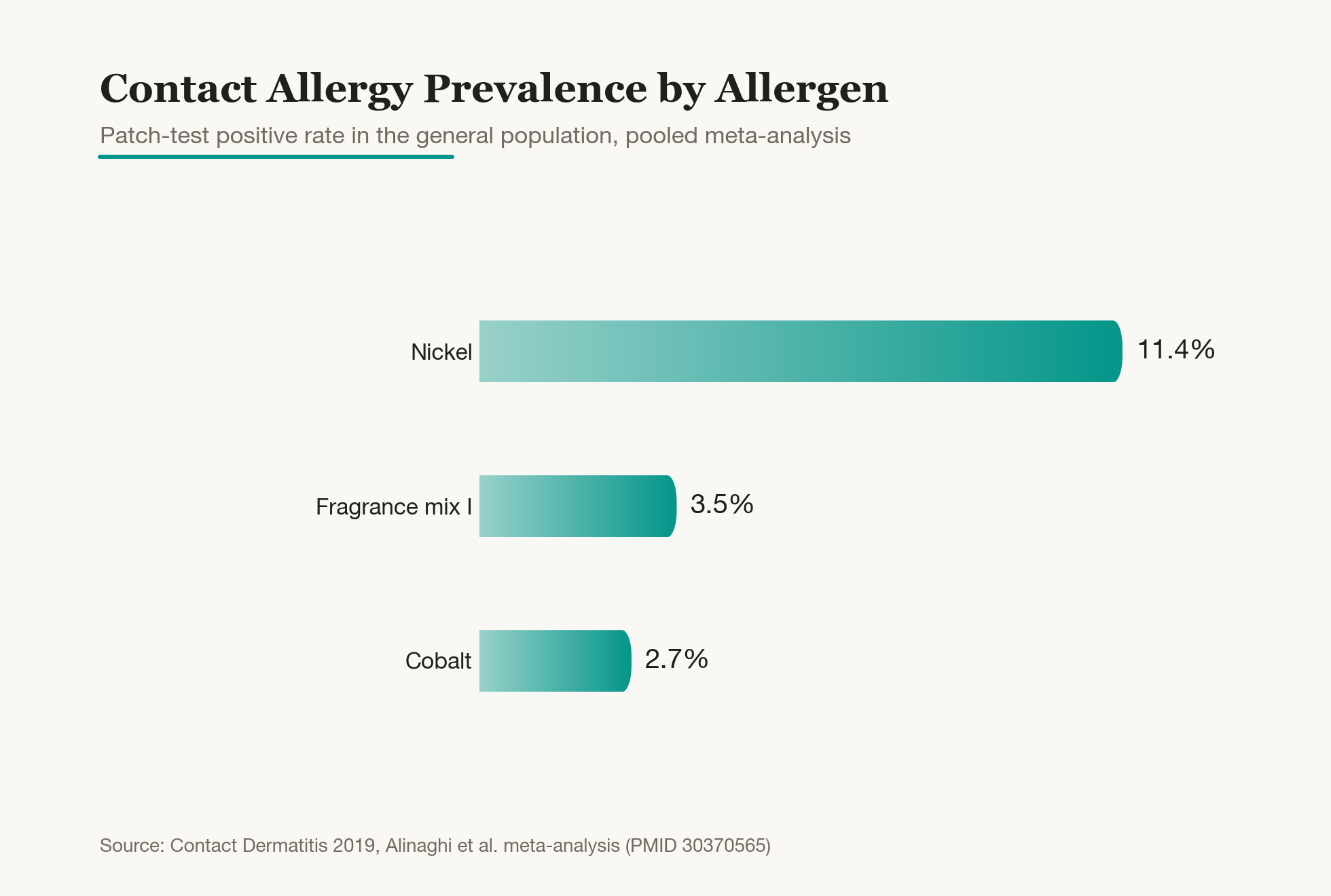
There's a question that comes up often with allergic contact dermatitis. Why would a cosmetic or accessory you've used without any problem for years suddenly trigger a reaction out of nowhere?
The answer lies in the fact that sensitization builds quietly. The first time skin touches a substance, immune cells are simply gathering information and preparing T cells behind the scenes, so nothing shows on the surface. Only once this preparation is complete does the body fully remember the substance. From then on, each exposure adds a little more to the reaction until it finally breaks through as visible symptoms.
So if a product you've used safely for a long time suddenly starts causing trouble, allergic contact dermatitis is worth suspecting. Using something for years doesn't guarantee it's safe. For some substances, the more exposure accumulates, the higher the odds of sensitization actually become.
How long does contact dermatitis take to heal?
Contact dermatitis mostly resolves on its own once the triggering substance is avoided. That said, recovery speed depends on the type and how long the exposure lasted.
Mild irritant dermatitis usually shows visible improvement within four to eight weeks if the trigger is avoided and the barrier is consistently supported with moisturizer. Chronic irritant dermatitis from long, repeated exposure, or allergic dermatitis, often takes eight to twelve weeks to recover instead. The barrier needs roughly as long to rebuild as it spent breaking down.
If the trigger goes unnoticed and contact keeps happening, the inflammation can drag on for six months to over a year and turn chronic. In some cases, skin thickens and flakes into a state called lichenification (a bark-like thickening of the skin). If symptoms keep coming back, finding the actual trigger is the first real step toward recovery.
Finding the culprit with a patch test
When the cause is hard to pinpoint, patch testing can confirm it directly. Small patches divided into multiple sections are placed on the back, each loaded with a small amount of a suspected substance, and left in place for about two days.
Skin reactions are checked right after the patches come off, and again two to four days later. The reason for checking twice, with a gap in between, is that allergic reactions are delayed responses, taking time for immune cells to gather at the site. Unlike hives, which appear immediately, a clear red reaction here often doesn't fully show until a day or two has passed.
Once the trigger is identified, knowing its name and checking ingredient labels going forward can significantly cut down on flare-ups when choosing cosmetics or household products.
How to manage it once the cause is found
Once a diagnosis is confirmed, the path forward is fairly straightforward.
- Completely avoid any product containing the confirmed trigger, checking ingredient labels carefully. The same ingredient sometimes appears under a different name, so knowing the exact name matters.
- During a severe acute flare, a short course of a prescription topical steroid ointment can calm the inflammation. It works by directly suppressing the inflammatory response, which speeds up recovery.
- Rebuild the barrier with a moisturizer containing ceramide or panthenol. Once the barrier is restored, outside irritants can no longer penetrate as easily.
- During recovery, it's best to pause potentially irritating ingredients like retinol or high-concentration vitamin C. Adding more stimulation to a barrier that's already thin can actually slow recovery down.
Following these four steps in order, most cases of contact dermatitis clear up without leaving any lasting marks.
References
Korean Dermatological Association, American Academy of Dermatology (AAD), and Ministry of Food and Drug Safety (MFDS).
Was this helpful?
About this article
Written by a practising aesthetic physician and intended for general education — not a substitute for individual medical advice.
Read next

Epidermal Cyst and Lipoma Difference: Can You Tell Them Apart by Touch?
A lump you can feel under your skin usually turns out to be either an epidermal cyst or a lipoma, and while they look similar on the surface, they form differently and feel different under your fingers. Here is how each one develops, how to tell them apart, and what tests doctors use to confirm which is which.
By Dr. Kim
Atopic Dermatitis: Causes, How to Use Moisturizer, Ointments and Daily Care
Atopic dermatitis is a chronic condition in which a weakened skin barrier and an overactive immune response feed off each other, keeping itching and inflammation on repeat. Here is why the barrier breaks down, why flares keep returning, and how moisturizing and topical treatment need to work together.
By Dr. Kim

Freckles, Melasma, Lentigines and Seborrheic Keratosis: Can You Tell Them Apart in the Mirror?
Freckles, melasma, solar lentigines, and seborrheic keratosis all look like brown spots, but each forms for different reasons and follows a different course. Here is how to tell these four commonly confused types apart by comparing their color, shape, typical age of onset, and location.
By Dr. Kim